When Can You Start Filing Taxes? Complete Guide
Learn the exact dates you can start filing your 2024 taxes and how to prepare.

When Can You Start Filing Taxes?
Tax season 2025 officially began on January 27, when the Internal Revenue Service (IRS) started accepting income tax returns for the 2024 tax year. Federal tax filing typically opens in late January or early February each year, with most states following the federal timeline shortly thereafter. This year’s filing season creates a 78-day window for over 140 million taxpayers to submit their individual income tax returns for the year covering January 1 through December 31, 2024.
The IRS has announced that this filing season will feature expanded and enhanced tools to help taxpayers navigate the process, thanks to the agency’s significant modernization efforts. These improvements include new text and virtual assistants offering tax guidance, innovative mobile phone options for completing tax forms, and expanded free filing options available to eligible taxpayers.
Understanding Tax Filing Deadlines
While filing can begin immediately once the IRS opens the filing season, there are important deadlines you must understand to avoid penalties and ensure proper tax compliance.
Tax Day 2025
Tax Day in 2025 falls on April 15, which serves as the primary deadline for filing your federal income tax return. This midnight deadline applies to all individual taxpayers unless they have filed for an automatic extension or live in a federally declared disaster area with an extended deadline.
Automatic Extension Filing
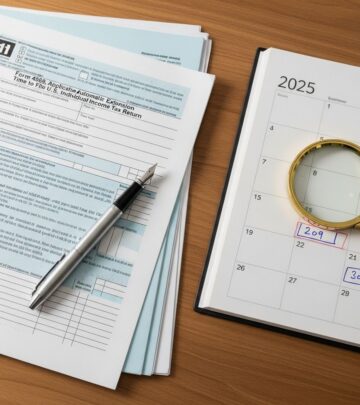
If you cannot meet the April 15 deadline, you can file Form 4868 to request an automatic extension. This form extends your filing deadline to October 15, providing an additional six months to complete and submit your return. However, it’s critical to understand that while an extension delays your filing deadline, it does not extend the deadline for paying any taxes you owe to the IRS. Interest and penalties may accumulate on unpaid taxes after April 15, even if you file an extension.
Special Circumstances and Disaster Relief
Some taxpayers qualify for additional time to file their taxes beyond the standard deadline. Individuals and businesses in federally declared disaster areas receive extended filing deadlines to help them recover from emergencies. Recent examples include Los Angeles County, where wildfires caused widespread damage, and areas affected by major hurricanes in 2024. You can verify whether you qualify for a later filing deadline by visiting the IRS website and checking your specific location.
How to Prepare Before Filing
Preparation is key to filing your taxes efficiently and accurately. Beginning early in the tax season allows you to gather necessary documents and organize your financial information.
Essential Documents to Gather
Before you begin filing, compile the following documents:
– Forms W-2 from all employers (these should arrive by January 31)- Forms 1099 from banks and other institutions reporting interest, dividends, or distributions- Form 1099-K if you received payments for goods and services through online marketplaces or payment apps exceeding $20,000 in more than 200 transactions- Form 1099-MISC for miscellaneous income- Records of charitable contributions if you plan to itemize deductions- Documentation of educational expenses if claiming education credits- Medical expense records if itemizing deductions- Records of mortgage interest and property taxes paid
Understanding Standard Deductions vs. Itemizing
Before filing, determine whether you should take the standard deduction or itemize your deductions. For the 2024 tax year, the standard deductions are:
– Single filers: $14,600- Heads of households: $21,900- Married couples filing jointly: $29,200
If your allowable deductions exceed these amounts, itemizing may result in a larger refund or a reduced tax bill. However, itemizing requires more detailed record-keeping and a longer filing process. Tax preparation tools often include calculators to help you compare these options and determine which approach benefits you most.
Free Filing Options Available in 2025
The IRS provides multiple free filing options for eligible taxpayers, eliminating the need to purchase expensive tax software.
IRS Free File Program
Through a partnership with eight tax preparation companies, the IRS Free File program offers completely free online tax filing. To qualify, your adjusted gross income for 2024 must be $84,000 or less. This program provides guided tax preparation assistance, making it ideal for taxpayers who want professional-level guidance without paying fees.
Direct File Tool
The IRS’s own Direct File tool has expanded significantly for 2025. An estimated 32 million taxpayers in 25 states can now use this free guided tax-filing tool. Last year, only residents of 12 states could access a pilot version, but the program has since dramatically expanded. Direct File is available now and offers a streamlined alternative to third-party software.
Free File Fillable Forms
For taxpayers with adjusted gross incomes exceeding $84,000, Free File Fillable Forms provide free basic tax forms without guided assistance. This option requires more tax knowledge, as it is not guided, but it remains completely free. Note that both IRS Free File and Free File Fillable Forms closed on October 15, 2024, so these specific programs are no longer available for the current tax year.
Early Filing Benefits and Strategy
Although taxes aren’t due until April 15, filing early offers significant advantages that make it worth starting immediately when the IRS begins accepting returns.
Maximize Refund Speed
The IRS processes most refunds within 21 days, though paper filings take longer. By filing electronically early in the tax season, you position yourself to receive your refund quickly. Selecting direct deposit as your refund delivery method further accelerates the process, allowing the IRS to deposit funds directly into your bank account rather than mailing a check.
Reduce Identity Theft Risk
Filing early reduces your vulnerability to identity theft during tax season. Criminals sometimes file fraudulent returns using stolen Social Security numbers to claim unauthorized refunds. By filing first, you establish a legitimate return in the IRS system, preventing criminals from using your identity.
Meet Payment Obligations
If you owe taxes rather than expecting a refund, filing early ensures you can meet your payment obligations before the April 15 deadline without rushing.
Tracking Your Refund Status
Once you’ve filed your return, monitoring its progress helps you know when to expect your refund. The IRS provides tools to track your return status at no cost.
Where’s My Refund? Tool
The IRS’s “Where’s My Refund?” tool allows you to check your refund status by entering your Social Security or taxpayer ID number, filing status, and refund amount. This tool provides real-time updates on your return’s processing status and estimated delivery date. However, the IRS advises against counting on receiving your refund by a specific date to pay bills, as delays are possible due to processing backlogs or errors in your return.
Typical Refund Amounts
In each of the past two years, over 100 million tax refunds were issued at an average amount exceeding $3,000. Many taxpayers will receive similar refunds in 2025, but individual refund amounts vary based on withholding, credits claimed, and overall tax liability.
Protecting Yourself From Tax Scams
Tax season brings an increase in fraudulent schemes targeting taxpayers. The IRS urges vigilance to protect your personal and financial information.
Phishing Attempts
Scammers often send phishing emails and text messages claiming to be from the IRS. These messages always contain false information and are designed to trick you into providing personal information or clicking malicious links. Remember this critical fact: The IRS will never reach out to taxpayers via phone, text, or email. Any such communication is automatically fraudulent.
Safe Filing Practices
Protect yourself by filing through secure, official channels. Use the IRS website directly, reputable tax software, or licensed tax professionals. Verify website URLs carefully before entering personal information, and never click links in unsolicited emails or texts claiming to be from the IRS.
Frequently Asked Questions
Q: When does the IRS start accepting tax returns?
A: The IRS typically begins accepting returns in late January or early February. For 2025, the IRS started accepting 2024 tax returns on January 27.
Q: What is the deadline to file taxes in 2025?
A: Tax Day 2025 is April 15. This is the deadline to file your federal income tax return unless you’ve requested an automatic extension or qualify for a federally declared disaster extension.
Q: Can I file an extension, and does it delay payment obligations?
A: Yes, you can file Form 4868 for an automatic extension, moving your filing deadline to October 15. However, this extension only delays filing, not payment. Any taxes owed must be paid by April 15 to avoid interest and penalties.
Q: How quickly will I receive my refund?
A: The IRS issues most refunds within 21 days of processing your return. Electronic filing with direct deposit is the fastest method for receiving refunds.
Q: Are there free options for filing my taxes?
A: Yes. If your adjusted gross income is $84,000 or less, you can use IRS Free File through eight partner companies. An estimated 32 million taxpayers in 25 states can also use the IRS’s Direct File tool. Additionally, Free File Fillable Forms are available to all taxpayers at no cost, though they require more tax knowledge.
Q: Should I file early even though the deadline is April 15?
A: Filing early is advantageous because it allows you to receive your refund quickly, reduces identity theft risk, and ensures you meet payment obligations without rushing.
Q: What documents do I need to file my taxes?
A: You’ll need Forms W-2 from employers, Forms 1099 from financial institutions and other payers, and documentation supporting any deductions or credits you claim, such as charitable contribution receipts or education expense records.
Q: How can I avoid tax scams during filing season?
A: Remember that the IRS never initiates contact via phone, text, or email. File through official IRS channels or reputable tax software, verify website URLs carefully, and never click links in unsolicited messages claiming to be from the IRS.
References
- When Does Tax Season Start? 2025 IRS Filing Dates to Know — Money Magazine. 2025-01-27. https://money.com/tax-season-2025-start-date-irs/
- Get ready to file your taxes — Internal Revenue Service. 2024-12-15. https://www.irs.gov/individuals/get-ready-to-file-your-taxes
- When Can You Start Filing Taxes? — Money Magazine. 2025-01-27. https://money.com/when-can-you-start-filing-taxes/
- Why Teenagers Should File a Tax Return — Money Magazine. 2021-02-18. https://money.com/teen-file-tax-return/
- How to File Your Taxes for Free With TurboTax This Year — Money Magazine. 2024-10-01. https://money.com/file-taxes-for-free-with-turbotax/
Similar Articles








Read full bio of Sneha Tete