When Avoiding Debt Is the Losing Strategy
Discover when steering clear of debt might actually hinder your financial growth and key opportunities.

It’s almost always a good idea to stay out of debt. But sometimes, refusing to take on debt could hurt you in the long run. There are times when avoiding debt is the losing strategy. Smart borrowers know when to use debt to their advantage, leveraging it to build wealth, seize opportunities, and achieve financial goals that would otherwise be out of reach.
This article examines key scenarios where strategic debt can outperform a debt-free approach. By understanding good debt versus bad debt, you can make informed decisions that align with long-term financial success. We’ll cover education, housing, business ventures, investments, emergencies, and more, drawing on proven financial principles.
The Power of Leverage: Why Debt Can Amplify Wealth
Debt acts as leverage when used wisely, allowing you to control more assets than your cash alone permits. For instance, borrowing at low rates to invest in appreciating assets creates positive arbitrage—earning more on the investment than the debt costs. According to financial guidelines from banking experts, sensible borrowing is part of a sound strategy when it enables access to high-value opportunities.
Consider the opportunity cost of avoiding debt entirely. Hoarding cash for big purchases might seem safe, but inflation erodes its value, while debt-funded investments can compound returns. The key is borrowing only what you can repay comfortably, prioritizing low-interest, long-term value options like education or real estate over high-interest consumer debt.
Education: Investing in Your Earning Potential
Student loans often represent good debt because they fund education that boosts lifetime earnings. A college degree can increase earning potential by 66% over a high school diploma, per U.S. Bureau of Labor Statistics data. Paying cash for tuition might deplete savings needed elsewhere, while loans preserve liquidity for other investments.
However, choose programs with strong return on investment (ROI). Prioritize degrees in high-demand fields like engineering or healthcare, where graduates recoup costs quickly. Federal student loans offer low rates and flexible repayment, making them preferable to private options. Always calculate net present value: if post-graduation income exceeds loan payments plus interest, it’s a win.
- Pros of education debt: Access top schools, defer payments during studies, tax-deductible interest.
- Cons to avoid: Overborrowing for low-ROI majors or graduate degrees without clear career paths.
- Tip: Use scholarships, grants, and part-time work to minimize loans.
Homeownership: Building Equity Through Mortgages
A mortgage is classic leverage. Instead of saving hundreds of thousands for a home, a 20% down payment lets you control a property that appreciates over time. U.S. housing has historically returned 4-5% annually after inflation, often outpacing mortgage rates below 4% in recent years.
Renting indefinitely means building equity for your landlord, not yourself. With fixed-rate mortgages, payments remain stable while rents rise. Tax benefits like mortgage interest deductions further sweeten the deal for qualifying buyers. Data from the Federal Reserve shows homeowners build substantially more net worth than renters over decades.
| Strategy | 10-Year Net Worth Growth | Key Advantage |
|---|---|---|
| Cash Purchase (No Debt) | Moderate (Limited to one property) | No interest costs |
| Mortgage Leverage | High (Multiple properties possible) | Forced savings via principal paydown |
| Rent Forever | Low (No equity) | Flexibility |
Refinance when rates drop to capture savings, as recommended in borrowing strategies.
Starting a Business: Fueling Entrepreneurship
Business loans or lines of credit enable startups without draining personal savings. Successful ventures like franchises or e-commerce often require upfront capital for inventory, marketing, or equipment. Small Business Administration (SBA) loans offer government-backed terms at competitive rates.
Avoiding debt might mean missing market opportunities or scaling slowly, allowing competitors to dominate. Venture debt provides runway without diluting equity. Stats from the U.S. Census Bureau indicate leveraged startups grow faster initially. Prioritize viable business plans with projected cash flow covering debt service.
- Best debt types: SBA 7(a) loans, equipment financing.
- Warning: Never borrow for unproven ideas; validate with bootstrapping first.
Investments: Borrowing to Grow Assets
Margin loans, HELOCs (Home Equity Lines of Credit), or securities-based lending allow investing beyond cash reserves. Historically, stock market returns (S&P 500 averages 10% annually) exceed borrowing costs (3-6%). This amplifies gains during bull markets.
For example, a HELOC at 5% to buy stocks returning 8% nets 3% profit after costs. Real estate investors use this for rental properties generating passive income. Federal Reserve guidelines emphasize maintaining a debt-service coverage ratio above 1.25x.
Risks: Market downturns can trigger margin calls. Limit leverage to 20-30% of portfolio value.
Emergencies and Life Events: Strategic Safety Nets
An emergency fund is ideal, but low-interest debt like 0% balance transfers can bridge gaps without liquidating investments at a loss. Personal loans beat credit cards for unexpected medical or auto repairs. Utah State University Extension stresses building cash stashes, but acknowledges debt as a temporary tool.
For major life events like weddings or moves, financing preserves opportunity costs elsewhere. Always compare total costs versus cash outlay.
Automobiles and Big Purchases: When to Finance
Cars depreciate rapidly, making them poor investments, yet 0% dealer financing or short-term loans beat tying up cash earning low savings rates. Prioritize based on long-term value: autos after necessities.
The Role of Credit: Building a Strong Profile
Responsible debt use builds credit scores, unlocking better rates. FICO models reward on-time payments and low utilization. A strong record enables future leverage at preferential terms.
Risks and When to Avoid Debt
Not all debt is good. High-interest credit cards for consumption trap users in cycles. Debt snowball (smallest balances first) or avalanche (highest interest first) methods help payoff. Budgeting strategies like 50/30/20 or zero-based ensure control.
Frequently Asked Questions (FAQs)
What is ‘good debt’ versus ‘bad debt’?
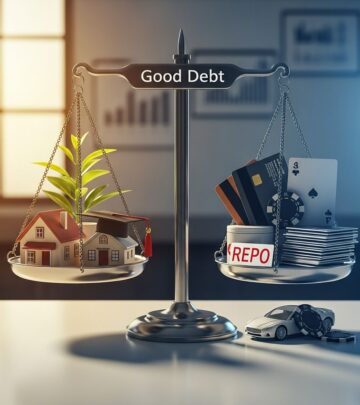
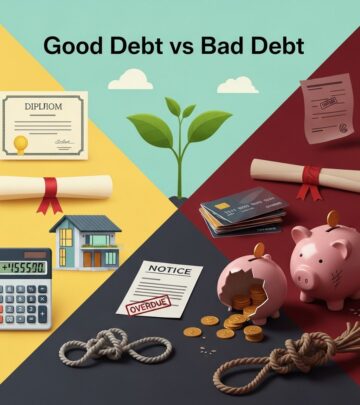
Good debt builds wealth (e.g., mortgages, student loans); bad debt funds depreciating consumption (e.g., credit cards for vacations).
Is a mortgage always better than renting?
Not always—consider mobility needs, local markets, and rates. Calculate break-even points.
How much debt is too much?
Keep total debt-to-income under 36%; debt payments under 28% of gross income.
Can debt help during inflation?
Yes, fixed-rate debt becomes cheaper as wages rise with inflation.
Should I use debt for stock investing?
Only if risk-tolerant and diversified; avoid margin for beginners.
Conclusion: Borrow Wisely, Win Big
Avoiding all debt limits potential. Embrace strategic borrowing for high-ROI opportunities while shunning impulse debt. Review debts periodically, refinance smartly, and maintain emergency reserves. This balanced approach turns debt into a tool for financial freedom.
References
- 5 popular budgeting strategies — and how to find the best fit for how … — AOL Finance. 2023-10-01. https://www.aol.com/finance/budgeting-strategies-193352485.html
- Developing and Using a Wise Borrowing Strategy — TowneBank. 2024-01-15. https://www.townebank.com/personal/resource/credit/trouble/wise-strategy/
- Eliminate Credit Card Debt — CC Advising. 2023-05-20. https://ccadvising.com/articles/eliminate-credit-card-debt
- Abandon Losing Strategies — Wise Bread. 2010-07-12. https://www.wisebread.com/abandon-losing-strategies
- Opting out of the money economy — Wise Bread. 2009-11-03. https://www.wisebread.com/opting-out-of-the-money-economy
- WiseBread’s Luxury Eccentricity Trick — Consumer Credit. 2008-06-15. https://www.consumercredit.com/blog/wisebreads-luxury-eccentricity-trick/
- Emergency Cash Stash — Utah State University Extension. 2022-08-10. https://extension.usu.edu/finance/research/emergency-cash-stash
Similar Articles








Read full bio of Sneha Tete