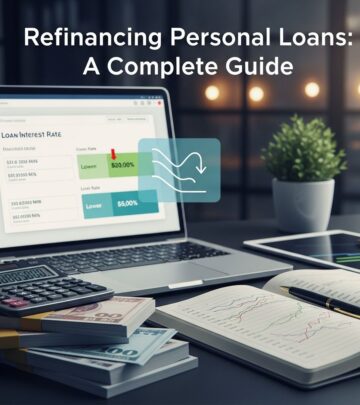
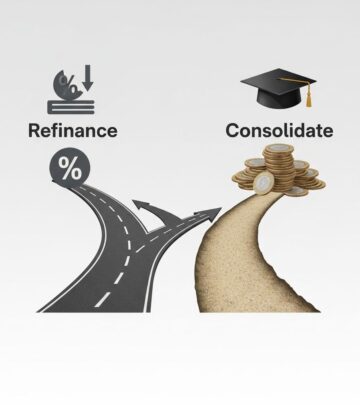
When And How To Refinance Student Loans: 8 Steps
Learn when refinancing student loans makes financial sense and how to compare lenders, rates, and terms to maximize your savings.

Refinancing student loans can be a powerful strategy to lower your interest rate, reduce monthly payments, or simplify repayment. However, it is not the right move for every borrower, especially if you have federal loans with valuable protections. Understanding when to refinance and how to do it carefully can save you thousands of dollars over the life of your loans.
What Does It Mean to Refinance Student Loans?
Student loan refinancing means taking out a new private loan to pay off one or more existing student loans. The new loan comes with its own interest rate, repayment term, and borrower protections, all set by the private lender you choose.
In practice, refinancing allows you to:
- Combine multiple student loans into a single loan with one monthly payment.
- Potentially qualify for a lower interest rate based on your current credit and income profile.
- Change your repayment term to increase or decrease monthly payments.
Refinancing is always done through a private lender such as a bank, credit union, or online lender. When you refinance federal loans, you permanently convert them into private debt and lose federal protections like income-driven repayment plans and most forgiveness programs.
When Does Refinancing Student Loans Make Sense?
Refinancing is most beneficial in situations where the trade-off between savings and lost protections clearly favors a new private loan. Common scenarios where refinancing may make sense include:
- Your credit score has significantly improved since you first borrowed and you now qualify for better rates.
- Market interest rates have fallen, and current refinance offers are lower than your existing rates.
- You have high-interest private loans and do not rely on federal repayment benefits.
- You want to simplify repayment by combining several loans into one bill.
- You have stable income and employment, and can handle the obligations of a private loan.
- You want to change your repayment term either to lower your monthly payment or pay off debt faster.
When Refinancing Might Not Be Right for You
On the other hand, refinancing may be a poor fit if any of the following apply:
- You rely on or expect to use income-driven repayment (IDR) on federal loans.
- You work in public service or a qualifying nonprofit and are pursuing Public Service Loan Forgiveness (PSLF).
- Your income is unstable or uncertain, making federal forbearance and deferment options valuable.
- You have poor or limited credit and would only qualify for high refinance rates.
Because refinancing federal loans is irreversible, it is important to evaluate not just your current situation but your likely future need for federal protections.
Benefits and Drawbacks of Refinancing
Refinancing can offer both clear advantages and important risks. Weighing both sides will help you decide if this strategy aligns with your financial goals.
| Potential Benefits | Potential Drawbacks |
|---|---|
|
|
Refinancing Federal vs. Private Student Loans
The decision to refinance often depends on whether your current loans are federal, private, or a mix of both.
Refinancing Private Student Loans
Refinancing private loans is generally less risky because you are not giving up federal protections you never had. It can be particularly attractive if:
- Your private loan interest rates are high compared to current market offers.
- You have improved credit or income since you originally borrowed.
- You want to simplify several private loans into a single payment.
Lenders often promote refinancing private loans for borrowers with strong credit profiles, sometimes offering fixed rates that are substantially lower than older loan terms.
Refinancing Federal Student Loans
Refinancing federal loans requires much more caution. Federal benefits you risk losing include:
- Income-driven repayment (IDR) plans that cap payments at a share of discretionary income.
- Loan forgiveness after qualifying years of repayment under IDR, or through PSLF for public service workers.
- Broad and often generous forbearance and deferment options in times of financial hardship.
For borrowers who are high-income, have a strong safety net, and are not using federal protections, refinancing some or all federal loans may still be worth it if the interest savings are large enough.
How Much Can You Save by Refinancing?
The savings from refinancing depend on three main factors:
- The difference between your current interest rate and the new rate.
- The length of your new repayment term compared with your existing term.
- Whether you choose to keep payments the same and shorten your term, or lower monthly payments.
For example, if you reduce your interest rate by several percentage points while keeping the same term, you may save thousands of dollars in total interest. By contrast, lowering your monthly payment by extending your term can increase the total interest you pay, even if the interest rate is modestly lower.
Many reputable refinance lenders offer calculators that allow you to estimate savings based on loan balance, current rate, and proposed terms.
Eligibility Requirements for Student Loan Refinancing
Refinance lenders evaluate your application based on your ability and willingness to repay. Common eligibility criteria include:
- Credit score: Often in the good to excellent range (around 670+), with the best rates reserved for higher scores.
- Debt-to-income ratio: A lower ratio is preferred, showing you are not overextended.
- Stable income and employment: Full-time work or a documented, reliable income source.
- Loan and school eligibility: Some lenders restrict which schools or loan types they will refinance.
- Citizenship or residency: Many lenders require U.S. citizenship or permanent residency, though policies vary.
If your profile does not meet these standards, you might still qualify with a creditworthy cosigner, though this creates shared responsibility for the debt.
Step-by-Step Guide: How to Refinance Student Loans
While each lender has unique processes, most student loan refinancing follows a similar sequence.
1. Clarify Your Financial Goals
Before gathering quotes, decide what you want to accomplish with refinancing:
- Lower your interest rate and total cost.
- Reduce your monthly payment for short-term flexibility.
- Pay off loans faster by choosing a shorter term.
- Consolidate multiple loans into one payment.
Your goals will guide choices about rate type, term length, and which loans to refinance.
2. Review Your Current Loans
Collect details for each loan you may refinance:
- Current balance and interest rate.
- Remaining term and monthly payment.
- Whether the loan is federal or private.
- Any special benefits (such as forgiveness eligibility or IDR enrollment).
Decide whether you want to refinance just private loans, select high-rate loans, or both private and federal loans together.
3. Check Your Credit and Improve It if Needed
Because your credit score heavily influences refinance rates, it is helpful to check your credit before applying. If your score is borderline, steps such as lowering credit card balances, correcting errors on your report, and making on-time payments for several months may improve your offers.
4. Shop Around and Compare Lenders
Different lenders can give very different offers to the same borrower. To find the best deal:
- Use prequalification tools (when available) to check estimated rates without affecting your credit score.
- Compare fixed vs. variable rates, available terms, and any discounts (such as autopay rate reductions).
- Review each lender’s policies on forbearance, cosigner release, and customer support.
- Avoid lenders that charge prepayment penalties or excessive fees.
Marketplaces and comparison websites can help you quickly see offers from multiple lenders, but you should always review the primary lender’s terms directly before applying.
5. Decide Which Loans to Include
You can usually refinance any combination of eligible federal and private loans. Some borrowers choose to:
- Refinance only private loans while leaving federal loans untouched to preserve protections.
- Refinance high-interest loans first and leave lower-rate loans as they are.
- Refinance all loans into a single new loan for maximum simplicity.
Remember that once federal loans are refinanced, they cannot be moved back into the federal system.
6. Complete the Application
Once you select a lender, you will fill out a full application, typically online. You may be asked to provide:
- Personal identifying information (name, address, Social Security number).
- Proof of income, such as recent pay stubs or tax returns.
- Details of each loan you plan to refinance, including account numbers and balances.
- Information about your employer and length of employment.
The lender will perform a hard credit inquiry and may request additional documentation based on your profile. Approval can take anywhere from a few days to several weeks, depending on the lender and how quickly you respond to requests.
7. Review and Sign the Final Loan Offer
If approved, the lender will present a final offer that includes:
- Your approved interest rate (fixed or variable).
- The repayment term and estimated monthly payment.
- Any borrower protections and deferment/forbearance options.
- Conditions for cosigner release, if a cosigner is on the loan.
Read the terms carefully. Only sign once you are comfortable with both the monthly payment and the long-term cost. When you sign, the lender will pay off your old loans directly in most cases, and you will begin repayment under the new terms.
8. Confirm Payoff and Set Up Repayment
After your refinance is complete:
- Verify that your old lenders show a $0 balance and that no additional payments are due.
- Set up automatic payments with your new lender, especially if they offer an interest rate discount for autopay.
- Monitor your first one or two payments to ensure they are processed correctly and on schedule.
Choosing the Right Rate Type and Term
Lenders typically offer a choice between fixed and variable interest rates, as well as various repayment terms.
Fixed vs. Variable Interest Rates
- Fixed rate: The rate stays the same over the life of the loan, making payments predictable. This can be appealing if you expect rates to rise or you value stability.
- Variable rate: The rate can move up or down based on market conditions. Initial rates are often lower, but your payment could increase over time if rates rise.
Borrowers who plan to repay quickly and can tolerate risk sometimes choose variable rates, while others prefer the certainty of fixed rates.
Short vs. Long Repayment Terms
The repayment term also affects both monthly payments and total interest paid:
- Shorter term (e.g., 5–7 years): Higher monthly payments but lower total interest cost.
- Longer term (e.g., 15–20 years): Lower monthly payments but higher total interest cost.
Choose a term that balances affordability with your desire to minimize interest. If you select a longer term for flexibility, you can still pay extra when possible to reduce your total cost.
Frequently Asked Questions (FAQs)
Q: Can I refinance both federal and private student loans together?
Yes. Most refinance lenders allow you to combine multiple federal and private loans into a single new private loan. However, any federal loans you refinance will lose federal protections and repayment programs.
Q: Can I refinance my student loans more than once?
Yes. As long as you qualify, you can refinance multiple times. Borrowers sometimes refinance again to take advantage of lower market rates or an improved credit profile.
Q: Does refinancing hurt my credit score?
Refinancing involves a hard credit inquiry, which may cause a small, temporary dip in your score. Over time, making on-time payments on your new loan can help your credit health.
Q: Do I have to refinance all my student loans?
No. You can choose which eligible loans to refinance. Many borrowers refinance only private loans or select high-rate loans while leaving federal loans in the federal system for continued access to protections.
Q: How long does it take to refinance student loans?
The timeline varies by lender but often ranges from a few days to several weeks, depending on how quickly you submit documentation and how complex your application is.
References
- Best student loan refinance rates and lenders — Credible. 2026-01-01. https://www.credible.com/refinance-student-loans
- Student Loan Refinancing Guide: How to Lower Your Costs — Student Choice (CU Student Choice). 2024-05-10. https://www.studentchoice.org/borrower-resources/guides/guide-to-refinance/
- Best Student Loan Refinance Companies of 2026 — Money. 2025-12-15. https://money.com/best-student-loan-refinance/
- Student Loan Consolidation vs Refinancing: What’s Best for You? — Sallie Mae. 2024-03-20. https://www.salliemae.com/blog/refinance-student-loans/
- Beginner’s Guide to Refinancing Your Student Loans — Iowa Student Loan Liquidity Corporation. 2024-02-01. https://www.iowastudentloan.org/articles/college/beginners-guide-to-refinancing.aspx
Similar Articles








Read full bio of medha deb