What Net Worth Defines Wealth in 2026?
Explore data-driven benchmarks for financial wealth across U.S. households, from median savers to the top 1%, revealing stark inequality trends.

In an era of soaring asset prices and persistent economic divides, defining ‘richness’ requires hard numbers rather than vague feelings. Recent Federal Reserve data reveals that the top 1% of U.S. households control 31.7% of all wealth as of Q3 2025, holding about $55 trillion—equivalent to the bottom 90% combined. Meanwhile, median net worth for typical Americans hovers far lower, peaking at around $410,000 for those aged 65-74. This article breaks down wealth benchmarks, inequality drivers, and paths to financial security using the latest 2025-2026 statistics.
Understanding Net Worth as a Wealth Metric
Net worth calculates total assets minus liabilities, encompassing homes, investments, savings, and retirement accounts subtracted by debts like mortgages and loans. It’s a superior gauge of financial health over income, as it reflects accumulated prosperity. For instance, homeowners boast median net worths of $390,000-$420,000, dwarfing renters’ $10,000-$15,000—a 25-40x gap that persists across demographics.
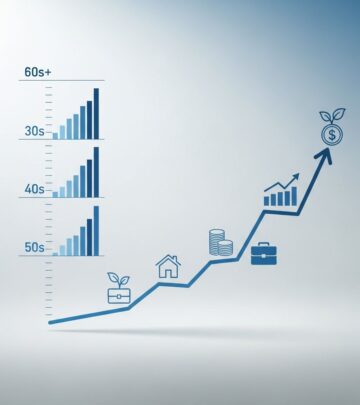
Wealth builds gradually: households under 35 average under $100,000, climbing to $365,000 by ages 55-64, peaking at $410,000 for 65-74, then dipping to $336,000 post-75 due to spending in retirement. These figures, from Federal Reserve surveys, highlight time’s role in compounding gains through careers, home equity, and 401(k)s.
Wealth Percentiles: From Median to Elite
U.S. household wealth follows a steep pyramid. The bottom 50% holds just 2.5% of total wealth, down from 3.6% three decades ago, while the top 1%’s share rose over 4%. Here’s a breakdown of 2026 net worth thresholds:
| Wealth Percentile | Approximate Net Worth Threshold | Share of Total U.S. Wealth |
|---|---|---|
| Top 1% | $11+ million | 31.7% |
| Top 5% | $3.8 million | ~40% (top 10% combined) |
| Top 10% | $2.15 million | N/A |
| Median (50th) | $192,000 (all ages) | N/A |
| Bottom 50% | <$50,000 | 2.5% |
These tiers show acceleration at the top: top 10% starts separating sharply at $2.15 million, with equities and businesses dominating portfolios versus middle-class home reliance. Billionaires and centi-millionaires grew wealth at 8% annually since the 1990s, double the bottom half’s pace.
Age and Homeownership: Key Wealth Builders
- Early Career (Under 35): Median net worth ~$39,000, focused on student debt payoff and initial savings.
- Mid-Career (35-54): Jumps to $135,000-$250,000 as incomes rise and home purchases begin.
- Pre-Retirement (55-64): $365,000 median, bolstered by peak earnings and retirement contributions.
- Retirement (65+): Peaks at $410,000, then declines; more millionaire households via home equity and 401(k) growth since 2020.
Homeownership amplifies this: since 2020, equity gains propelled millions over $1 million net worth, with retirement balances at records. Renters lag drastically, underscoring property as a wealth multiplier.
The Surge in Inequality: K-Shaped Recovery Exposed
Wealth concentration hit record highs in 2025, with the top 1% at 31.7%—widest gap in 36 years. Post-pandemic, low/middle-income households stalled as the rich surged via stocks and real estate. Top 10% drove nearly half of Q2 2025 consumer spending. Drivers include:
- Uneven wages: High earners at 3% growth vs. 1.1%-1.5% for others (Dec 2025).
- Asset inflation: Stocks/businesses favor the wealthy; home prices slowed for middles.
- Billionaire boom: Wealth grew 3x faster than prior years; Musk at $668B.
Long-term, top 1% share up 4%+ in 30 years; bottom 50% down to 2.5%. This ‘K-shaped’ economy sees elites pull away amid loose policy and growth.
Investment Strategies for Climbing Wealth Tiers
Real ways to advance: diversify beyond cash, as 2026 rate cuts erode money-market yields ($9.1T globally). Shift to quality equities, multi-asset income for retirees. Top tiers lean on stocks/private equity.
| Asset Class | Middle Class Focus | Top 10% Focus | 2026 Outlook |
|---|---|---|---|
| Housing | Primary wealth (median $400K equity) | Secondary | Slowing appreciation |
| Retirement/401(k) | Record balances | Significant | Resilient amid volatility |
| Equities/Business | Limited | Heavy (growth-oriented) | Supported by U.S. growth |
| Cash/MMFs | Safe but yielding less | Minimal | Falling rates |
Four paths up: consistent saving (15%+ income), homeownership, stock investing, side businesses. Time compounds: steady workforce years build medians to $400K+.
Regional and Demographic Variations
Wealth skews urban/coastal: California top 1% averages higher via tech. Racial gaps persist, though home equity narrows some. Women-led households trail slightly but close via education. 2026 forecasts resilient growth supporting risk assets.
Implications for Policy and Personal Planning
Record inequality prompts debates on taxes, housing access. Individuals: aim above median via compounding. Retirees face cash yield drops—pivot to diversified income. Millionaires multiply quietly via equity/401(k)s.
Frequently Asked Questions
What is the median net worth in the U.S.?
Around $192,000 all ages; peaks at $410,000 for 65-74.
Am I rich at $1 million net worth?
Top 10-15%; yes for most metrics, driven by homes/retirement.
Why is wealth inequality worsening?
Asset growth favors tops; wages/debts burden bottoms.
How to build wealth in 2026?
Home buy, invest equities, save aggressively amid rate cuts.
Top 1% net worth threshold?
$11M+, holding 31.7% total wealth.
These FAQs distill key data for quick insights.
References
- Shocking Financial Stats About the Typical American in 2026 — Erin Talks Money (YouTube). 2026. https://www.youtube.com/watch?v=WnRQCDBL_sA
- Top 1%, 5%, 10%, 25%, 50% INCOME and NET WORTH — Yidan Unlocked (YouTube). 2026. https://www.youtube.com/watch?v=PIcRiIA1CfA
- Wealth inequality in America just hit its widest gap in more than 3 decades — CBS News. 2025. https://www.cbsnews.com/news/us-wealth-gap-widest-in-three-decades-federal-reserve/
- 2026 Income Outlook — BlackRock. 2026. https://www.blackrock.com/us/financial-professionals/insights/2026-income-outlook
- Executive Summary – World Inequality Report 2026 — World Inequality Database. 2026. https://wir2026.wid.world/insight/executive-summary/
Similar Articles








Read full bio of medha deb