Credit Card APR: 4 Good-Rate Benchmarks For 2026
Discover how to identify competitive credit card APRs, factors influencing rates, and proven strategies to secure and lower yours for smarter borrowing.
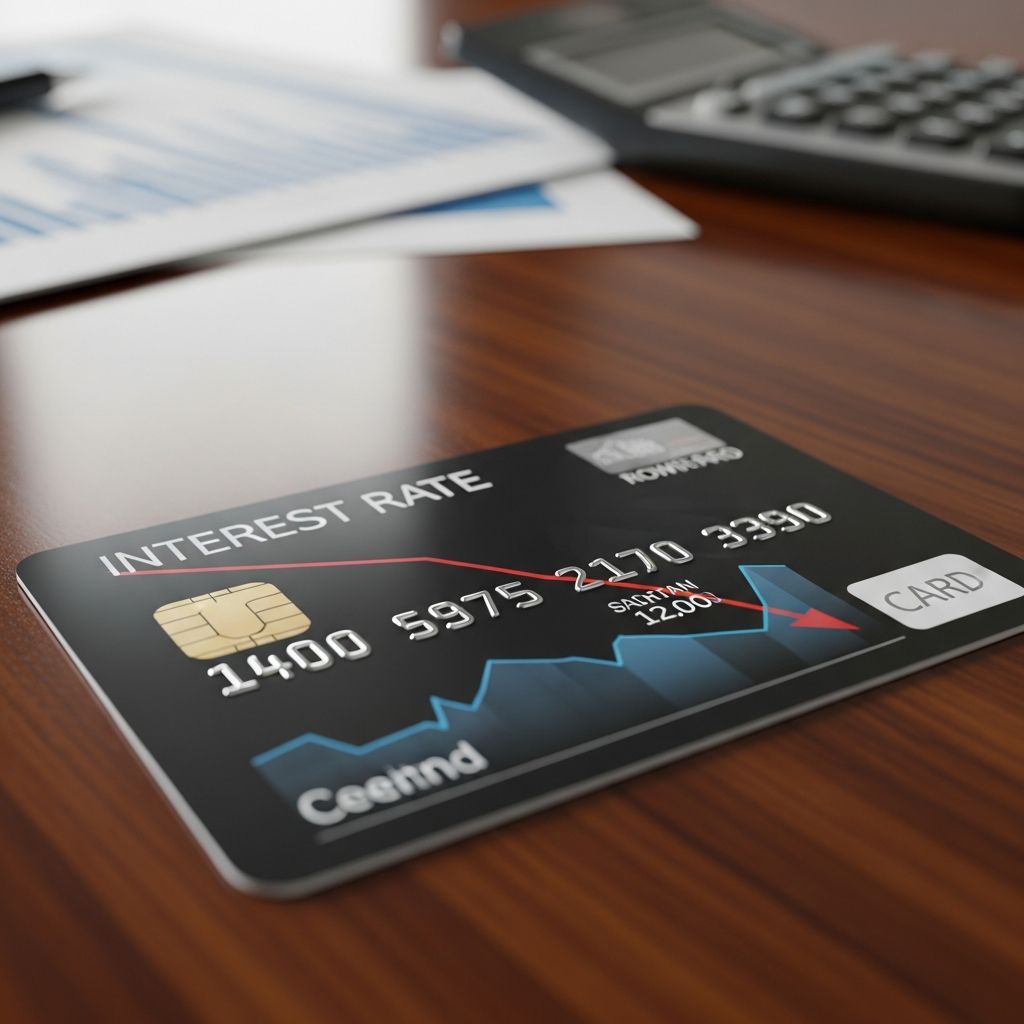
Determining a strong credit card APR involves evaluating your credit profile, market benchmarks, and borrowing habits. A competitive APR typically falls below 20% for those with excellent credit, helping minimize interest when balances carry over.
Defining APR in Credit Cards
The
annual percentage rate (APR)
quantifies the yearly expense of borrowing via your credit card, encompassing interest on unpaid balances. Unlike simple interest rates, APR often incorporates select fees, offering a fuller picture of costs.Credit cards feature multiple APR categories: purchase APR for everyday buys, balance transfer APR for shifting debts, cash advance APR (usually elevated with fees), and penalty APR triggered by late payments. Promotional APRs provide temporary relief, often 0%, but revert to standard rates post-term.
Fixed vs. Variable APR: Key Distinctions
Credit card APRs come in two primary forms, each with unique implications for your finances.
- Fixed APR: Remains stable despite prime rate shifts, though issuers may adjust for account changes like missed payments. Ideal for predictability.
- Variable APR: Fluctuates with benchmarks like the U.S. prime rate plus a margin (e.g., prime + 15%). Federal Reserve actions can raise or lower it.
Understanding these helps anticipate rate changes. Variable rates dominated in 2025-2026 amid economic flux, averaging over 20%.
How Credit Issuers Calculate Your APR
APRs stem from your creditworthiness and economic factors. Issuers blend the prime rate—a baseline for top borrowers—with a personalized margin.
| Factor | Influence on APR | Example Impact |
|---|---|---|
| Credit Score | Higher scores yield lower rates | Excellent (800+) often sees <15%; poor (<600) >25% |
| Prime Rate | Base for variable APRs | Prime at 8% + 12% margin = 20% APR |
| Account History | Late payments trigger penalties | Penalty APR up to 29.99% |
| Card Type | Premium cards lower for qualified users | Rewards cards average 19-21% |
Your FICO score drives offers; boosting it via timely payments unlocks better terms.
Mastering APR Calculations
Interest accrues daily on balances past grace periods (typically 21-25 days). The process: convert APR to a daily periodic rate, then multiply by average daily balance and billing cycle days.
Step-by-Step Example: $1,000 balance, 24% APR, 30-day cycle.
- Daily rate: (24%/365 = 0.06575%)
- Interest: (1000 × 0.0006575 × 30 = $19.73)
Compounding amplifies this; unpaid interest joins principal next cycle. Use statements or calculators for precision.
Benchmarks: What Counts as a Good APR?
A “good” APR varies by profile:
- Excellent Credit (740+): 15-19%—top-tier offers.
- Good Credit (670-739): 19-23%.
- Fair Credit (580-669): 23-28%.
- Poor Credit (<580): 28%+; focus on secured cards.
Average APR hovers at 20-21% in 2026, per recent data. Below average signals a strong deal, especially fixed rates. Compare via tools like pre-qualification checks without credit hits.
Impacts of High vs. Low APRs
Elevated APRs erode payments: at 25%, $5,000 debt minimums mostly cover interest, extending payoff years. Low APRs (under 18%) accelerate principal reduction.
Pro Tip: Pay full balances monthly to dodge interest entirely—grace periods shield new purchases.
Strategies to Secure Lower APRs
Proactive steps yield results:
- Enhance credit score: Pay on time, reduce utilization below 30%.
- Negotiate: Request rate cuts after 6-12 months good standing.
- Balance transfers: 0% promo periods (12-21 months) to high-APR debt.
- Shop issuers: Prequalify for personalized offers.
- Avoid triggers: No late payments to evade penalty APRs.
Real-World APR Scenarios
Consider these profiles:
| Profile | Avg. Purchase APR | Best Available | Strategy |
|---|---|---|---|
| Excellent Credit | 18% | 14-16% | Premium rewards cards |
| Good Credit | 21% | 17-20% | Balance transfer promos |
| Fair Credit | 25% | 22-24% | Build history first |
Tailor choices to needs; cash advance APRs often exceed 25%.
Frequently Asked Questions
What is a realistic good APR for credit cards in 2026?
For strong credit, aim under 18%; averages sit at 20-22% amid steady prime rates.
Does APR include all fees?
No—APR covers interest and some charges, excluding annual fees or late penalties, though these factor into total costs.
Can I switch to a fixed APR?
Depends on issuer; many offer variable only, but requests may succeed with good history.
How does prime rate affect my APR?
Variable APRs rise/fall with it; monitor Fed announcements for impacts.
Is 0% APR truly free?
During promos yes, but post-term, standard rates apply—pay off before end.
Long-Term Habits for APR Success
Beyond rates, cultivate discipline: track spending, set budgets, use autopay. Over time, these build profiles for elite offers. In volatile economies, low-APR cards act as buffers against hikes.
For debt-heavy users, prioritize payoff: avalanche (high-APR first) or snowball methods. Combine with transfers for hybrid wins.
Stay informed—rates evolve with policy. Excellent credit unlocks doors to sub-15% APRs, transforming cards from liabilities to assets.
References
- What Is APR on a Credit Card? Understand Your Rates — PNC Insights. 2025. https://www.pnc.com/insights/personal-finance/spend/what-is-credit-card-apr.html
- How Does APR on a Credit Card Work? — Space Coast Credit Union. 2025. https://www.sccu.com/articles/personal-finance/how-does-apr-on-a-credit-card-work
- What is APR? — Lloyds Bank. 2025. https://www.lloydsbank.com/credit-cards/help-and-guidance/what-is-apr.html
- What is APR? Types of APR, How to Calculate & Lower It — Bank of America Better Money Habits. 2025. https://bettermoneyhabits.bankofamerica.com/en/credit/what-is-apr
- What is an APR on a Credit Card? — Citi. 2025. https://www.citi.com/credit-cards/money-management/what-is-credit-card-apr
- How APR Works and Your Credit Score Impact — Citizens Bank. 2025. https://www.citizensbank.com/learning/what-is-apr.aspx
- Why Is My Credit Card APR So High? — Navy Federal Credit Union. 2025. https://www.navyfederal.org/makingcents/credit-debt/why-is-my-credit-card-apr-high.html
Similar Articles








Read full bio of Sneha Tete