What Kind Of Home Should You Buy: 4 Home Types Compared
Compare condos, townhomes, single-family and more so you can match the right type of home to your budget, lifestyle, and long-term plans.

Choosing what kind of home to buy is one of the most important decisions you will make in the homebuying process. The type of property you choose affects your budget, your day-to-day lifestyle, your maintenance responsibilities, and even your long-term wealth-building potential.
This guide walks through the main types of homes, explains who each option is best for, and shows how your mortgage, down payment, and long-term plans should shape your decision.
Start With Your Needs, Not the Listing Photos
Before you focus on any specific property, step back and clarify what you need from your next home. This helps you decide which property type fits you best and prevents you from stretching your budget for features that do not truly matter.
Key questions to ask yourself
- How long do I plan to stay in this home (roughly 3–5 years, 7–10 years, or longer)?
- Is my top priority building equity, minimizing monthly costs, or maximizing flexibility?
- How much space do I realistically need for people, pets, work-from-home, and storage?
- Am I willing to trade a shorter commute or central location for less space?
- How much time, money, and interest do I have for maintenance and repairs?
- Do I value privacy more than shared amenities like a gym, pool, or concierge?
- Is school quality, yard space, or future expansion important for my family plans?
Once you have a clear picture of your priorities, you can compare home types more objectively instead of relying on emotion alone.
Common Types of Homes You Can Buy
Most residential buyers will choose among four main categories: condominiums, townhouses, single-family homes, and multi-family properties (like duplexes or small apartment buildings). Each comes with trade-offs in cost, privacy, control, and maintenance.
| Home Type | Typical Buyer | Main Advantages | Main Drawbacks |
|---|---|---|---|
| Condominium | First-time buyers, downsizers, urban professionals | Lower purchase price, shared amenities, low exterior maintenance | HOA fees, rules, less privacy, possible special assessments |
| Townhouse | Buyers wanting a balance of space and convenience | More space than a condo, some land, often more affordable than a detached home | Shared walls, possible HOA, some maintenance responsibilities |
| Single-family home | Families, long-term owners, buyers wanting control and privacy | Maximum privacy and control, yard, strong long-term value in many markets | Highest upfront and ongoing costs, full maintenance responsibility |
| Multi-family (duplex, triplex, 4-plex) | Owner-occupants and investors | Rental income potential, possible better long-term returns | Landlord responsibilities, more complex financing and management |
Condos: Low Maintenance, High Convenience
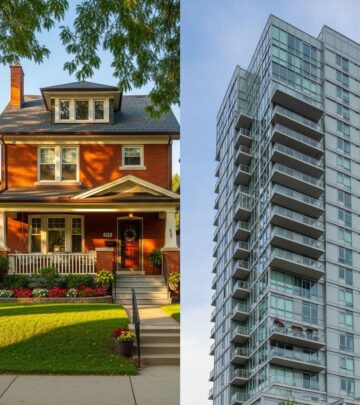
A condominium (condo) is a unit in a building or community where you own the interior of your unit and share ownership of common areas such as hallways, lobbies, and amenities.
Pros of buying a condo
- Lower entry price in many markets: Condos often cost less than similar-sized townhouses or single-family homes in the same area, which can make them attractive to first-time buyers.
- Reduced exterior maintenance: The homeowners association (HOA) typically handles exterior maintenance, landscaping, and common-area repairs, which saves you time and reduces surprise repair projects.
- Shared amenities: Many condo communities offer gyms, pools, security, common lounges, or coworking spaces that would be expensive to have in a standalone home.
- Urban or walkable locations: Condos are common in city centers or transit-rich neighborhoods, which can reduce transportation costs and commuting time.
Cons of buying a condo
- HOA fees: You pay monthly HOA dues on top of your mortgage, taxes, and insurance. These can significantly affect affordability and should be included when you calculate how much home you can afford.1
- HOA rules and restrictions: Rules can govern pets, rental policies, renovations, noise, and use of common areas. Review the HOA bylaws, budget, and reserve studies before you buy.
- Special assessments: If the HOA reserves are insufficient for major repairs (like roof or elevator replacements), owners may face large one-time or temporary additional charges.
- Financing and resale: Some lenders apply additional requirements to certain condo buildings, and resale value can depend heavily on the building’s condition, financial health, and HOA management.
Who a condo is best for
- First-time buyers who prioritize location and amenities over maximum space.
- People who want minimal responsibility for exterior maintenance.
- Downsizers transitioning from larger houses to a more convenient lifestyle.
Townhouses: A Middle Ground Between Condo and House
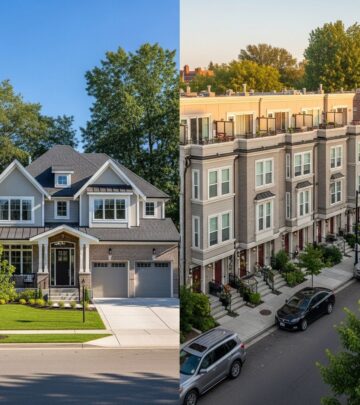
A townhouse is typically a multi-story home that shares one or more walls with neighboring units but includes ownership of the structure and sometimes the land it sits on.
Pros of buying a townhouse
- More space than most condos: Townhouses often include multiple bedrooms, private entrances, and sometimes small yards or patios.
- Often more affordable than single-family homes: Because you share walls, land costs can be lower than for a detached house in the same area.
- Some private outdoor space: Even a small yard or terrace can be valuable for pets, gardening, or outdoor dining.
- HOA may be lighter: Some townhome communities have lower HOA fees or limited shared amenities, which can keep monthly costs down compared with full-service condo buildings.
Cons of buying a townhouse
- Shared walls and noise: You may still experience noise from neighbors, and privacy is somewhat reduced compared with a detached home.
- Possible HOA rules and fees: Many townhouse communities still have HOAs that regulate exterior appearance, parking, and common areas.
- Some maintenance responsibility: Depending on the community, you may be responsible for your roof, exterior, or yard in addition to interior upkeep.
Who a townhouse is best for
- Buyers who want a compromise between a condo and a detached home.
- Households needing more space but still wanting relatively manageable costs.
- People who value a bit of outdoor space without taking on a large yard.
Single-Family Homes: Space, Privacy, and Control
A single-family home is a standalone property on its own lot, with no shared walls. You own both the structure and the land.
Pros of buying a single-family home
- Maximum privacy: No shared walls and typically more distance from neighbors.
- More control over the property: You can usually modify the home, add structures (subject to local zoning and permits), and design the yard to your preferences.
- Yard and outdoor space: A yard can be ideal for children, pets, gardening, and outdoor entertaining.
- Strong long-term equity potential in many markets: Detached homes often appreciate steadily over time, especially in desirable school districts and job centers.2
Cons of buying a single-family home
- Higher upfront cost: Detached homes usually have higher purchase prices than condos or townhouses in the same area.
- Higher ongoing costs: You are responsible for all maintenance, repairs, landscaping, and often higher utility costs due to larger space.
- Time and planning demands: Managing repairs, contractors, and long-term upkeep requires more time and effort.
Who a single-family home is best for
- Families or households who need multiple bedrooms, storage, or outdoor space.
- Buyers planning to stay put for a longer time horizon (often 7+ years).
- People who value control over their property and are comfortable budgeting for maintenance.
Multi-Family Properties: Live in One, Rent the Others
Multi-family homes include duplexes, triplexes, and four-unit properties where each unit has its own kitchen and bathroom. Many buyers live in one unit and rent out the others, using rental income to help cover the mortgage.
Pros of buying a multi-family home
- Rental income potential: Rent from other units can help pay the mortgage, taxes, and insurance. Lenders often consider a portion of projected rental income when evaluating your application for certain loan programs.3
- Lower-cost entry into real estate investing: Owning a small multi-unit building can be a practical first step into property investment.
- Owner-occupied financing options: In many cases, you can still use primary-residence mortgage products (such as FHA, VA, or conventional loans) if you live in one of the units.
Cons of buying a multi-family home
- Landlord responsibilities: You are responsible for tenant screening, leases, repairs, and compliance with local landlord-tenant laws.
- More complex cash flow and budgeting: You must account for vacancy risk, repair reserves, and potential legal costs.
- Less privacy: Living close to your tenants can blur the line between home life and business.
Who a multi-family property is best for
- Buyers willing to act as landlords in exchange for lower net housing costs.
- People interested in real estate investing but still wanting to occupy one unit.
- Households comfortable with shared spaces and more complex budgeting.
How Your Mortgage Affects the Home You Can Buy
The type and size of mortgage you qualify for will help determine which home types are realistic for your budget. Lenders typically look at your income, debts, credit score, and down payment to calculate how much you can borrow and what monthly payment you can sustain.4
Key affordability factors
- Debt-to-income (DTI) ratio: Lenders compare your total monthly debt payments (including the new mortgage) to your gross monthly income. Many conventional lenders look for a DTI ratio at or below about 43%, though some programs allow higher.5
- Credit score: Higher credit scores generally unlock better interest rates, which can significantly lower your monthly payment and total interest paid over the life of the loan.5
- Down payment: A larger down payment reduces the loan amount and can help you avoid private mortgage insurance (PMI) on conventional loans when you reach at least 20% equity.4
- Property type: Some loan programs have stricter rules or extra documentation for condos or multi-family properties, which can affect approval and interest rates.
Common mortgage options by home type
| Home Type | Typical Mortgage Options | Notes |
|---|---|---|
| Condo | Conventional, FHA, VA (if project is approved) | Building/HOA must meet lender and program requirements. |
| Townhouse | Conventional, FHA, VA, USDA (in eligible areas) | Financing often similar to single-family if you own the land. |
| Single-family home | Conventional, FHA, VA, USDA (eligible rural/suburban areas) | Typically the broadest range of mortgage options. |
| Multi-family (2–4 units) | Conventional, FHA, VA (if owner-occupied) | Rental income may partially count toward qualifying income. |
Location, Commute, and Lifestyle Trade-Offs
The same budget can buy very different homes in different neighborhoods. Instead of focusing only on square footage, weigh the trade-offs between location, lifestyle, and future resale value.
Location factors to consider
- Commute and transportation: Shorter commutes can save time and money, especially if you can rely on public transit.
- School quality: For current or future parents, school district ratings can be crucial and may affect long-term property values.2
- Walkability and amenities: Proximity to grocery stores, parks, healthcare, and recreation can improve everyday quality of life.
- Local taxes and insurance costs: Property tax rates and homeowners insurance premiums vary widely by location and can significantly affect your monthly payment.
Maintenance: Time vs. Money
Every home requires maintenance, but the amount of work you personally handle versus what you outsource or share varies by property type.
Maintenance expectations by home type
- Condos: Interior upkeep is your responsibility; exterior, roof, and common areas are managed by the HOA and funded through dues and assessments.
- Townhouses: Interior is your responsibility; exterior responsibility varies by community—some HOAs cover roofs and exteriors, others do not.
- Single-family homes: You handle or pay for all maintenance, including roof, siding, yard, and major systems like HVAC, plumbing, and electrical.
- Multi-family properties: You maintain your home plus other units and shared spaces; you must also respond to tenant repair requests.
Experts often recommend setting aside around 1% of the home’s value each year for maintenance and repairs, though older homes or harsh climates may require more.2
Thinking Long Term: Resale and Life Changes
Even if you do not plan to move soon, it is wise to consider how easy it will be to sell or rent your home in the future if your needs change.
Future-focused questions
- Is this area likely to see steady demand (jobs, schools, infrastructure)?
- Could I rent this home out if I needed to relocate quickly?
- Does the property type appeal to a broad pool of buyers (for example, families, professionals, or downsizers)?
- Are there any red flags, such as an unstable HOA, deferred building maintenance, or local zoning changes?
Frequently Asked Questions (FAQs)
Q: How do I decide between a condo and a house as a first-time buyer?
A: Start by comparing total monthly costs, not just listing prices. Include HOA fees, property taxes, insurance, utilities, and estimated maintenance. If you prioritize location and low maintenance and are comfortable with rules and fees, a condo can be a good fit. If you want more privacy, a yard, and control over your property—and can budget for higher maintenance—a single-family home may be better.
Q: Are HOA fees worth it?
A: HOA fees can be worthwhile if they cover meaningful amenities and major exterior maintenance you would otherwise pay for separately. Review the HOA budget, reserve fund, and rules. Well-managed associations with adequate reserves may help preserve property values, while poorly funded HOAs can lead to surprise special assessments.
Q: Should I consider buying a multi-family property for my first home?
A: It can be a smart strategy if you are prepared to be a landlord. Living in one unit and renting the others can lower your net housing costs and help you build equity faster, but you must be comfortable managing tenants, following local laws, and budgeting for repairs and vacancies.
Q: How much should I budget for home maintenance?
A: A common rule of thumb is about 1% of the home’s value per year for maintenance and repairs, though this can vary based on age, condition, and climate. Newer condos may require less interior maintenance early on but could face larger building-related costs later if reserves are insufficient.
Q: Does the type of home I buy affect my mortgage rate?
A: Your credit profile, down payment, and overall risk profile are usually bigger drivers of your rate than property type. However, some lenders and loan programs have additional guidelines for condos or multi-family properties, which can affect approval and, in some cases, pricing. It is important to compare offers from multiple lenders and share accurate details about the property you plan to buy.
References
- Consumer’s Guide to Mortgage-Related Costs — Consumer Financial Protection Bureau. 2024-03-01. https://www.consumerfinance.gov/owning-a-home/loan-options/compare-options/
- Buying a Home — U.S. Department of Housing and Urban Development (HUD). 2023-06-15. https://www.hud.gov/topics/buying_a_home
- FHA Single Family Housing Policy Handbook (4000.1) — U.S. Department of Housing and Urban Development. 2023-10-31. https://www.hud.gov/program_offices/housing/sfh/handbook_4000-1
- Condominiums — Federal Housing Administration (FHA) / HUD. 2023-09-20. https://www.hud.gov/program_offices/housing/sfh/condo
- Ability-to-Repay and Qualified Mortgage Rule — Consumer Financial Protection Bureau. 2023-11-10. https://www.consumerfinance.gov/compliance/compliance-resources/mortgage-resources/ability-repay-and-qualified-mortgage-rule/
Similar Articles








Read full bio of medha deb