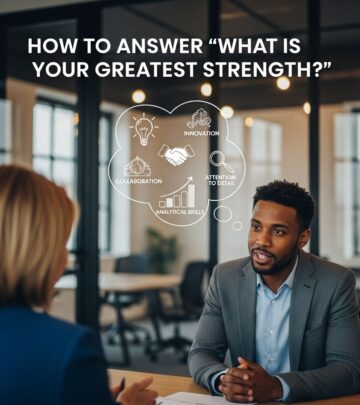
What Is Your Greatest Weakness Interview Question
Master the greatest weakness interview question with proven strategies and authentic examples.

What Is Your Greatest Weakness? How to Answer This Common Interview Question
The question “What is your greatest weakness?” strikes fear into the hearts of many job candidates. It feels like a trap—answer too honestly and you might disqualify yourself, but answer too cautiously and you’ll sound inauthentic. However, this question is one of the most predictable and answerable in any interview. With the right approach, you can turn this challenging question into an opportunity to demonstrate self-awareness, honesty, and commitment to professional growth.
Interviewers ask this question for a specific reason: they want to see how you think about yourself, whether you can be honest about areas for improvement, and most importantly, how you take action to overcome challenges. The key is understanding that employers aren’t expecting perfection—they’re expecting authenticity combined with a genuine effort to improve.
Why Interviewers Ask This Question
Before diving into how to answer, it’s important to understand what hiring managers are really looking for when they ask about your greatest weakness. This question reveals several critical insights about a candidate that resume and qualifications alone cannot provide.
First, interviewers are assessing your level of self-awareness. Can you honestly evaluate your own performance and identify areas where you need improvement? This demonstrates maturity and the ability to reflect on your work objectively. Second, they’re testing your authenticity. Candidates who give rehearsed, overly polished answers that disguise strengths as weaknesses come across as disingenuous. Interviewers can spot when someone says “I’m a perfectionist” or “I work too hard”—these answers feel inauthentic and actually raise red flags.
Third, this question helps employers understand how you handle challenges and setbacks. Do you run from problems or do you face them head-on? How do you develop as a professional? Employers want team members who recognize their limitations and actively work to overcome them, not those who pretend to have none.
The Three-Step Framework for Success
The most effective approach to answering this question follows a simple three-step framework that transforms any weakness into a compelling story of growth and development.
Step 1: Identify and State Your Weakness Clearly
The first step is choosing a genuine weakness that meets four critical criteria. Your weakness should be real—interviewers can immediately tell when you’re being dishonest. It should be manageable—not a core job requirement that would disqualify you from the position. It should be improvable—something you can realistically develop and improve over time. Finally, it should be professional—work-related rather than a personal character flaw.
Avoid the temptation to disguise strengths as weaknesses. When you say you’re a perfectionist or that you work too hard, interviewers recognize this immediately as inauthentic. Instead, choose something that’s genuinely been a challenge for you in your professional life. This could be public speaking, delegating tasks, asking for help, decision-making hesitancy, or managing multiple priorities.
Step 2: Provide Specific Context and Examples
Simply stating your weakness isn’t enough. You need to explain how this weakness has actually shown up in your work. Provide a brief, specific example that demonstrates several things: that you understand the real impact of this weakness, that you’ve experienced actual consequences that motivated you to change, and that you’re not just theorizing about improvement but have lived through it.
For instance, rather than saying “I sometimes have difficulty delegating,” explain a specific situation: “Earlier in my career, I was hesitant to delegate tasks, especially when I knew I could complete them efficiently myself. This led to me working long hours and becoming a bottleneck for my team’s productivity.” This specificity makes your answer credible and shows that you’ve genuinely reflected on your weaknesses.
Step 3: Detail Your Improvement Plan
This is where you truly shine and where your answer transforms from a liability into an asset. Explain the specific actions you’re taking to improve, the progress you’ve already made, and the tools or systems you use to manage this weakness. Be concrete and measurable when possible.
Your improvement strategy should include the methods you’re using to address the weakness and concrete examples of how this has already resulted in better outcomes. This demonstrates that you’re not just aware of your weaknesses—you’re actively working to overcome them and you’re already seeing results.
Examples for Different Career Stages
For Entry-Level Positions and New Graduates
Public Speaking Anxiety Example: “My greatest weakness is feeling nervous about public speaking, especially with large groups or senior stakeholders. During my internship, I had to present our team’s findings to department heads, and I was so anxious that I rushed through my slides and didn’t effectively communicate our key insights. Since then, I’ve joined a professional speaking club, practiced presentations more frequently, and taken courses on public speaking. I recently delivered a presentation to my class with much more confidence, and the feedback was significantly more positive.”
This example works for entry-level candidates because it addresses a common concern, shows genuine growth, and demonstrates initiative in improving through specific actions.
For Mid-Level Professionals
Delegation Difficulties Example: “I’ve recognized that my weakness is being hesitant to delegate tasks, especially when I know I can complete them efficiently myself. Earlier in my career, this led to me working long hours and becoming a bottleneck for my team’s productivity. I realized this was counterproductive to our team’s success. Now, I’m more deliberate about identifying tasks that team members can own. I’ve also created a delegation matrix that helps me identify which tasks to delegate based on team member development areas. As a result, my team has grown their skills, our project delivery has improved, and I’ve been able to focus on higher-level strategic work.”
Mid-level professionals benefit from examples showing leadership growth and team impact.
For Leadership Positions
Giving Difficult Feedback Example: “My greatest weakness is that I sometimes struggle with delivering difficult feedback, particularly early in working relationships. I value maintaining positive team dynamics and have sometimes delayed necessary conversations to avoid potential conflict. This became problematic when a team member’s performance issues went unaddressed for too long, ultimately affecting project deadlines and team morale. I realized that my avoidance of difficult conversations was actually causing more harm than good. I’ve since worked with an executive coach on this skill, conducted training on difficult conversations, and established clear feedback protocols. Now I address performance issues more promptly and constructively, and my team has responded positively to this more direct approach.”
For Sales Roles
Emotional Investment Example: “My weakness is that I sometimes become too emotionally invested in individual deals, which can affect my judgment and make rejection more difficult to handle. My passion for helping clients find the right solutions can sometimes cloud my ability to objectively assess deal viability. I’ve learned to manage this by implementing a decision-making framework that keeps me grounded in the numbers and client fit criteria. I also check my emotions by discussing deals with mentors before moving forward. This discipline has actually improved my close rate and reduced time wasted on poor-fit opportunities.”
Additional Examples for Common Weaknesses
Difficulty Saying No: “I’ve sometimes struggled with saying no to additional tasks, which could stretch me thin and affect my focus. I’ve been working on this by setting clearer boundaries and prioritizing my core responsibilities. By doing this, I’ve improved my productivity and my supervisor noted that my work quality has increased since I’m more focused.”
Over-Analysis and Decision Hesitancy: “Early in my career, I sometimes hesitated to make decisions because I wanted to gather all possible information first, which could delay progress. I’ve implemented a decision-making process that establishes clear deadlines for information gathering, helping me move forward with confidence while still being thorough.”
Perfectionism and Letting Go: “My greatest weakness is that I sometimes have trouble letting go of a project. I’m my own biggest critic and can always find something that needs improvement. To help myself improve, I give myself deadlines for revisions, which ensures I’m not spending excessive time on refinements at the expense of other priorities.”
Hesitancy to Speak Up: “My biggest weakness has been my hesitancy to speak up in group settings. I realized this was an area for improvement during meetings at my last position, where I sometimes held back valuable suggestions because I was concerned about how they would be received. I’ve been working to build my confidence in these settings by preparing talking points beforehand and reminding myself that my perspective has value to the team.”
What NOT to Say
Understanding what to avoid is just as important as knowing what to say. There are several categories of answers that will hurt your candidacy rather than help it.
Never claim you don’t have weaknesses. This comes across as either dishonest or lacking self-awareness. Everyone has areas for improvement—claiming otherwise raises serious doubts.
Avoid disguising strengths as weaknesses. Answers like “I’m a perfectionist,” “I work too hard,” “I’m too detail-oriented,” or “I care too much” signal that you’re not being authentic. Interviewers hear these responses regularly and recognize them as rehearsed, inauthentic answers.
Don’t mention weaknesses that are core to the job. If you’re interviewing for an accounting position, don’t say your weakness is numerical analysis. If it’s a customer service role, don’t mention difficulty with interpersonal communication.
Avoid vague or rambling answers. Be specific and concise. Candidates who go on and on about their weaknesses without structure lose the interviewer’s attention and fail to demonstrate the self-awareness the question is designed to assess.
How to Prepare Your Answer
Preparation is essential for answering this question effectively. Start by reflecting genuinely on areas where you’ve struggled in your professional life. Ask yourself what feedback you’ve received from managers and colleagues. Look at performance reviews and identify patterns. What tasks do you typically defer? What situations cause you stress? What do you need to work on to advance in your career?
Once you’ve identified several potential weaknesses, choose one that best fits the three-step framework while being appropriate for the position and company. Write out your answer using the structure: weakness statement, specific example showing real impact, and detailed improvement plan. Practice saying it aloud until it feels natural and conversational rather than scripted.
Remember that the goal is not to deliver a perfect answer but to sound like a real human being who has genuinely reflected on their development. Authenticity matters far more than polish.
Common Weaknesses By Role and Industry
| Role Type | Appropriate Weaknesses | Avoid Mentioning |
|---|---|---|
| Entry-Level/New Graduate | Public speaking, asking for help, limited experience with specific tools | Core technical skills, reliability, basic job functions |
| Management/Leadership | Difficult feedback, delegation, work-life balance | Decision-making, strategic thinking, team management fundamentals |
| Sales | Emotional investment, handling rejection, follow-up consistency | Relationship building, communication, persistence |
| Technical Roles | Specific technology, soft skills like presentation | Core technical competencies, problem-solving abilities |
Frequently Asked Questions
Q: Should I mention a weakness that I’m still working on, or only one I’ve overcome?
A: It’s actually better to mention a weakness that you’re actively working on rather than one you’ve completely overcome. This shows honesty and demonstrates your commitment to continuous improvement. However, you should have concrete evidence of progress and specific strategies in place, not just recognition of the problem.
Q: How honest should I be? Will being too honest hurt my chances?
A: Being honest is important, but being strategic is equally critical. Choose a genuine weakness that won’t disqualify you from the position and that you can frame constructively through your improvement efforts. Honesty combined with a growth mindset is what impresses interviewers.
Q: Can I mention different weaknesses to different employers?
A: Absolutely. You should tailor your weakness to be somewhat relevant to the specific role and company. However, it should still be a genuine weakness that you’ve actually worked on, not a fabricated one.
Q: What if the interviewer asks follow-up questions about my weakness?
A: Welcome follow-up questions—they give you an opportunity to provide more detail about your growth and improvement efforts. Be prepared to discuss specific examples of how you’ve applied your improvement strategies and what results you’ve achieved.
Q: How long should my answer be?
A: Aim for 60 to 90 seconds. This is long enough to cover the three-step framework thoroughly but short enough to keep the interviewer’s attention. Practice timing yourself during preparation.
Q: Should I ask the interviewer about their greatest weakness?
A: You can, but it’s not necessary unless the conversation naturally flows that direction. Focus on demonstrating your own self-awareness and growth rather than turning the question around.
Key Takeaways
The “greatest weakness” question doesn’t have to be feared. By following the three-step framework—identifying a real but manageable weakness, providing specific context, and detailing your improvement plan—you can transform this challenging question into an opportunity to showcase self-awareness and professional maturity.
Remember that interviewers want to see authentic, reflective candidates who recognize areas for growth and take concrete action to improve. They’re not looking for perfection; they’re looking for honesty combined with a genuine commitment to development. When you answer this question with authenticity and structure, you’ll stand out as a thoughtful, self-aware professional who takes their development seriously.
References
- How to Answer “What Is Your Greatest Weakness?” in an Interview — The Interview Guys. 2025. https://blog.theinterviewguys.com/what-is-your-greatest-weakness-15-example-answers/
- Weaknesses for Job Interviews: 10 Example Answers — Indeed Career Advice. 2025. https://www.indeed.com/career-advice/interviewing/list-of-example-weaknesses-for-interviewing
- 10 Examples of Strengths and Weaknesses for Job Interviews — Coursera. 2025. https://www.coursera.org/articles/strengths-and-weaknesses-interview
Similar Articles








Read full bio of Sneha Tete