What Is Whipsaw in Investing: Definition and Examples
Understanding whipsaw in investing: Learn how sudden price reversals affect your trading strategy.

What Is Whipsaw in Investing?
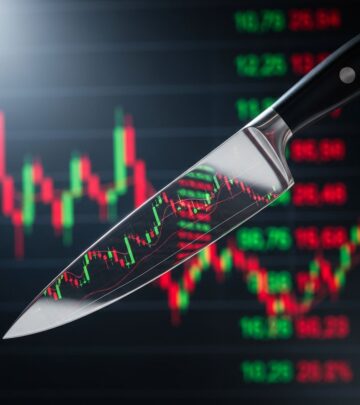
Whipsaw in investing refers to a sudden price movement in a security that goes against the prevailing trend, followed quickly by a sharp reversal in the opposite direction. The term originates from the back-and-forth cutting motion of a lumberjack’s saw, which moves in and out rapidly. In the financial markets, whipsaw describes a similarly abrupt and volatile price action that can catch traders off-guard and result in significant losses. When you open a trading position expecting the price to move in one direction, only to have it suddenly reverse course, you’ve experienced a whipsaw.
Unlike typical price corrections or reversals, whipsaw is characterized by the timing of the movement relative to when a trader opens their position. The reversal happens shortly after the trader commits capital, making it particularly frustrating and costly. This phenomenon is most common in volatile market conditions where price movements are sudden, unexplained, and often driven by panic selling or irrational exuberance.
Understanding How Whipsaw Works
Whipsaw occurs when a trader’s position is immediately contradicted by the market. The mechanics are straightforward but painful: you identify what you believe is a clear trend, open a position aligned with that trend, but then the market reverses sharply before your thesis has time to play out. This creates a situation where your profit expectations are dashed or your losses mount quickly.
The process typically unfolds in three stages:
- You identify a trend and open a position (either long or short)
- The market initially moves in your expected direction
- The momentum suddenly reverses, moving sharply against your position
Two primary types of whipsaw movements exist in trading. A bullish whipsaw occurs when an asset’s price rises sharply, prompting traders to buy with the expectation of continued gains, only to have the price suddenly fall. Conversely, a bearish whipsaw happens when traders short a falling asset expecting further declines, but the price unexpectedly rises instead.
Real-World Examples of Whipsaw
Example 1: Long Position Whipsaw
Imagine you’ve observed that the FTSE 100 index has been rising consistently over several weeks. Based on this upward trend, you decide to open a long position, betting that the index will continue climbing. Initially, your analysis appears correct—the index continues to rise after you enter. However, without warning, the momentum reverses sharply, and the index begins falling rapidly. Since you’ve gone long on the expectation of continued price appreciation, this sudden reversal means you lose a portion of your profits or incur an outright loss.
Example 2: Technology Stock Earnings Announcement
Consider a blue-chip technology company like Apple that announces better-than-expected earnings. The stock price jumps immediately higher in after-hours trading, and traders rush to buy shares expecting the rally to continue into the next trading day. However, as the trading session progresses, profit-taking accelerates, and the stock price suddenly reverses course, falling sharply. Traders who bought anticipating further gains find themselves facing significant losses as the stock corrects.
Example 3: Short Position Whipsaw
Alternatively, suppose you short a stock (XYZ) because you believe its price will continue falling after an initial decline. The stock does fall further at first, and your short position is profitable. Suddenly, however, buyer interest emerges, and the price reverses sharply upward. Because you’re short, this reversal causes your losses to mount quickly, and you may be forced to cover at a loss to prevent further damage.
Why Whipsaw Happens
Several market conditions and behavioral factors contribute to whipsaw events. Understanding these causes can help traders recognize when whipsaws are likely to occur.
Market Volatility and Uncertainty
Whipsaws are most common in highly volatile market environments where price movements are sudden and lack clear fundamental drivers. During periods of economic uncertainty, geopolitical tension, or major news events, prices can swing wildly as different market participants interpret information differently.
Overbought and Oversold Conditions
When assets trade in overbought or oversold territory, technical indicators often signal a reversal. However, prices sometimes continue in the original direction despite these signals, creating a whipsaw as traders who acted on the indicators find themselves on the wrong side of a continued trend. Conversely, when the trend does reverse, those who didn’t anticipate it quickly enough experience losses.
Irrational Exuberance
During periods of irrational exuberance, traders become convinced that a bullish or bearish run will last forever. This excessive confidence can lead to overextended positions that are vulnerable to sudden reversals when reality reasserts itself. A minor piece of negative news can trigger sharp reversals that whipsaw overly leveraged traders.
Threshold-Based Trading Systems
Automated trading systems and tactical investing strategies that rely on defined thresholds and flip points can create whipsaws when price movements cross these thresholds, triggering position changes. When the market reverses shortly after these system-generated trades are executed, both the position change and the reversal combine to create losses.
The Impact of Whipsaw on Different Traders
Day Traders and Short-Term Traders
Day traders and short-term traders are most vulnerable to whipsaw events. Because they operate on shorter timeframes and make more frequent trades, they encounter more potential whipsaw scenarios. The impact can be particularly severe because these traders often use leverage, amplifying both gains and losses.
Long-Term Investors
Long-term investors with extended investment horizons are the least affected by whipsaw patterns. Short-term volatility and sudden price reversals have minimal impact on their longer-term returns, as they maintain their positions through temporary market dislocations. For these investors, whipsaws are merely noise in the broader investment journey.
Tactical Investors
Tactical investors who frequently adjust their positions based on market conditions occupy a middle ground. While they can potentially outperform the market by reducing drawdowns and taking advantage of market declines, they face the risk of whipsaw losses when their frequent position changes occur at inopportune times.
Strategies to Avoid and Mitigate Whipsaw
Conduct Thorough Pre-Entry Analysis
Before opening any position, identify overbought and oversold levels through comprehensive technical and fundamental analysis. Look for confluence between multiple indicators and price action patterns rather than relying on single signals. This increases the probability that your trade setup has merit and reduces the likelihood of falling victim to a whipsaw.
Use Appropriate Stop-Loss Orders
Implement stop-loss orders at logical price levels to limit losses if a whipsaw occurs. Stop-loss orders ensure that losses are contained to a predetermined amount, protecting your capital from catastrophic drawdowns. However, place stops at levels that allow for normal market noise while protecting against actual reversals.
Diversify Your Portfolio
Spreading investments across multiple asset classes, sectors, and securities reduces the impact of whipsaw in any single position. Dollar-cost averaging (DCA), where you invest a fixed amount at regular intervals regardless of price, can help reduce the risk of deploying all capital at the moment of a whipsaw.
Manage Position Sizing
Never risk an excessive percentage of your capital on a single trade. Proper position sizing ensures that even if a whipsaw occurs, the damage to your overall portfolio is manageable. A common guideline is to risk no more than 1-2% of your total capital on any single trade.
Understand Market Context
Be aware of the broader market environment and economic calendar. Knowing when major economic data is scheduled to be released helps you avoid opening positions just before these events, when whipsaws are most likely to occur due to unexpected market reactions.
Adopt a Buy-and-Hold Approach
The buy-and-hold method of portfolio management essentially eliminates whipsaw because there are no threshold changes that trigger position switches. While this approach prevents whipsaw losses, it also prevents traders from playing both sides of the market and typically results in larger drawdowns during market crashes.
Whipsaw in Different Market Conditions
Whipsaw events are not uniform across all market environments. Their frequency and severity vary significantly based on the level of market stress and volatility.
Extremely Volatile Markets: In fragile, highly volatile markets, whipsawing patterns are frequently observed, particularly during sudden reversals of market direction. These are periods to exercise extreme caution and tighter risk management.
Normal Market Conditions: In stable markets with clear trends, whipsaws are less frequent but still possible, particularly when overbought or oversold conditions extend further than expected.
Trend-Following Conditions: In strong trending markets, whipsaws may be less common because price momentum tends to be more sustained, though reversals can still occur at major support and resistance levels.
The Psychological Impact of Whipsaw
Beyond the financial impact, whipsaws can take a psychological toll on traders. Experiencing a whipsaw—particularly when you were right about the direction but wrong about the timing—can lead to frustration, reduced confidence, and poor decision-making on subsequent trades. Some traders respond by overtrading or taking excessive risks to recover losses, which typically compounds the problem.
Recognizing that whipsaws are an intrinsic part of market dynamics helps maintain emotional equilibrium. Even professional traders and well-designed systems experience whipsaws. The key is managing them through position sizing, diversification, and appropriate stop-loss levels rather than trying to eliminate them entirely.
Frequently Asked Questions About Whipsaw
Q: Is whipsaw the same as a market reversal?
A: No, whipsaw is different from a standard reversal. While reversals can occur at any time and represent a change in trend direction, whipsaw specifically refers to a sharp reversal that occurs shortly after a trader opens a position, catching them off-guard and typically resulting in losses.
Q: Can whipsaw be completely eliminated?
A: Whipsaw cannot be completely eliminated, but it can be minimized through proper analysis, position sizing, stop-loss placement, and understanding when market conditions favor whipsaw events. Buy-and-hold investors avoid whipsaws entirely by not making tactical position changes.
Q: What is the relationship between whipsaw and leverage?
A: Leverage amplifies the impact of whipsaws. Traders using leverage experience larger losses during whipsaw events because the price movement is magnified. This makes proper position sizing and risk management even more critical for leveraged traders.
Q: Are whipsaws more common in certain markets?
A: Yes, whipsaws are more common in highly volatile markets and in assets with lower liquidity, where price movements can be more extreme. They’re also more frequent around major economic announcements, earnings releases, and during periods of market stress.
Q: How can I identify when a whipsaw is likely to occur?
A: While whipsaws cannot be predicted with certainty, they’re more likely when assets are overbought or oversold, when trading around major economic events, or when market sentiment is extreme. Analyzing volume patterns and market breadth can provide clues about potential reversals.
Q: Should I avoid trading during volatile periods to prevent whipsaws?
A: Many traders reduce their position sizes during highly volatile periods rather than avoiding trading entirely. If you do trade volatile markets, use tighter stop-losses, smaller position sizes, and avoid using leverage to protect yourself from whipsaw losses.
References
- What is Whipsaw in Trading and How Does it Work? — IG International. 2024. https://www.ig.com/en/trading-strategies/what-is-whipsaw-in-trading-and-how-does-it-work–200828
- What is Whipsaw? Causes, Impact, FAQ, Examples — POEMS Singapore. 2024. https://www.poems.com.sg/glossary/trading-terms/whipsaw/
- What is Whipsaw? — Kotak Securities. 2024. https://www.kotaksecurities.com/investing-guide/share-market/what-is-whipsaw/
- Tactical Investing WHIPSAW! – What is it, how to reduce it? — Volatility Trading Strategies. 2024. https://www.volatilitytradingstrategies.com/blog/article-626-tactical-investing-whipsaw-what-is-it-how-to-reduce-it
- Whipsaw: A Comprehensive Guide to Its Legal Meaning and Impact — USLegalForms. 2024. https://legal-resources.uslegalforms.com/w/whipsaw
Similar Articles








Read full bio of medha deb