What Is Trade Policy: Definition, Types & Impact
Understanding trade policy: How governments regulate imports, exports, and international commerce to shape economies.
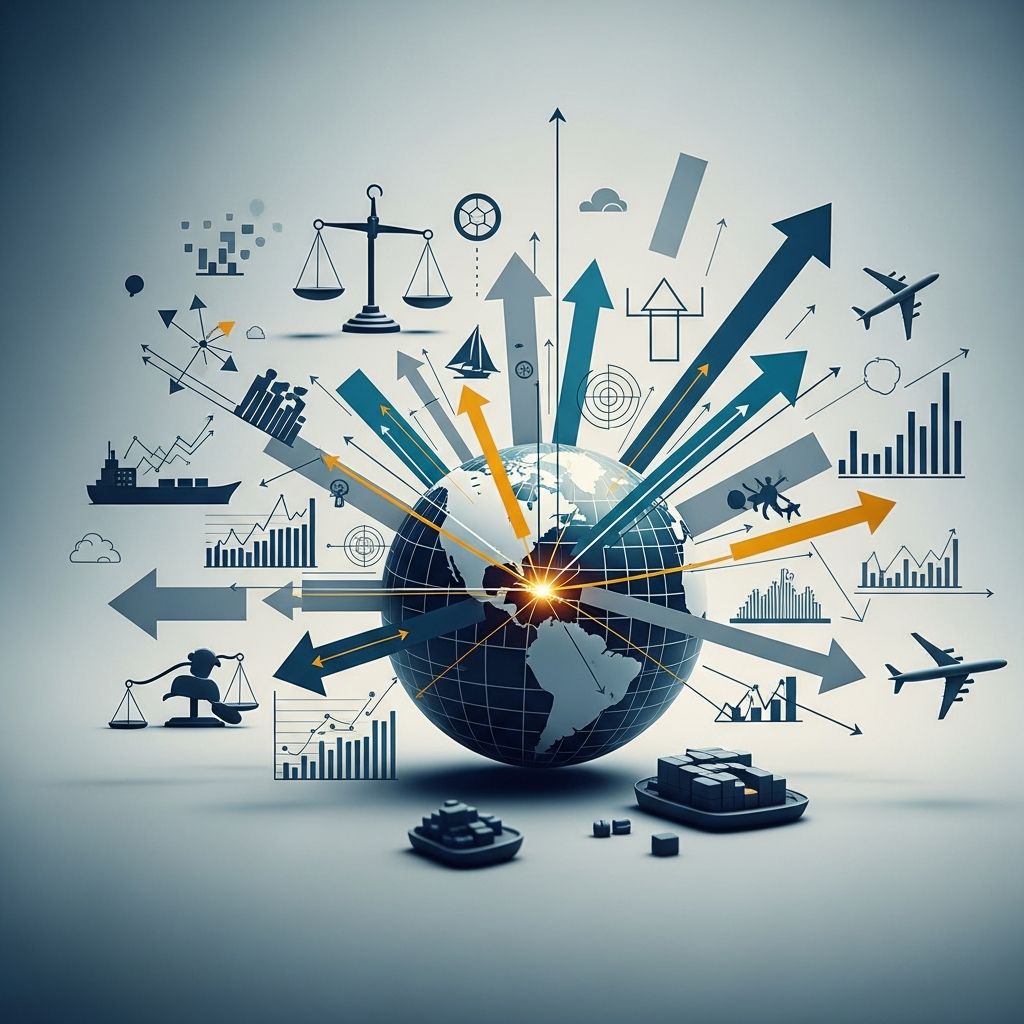
What Is Trade Policy?
Trade policy refers to the set of rules, regulations, and strategies that a government implements to guide its international trade and commerce. It encompasses how a country manages imports and exports to support its domestic economy, protect industries, and achieve economic objectives. Trade policies shape access to goods, stabilize prices, protect domestic industries, and ensure fair international trade through agreements and regulations.
Understanding trade policy is essential for grasping how nations interact in the global marketplace. These policies determine how easy or difficult it is for businesses to buy and sell goods and services across borders, affecting both producers and consumers significantly. Trade policies can include various tools such as tariffs (taxes on imported goods), import quotas (limits on the amount of goods that can be imported), subsidies, and trade agreements that either facilitate or restrict international commerce.
Understanding the Spectrum of Trade Policies
In modern economies, trade policies exist on a spectrum ranging from completely free trade to heavy protectionism. On one end of this spectrum lies free trade, where there are no government restrictions on trade, allowing goods and services to move freely across borders. On the other end sits protectionism, where governments set trade restrictions to help domestic industries compete against foreign competitors.
The choice between these approaches depends on a country’s economic priorities and political objectives. While economists generally prefer free trade policies because they theorize that economies will naturally strive toward equilibrium and efficiency, many governments employ protectionist measures to shield vulnerable domestic industries from foreign competition. Understanding where a country positions itself on this spectrum helps explain its approach to international commerce and its relationships with trading partners.
Key Trade Policy Instruments and Tools
Governments employ several distinct instruments to implement their trade policies effectively. These tools allow nations to protect domestic industries, manage trade deficits, or promote specific economic objectives.
Tariffs
Tariffs are taxes imposed on imported goods that increase their price in the domestic market. By making foreign products more expensive, tariffs make domestically produced goods more competitive. For example, if foreign steel is significantly cheaper than domestically produced steel, a government might impose a tariff on steel imports to protect the domestic steel industry. However, tariffs also increase prices for consumers and may lead to higher costs for businesses that use imported materials in their production processes.
Import Quotas
An import quota is a trade restriction that limits the total quantity or value of a specific good that can be imported into a country. Quotas work by directly controlling supply rather than through price mechanisms like tariffs. For instance, if a government wants to protect its domestic steel industry, it might establish a quota limiting the total amount of steel that can be imported during a specific period. This creates a shortage in the domestic market, which typically drives up prices and protects domestic producers from foreign competition.
Subsidies and Financial Support
Governments can support domestic industries through subsidies, which are financial benefits provided to producers to make their products more competitive. Export credit subsidies help domestic companies secure financing for international sales, making their products more attractive to foreign buyers. These subsidies can take various forms, including tax breaks, direct payments, or favorable loan terms.
Trade Agreements
Trade agreements are negotiated arrangements between countries designed to facilitate commerce and reduce trade barriers. These agreements can be multilateral (involving many countries), regional, or bilateral (between two countries). Free trade agreements allow goods from participating countries to be imported without certain restrictions like tariffs or quotas, keeping domestic prices low and stable by increasing available supply.
Types of Trade Policies
Different countries employ various trade policy approaches based on their economic development stage, natural resources, and strategic objectives.
Free Trade Policy
Free trade policies minimize government restrictions on imports and exports, allowing market forces to determine trade flows. Under free trade, imports are seen to benefit the economy by increasing the selection of goods available to consumers, lowering prices, improving economic efficiency, and creating global price stability. Countries that embrace free trade policies typically experience greater integration with global markets and may specialize in industries where they have competitive advantages.
Protectionist Trade Policy
Protectionist policies restrict trade to shield domestic industries from foreign competition. When trade policy is used to restrict trade like under protectionism, domestic producers may benefit, but consumers pay the price through higher costs. Protectionism is associated with increasing the price of the protected good because it creates a shortage in the domestic market. For example, India’s imposition of higher import duties on certain goods to promote “Make in India” represents a form of protectionism aimed at building domestic manufacturing capacity.
Import Substitution
Import substitution is a trade policy strategy where governments encourage domestic production of goods that were previously imported. This approach aims to build self-reliance and develop domestic industries. India’s early economic policies post-independence emphasized import substitution to build self-sufficiency and reduce dependence on foreign goods.
Export Promotion
Some governments focus on policies that encourage and facilitate exports. Special Economic Zones (SEZs) represent one such tool, providing businesses with relaxed regulations, tax benefits, and infrastructure support to boost exports. These zones create favorable conditions for export-oriented industries.
Import and Export Considerations
Trade policies must address both sides of international commerce—imports and exports—each with distinct policy considerations.
Import Policy Rationale
Governments establish trade policies for importing goods and services for several reasons. First, under free trade, imports increase the selection of goods available to consumers and lower prices. A trade policy supporting imports might be a free trade agreement between two or more nations that allows goods to be imported without restrictions like tariffs or quotas. However, governments might also restrict imports when domestic industries face challenges from foreign competition. If the domestic steel industry suffers from low prices due to affordable foreign steel, the government might impose tariffs or quotas to protect it.
Export Policy Considerations
Governments may employ protectionist trade policies on exports in specific situations. When a natural resource is being depleted or the domestic population cannot consume all produced goods because they are being exported, restrictions become necessary. If foreign prices for a good like corn are more profitable than what domestic consumers can pay, producers will export it to raise profit margins. This creates a shortage in the domestic market. The government can restrict export amounts to benefit domestic consumers and ensure sufficient domestic supply.
Advanced Trade Policy Mechanisms
Beyond basic tariffs and quotas, governments employ sophisticated policy tools to achieve their trade objectives.
Local Content Requirements
Local Content Requirements (LCR) are trade policies that mandate that a portion of goods manufactured by producers be produced domestically. This policy serves to reduce a country’s dependence on international trade and provides opportunities for domestic production. For example, a government might require that 40% of an automobile’s components be manufactured domestically.
Other Trade Policy Instruments
Governments utilize additional trade policies such as export credit subsidies, red-tape barriers (complex regulatory requirements), and government procurement preferences that serve to benefit citizens economically or protect their health and safety. These policies can be subtle but effective in influencing trade flows.
The Role of International Organizations
Foreign trade policy as it relates to the international market should follow agreed-upon principles decided by multiple nations that are part of international organizations like the World Trade Organization (WTO) and the International Monetary Fund (IMF). These organizations were created to support international trade in a fair and sustainable way that benefits all nations involved.
If a country’s trade policy is too drastic or devastating to another nation’s economy, the WTO may intervene as a mediator to keep peace and reach solutions. For example, when the Trump Administration placed approximately $200 billion worth of tariffs on Chinese imports, the WTO stated that the tariffs violated global trade body rules because they were only against China and it could not be proven that the domestic industry benefited from the tariffs. Foreign trade policies are meant to reduce barriers between trading nations, produce non-discriminatory trading practices, and make the trading process more transparent through international organizations like the WTO.
Regional and Bilateral Trade Agreements
Trade policy operates at multiple levels, from national frameworks to regional and bilateral arrangements. Regional trade agreements like those within the European Union foster seamless trade among member nations. Bilateral free trade agreements, such as those between the United States and specific countries, involve two nations agreeing to eliminate trade barriers. Preferential trade agreements are another type where countries make deals benefiting specific partners. These agreements can be quicker to implement than broad international agreements but may be criticized for being unfair to smaller countries or hindering broader trade negotiations.
Trade Policy Evolution and Administration Changes
Trade policy priorities shift based on political leadership and economic conditions. During the Trump Administration, the main purpose of U.S. trade policy was protecting domestic industries through the use of tariffs. In contrast, the Biden Administration has taken a different approach, aiming to reduce or remove some tariffs imposed during the Trump era and incorporating steps to address climate change. These shifts demonstrate how trade policy reflects broader political and economic philosophies.
Impact of Trade Policy on Domestic Markets
Solid trade policies keep international commerce running smoothly and efficiently. Trade policies support domestic markets by influencing prices through the regulation of imports and exports. Policies that lean toward free trade are generally preferred by economists because they theorize that economies will strive toward equilibrium and efficiency. Conversely, protectionist policies are often criticized because they disrupt free trade principles and interfere with the natural flow of the global economy.
Understanding how trade policies affect prices helps explain consumer costs and industry competitiveness. When governments restrict imports through tariffs or quotas, prices typically rise, benefiting domestic producers but hurting consumers. When governments encourage free trade, increased competition generally leads to lower prices and greater consumer choice.
Frequently Asked Questions About Trade Policy
Q: What is the primary purpose of trade policy?
A: The primary purpose of trade policy is to regulate imports and exports to benefit the domestic economy while achieving broader economic, political, and social objectives. This may include protecting domestic industries, stabilizing prices, ensuring access to goods, or promoting fair international trade.
Q: What is the difference between tariffs and quotas?
A: Tariffs are taxes on imported goods that increase their price, while quotas directly limit the quantity or value of goods that can be imported. Both aim to protect domestic industries, but they operate through different mechanisms—tariffs work through price increases, while quotas work through supply restrictions.
Q: How does protectionism differ from free trade?
A: Protectionism involves government restrictions to help domestic industries compete against foreign competition, while free trade removes government barriers and allows market forces to determine trade flows. Protectionism typically raises prices for consumers, while free trade generally lowers prices and increases consumer choice.
Q: What role does the WTO play in trade policy?
A: The World Trade Organization (WTO) serves as an international organization that supports fair and sustainable international trade. The WTO can intervene when a country’s trade policy is excessively harmful to other nations’ economies and acts as a mediator to resolve trade disputes and enforce agreed-upon principles.
Q: Why do governments use export restrictions?
A: Governments restrict exports to protect domestic consumers and ensure sufficient domestic supply, particularly when natural resources are being depleted or when foreign prices make exports more profitable than domestic consumption. Export restrictions help balance supply and maintain price stability in domestic markets.
Q: How do trade agreements affect trade policy?
A: Trade agreements establish frameworks between countries that can facilitate commerce by reducing trade barriers like tariffs and quotas. These agreements may be multilateral, regional, or bilateral, and they help shape the trading landscape by creating predictable rules for international commerce.
Q: What are Local Content Requirements?
A: Local Content Requirements (LCR) mandate that a portion of goods manufactured by producers must be produced domestically. This policy reduces dependence on international trade and provides opportunities for domestic production, helping build self-sufficiency in specific industries.
References
- Trade Policy: Definition, Types & Instruments — StudySmarter. 2025. https://www.studysmarter.co.uk/explanations/microeconomics/market-efficiency/trade-policy/
- Trade Policy – Intro to Business — Fiveable. 2025. https://fiveable.me/key-terms/intro-to-business/trade-policy
- Trade Policy, Meaning, Types, and Components — Physics Wallah. 2025. https://www.pw.live/ca/exams/trade-policy
- What Is Trade Policy? Understanding Trade Policy — County Office. February 6, 2025. https://www.youtube.com/watch?v=wOjUujf9HJ8
- What Is Trade Policy? — Council on Foreign Relations. February 6, 2025. https://education.cfr.org/learn/reading/what-trade-policy
- U.S. Trade Policy: Background and Current Issues — Congressional Research Service, U.S. Congress. https://www.congress.gov/crs-product/IF10156
Similar Articles








Read full bio of Sneha Tete