What Is the Euro? Currency of Europe Explained
Understand the euro: Europe's common currency, its history, benefits, and role in the global economy.

What Is the Euro? Understanding Europe’s Common Currency
The euro (symbol: €; currency code: EUR) is the official currency of 20 of the 27 member states of the European Union, making it one of the world’s most significant currencies. Established as a monetary union, the euro represents one of the most ambitious economic integration projects in history. This common currency facilitates trade, investment, and financial cooperation across the eurozone while streamlining cross-border transactions for businesses and consumers alike. Understanding the euro requires exploring its definition, administration, historical development, and the profound economic implications of adopting a unified currency across diverse European economies.
Definition and Basic Characteristics of the Euro
The euro functions as both a physical currency and an electronic medium of exchange. It is managed and administered by the European Central Bank (ECB) and the Eurosystem, which comprises the central banks of all eurozone countries. As an independent central bank, the ECB holds sole authority to set monetary policy for the entire eurozone, making it one of the most powerful financial institutions globally.
The Eurosystem participates in the printing, minting, and distribution of euro banknotes and coins in all member states, ensuring consistency and standardization across borders. Additionally, the Eurosystem operates the eurozone payment systems, facilitating seamless financial transactions across member nations. This centralized approach to currency management ensures monetary stability and consistent policy implementation throughout the region.
Historical Development and Adoption
The euro’s journey began with the Maastricht Treaty in 1992, which established the framework for Economic and Monetary Union (EMU). Initially launched as an electronic currency for financial transactions in 1999, the euro became tangible in citizens’ pockets on January 1, 2002, when physical banknotes and coins entered circulation. This transition from national currencies to the common euro marked a historic milestone in European integration, fundamentally reshaping commerce, travel, and financial relationships across the continent.
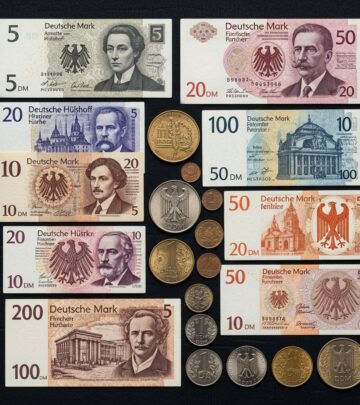
The introduction of the euro built upon the legacy of the Deutsche Mark, inheriting its status as the second most important reserve currency in the world. This institutional continuity provided credibility to the new currency and facilitated its acceptance in international markets. Today, the euro remains a critical component of global foreign exchange reserves, with emerging and developing economies holding larger proportions of euro reserves than advanced economies.
Eurozone Member States
The eurozone comprises 20 of the 27 European Union member states. These nations have relinquished their individual currencies in favor of the unified euro, creating an economic bloc with over 370 million citizens. The member states span diverse geographic regions, from the Mediterranean to the Baltic, representing varied economic structures and development levels. This geographic and economic diversity creates unique challenges for monetary policy, as a single interest rate must serve economies with different growth rates, inflation levels, and economic structures.
Not all EU members have adopted the euro. Some countries maintain their own currencies while remaining EU members, having either not yet met the convergence criteria established by the Maastricht Treaty or chosen to retain monetary independence. This creates a two-tier system within the European Union, with some nations operating within the eurozone while others maintain separate monetary policies.
Economic Benefits of the Euro
Reduced Transaction Costs
One of the most immediate benefits of euro adoption is the dramatic reduction in cross-border transaction costs. Before the single currency, businesses conducting transactions across borders faced significant expenses from currency conversions and exchange rate management. With the euro, these costs virtually disappeared, allowing larger banking firms to provide a wider array of services that can compete across and beyond the eurozone. This efficiency gain extended to consumers, who no longer needed to exchange currency when traveling between eurozone nations.
Financial Market Integration
The introduction of the euro significantly decreased the cost of trading bonds, equity, and banking assets within the eurozone. This integration transformed European financial markets, fostering greater cohesion in investment patterns. Eurozone countries now lend and borrow more extensively from each other than with non-eurozone partners, demonstrating the currency’s role in deepening financial integration. Banks, firms, and households gained the ability to invest more easily across borders, creating greater international risk-sharing and lower borrowing costs for European companies.
Price Convergence and Market Transparency
The common currency facilitates price transparency across borders. Differences in prices—particularly in price levels—tend to decrease due to the law of one price. When price differentials exist, arbitrage opportunities emerge, triggering speculative trade that ultimately equalizes prices. This transparency allows both customers and investors to allocate resources more efficiently, directing capital where it generates the greatest returns and reducing economic waste.
Lower Interest Rates and Debt Costs
A credible commitment to maintaining low inflation and stable debt reduces the risk that currency values will erode through inflation or default. This stability enables debt to be issued at lower nominal interest rates, benefiting both public and private borrowers. The euro’s reputation for stability has provided member nations and their corporations with access to cheaper financing, particularly important for smaller economies that previously faced higher borrowing costs due to currency risk premiums.
Monetary Policy Under the Euro
The ECB targets interest rates rather than exchange rates and generally does not intervene in foreign exchange markets. This approach stems from the Mundell-Fleming model, which demonstrates that central banks cannot simultaneously maintain both interest rate and exchange rate targets without capital controls. Following the Single European Act, the EU liberalized its capital markets, and with the ECB’s inflation-targeting mandate, the euro operates under a floating exchange rate regime.
This framework means that the euro’s value fluctuates based on market forces and economic fundamentals rather than through central bank intervention. The ECB’s independence ensures that monetary policy decisions rest on economic grounds rather than political pressure, enhancing credibility and policy effectiveness across the eurozone.
Challenges and Trade-offs
Loss of Monetary Policy Flexibility
Euro adoption requires member states to relinquish individual monetary policy tools. Countries can no longer adjust interest rates independently or use currency depreciation to enhance competitiveness. This limitation is particularly challenging for economies experiencing different growth rates or inflation levels, as they must accept a single monetary policy designed for the eurozone average. Smaller economies may find themselves disadvantaged when their specific conditions diverge from eurozone-wide conditions.
Currency Strength and Export Competitiveness
A structurally strong euro—maintained at lower inflation levels than the United States, United Kingdom, and China—creates higher costs for European products in international markets. From the perspective of major trading partners, the euro has become expensive, making European exports increasingly difficult to sell. This phenomenon reflects the challenge of maintaining price competitiveness when the currency reflects strong fundamental economic conditions.
Incomplete Architecture
The eurozone faces structural limitations stemming from the incomplete architecture of the Economic and Monetary Union. Key deficiencies include a limited pool of safe assets denominated in euros, underdeveloped payments systems, and the dominance of US- and UK-based banks and exchanges. Completing the Banking Union, finalizing backstops to the Single Resolution Fund, and implementing the European Deposit Insurance Scheme would strengthen financial stability and reduce bank exposure to sovereign risk.
The Euro’s International Role
The euro holds significant importance in global finance, serving as a reserve currency and medium for international transactions. Despite its relative youth compared to the US dollar, the euro has established itself as a major international currency. However, untapped potential remains for the euro to play a stronger international role. The benefits of expanded international use include lower exchange rate risk for private agents, lower hedging costs, and reduced funding costs for public and private debt issuers—an advantage sometimes called the “exorbitant privilege.”
Policymakers can strengthen Europe’s monetary sovereignty by enhancing the euro’s international appeal through improved economic fundamentals, strengthened institutional frameworks, and advanced financial infrastructures. Developing deeper capital markets and increasing the supply of euro-denominated safe assets would make the currency more attractive for international use and central bank reserves.
Digital Euro and Future Development
The European Central Bank is developing a digital euro to modernize the monetary system while maintaining the retail role of central bank money. A well-designed digital euro would safeguard monetary stability, prevent private payment monopolies, and serve as a symbol of European unity. Appropriately calibrated limits on digital euro holdings would provide sufficient digital cash for transactions while preventing excessive bank outflows or unsustainable central bank balance sheet expansion.
Frequently Asked Questions About the Euro
Q: How many countries use the euro?
A: Twenty of the 27 European Union member states officially use the euro as their currency, forming the eurozone and collectively representing a population exceeding 370 million people across diverse economies and regions.
Q: Who manages the euro?
A: The European Central Bank (ECB) and the Eurosystem manage the euro. The ECB holds sole authority for monetary policy decisions, while the Eurosystem handles printing, minting, and distribution of banknotes and coins across member states.
Q: What are the main benefits of using the euro?
A: Primary benefits include reduced transaction costs, financial market integration, increased price transparency, lower borrowing costs, and simplified cross-border commerce and travel for businesses and consumers throughout the eurozone.
Q: Does every EU country use the euro?
A: No. While 20 of 27 EU member states use the euro, seven countries maintain their own currencies. Some have not yet met convergence criteria, while others have chosen to retain monetary independence for strategic reasons.
Q: How does the euro affect inflation?
A: The ECB maintains inflation-targeting as its primary monetary policy objective. The common currency facilitates price transparency and convergence across borders, though individual member states cannot use inflation to address competitiveness or growth challenges independently.
Q: What is the eurozone?
A: The eurozone comprises the 20 EU member states that have adopted the euro as their official currency, forming an economic and monetary union governed by unified policies from the ECB and requiring coordination of fiscal policies among member governments.
Q: How stable is the euro?
A: The euro has demonstrated considerable stability through its commitment to low inflation and sound fiscal policies. The ECB’s independence ensures credible monetary policy, though structural challenges in the eurozone’s architecture occasionally create vulnerabilities requiring institutional reforms.
References
- Euro – Wikipedia — Wikimedia Foundation. 2024. https://en.wikipedia.org/wiki/Euro
- The euro: From monetary independence to monetary sovereignty — Centre for Economic Policy Research. 2017. https://cepr.org/voxeu/columns/euro-monetary-independence-monetary-sovereignty
- Why Europe Needs a Digital Euro — International Monetary Fund. 2025-09. https://www.imf.org/en/publications/fandd/issues/2025/09/point-of-view-why-europe-needs-a-digital-euro-philip-lane
- What is money? — European Central Bank. 2024. https://www.ecb.europa.eu/ecb-and-you/explainers/tell-me-more/html/what_is_money.en.html
- The euro: in our pockets for 20 years — Banque de France. 2022. https://www.banque-france.fr/en/publications-and-statistics/publications/euro-our-pockets-20-years
Similar Articles








Read full bio of medha deb