What Is the Business Cycle: Phases and Impact
Master the four phases of economic cycles and understand their impact on markets.
What Is the Business Cycle?
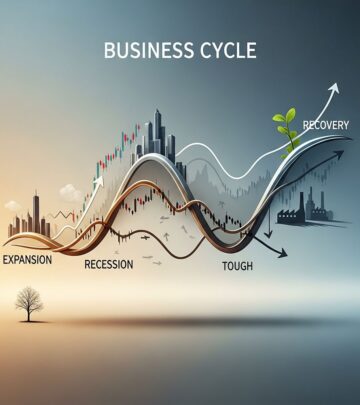
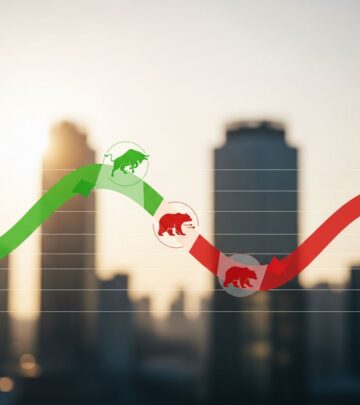
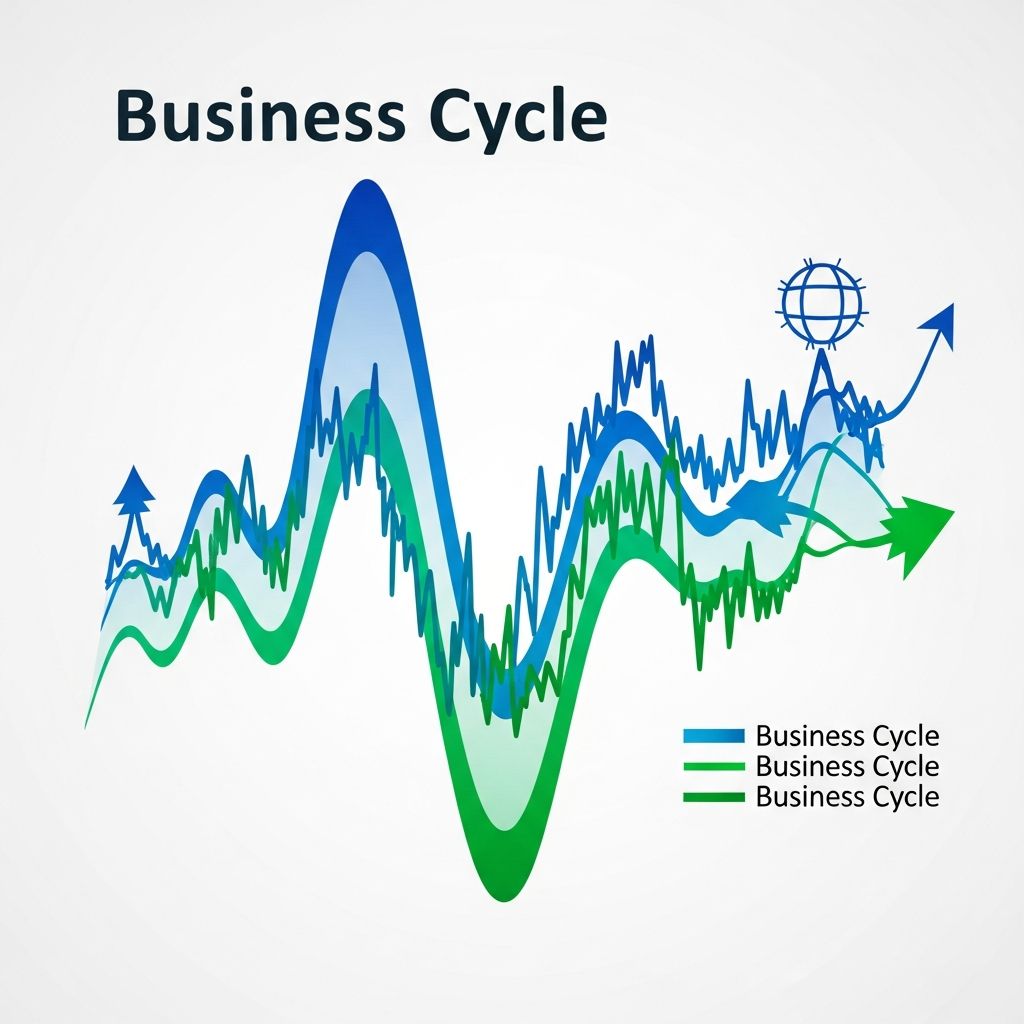
The business cycle, also known as an economic cycle, is the natural fluctuation of economic activity that occurs over time in a market economy. It represents the recurring pattern of expansion and contraction in economic growth, measured primarily by changes in real gross domestic product (GDP), employment, and consumer spending. These cycles are fundamental to how modern economies operate, creating periods of robust growth followed by periods of decline, then recovery, and eventual renewed expansion.
The business cycle is not a predictable, uniform pattern but rather a series of recurring fluctuations that have characterized economic history. Understanding the business cycle is essential for policymakers, business leaders, investors, and individuals making financial decisions. Each phase of the cycle presents distinct economic conditions, opportunities, and challenges that require different strategic approaches.
The Four Phases of the Business Cycle
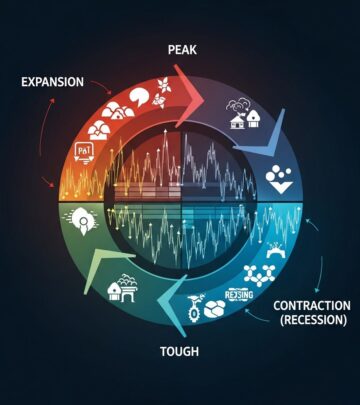
The business cycle consists of four distinct phases that occur sequentially and then repeat. Each phase has unique characteristics reflected in economic indicators such as GDP growth, employment rates, consumer confidence, and business investment.
1. Expansion Phase
Expansion is the first and often the longest phase of the business cycle, characterized by sustained economic growth and increased business activity. During this phase, real GDP rises, businesses expand operations, and economic activity accelerates quickly. Companies increase production to meet rising demand, and consumer spending grows broadly across the economy.
Key characteristics of the expansion phase include:
- Rising Employment: Businesses hire more workers to meet increasing demand, causing unemployment rates to fall steadily.
- Increased Consumer Spending: Consumers have greater confidence in the economy and spend more on goods and services, including housing and consumer durables.
- Business Investment: Companies invest in new projects, equipment, and infrastructure to support growth.
- Growing Corporate Profits: As sales increase and production efficiency improves, business profits rise substantially.
- Moderate Inflation: Prices begin to rise gradually as demand outpaces supply, though inflation typically remains moderate.
- Increased Credit Availability: Banks and lenders become more willing to extend credit as economic conditions improve.
During expansion, the inventory-to-sales ratio begins at normal levels from the recession period but gradually increases as firms boost production to meet rising demand. This phase continues as long as economic conditions remain favorable, with positive momentum building throughout the economy.
2. Peak Phase
The peak represents the highest point of the business cycle and marks the transition from expansion to contraction. At this stage, real economic stability has been achieved, with market penetration reaching significant levels and profits remaining strong. However, the peak is also the turning point where economic growth begins to slow and eventually decline.
Characteristics of the peak phase include:
- GDP Growth Plateaus: Economic output stops accelerating and reaches its maximum level before beginning to decline.
- Rising Costs: Production costs increase as businesses push operations to capacity limits and wages rise with tight labor markets.
- Increased Competition: Market saturation occurs as competitors enter the market, which begins to catch up in terms of market share and profitability.
- High Employment: The job market remains very tight with low unemployment rates and competitive wage pressures.
- Inventory Accumulation: Sales growth slows while production remains high, causing unsold inventories to accumulate and pushing the inventory-to-sales ratio above normal levels.
- Rising Interest Rates: Central banks often begin raising interest rates to control inflation, which dampens economic growth.
The peak phase is generally the shortest phase of the business cycle. The primary challenge during this stage is maintaining profitability and stability as competition intensifies. Business owners must recognize signs of decline early, including dwindling sales, increased customer churn, or rising operational costs, to position themselves for the contraction ahead.
3. Contraction Phase
Contraction, also called recession, is the phase where economic activity declines. Real GDP decreases, business activity slows, and economic growth becomes negative. This phase represents a significant shift from the optimistic conditions of expansion and peak periods.
Key indicators of the contraction phase are:
- Declining GDP: Real economic output falls, and the economy produces fewer goods and services.
- Rising Unemployment: Businesses lay off workers and reduce hiring to cut costs, causing unemployment rates to rise.
- Falling Consumer Spending: Consumer confidence drops as people become uncertain about their financial futures and reduce purchases.
- Declining Business Investment: Companies postpone expansion plans and capital investments due to reduced demand and uncertainty.
- Falling Corporate Profits: Businesses struggle with declining revenue and may operate at a loss.
- Reduced Credit Availability: Banks tighten lending standards and become less willing to extend credit.
- Rising Inventories: Unsold goods accumulate as demand weakens, putting downward pressure on prices.
A recession is formally defined using an informal rule of thumb: two consecutive quarters of negative real GDP growth. The contraction phase presents a challenging position for business owners, making it crucial to recognize decline signals early and implement strategies to either rebound effectively or minimize losses before the situation becomes more severe.
4. Trough Phase
The trough represents the lowest point of the business cycle, occurring after the contraction phase. It marks the bottom of economic activity before the economy begins to recover. At the trough, the economy has stopped declining but has not yet begun expanding.
Characteristics of the trough phase include:
- Lowest Economic Activity: GDP remains at its lowest level, and economic output has stabilized.
- High Unemployment: Joblessness remains elevated from the contraction phase, though layoffs may have stabilized.
- Low Consumer Confidence: Consumer and business sentiment remain pessimistic, but signs of stabilization may emerge.
- Low Inventory Levels: Businesses have worked through excess inventory accumulated during the peak and contraction phases.
- Reduced Prices: Deflation or very low inflation rates prevail as demand remains weak.
- Low Interest Rates: Central banks typically maintain low interest rates to stimulate economic activity.
The trough is characterized by enhanced operations through improved management practices and smart resource allocation. This stage may introduce mid-level managers who alleviate some burdens from business owners, allowing for more strategic focus on long-term objectives. Capital sources begin to diversify, encompassing customer payments, stakeholder investments, grants, and alternative business loans.
Recovery Phase: The Bridge to Expansion
Some economists identify a distinct recovery phase that bridges the trough and expansion phases. During early expansion or recovery, companies stop laying off workers, consumer and business spending slowly pick up, and inflation remains moderate. Businesses are typically cautious in hiring, so unemployment remains elevated despite the economy turning positive.
Recovery characteristics include:
- GDP Turns Positive: Economic output begins increasing after declining or remaining flat.
- Demand Pickup: Consumer and business demand begins to increase due to low prices and accumulated savings.
- Cautious Hiring: Businesses begin rehiring workers, but employment growth remains gradual.
- Rising Housing and Consumer Durables Demand: Sectors like housing and consumer durables typically see increased demand during recovery.
- Positive Economic Attitude: Consumer and business sentiment gradually improve as confidence returns.
Understanding Economic Indicators
To identify which phase of the business cycle the economy is currently in, economists and investors examine various economic indicators and metrics. These indicators help predict future economic activity and guide decision-making.
Key Economic Indicators
Gross Domestic Product (GDP): The total value of goods and services produced, GDP is the primary measure of economic activity. Rising GDP indicates expansion, while falling GDP indicates contraction.
Employment and Unemployment Rates: The percentage of the workforce that is employed or jobless. Low unemployment typically accompanies expansion, while rising unemployment signals contraction.
Consumer Spending and Retail Sales: Measures of household consumption, which constitutes a large portion of economic activity. Strong consumer spending indicates expansion, while falling sales suggest contraction.
Business Investment: Corporate spending on capital goods and expansion projects. Increased investment signals confidence and expansion, while reduced investment indicates caution or contraction.
Interest Rates: Set primarily by central banks, interest rates influence borrowing costs and economic activity. Low rates stimulate growth during contraction, while high rates cool growth during overheating expansion.
Inflation Rates: The pace at which prices rise. Moderate inflation typically accompanies expansion, while falling prices (deflation) may indicate contraction.
Stock Market Performance: Equity prices often lead other indicators, rising in anticipation of expansion and falling in anticipation of contraction.
Comparing Business Cycle Phases
| Phase | GDP Growth | Employment | Consumer Spending | Business Investment | Inflation |
|---|---|---|---|---|---|
| Expansion | Rising | Rising/Low | Strong | High | Moderate |
| Peak | Plateaus | Very Low | Strong | Rising | Rising |
| Contraction | Falling | Falling | Declining | Falling | Stable/Falling |
| Trough | Low/Stabilized | High | Low | Low | Low |
Types of Business Cycles
Economists recognize different ways of analyzing business cycles, each providing distinct insights into economic dynamics.
Classical Cycle
The classical cycle focuses on overall fluctuations in economic activity, typically measured by GDP. These cycles oscillate around the economy’s long-term potential or trend growth level, with expansions generally outlasting contractions.
Growth Cycle
The growth cycle concentrates on fluctuations around the long-term trend growth, highlighting the deviation of actual economic activity from its trend growth. This type provides insights into short-term economic dynamics.
Growth Rate Cycle
This cycle involves fluctuations in the growth rate of economic activity, with the growth rate cycling between positive (expansion) and negative (contraction) phases.
How Business Cycles Affect You
Business cycles have profound effects on employment, investment returns, consumer purchasing power, and household finances. During expansion, job opportunities increase, wages rise, and investment returns typically improve. During contraction, employment becomes more difficult to secure, wage pressures ease, and investment returns often decline. Understanding where the economy stands in the business cycle can help individuals and businesses make better financial decisions regarding borrowing, investing, saving, and employment choices.
Government and Central Bank Intervention
The U.S. government and Federal Reserve actively monitor the business cycle through fiscal and monetary policies, influencing taxes, government spending, and interest rates. These interventions aim to moderate the severity of cycles, prevent excessive inflation or deflation, and promote stable, sustained economic growth. By adjusting policy tools, policymakers attempt to smooth out the extreme fluctuations between expansion and contraction phases.
Frequently Asked Questions
Q: How long does a typical business cycle last?
A: Business cycles vary in length, but historically the average expansion lasts several years, while contractions are typically shorter. Since 1950, U.S. recessions have averaged about 11 months, while expansions have averaged about 59 months. However, cycles are not uniform and can vary significantly.
Q: Can the business cycle be predicted?
A: While economists use leading economic indicators to forecast future cycles, predicting the exact timing and severity of cycle changes remains challenging. Leading indicators such as consumer confidence, yield curve inversions, and stock market performance can provide clues, but cycles are influenced by numerous unpredictable factors.
Q: What causes recessions?
A: Recessions can result from various causes including tight monetary policy, supply shocks, financial crises, loss of consumer or business confidence, or external events. The specific trigger varies, but recessions typically occur when aggregate demand falls relative to aggregate supply.
Q: How should businesses prepare for different cycle phases?
A: During expansion, businesses should build reserves and avoid overextending themselves. During contraction, focus on maintaining cash flow, controlling costs, and preserving customer relationships. Flexibility and proactive management help businesses navigate cycle transitions successfully.
Q: Why is understanding the business cycle important for investors?
A: Different asset classes perform differently across cycle phases. Understanding cycle stages helps investors adjust their portfolios appropriately, positioning for growth during expansion and protecting capital during contraction. This knowledge enhances long-term investment returns.
References
- 5 Stages of the Business Cycle: How to Succeed in Every Phase — G2 Learning Hub. 2024. https://learn.g2.com/business-cycle-stages
- The Four Stages of Business Cycles — Guidant Financial. 2024. https://www.guidantfinancial.com/blog/business-cycles/
- Understanding Business Cycles: Overview and Phases — PrepNuggets CFA Study Materials. 2024. https://prepnuggets.com/cfa-level-1-study-notes/economics-study-notes/understanding-business-cycles/
- Business Cycle: Key Concepts, Measurement, and Its Four Stages — The Investor’s Podcast Network. 2024. https://www.theinvestorspodcast.com/business/understanding-the-business-cycle/
- All About the Business Cycle: Where Do Recessions Come From? — Federal Reserve Bank of St. Louis. 2023-03-01. https://www.stlouisfed.org/publications/page-one-economics/2023/03/01/all-about-the-business-cycle-where-do-recessions-come-from
- Lesson Summary: Business Cycles — Khan Academy. 2024. https://www.khanacademy.org/economics-finance-domain/ap-macroeconomics/economic-iondicators-and-the-business-cycle/business-cycles/a/lesson-summary-business-cycles
- Business Cycle: Definition, How to Measure and 6 Different Stages — Corporate Finance Institute. 2024. https://corporatefinanceinstitute.com/resources/economics/business-cycle/
Similar Articles








Read full bio of Sneha Tete