What Is a Subsidiary Company: Definition, Types & Examples
Understanding subsidiary companies: ownership structures, legal implications, and real-world business examples.

What Is a Subsidiary Company?
A subsidiary company is a business entity that is owned or controlled by another company, known as a parent company or holding company. To qualify as a subsidiary, the parent company must own more than 50% of the subsidiary’s voting stock or shares. This ownership structure gives the parent organization controlling interest over the subsidiary’s operations, though subsidiaries maintain their own legal identity and often operate independently under their own brand names.
The concept of subsidiary companies has become fundamental to modern corporate structure. Large multinational corporations frequently organize their business operations through the creation and acquisition of subsidiary companies. This approach allows parent companies to expand into new markets, diversify their business portfolios, and manage risk more effectively while maintaining separate legal entities for each operating unit.
Understanding Subsidiary Company Definitions
A subsidiary is formally defined as a company where a parent or holding company owns a controlling interest, typically defined as 50% or more of the company’s voting shares. This ownership threshold distinguishes subsidiaries from other types of business relationships, such as affiliates or minority investments, where the controlling company owns less than 50% of the shares.
The key characteristic that defines a subsidiary is the element of control. The parent company can influence major business decisions, elect the board of directors, set overall business strategy, and direct the subsidiary’s operations. Despite this control, subsidiaries maintain their own legal standing as separate entities, with their own management teams, assets, liabilities, and financial statements.
Types of Subsidiary Companies
Subsidiary companies fall into distinct categories based on ownership structure and operational focus. Understanding these types helps clarify how corporations organize their business activities.
Wholly-Owned Subsidiaries
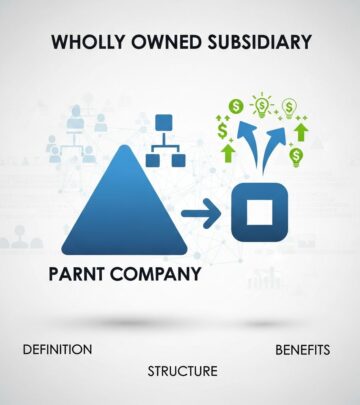
A wholly-owned subsidiary represents the most complete form of parent company ownership, where the parent corporation owns 100% of the subsidiary’s common stock. This structure provides the parent company with absolute control over all operational decisions, management appointments, financial policies, and strategic direction. The parent company holds sole influence over the subsidiary’s affairs and can make unilateral decisions without consulting other shareholders. Wholly-owned subsidiaries are typically established when a parent company acquires full control of an existing company or creates a new subsidiary from scratch.
Partially-Owned Subsidiaries
A partially-owned subsidiary exists when a parent or holding corporation owns more than 50% but less than 100% of the company’s common stock. This structure allows the subsidiary to have multiple shareholders alongside the parent company. While the parent maintains controlling interest and can direct major decisions, minority shareholders retain voting rights proportional to their ownership stake. This arrangement enables parent companies to raise capital while maintaining operational control or to acquire strategic partners who retain meaningful ownership positions.
Operating Subsidiaries
Operating subsidiaries actively engage in business operations, producing goods or delivering services under their own brand names. These subsidiaries conduct the actual day-to-day business activities while remaining under parent company ownership and control. Most large corporations utilize operating subsidiaries that function as independent business units within the broader corporate structure.
Holding Subsidiaries
Holding subsidiaries exist primarily to own assets, hold intellectual property, or manage investments rather than conduct active business operations. These subsidiaries serve important functions in corporate structuring for tax planning, asset protection, and financial management purposes. They provide a vehicle for holding valuable corporate resources while maintaining legal separation from operational entities.
Key Differences: Subsidiaries Versus Other Business Structures
Subsidiary Versus Affiliate
The distinction between subsidiaries and affiliates centers on ownership percentages and control. An affiliate represents a company where another firm holds a minority interest, typically less than 50% of the voting shares. In contrast, a subsidiary involves majority or full ownership, providing the parent company with significant or complete control over decisions and operations. Affiliates maintain greater independence and may not be subject to the same level of parental oversight as subsidiaries.
Subsidiary Versus Division
A critical distinction exists between subsidiaries and internal divisions. A division operates as an internal segment of a parent company and does not constitute a separate legal entity. Divisions function under the parent company’s legal name and identity, with no independent liability structure. Subsidiaries, by contrast, are standalone legal entities even when wholly owned by a parent company. They typically maintain their own branding, separate financial statements, independent liability structures, and individual tax filings. This legal distinction has significant implications for liability protection, tax treatment, and regulatory compliance.
Subsidiary Versus Branch Office
A branch office functions as an extension of the parent company and is not a separate legal entity. Branch offices operate under the parent company’s legal identity and do not provide the same liability protection or operational independence that subsidiaries offer. Subsidiaries maintain distinct legal status separate from their parents, while branch offices remain integral parts of the parent organization.
How Subsidiary Companies Work
Subsidiaries and parent companies operate as legally separate entities despite their ownership relationship. Each organization maintains its own corporate identity, pays its own taxes, manages its own debts, and maintains distinct financial records. This legal separation creates important benefits and limitations that define how subsidiaries function within corporate structures.
Legal Separation and Liability
One of the most significant advantages of the subsidiary structure involves liability isolation. Liabilities incurred by a subsidiary generally do not transfer to the parent company, protecting parental assets from subsidiary-related legal claims or financial obligations. Conversely, the subsidiary typically cannot claim immunity from liabilities; creditors of the subsidiary can pursue assets held by the subsidiary but generally cannot access parent company assets. This liability barrier exists because subsidiaries maintain legal independence, even when wholly owned.
Operational Independence and Control
Most subsidiaries operate with considerable independence from their parent companies. They typically employ their own management teams, establish their own business strategies within parent-approved parameters, and manage day-to-day operations autonomously. Many subsidiaries maintain distinct branding, serve specific market segments, or operate in distinct geographic territories separate from the parent company’s direct operations.
However, parent companies naturally influence their subsidiaries’ operations through governance mechanisms. As the major shareholder, the parent company can elect the subsidiary’s board of directors, approve major capital expenditures, set overall business strategy, and establish policies governing subsidiary operations. This creates a balance between operational independence and parental oversight.
Financial Structure
Subsidiaries maintain their own financial statements, banking relationships, and accounting systems. The parent company consolidates subsidiary financial results into its own financial statements for reporting purposes, but subsidiaries typically file separate tax returns and maintain independent bookkeeping systems. This financial separation allows for clearer tracking of subsidiary performance and facilitates accurate assessment of specific business unit profitability.
Real-World Examples of Subsidiary Companies
Major corporations across industries organize their businesses through subsidiary structures, demonstrating the widespread adoption of this corporate model.
PepsiCo and Its Subsidiaries
PepsiCo operates not merely as a single company but as a diversified conglomerate owning numerous subsidiary companies. PepsiCo’s subsidiary portfolio includes Mountain Dew, Frito-Lay, and Quaker Foods, among many others. These subsidiaries operate as independent brands with distinct market positioning while benefiting from PepsiCo’s resources, distribution networks, and corporate infrastructure. Each subsidiary maintains its own brand identity and product lines while contributing to PepsiCo’s overall corporate profitability.
Berkshire Hathaway
Berkshire Hathaway exemplifies the holding company model, owning subsidiaries spanning remarkably diverse industries including insurance, manufacturing, retail, and services. This conglomerate structure allows Berkshire Hathaway to maintain a portfolio of fundamentally different businesses, each operating as an independent subsidiary while sharing access to Berkshire’s capital resources and management expertise.
The Walt Disney Company
Disney operates an extensive network of subsidiaries spanning entertainment, media, theme parks, and consumer products. Marvel Films and Lucasfilm represent sister companies within the Disney corporate family, sharing the same parent company while operating as distinct entities. Both subsidiaries maintain independent creative and operational identities while benefiting from Disney’s distribution capabilities and financial resources.
Meta Platforms, Inc.
Meta Platforms owns multiple subsidiaries including Instagram, WhatsApp, and Oculus, each operating as distinct entities within the broader Meta corporate structure. These subsidiaries maintain separate brand identities and user bases while leveraging Meta’s technological infrastructure and corporate resources.
Understanding Tiered Subsidiaries
Complex corporate groups often feature multiple layers of subsidiaries, creating hierarchical structures that organize operations across different organizational tiers. A first-tier subsidiary is owned directly by the parent corporation. However, this first-tier subsidiary may itself hold majority shares of another company, creating a second-tier subsidiary within the overall corporate group. This subsidiary company can be described as a second-tier subsidiary of the ultimate parent corporation. Additional tiers can continue depending on corporate complexity, allowing sophisticated organizations to create elaborate ownership structures tailored to their specific business needs and strategic objectives.
Advantages and Disadvantages of Subsidiary Structures
Advantages
Subsidiary structures offer numerous strategic benefits to parent companies. Liability protection stands foremost, insulating parent company assets from subsidiary-related legal claims or financial troubles. Geographic expansion becomes simplified through subsidiary creation in new jurisdictions. Market diversification allows parent companies to operate in multiple industries simultaneously. Tax optimization opportunities often emerge through subsidiary structures, allowing companies to minimize overall tax burdens through strategic subsidiary placement. Additionally, subsidiaries can access local management talent, navigate regulatory requirements more effectively, and maintain brand differentiation in diverse markets.
Disadvantages
Subsidiary structures introduce operational complexity, requiring separate governance, accounting, tax filings, and compliance procedures. Establishing and maintaining subsidiary entities involves legal costs and administrative overhead. Corporate accountability can become diffused across multiple entities, potentially creating governance challenges. Additionally, internal conflicts may arise between parent company objectives and subsidiary independence, particularly when subsidiary-specific interests diverge from broader corporate goals.
Frequently Asked Questions About Subsidiary Companies
Are subsidiaries 100% owned?
Subsidiaries can be either wholly-owned (100% owned) or partially-owned (more than 50% but less than 100% owned). A parent company only needs to own more than 50% of another company’s stock for that company to be legally considered a subsidiary. Ownership percentages above 50% satisfy the control requirement that defines subsidiary status, but individual parent companies choose ownership levels based on strategic considerations and capital availability.
Is a subsidiary its own company?
Yes, subsidiaries operate as their own separate legal entities with independent management structures, assets, liabilities, and financial records. Despite being owned by parent companies, subsidiaries maintain distinct corporate identities and typically follow their own organizational structures. They benefit significantly from resources, connections, and strategic direction provided by parent companies while maintaining operational autonomy in day-to-day affairs. This dual nature—legal independence combined with parental ownership—defines the subsidiary relationship.
Can a subsidiary company own another subsidiary?
Yes, subsidiaries can hold majority shares of other subsidiary companies, creating tiered subsidiary structures. The second subsidiary company created through this arrangement is described as a second-tier subsidiary of the ultimate parent corporation. This hierarchical structure allows sophisticated corporate organizations to create complex ownership arrangements tailored to specific strategic objectives, tax considerations, or operational requirements. The tiering can continue through multiple levels depending on corporate complexity.
What is a sister company?
Sister companies refer to companies that share the same parent company or holding corporation. Sister companies are distinct subsidiaries of the same parent organization, operating as independent entities while sharing common ownership. Marvel Films and Lucasfilm exemplify sister companies, both operating under The Walt Disney Company’s ownership while maintaining separate creative identities and operational structures. Sister companies often collaborate to share resources, technologies, or distribution capabilities.
What is a conglomerate?
A conglomerate represents a large corporation owning a collection of diverse businesses, often operating in completely unrelated industries, all functioning under a single corporate umbrella. These diverse businesses typically operate as subsidiaries, maintaining independence while sharing corporate ownership. Examples include Berkshire Hathaway, which owns subsidiaries spanning insurance, manufacturing, retail, and services. Conglomerates leverage their parent company status to allocate capital efficiently across diverse industries and manage risk through business diversification.
Legal Forms for Subsidiaries
Subsidiaries can take various legal forms depending on parent company preferences and strategic objectives. Corporation subsidiaries provide the benefits of corporate structures, including limited liability protection and ease of stock transferability. LLC subsidiaries offer flexibility, particularly regarding taxation and management structures. Some parent companies establish subsidiaries as partnerships or other business entities depending on operational requirements and tax implications. The choice of legal form significantly impacts tax treatment, liability protection, and operational flexibility for subsidiary operations.
Conclusion
Subsidiary companies represent fundamental building blocks of modern corporate organization, enabling large enterprises to manage complex operations, diversify revenue streams, and optimize tax structures while maintaining liability protection. Whether wholly-owned or partially-owned, operating or holding subsidiaries serve specific strategic purposes within broader corporate frameworks. Understanding subsidiary structures helps clarify how multinational corporations organize their global operations and how legal separation enables both parental control and subsidiary independence. As businesses continue globalizing and diversifying, subsidiary structures will remain essential tools for strategic business management and corporate organization.
References
- What Is a Subsidiary Company? Definition, Examples and FAQs — Diligent. 2025. https://www.diligent.com/resources/blog/what-is-a-subsidiary-company
- Guide to Subsidiary Company: Definition, Examples and FAQs — BoardCloud. 2025. https://boardcloud.us/news/posts/guide-to-subsidiary-companies-definition-examples-and-faqs/
- Understanding Subsidiary Companies: A Comprehensive Guide — Dilitrust. 2025. https://www.dilitrust.com/subsidiary-companies/
- Subsidiary — Wikipedia. https://en.wikipedia.org/wiki/Subsidiary
- Decoding Subsidiaries: A Deep Dive into Company Structure Charts — LexChart. 2025. https://lexchart.com/decoding-subsidiaries-a-deep-dive-into-company-structure-charts/
- What Is a Subsidiary and How Does It Work? (With Examples) — Indeed. 2025. https://www.indeed.com/career-advice/career-development/subsidiary
- Subsidiary – Definition, How It Works, and Examples — Corporate Finance Institute. 2025. https://corporatefinanceinstitute.com/resources/accounting/subsidiary-definition/
Similar Articles








Read full bio of Sneha Tete