What Is a Student Loan Servicer and How Do They Work?
Understanding student loan servicers: their roles, responsibilities, and how they manage your education debt.
What Is a Student Loan Servicer?
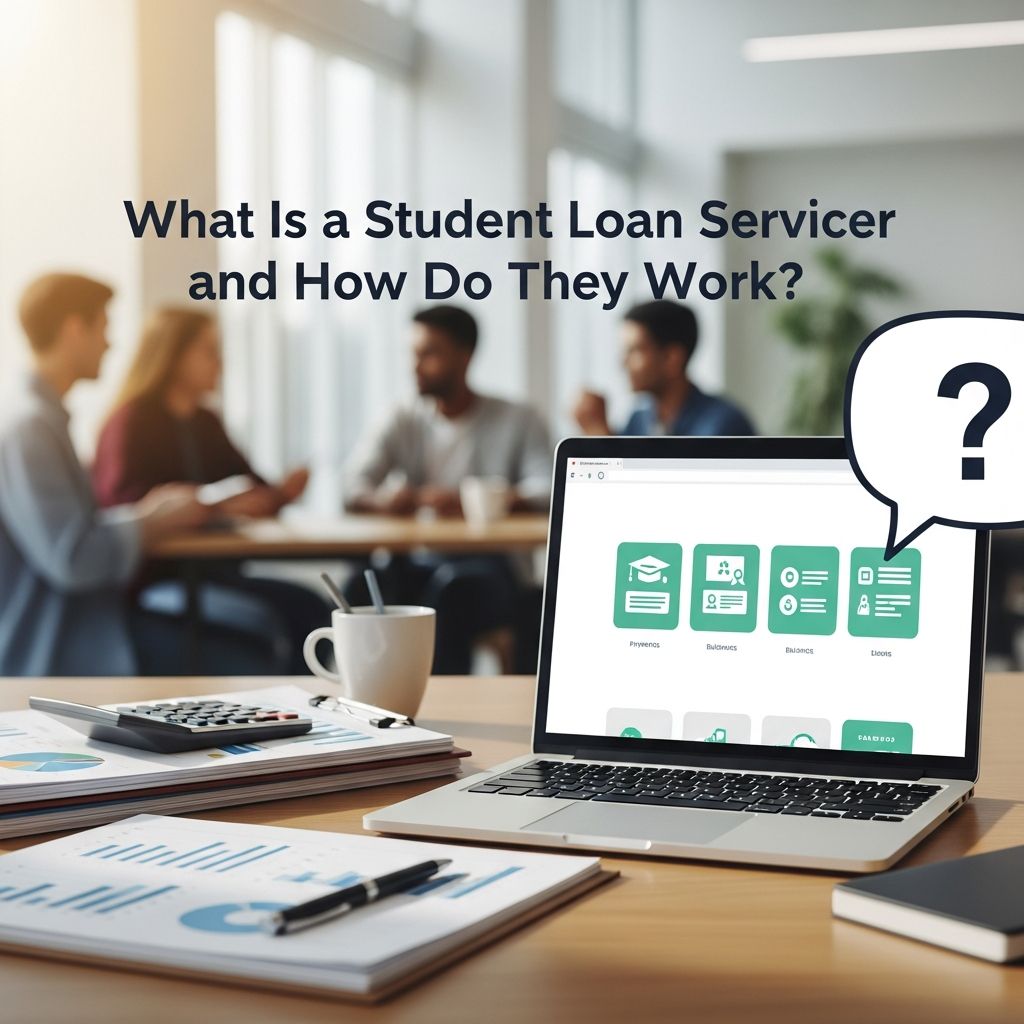
A student loan servicer is a company responsible for managing the day-to-day operations of your student loans on behalf of the loan holder or owner. Whether you have federal or private student loans, a servicer acts as the intermediary between you and the entity that actually owns your loan. Student loan servicers handle various administrative and financial tasks related to your education debt, making them a crucial part of your borrowing experience. Understanding what a servicer does and how to work with them effectively can help you manage your loans more successfully and avoid potential problems.
Core Responsibilities of Student Loan Servicers
Student loan servicers perform several essential functions that keep your loans on track and ensure smooth loan administration. Their primary responsibilities include:
Payment Processing and Collection
One of the main duties of a student loan servicer is to receive your scheduled periodic payments and apply them to your loan account according to the terms specified in your loan documents. This includes processing payments made through various methods, such as automatic debit, online payments, or manual submissions. The servicer ensures that your payments are correctly allocated to principal, interest, and any applicable fees.
Account Maintenance and Record Keeping
Servicers are responsible for maintaining comprehensive account records for each student loan they manage. This includes tracking your payment history, loan balance, interest accrual, and any changes to your loan status. These records must be accurate and up-to-date, as they form the basis for all communications and decisions regarding your loan.
Borrower Communication
Student loan servicers serve as the primary point of contact for borrowers regarding their loans. They communicate information about your account status, upcoming payments, changes to repayment terms, and other important loan-related matters. This communication occurs on behalf of the actual owner of the loan promissory note.
Administrative Services
Beyond basic payment processing, servicers provide various administrative services, including helping borrowers understand their repayment options, processing applications for income-driven repayment plans, facilitating requests for deferment or forbearance, and assisting with loan consolidation inquiries. These services help borrowers navigate their loan obligations and find solutions that work for their financial situations.
Default Aversion and Support
Servicers work with borrowers who may be at risk of defaulting on their loans, helping them understand their options and avoid default status. This proactive approach protects both the borrower and the loan owner by addressing financial difficulties before they escalate to default.
Types of Student Loan Servicers
Not all student loan servicers operate under the same regulatory framework. Understanding the different types can help you know what protections and standards apply to your specific loans.
Federal Student Loan Servicers
Federal student loan servicers are companies contracted by the U.S. Department of Education to manage federal student loans at no cost to borrowers. These servicers must comply with federal regulations and provide standardized services to all federal loan borrowers. Examples of federal servicers include Nelnet, which works directly with the Department of Education to help borrowers achieve their educational financing goals.
Private Student Loan Servicers
Private student loan servicers manage loans issued by private lenders such as banks, credit unions, and other financial institutions. These servicers may operate under different regulatory frameworks than federal servicers, though many states have established licensing requirements and consumer protections for private loan servicing.
State-Regulated Servicers
Many states have implemented their own student loan servicing regulations to protect borrowers. For example, California established the Student Loan Servicing Act through Assembly Bill 2251, which created state standards to ensure consistent, fair, and quality servicing for the more than 4 million Californians with student loans. Other states like Maryland, New Jersey, Maine, and the District of Columbia have also established student loan servicer licensing and oversight programs to protect borrowers within their jurisdictions.
How to Find Your Student Loan Servicer
Knowing who your student loan servicer is essential for managing your loans effectively. Fortunately, several resources can help you identify your servicer:
Federal Student Aid Website
If you have federal student loans, you can visit the Federal Student Aid website at studentaid.gov to find information about your servicer. The “Who’s My Student Loan Servicer” tool allows you to search for your servicer using your name and date of birth, providing direct contact information and details about your loan account.
Loan Documentation
Your original loan documents and any correspondence you receive about your loans typically include information about your servicer. Check your promissory note, loan agreements, or recent billing statements for servicer contact details.
Direct Contact
If you borrowed through a specific institution, such as your college’s financial aid office or a private lender, you can contact them directly to ask who services your loans.
Servicer Licensing and Regulation
To ensure fair treatment and prevent fraud, many states require student loan servicers to obtain licenses before operating within their jurisdiction. State licensing programs establish standards for servicer conduct, complaint resolution procedures, and consumer protections. The licensing process typically requires servicers to provide information about the number of borrowers they serve and the volume of loans they manage, both initially and on an annual basis.
States may exempt certain entities from licensing requirements. For example, state or federally chartered banks, savings banks, savings and loan associations, and credit unions are often exempt from student loan servicer licensing requirements in many jurisdictions. However, these entities must still comply with applicable federal and state consumer protection laws.
Additionally, debt collectors who focus exclusively on defaulted student loans (those with no payment for 270 days or more for federal loans) may be excluded from the definition of student loan servicer in some state regulations. However, debt collectors who also service non-defaulted loans are considered student loan servicers and must comply with applicable licensing and servicing standards.
Your Rights as a Student Loan Borrower
Understanding your rights in relation to your student loan servicer is crucial for protecting yourself from unfair practices. Most states and the federal government have established protections for student loan borrowers:
Right to Clear Communication
Servicers must communicate transparently with borrowers about their loan terms, payment obligations, and available options. You have the right to receive clear, accessible information about your loan in a timely manner.
Right to Accurate Account Information
Your servicer must maintain accurate records and provide you with correct information about your loan balance, payment history, and account status. You have the right to dispute any errors in your account records.
Right to Complaint Resolution
Many states have established student loan ombudsman offices that accept complaints from borrowers and work to resolve disputes with servicers. These offices help borrowers understand their rights and responsibilities and provide information about servicer misconduct or violations.
Right to Explore Repayment Options
Servicers must inform you of all available repayment options, including income-driven repayment plans, and assist you in applying for these programs if you qualify. You have the right to choose a repayment plan that fits your financial situation.
What Activities Constitute Student Loan Servicing
The definition of student loan servicing varies slightly by jurisdiction, but generally includes:
Payment Receipt and Application
Receiving scheduled periodic payments from borrowers according to the loan terms and applying those payments to the borrower’s account as required.
Administrative Services
Performing other administrative tasks associated with maintaining a student education loan, which may include processing loan modifications, updating borrower information, and handling correspondence.
Active Loan Management During Payment Periods
When a loan is actively being repaid, servicers maintain account records and communicate with borrowers on behalf of the loan owner regarding the student loan.
Support During Non-Payment Periods
When no payment is required on a student loan (such as during deferment or forbearance), servicers still maintain account records and communicate with borrowers to help them understand their obligations and avoid default.
Excluded Entities
Certain organizations are typically excluded from the definition of student loan servicer, even if they perform some servicing functions:
- Public postsecondary educational institutions servicing their own student loans
- Private nonprofit postsecondary educational institutions servicing their own student loans
- Nonprofit community service organizations meeting specific criteria
- Guaranty agencies engaged in default aversion under agreement with the U.S. Secretary of Education
- Debt collectors focusing exclusively on defaulted student loans
Frequently Asked Questions About Student Loan Servicers
Q: Do I have to pay fees to my student loan servicer?
A: Federal student loan servicers do not charge fees for their services, as the U.S. Department of Education compensates them directly. However, private student loan servicers may charge fees, which should be disclosed in your loan documents. Always review your loan agreement to understand what fees, if any, apply to your loan.
Q: Can my student loan servicer change?
A: Yes, your servicer can change if your loan is sold to a different servicer or transferred to a different servicing company. If this occurs, you should receive notification from both your current servicer and the new servicer explaining the transition and providing updated contact information.
Q: What should I do if I have a complaint about my servicer?
A: First, try to resolve the issue directly with your servicer through their customer service department. If you’re unable to resolve the complaint, you can file a complaint with your state’s student loan ombudsman office or with the Consumer Financial Protection Bureau (CFPB). Many states also have regulatory agencies that oversee student loan servicers.
Q: How often should I contact my servicer?
A: You should contact your servicer whenever you have questions about your loan, need to make changes to your account, or want to explore different repayment options. Regular communication can help prevent misunderstandings and ensure your loan is being managed according to your preferences.
Q: What information should I keep from my servicer?
A: Keep all correspondence from your servicer, including loan statements, payment confirmations, notices of changes to your account, and any agreements you reach with your servicer. This documentation is important for tracking your loan history and resolving any disputes that may arise.
Building a Productive Relationship With Your Servicer
Managing your student loans effectively requires maintaining a good working relationship with your servicer. Keep their contact information readily accessible, respond promptly to their communications, and reach out proactively if your financial situation changes. Understanding what your servicer can and cannot do, knowing your rights as a borrower, and staying informed about your loan terms will help you navigate the student loan repayment process successfully and achieve your goal of becoming debt-free.
References
- Student Loan Servicers — California Department of Financial Protection and Innovation (DFPI). 2024. https://dfpi.ca.gov/regulated-industries/student-loans-student-loan-servicing-program/
- Frequently Asked Questions – Student Loan Servicers – Industry — Maryland Department of Labor, Office of Finance. 2024. https://www.labor.maryland.gov/finance/industry/frslservfaqs.shtml
- D.C. Law 21-214. Student Loan Ombudsman Establishment and Student Loan Servicing Requirements — D.C. Council, Office of the Secretary. 2016. https://code.dccouncil.gov/us/dc/council/laws/21-214
- Who’s My Student Loan Servicer? — U.S. Department of Education, Federal Student Aid. 2024. https://studentaid.gov/manage-loans/repayment/servicers
- S1149 – An Act Establishing a Student Loan Ombudsman — New Jersey State Legislature. 2018. https://pub.njleg.gov/bills/2018/S1500/1149_I1.HTM
- Request for Information Regarding Student Loan Servicing — Federal Register, U.S. Government Publishing Office. 2015-05-21. https://www.federalregister.gov/documents/2015/05/21/2015-12276/request-for-information-regarding-student-loan-servicing
- Meet Nelnet, Your Student Loan Servicer — Nelnet Student Aid. 2024. https://nelnet.studentaid.gov/content/yourstudentloanservicer
Similar Articles








Read full bio of medha deb