What Is Scarcity in Economics: Definition & Importance
Understanding scarcity: How limited resources shape economic decisions and market prices.

What Is Scarcity in Economics?
Scarcity is one of the most fundamental concepts in economics, representing the basic reality that our world has limited resources but unlimited human wants and needs. In its simplest form, scarcity refers to the gap between the finite amount of goods and services available and the infinite desires of people to consume them. This imbalance creates the foundation for all economic theory and decision-making in modern society.
Economic scarcity exists because there are only so many resources—including time, labor, capital, and raw materials—that can be used to produce goods and services. No matter how efficient our production methods become, we cannot create infinite amounts of every product to satisfy every desire. This fundamental constraint means that every society, business, and individual must make choices about how to allocate limited resources to meet the most pressing needs and wants.
Understanding the Core Concept of Scarcity
The concept of scarcity is central to understanding why economics exists as a discipline. British economist Lionel Robbins famously defined economics as “the science which studies human behaviour as a relationship between ends and scarce means which have alternative uses.” This definition captures the essence of scarcity: we must choose how to use limited resources to achieve multiple goals.
Scarcity creates several important economic consequences. First, it necessitates competition—people must compete to obtain limited resources. Second, it makes resources valuable; items that are abundant have little economic value, while items that are scarce command higher prices. Third, it forces individuals and organizations to make tradeoffs, accepting less of one thing to get more of another.
Scarcity Versus Supply and Demand
The relationship between scarcity and the supply-demand dynamic is crucial to understanding how markets function. Scarcity occurs when demand for a product or service exceeds the available supply. In a perfectly balanced market, supply equals demand, and the market reaches equilibrium—a state where all produced goods are distributed and there is neither excess inventory nor shortage.
However, markets rarely maintain perfect equilibrium. When scarcity exists—meaning demand is high but supply is low—prices tend to rise. Higher prices serve an important economic function: they signal to consumers that a product is limited, which often causes some consumers to reduce their purchases or seek alternatives. This price increase and reduced demand help move the market back toward equilibrium. Conversely, when supply exceeds demand, prices fall, encouraging more purchases until balance is restored.
The Scarcity Principle Explained
The scarcity principle states that people place greater value on items that are difficult to obtain. This principle reflects basic human psychology: we tend to want things more when we believe they might become unavailable. This psychological response is not purely rational economic behavior; it reflects genuine human preferences and fears.
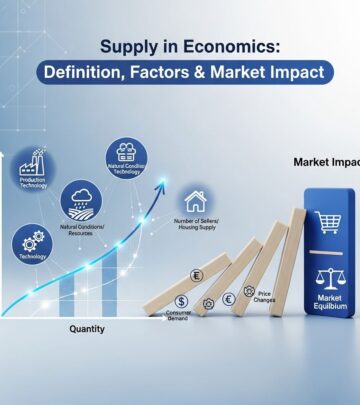
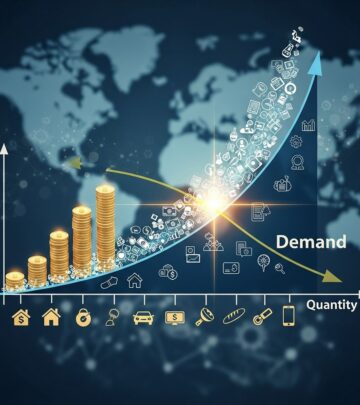
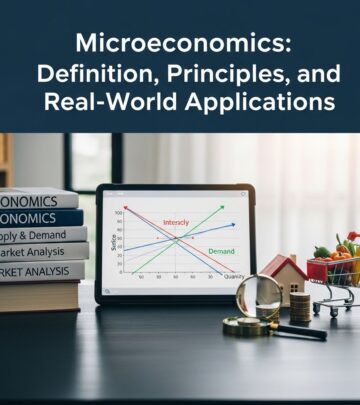
The scarcity principle operates on two fundamental economic laws: the law of supply and the law of demand. The supply curve typically slopes upward, showing that producers are willing to make more of a product when they can charge higher prices. The demand curve typically slopes downward, indicating that consumers are willing to buy more when prices are lower. The point where these two curves intersect represents the market equilibrium price.
When scarcity is present, consumers face a cost-benefit analysis. At higher prices, fewer people believe the benefit of purchasing the product justifies the cost, so demand naturally decreases. This self-correcting mechanism helps markets move toward equilibrium without requiring external intervention.
Types of Scarcity in Economics
Economic theory distinguishes between different types of scarcity to better understand how they affect markets and human behavior.
Relative Scarcity
Relative scarcity is the most common form and is the primary focus of economic theory. It occurs when demand for a resource exceeds the available supply at the current market price. Relative scarcity means that while resources may exist, they are not abundant enough to meet all desires at a zero or very low price. Most goods and services we encounter in daily life experience relative scarcity—there is enough to meet basic needs, but not enough to satisfy unlimited wants at a zero price point.
Absolute Scarcity
Absolute scarcity refers to situations where a resource is truly limited in total quantity, regardless of price or production methods. For example, the total amount of land on Earth is absolutely scarce; no amount of technological advancement can create more physical space. Similarly, certain natural resources like fossil fuels have absolute limits based on the finite deposits that exist underground.
How Scarcity Affects Business and Markets
Businesses face scarcity challenges constantly, particularly in their supply chains and operational decisions. When raw materials become scarce, production costs rise, which can reduce profit margins or require price increases that may lower consumer demand. In extreme cases, significant scarcity can force businesses to cease operations entirely if they cannot obtain necessary inputs.
Scarcity management requires business leaders to pay close attention to market data and trends. Understanding potential scarcity situations allows companies to:
- Plan inventory strategically to avoid shortages
- Adjust pricing to maintain profitability while managing demand
- Develop alternative suppliers or substitute materials
- Make informed decisions about production levels
For example, when market prices for a good decline, manufacturers often respond by producing less of that good because the lower price may not cover production costs. This reduced production creates scarcity for consumers, which gradually pushes prices back up toward equilibrium.
Scarcity’s Role in Marketing Strategies
Marketing professionals effectively use the scarcity principle to influence consumer behavior and drive sales. By creating or highlighting the limited availability of products, companies can increase consumer urgency and willingness to purchase at higher price points.
Common marketing tactics that leverage scarcity include:
- “Limited time offers” that create urgency by setting an expiration date
- “Only X items left in stock” messages that highlight availability constraints
- “X customers are viewing this item right now” notifications that suggest high demand and limited inventory
- Exclusive or VIP-only product releases that limit access to certain consumers
These tactics work because they tap into a real psychological phenomenon: the fear of missing out (FOMO). When consumers believe they may not have the opportunity to purchase a product in the future, they become more eager to buy it now, often at higher prices than they would normally consider paying.
Scarcity and Price Elasticity
Scarcity directly influences price elasticity—how responsive consumers are to price changes. Products that experience scarcity often have lower price elasticity in the short term, meaning that price increases don’t cause proportional decreases in demand. This is because consumers view scarce items as particularly valuable and feel compelled to purchase them despite higher costs.
However, elasticity can change over time. As scarcity persists and prices remain elevated, consumers may eventually reduce their purchases more significantly, switching to substitutes or delaying purchases until conditions improve.
Real-World Examples of Scarcity
Scarcity manifests in numerous ways throughout the global economy. Tech companies frequently experience scarcity of specialized chips and components, affecting production of smartphones, computers, and gaming consoles. Energy markets experience scarcity when supply disruptions occur, leading to price spikes for oil and natural gas. Agricultural products face seasonal scarcity when production conditions are unfavorable, causing price increases for consumers.
During the COVID-19 pandemic, scarcity became acutely visible as supply chain disruptions limited the availability of essential items like masks, hand sanitizer, and certain medications. These scarcity events revealed how sensitive modern economies are to supply disruptions and demonstrated the psychological impact of scarcity on consumer behavior.
Why Scarcity Is Fundamental to Economics
Scarcity is the foundational reason why economics exists as a discipline. If resources were infinite and all human wants were fully satisfied, there would be no need for economic theory or decision-making. Economics only exists because scarcity creates the need to choose—to decide which wants to satisfy and which to postpone or abandon.
Scarcity gives rise to several critical economic concepts:
- Opportunity Cost: The value of the best alternative foregone when making a choice
- Resource Allocation: Decisions about how to distribute limited resources among competing uses
- Tradeoffs: The recognition that obtaining more of one good requires giving up some amount of another
- Risk Management: Strategies to handle uncertainty about future resource availability
Scarcity and Consumer Behavior
Beyond the mathematical aspects of supply and demand, scarcity profoundly affects how consumers psychologically respond to products and purchasing decisions. Human beings naturally desire items more when they perceive them as scarce or difficult to obtain. This is not purely irrational; scarcity often signals quality, exclusivity, or importance.
Consumers factor scarcity into their buying calculations in several ways. They may accelerate their purchase decisions, willing to buy now rather than wait for future availability. They may accept higher prices than they would otherwise consider acceptable. They may also pay more for expedited delivery or special access to scarce items.
Addressing Scarcity Through Resource Allocation
Societies address scarcity through various allocation mechanisms. Market prices represent one approach, where willingness to pay determines resource distribution. Governments may use regulation, rationing, or taxation to allocate scarce resources. Organizations might use queuing systems, lottery systems, or priority rules to determine who receives limited goods.
The most effective resource allocation methods depend on the specific context and the values a society prioritizes. Market-based approaches emphasize efficiency, while command-based approaches may emphasize fairness or social priorities.
Frequently Asked Questions
Q: What is the definition of scarcity in economics?
A: Scarcity is the fundamental economic problem arising from limited resources available to satisfy unlimited human wants and needs. It represents the gap between finite supply and infinite demand, making it the core driver of all economic activity and decision-making.
Q: How does scarcity affect prices?
A: When scarcity exists—with demand exceeding supply—prices tend to increase. Higher prices signal the limited availability of the product and encourage consumers to reduce purchases, eventually helping the market reach equilibrium where supply equals demand.
Q: Why is scarcity important for businesses?
A: Scarcity directly impacts business operations, costs, and profitability. Understanding scarcity helps businesses manage supply chains, adjust pricing strategies, forecast revenue impacts, and make informed production decisions.
Q: What is the scarcity principle in marketing?
A: The scarcity principle states that consumers place higher value on items that are difficult to obtain. Marketers leverage this principle using tactics like “limited time offers” and “only X items left” messages to create urgency and drive sales.
Q: Is scarcity the same as shortage?
A: No. Scarcity is a fundamental economic condition reflecting the reality that resources are finite. A shortage is a temporary market condition where supply falls below demand at the current price, typically due to disruptions or unexpected changes.
Q: How do supply and demand curves relate to scarcity?
A: Supply curves slope upward (producers supply more at higher prices) while demand curves slope downward (consumers buy more at lower prices). Their intersection shows equilibrium. Scarcity exists when demand exceeds supply, pushing prices higher and moving toward equilibrium.
References
- The Scarcity Principle — MicroVentures. 2025. https://microventures.com/the-scarcity-principle
- What Is the Scarcity Principle? Definition and Importance — Indeed Career Advice. 2025-06-07. https://www.indeed.com/career-advice/career-development/scarcity-principle
- Scarcity: Definition, Basics and Examples in Business — NetSuite. 2025. https://www.netsuite.com/portal/resource/articles/business-strategy/scarcity.shtml
- Scarcity — Econlib. 2025. https://www.econlib.org/library/Topics/College/scarcity.html
Similar Articles








Read full bio of medha deb