What Is a Recessionary Gap: Definition and Impact
Understanding recessionary gaps, their causes, effects on employment, and economic policy responses.
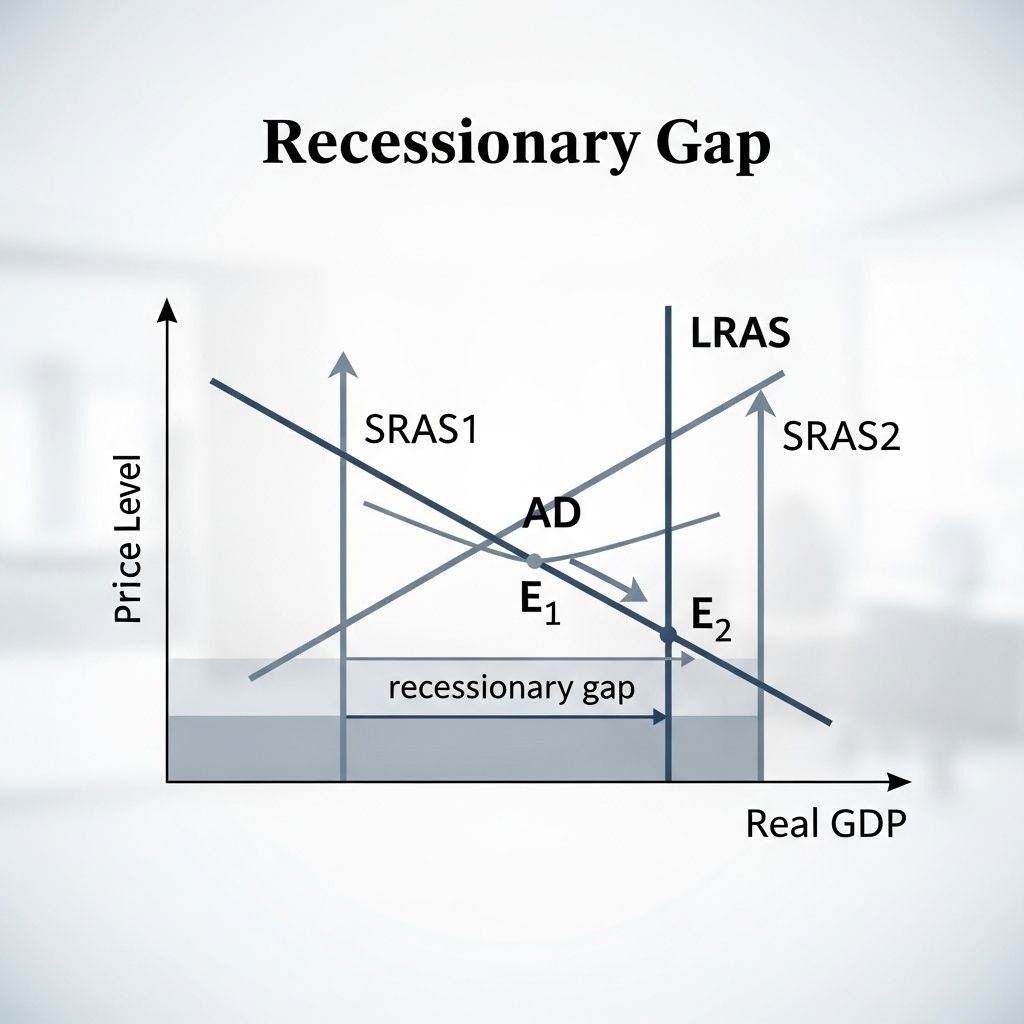
What Is a Recessionary Gap?
A recessionary gap, also known as a contractionary gap, is a macroeconomic term that describes the difference between an economy’s actual real gross domestic product (GDP) and its potential GDP at full employment. When an economy experiences a recessionary gap, it means the nation is not producing at its full productive capacity, resulting in output that falls short of what it could achieve under optimal conditions. This gap represents a critical economic indicator that reveals whether an economy is underperforming relative to its long-term sustainable output level.
The recessionary gap is not simply a measure of economic decline but rather a specific calculation of how far below potential an economy is operating. During this phase, resources—including labor, capital, and technology—are not being utilized to their fullest extent, leading to inefficiencies and lost economic opportunities. Understanding this concept is essential for policymakers, investors, and economists who seek to diagnose economic health and implement corrective measures.
Understanding the Business Cycle and Recessionary Gaps
To fully comprehend a recessionary gap, it is important to understand its place within the broader business cycle. The business cycle refers to the alternating periods of economic expansion and contraction that all modern economies experience. This cycle consists of four distinct phases, each with unique characteristics and implications for economic activity.
The Four Phases of the Business Cycle
The business cycle encompasses four primary stages:
- Trough: This represents the lowest point in the business cycle. During this phase, production is at its minimum, unemployment reaches its highest levels, and consumer confidence is typically at its weakest. The trough marks the transition point where the economy begins its recovery.
- Growth (Recovery): Following the trough, the growth phase begins as production starts to increase and unemployment begins to decline. Consumer spending gradually increases, and business investment picks up momentum.
- Peak: At the peak of the business cycle, production reaches its highest level, unemployment is at its lowest point, and the economy is operating near full capacity. This phase represents the strongest point in the economic expansion.
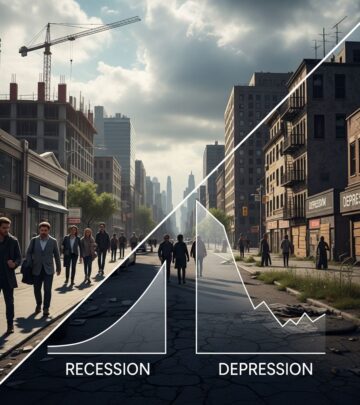
- Recession: During the recession phase, production decreases, unemployment increases, and economic growth slows. The recessionary gap occurs during this phase when actual GDP falls below potential GDP.
The recessionary gap specifically corresponds to the declining phase of the business cycle, where the economy transitions from peak performance toward the trough. This phase is characterized by reduced economic activity and underutilization of available resources.
Causes of Recessionary Gaps
Recessionary gaps emerge from various economic factors that disrupt the balance between aggregate demand and aggregate supply. Understanding these causes is crucial for developing appropriate policy responses.
Decline in Aggregate Demand
One of the primary causes of a recessionary gap is a reduction in aggregate expenditure across the economy. This can occur through several mechanisms: When consumers reduce consumption spending, when businesses decrease investment, when government reduces spending, or when net exports decline due to falling foreign demand or rising imports. These factors shift the aggregate demand curve downward, resulting in lower equilibrium GDP and a recessionary gap between actual and potential output.
Supply and Demand Imbalance
Recessionary gaps are fundamentally created when supply and demand are not in equilibrium. When consumers decide they do not want as much of what is being produced, businesses must respond by slowing down production. This cause-and-effect relationship cascades through the economy: as production decreases, companies need fewer workers, leading to layoffs and rising unemployment. The reduction in employment further dampens consumer spending, creating a negative feedback loop that deepens the recessionary gap.
External and Structural Shocks
Recessionary gaps can be categorized based on their duration and underlying causes. Short-term gaps are often caused by cyclical factors, such as natural fluctuations in the economic cycle triggered by temporary shocks to demand or supply. Long-term gaps may indicate more serious structural issues, such as labor market rigidities, technological lag, or persistent mismatches between worker skills and job requirements.
The Impact of Recessionary Gaps on Employment
One of the most significant consequences of a recessionary gap is its effect on employment and the labor market. When actual GDP falls below potential GDP, firms do not wish to hire the full employment number of workers because production levels do not justify expanded payroll. This results in high unemployment rates, which extend beyond cyclical factors to include structural unemployment as workers struggle to find suitable positions.
During periods of recessionary gaps, several labor market phenomena occur simultaneously:
- Rising unemployment rates above the natural rate of unemployment
- Increased duration of joblessness for displaced workers
- Reduced wage growth and potential wage pressure downward
- Decreased labor force participation as discouraged workers exit the job market
- Growing skills mismatches between available jobs and worker qualifications
The relationship between recessionary gaps and employment is bidirectional: lower demand reduces hiring, and job losses further reduce consumer spending, perpetuating the recessionary gap. This vicious cycle can persist for extended periods unless external intervention occurs.
Economic Characteristics During Recessionary Gaps
When an economy experiences a recessionary gap, several interconnected economic conditions emerge that characterize this phase of the business cycle.
Reduced Production and Investment
Production activity decreases significantly during recessionary periods. Businesses operate below capacity, factories run at reduced utilization rates, and capital investment declines as firms become hesitant about future growth prospects. This reduced investment further constrains the economy’s productive capacity for future growth.
Deflationary Pressures
During recessionary gaps, the economy typically experiences deflationary or low-inflation pressures. With excess supply relative to demand and underutilized resources, prices tend to remain stable or even decline. This deflationary environment can complicate monetary policy responses and create challenges for debt management.
Consumer Behavior Changes
During recessions, consumers fundamentally alter their spending patterns. Rather than spending their income, consumers increase savings rates as uncertainty about future employment and income rises. This shift from consumption to savings reduces aggregate demand further, widening the recessionary gap and prolonging the economic downturn.
Measuring Recessionary Gaps
Economists use various methods to identify and measure recessionary gaps, though direct observation is impossible since potential GDP is not directly observable but rather estimated.
The primary method involves comparing actual real GDP with estimates of potential GDP. Potential GDP represents the level of output an economy can produce when all resources are fully and efficiently employed at the natural rate of unemployment. The recessionary gap is then calculated as the difference between these two figures, often expressed as a percentage of potential GDP.
Graphically, recessionary gaps appear on aggregate demand and aggregate supply diagrams as the horizontal distance between the equilibrium point (where actual GDP is determined) and the potential GDP line (a vertical line representing full employment output). When equilibrium occurs to the left of the potential GDP line, a recessionary gap exists.
Policy Responses to Recessionary Gaps
Governments and central banks employ various policy tools to close recessionary gaps and restore economies to full employment output. The origin of recessionary gap analysis traces to Keynesian economics, particularly during the Great Depression of the 1930s, when economists recognized that government intervention could help close gaps by boosting demand.
Fiscal Policy Interventions
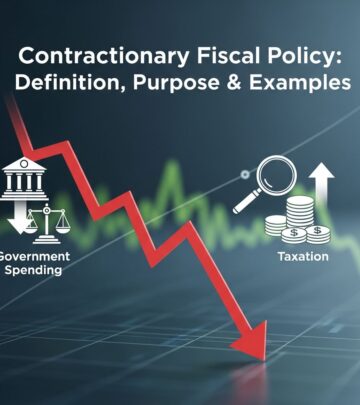
Fiscal policy tools include government spending and taxation adjustments. To close a recessionary gap, governments can increase spending on infrastructure, education, defense, or other programs, directly boosting aggregate demand. Alternatively, governments can reduce taxes to increase consumer disposable income and encourage spending. During the recessionary phase, reducing corporate taxes can have parallel effects by boosting business profits, promoting business expansion, and encouraging investment in capital equipment and worker hiring.
Monetary Policy Responses
Central banks typically respond to recessionary gaps by reducing interest rates, making borrowing cheaper for both consumers and businesses. Lower interest rates encourage spending and investment, shifting the aggregate demand curve upward. During severe recessions and depressions, when interest rates approach zero, quantitative easing may be employed to inject liquidity directly into the financial system.
Long-term Equilibrium Considerations
An important economic principle is that an economy in equilibrium with a recessionary gap may persist in that state for extended periods. The existence of equilibrium does not automatically mean price and quantity adjustments will eliminate the gap. Without policy intervention, an economy can suffer prolonged high unemployment and underutilization of resources indefinitely. This recognition underlies the case for active government and central bank intervention to accelerate recovery.
The Flattest Portion of the SRAS Curve
During severe depressions and recessions, economies operate on the flattest portion of the short-run aggregate supply (SRAS) curve. In this region, increases in aggregate demand result in minimal inflation relative to the increase in production. This characteristic is economically favorable because policymakers can stimulate output without triggering substantial inflationary pressures, making it an ideal time for expansionary policy interventions.
Comparing Recessionary and Inflationary Gaps
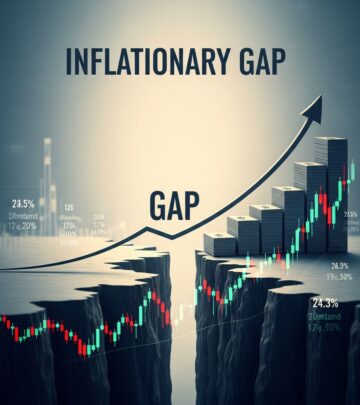
While recessionary gaps represent output below potential, the inverse situation also exists. An inflationary gap occurs when macro equilibrium happens at a level of GDP greater than potential GDP, resulting in unemployment rates lower than the natural rate. While a recessionary gap indicates an economy operating below its potential with high unemployment, an inflationary gap suggests an overheating economy with tight labor markets and upward pressure on prices.
| Characteristic | Recessionary Gap | Inflationary Gap |
|---|---|---|
| Actual GDP vs. Potential GDP | Below potential | Above potential |
| Unemployment Rate | Above natural rate | Below natural rate |
| Price Pressures | Deflationary | Inflationary |
| Policy Response | Expansionary | Contractionary |
| Resource Utilization | Underutilized | Overutilized |
Frequently Asked Questions
Q: How is a recessionary gap different from an actual recession?
A: A recessionary gap is an economic condition where actual GDP falls below potential GDP, while a recession is technically defined as two consecutive quarters of declining real GDP. An economy can have a recessionary gap without technically being in a recession, and conversely, the presence of a recession indicates a recessionary gap exists.
Q: Can a recessionary gap persist indefinitely?
A: Yes, an economy in equilibrium with a recessionary gap may remain in that state for extended periods without policy intervention. This is why active fiscal and monetary policy responses are considered important to accelerate recovery and return the economy to full employment.
Q: What is the natural rate of unemployment?
A: The natural rate of unemployment includes individuals who are temporarily unemployed during job transitions or structural changes in the labor market. It is not zero percent because some unemployment is always present in a dynamic economy with normal worker transitions and skill mismatches.
Q: How do businesses respond to recessionary gaps?
A: Businesses respond by reducing production to match lower demand, postponing capital investments, and reducing their workforce. These responses, while rational for individual firms, collectively deepen the recessionary gap if not counteracted by policy measures.
Q: Why is potential GDP hard to measure?
A: Potential GDP is an estimate of what an economy could produce at full employment. Since full employment itself is not directly observable and varies over time due to demographic changes, technological improvements, and structural shifts, economists must estimate potential GDP using various methodologies, introducing uncertainty into gap calculations.
References
- Recessionary Gap Definition & Causes — Study.com. 2024. https://study.com/academy/lesson/what-is-a-recessionary-gap-definition-graph.html
- Recessionary Gaps — Fiveable. 2024. https://fiveable.me/key-terms/principles-econ/recessionary-gaps
- Equilibrium and the Multiplier Effect: Recessionary and Inflationary Gaps in the Income-Expenditure Model — Lumen Learning. 2024. https://courses.lumenlearning.com/wm-macroeconomics/chapter/equilibrium-and-the-multiplier-effect/
- What is Recessionary Gap? — LongBridge. 2024-12-05. https://longbridge.com/en/learn/recessionary-gap-101985
- Definition of Recessionary Gap — Higher Rock Education. 2024. https://www.higherrockeducation.org/glossary-of-terms/recessionary-gap
Similar Articles








Read full bio of Sneha Tete