What Is Petty Cash: Definition & Best Practices
Master petty cash management: Definition, accounting methods, best practices for small business expenses.
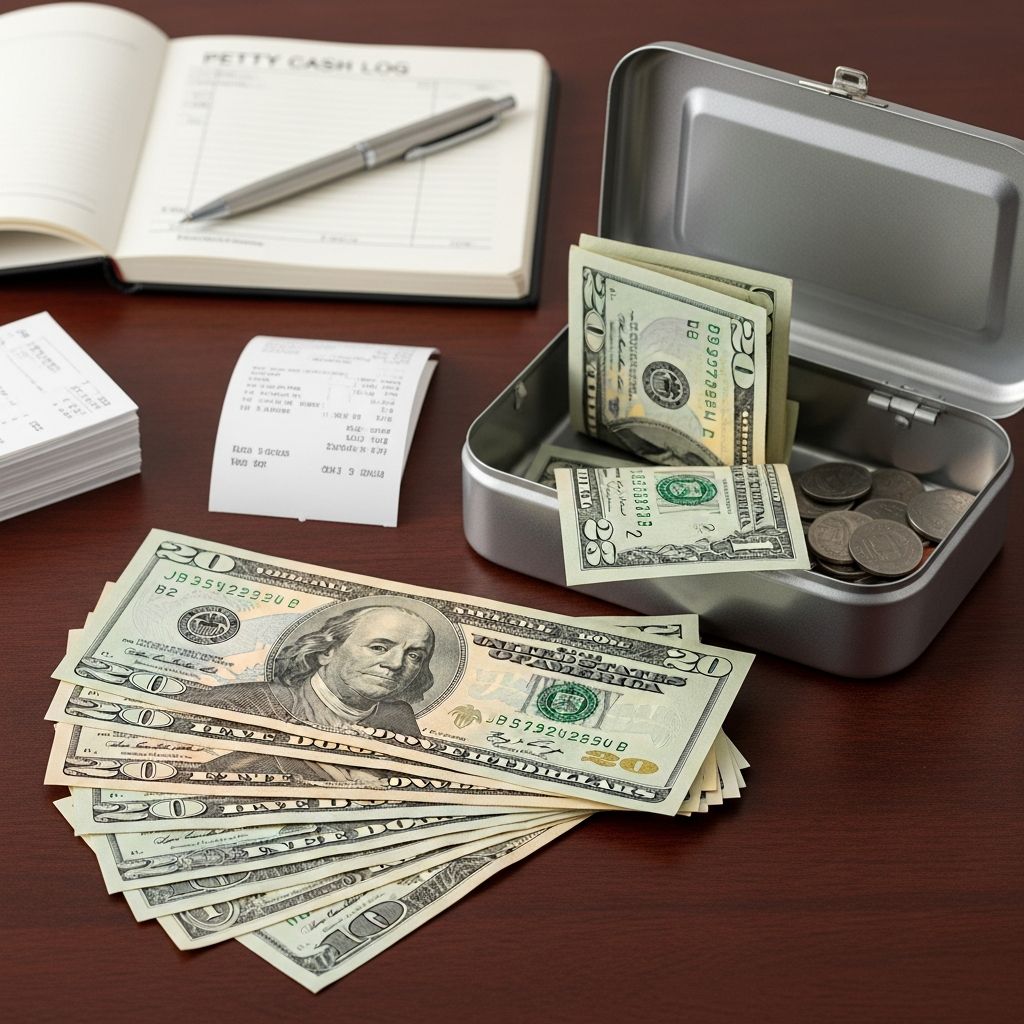
Petty cash is a small, fixed amount of physical currency kept at your business location specifically for minor, day-to-day expenses when writing a check or using a credit card would be inefficient or impractical. Think of it as the business equivalent of the spare change you keep in your car for parking meters—except with proper documentation and controls. For most organizations, petty cash funds range from $50 to $500, depending on how frequently the business makes small purchases and the typical costs of those purchases.
The fund typically sits in a locked cash box or drawer, managed by one designated employee who tracks every penny that comes and goes. Unlike other business expenses that flow through accounts payable or credit cards, petty cash transactions happen instantly, in cash, without approval delays or processing fees. This immediate access to funds makes petty cash invaluable for businesses that need flexibility in handling unexpected minor expenses.
Understanding Petty Cash vs. Cash on Hand
While these terms sound similar, they serve different purposes in business accounting:
- Petty Cash: A small, fixed amount of physical currency kept at your business location specifically for minor expenses.
- Cash on Hand: Encompasses all readily available funds your business can access, including money in bank accounts and cash registers, as well as your petty cash fund.
Understanding this distinction is crucial for accurate financial reporting and inventory management. Petty cash is a subset of your total cash on hand, but it serves a specific purpose within your organization’s financial structure.
How Petty Cash Works in Practice
Here’s a step-by-step breakdown of how petty cash operates in a typical business environment:
- Establishment: You establish a petty cash fund and assign a custodian to manage it.
- Transaction Recording: When someone uses petty cash, the custodian records the transaction and documents the amount.
- Fund Depletion: Once the fund drops to a certain level, the custodian replenishes it by writing a check or transferring money from a business account.
- Reconciliation: Cash plus receipts must always equal your fund’s set amount.
This systematic approach ensures accountability and prevents misuse of company funds. The custodian serves as the gatekeeper, ensuring that every transaction is documented and legitimate.
The Fundamental Rule of Petty Cash
The fundamental rule for petty cash is straightforward but critical: Cash plus receipts must always equal your fund’s set amount. This mathematical certainty is what makes petty cash accounting work and prevents discrepancies or fraud.
Key petty cash policies typically include:
- Setting transaction limits (usually $25 to $50)
- Requiring receipts for every purchase
- Assigning one custodian at a time for accountability
- Prohibiting the use of petty cash for personal purchases
- Conducting regular reconciliations
- Replenishing as needed to maintain the fund level
Types of Petty Cash Funds
Organizations can establish different types of petty cash funds based on their specific needs and operational requirements:
General Petty Cash
A designated amount set aside for small, miscellaneous expenses. You’ll use this for things like office supplies, postage, and minor employee reimbursements. This is the most common type of petty cash fund in most organizations.
Imprest Petty Cash
A fixed amount that gets periodically replenished to its original level. Companies often use this system to reimburse employees for business travel expenses. The imprest method is the most common accounting approach for petty cash.
Emergency Petty Cash
Money reserved specifically for urgent, unexpected expenses—like when a window breaks, the printer malfunctions, or a critical office supply runs out unexpectedly. This type of fund provides businesses with financial flexibility during unforeseen circumstances.
Discretionary Petty Cash
Funds available at a manager’s or supervisor’s discretion. This works well for employee rewards or small unbudgeted items that pop up throughout the month. Discretionary petty cash allows managers to make quick decisions without lengthy approval processes.
Determining the Right Petty Cash Amount
The amount of petty cash your business should maintain varies based on your company’s internal policies, size, and transaction frequency. Most companies set their petty cash fund between $50 and $500, depending on how often they make small purchases and what those purchases typically cost. Some larger corporations or those with multiple office locations might maintain higher amounts, while smaller businesses or startups might keep funds at the lower end of this spectrum.
When determining your ideal petty cash amount, consider:
- Frequency of small purchases in your organization
- Average cost of typical petty cash purchases
- Number of employees who might need access
- Security and control considerations
- Industry standards for your business type
Petty Cash Accounting: The Technical Side
From an accounting perspective, petty cash is a current asset with a normal debit balance. Understanding the accounting mechanics is essential for accurate financial reporting.
Initial Fund Establishment
When establishing the fund, you debit petty cash and credit your cash account. This journal entry removes the cash from your main cash account and transfers it to the petty cash account. The initial establishment might look like this: Debit Petty Cash $200, Credit Cash $200.
Recording Transactions
Accountants don’t create a journal entry each time an employee makes a purchase using petty cash. Instead, they only make a journal entry when they disburse additional cash to the custodian upon their request. The custodian will provide supporting documentation for the petty cash purchases in exchange for more funds.
Fund Replenishment
During replenishment, you debit the relevant expense accounts (e.g., office supplies, postage, travel, etc.) and credit petty cash to bring the fund back to its original amount. This method ensures that individual expenses are properly categorized in your general ledger while maintaining the petty cash account at its established level.
Reconciliation Process
Funds should be reconciled at least monthly and every time additional cash is requested for replenishment. During reconciliation, the total of cash on hand plus reimbursed vouchers must equal the original fund amount.
Is Petty Cash an Asset or an Expense?
Petty cash is a current asset on your balance sheet, not an expense. It represents actual cash owned by your business. The purchases made with petty cash become expenses when recorded during replenishment. In accounting terms, petty cash has a normal debit balance, which means increases are recorded as debits and decreases as credits.
Best Practices for Petty Cash Management
Since petty cash can be tempting for misuse, smart companies build in safeguards when accounting for these funds. Implementing robust controls protects your business from fraud and ensures accurate financial records.
Common Controls Include:
- Capping the amount anyone can take at once (typically $25-$50)
- Requiring receipts for everything
- Having someone other than the custodian conduct monthly audits
- Storing cash in a locked box or secure location
- Limiting who has access to the petty cash fund
- Documenting all transactions with dates and descriptions
- Conducting surprise spot-checks of the fund
Record-Keeping Standards
Despite being a small amount of money, petty cash still needs to be recorded for tax purposes. Petty cash allows businesses to make minor purchases without going through a formal expense reporting system, which can reduce the time spent bookkeeping for small items. However, this convenience should never compromise record-keeping accuracy.
Common Uses for Petty Cash
Petty cash is typically used for various small business expenses, including:
- Office supplies (pens, notepads, sticky notes)
- Postage and shipping for urgent mailings
- Staff refreshments and birthday celebrations
- Taxi fares or parking for urgent business needs
- Emergency stationery purchases
- Client entertainment and refreshments
- Minor office maintenance supplies
- Miscellaneous business-related purchases
Why Petty Cash Matters for Your Business
Petty cash provides businesses with a readily available source of funds for minor expenses without the administrative burden of formal payment processing. Rather than writing checks or processing credit card transactions for every small purchase, petty cash enables quick transactions that keep daily operations running smoothly.
The system offers several important benefits:
- Efficiency: Immediate access to funds for small purchases
- Cost-Effectiveness: Eliminates processing fees for minor transactions
- Flexibility: Handles unexpected minor expenses without bureaucratic delays
- Employee Satisfaction: Quick reimbursement for business-related out-of-pocket expenses
- Operational Continuity: Ensures business operations aren’t disrupted by administrative processes
Reconciliation and Audit Procedures
Regular reconciliation ensures your petty cash fund remains accurate and secure. When the fund starts running low, the custodian requests a check from the appropriate auditor before replenishing. The auditor then tracks this cash flow by recording it in a general ledger account labeled “petty cash.”
During each audit cycle, verify that:
- All receipts are accounted for
- Cash on hand plus vouchers equals the fund total
- All transactions are documented
- No unauthorized purchases were made
- The custodian followed all established policies
Frequently Asked Questions About Petty Cash
Q: What is the typical transaction limit for petty cash?
A: Most companies set transaction limits between $25 and $50 to ensure that petty cash is used only for genuinely minor expenses. Larger purchases should go through formal payment processing channels.
Q: Who should be responsible for managing petty cash?
A: A single designated employee should serve as the custodian to ensure accountability. This person tracks all transactions, maintains receipts, and requests replenishment when necessary.
Q: How often should petty cash be reconciled?
A: Petty cash should be reconciled at least monthly and every time a replenishment request is made. More frequent reconciliation may be necessary for high-transaction-volume businesses.
Q: Can petty cash be used for personal purchases?
A: No. Petty cash is strictly for legitimate business expenses. Personal purchases are prohibited and represent a misuse of company funds that could result in disciplinary action.
Q: What should I do if the petty cash doesn’t reconcile?
A: Investigate the discrepancy immediately. Review all transactions, check for missing receipts, and interview the custodian. If the discrepancy cannot be explained, it may indicate fraud or mismanagement.
Q: How is petty cash reported on financial statements?
A: Petty cash appears as a current asset on the balance sheet. Individual expenses from petty cash transactions are recorded in the appropriate expense categories during replenishment.
References
- What Is Petty Cash? Definition & Best Practices (2026) — Shopify. Accessed November 29, 2025. https://www.shopify.com/blog/what-is-petty-cash
- Petty Cash and Cash Drawers — Division of Financial Services, Cornell University. https://finance.cornell.edu/accounting/topics/pettycash
- What is Petty cash? – Definition — QuickBooks Global, Intuit. https://quickbooks.intuit.com/global/glossary/petty-cash/
- Petty Cash: Definition, Examples & Accounting — Happay. https://happay.com/blog/petty-cash/
- What should Petty Cash funds be used for? — Office of the Controller, Harvard University. https://oc.finance.harvard.edu/faq/what-should-petty-cash-funds-be-used
- Petty Cash: Definition and How It Works — Bill.com. https://www.bill.com/learning/petty-cash
Similar Articles








Read full bio of Sneha Tete