What Is Options Trading: A Beginner’s Guide
Learn options trading fundamentals: calls, puts, strategies, and risks explained.
What Is Options Trading: A Beginner’s Guide to Calls and Puts
Options trading represents one of the most versatile yet potentially risky investment strategies available in modern financial markets. At its core, options give investors the right—but not the obligation—to buy or sell an underlying asset at a specific price within a set timeframe. This fundamental characteristic distinguishes options from stocks and bonds, providing traders with unique opportunities for speculation, hedging, and income generation.
The appeal of options lies in their flexibility and leverage potential. Unlike traditional stock ownership, options allow investors to control a large position with a relatively small capital outlay. A single options contract typically represents control over 100 shares of the underlying security, creating significant leverage compared to directly purchasing the asset. This amplified exposure can result in substantial profits or losses, making options both attractive and dangerous for retail traders.
Understanding the Basics: Calls and Puts
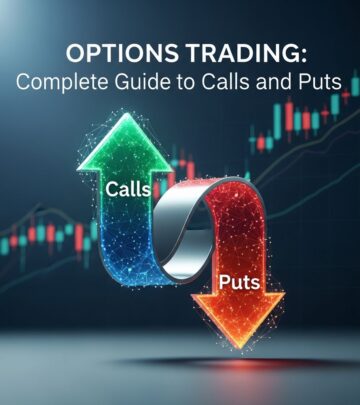
Options come in two primary varieties: call options and put options. Understanding the distinction between these two fundamental types is essential for anyone considering options trading.
Call Options: Betting on Price Increases
A call option grants the holder the right to purchase an underlying asset at a predetermined strike price before or at expiration. When you buy a call option, you’re essentially betting that the price of the underlying asset will rise above the strike price plus the premium you paid for the contract.
Call options become profitable when the underlying asset’s price rises significantly above the strike price. The further the asset price climbs beyond your strike price, the more valuable your option becomes. Theoretically, your potential profit from a call option is unlimited since there’s no cap on how high a stock price can go. This unlimited profit potential is one reason call options attract many traders seeking to maximize returns.
Put Options: Betting on Price Decreases
A put option provides the holder with the right to sell an underlying asset at a predetermined strike price before or at expiration. When you purchase a put option, you’re wagering that the price of the underlying asset will fall below the strike price minus the premium paid.
Put options become profitable when the underlying asset’s price declines significantly below the strike price. The further the asset price falls below your strike price, the more valuable your put option becomes. Put options are valuable tools for investors seeking to profit from declining markets or protect existing investment portfolios against downward price movement.
Key Options Trading Terminology
Before diving into trading, you must understand essential options terminology that forms the foundation of this market.
Strike Price and Premium
The strike price represents the predetermined price at which you have the right to buy (for calls) or sell (for puts) the underlying asset. The premium is the cost you pay upfront to purchase the option contract. This premium varies based on several factors including the underlying asset’s price, volatility, time to expiration, and interest rates.
In-the-Money and Out-of-the-Money
An in-the-money (ITM) option has intrinsic value—meaning it would be profitable to exercise immediately. For call options, this means the stock price exceeds the strike price. For put options, the stock price is below the strike price. An out-of-the-money (OTM) option has no intrinsic value and is worth only its time value—the potential for future profitability.
Expiration Date
The expiration date is the deadline by which you must exercise your option or let it expire. Options typically expire on the third Friday of each month, though weekly and monthly expirations are available. Time decay accelerates in the final weeks before expiration, making timing crucial for options traders.
Understanding Risk and Reward Profiles
One of the most attractive features of options trading is the asymmetric risk/reward profile, particularly for buyers.
Buying Call Options
Call options offer compelling risk/reward characteristics for bullish traders. Your maximum loss is strictly limited to the premium you paid for the contract—no matter how far the stock price falls. Conversely, your maximum profit is theoretically unlimited as the underlying asset’s price can rise indefinitely. This combination of defined, limited downside with unlimited upside potential explains why many traders are attracted to options.
Buying Put Options
Put options similarly offer defined risk. Your maximum loss is limited to the premium paid, providing clear downside protection. Your maximum profit is substantial but technically capped at the strike price (since stock prices cannot fall below zero), though in practical terms this represents a significant potential gain for deep in-the-money puts.
Break-Even Analysis and Profitability
Understanding break-even points is crucial for calculating actual profits and losses from options trades.
For call options, the break-even point equals the strike price plus the premium paid. For example, if you purchase a call option with a $50 strike price and pay a $2 premium, the underlying stock must rise to at least $52 for you to break even. Any movement above $52 generates profit.
For put options, the break-even point equals the strike price minus the premium paid. If you buy a put with a $50 strike price and pay a $2 premium, the stock must fall to $48 or lower for you to break even. Movement below $48 creates profit.
These calculations underscore why premium paid is so critical to your trading outcomes. A higher premium means the underlying asset must move further to reach profitability.
Time Decay and Volatility: The Greeks in Action
Options derive their value from two components: intrinsic value and time value. As expiration approaches, the probability of significant price movement decreases, causing time value to decay rapidly. This time decay—measured by the Greek letter theta—accelerates especially in the final weeks before expiration, which is why options are often called “wasting assets.” Their time value continually diminishes until expiration when only intrinsic value remains.
Time decay works against option buyers but benefits option sellers, making timing absolutely crucial. Many traders prefer to close positions before expiration to capture remaining time value or avoid automatic assignment of in-the-money options.
Underlying Assets and Option Availability
While stock options are the most common, options can be created for numerous underlying assets including:
- Individual stocks
- Exchange-traded funds (ETFs)
- Stock indices like the S&P 500
- Commodities including gold and oil
- Currencies
This diversity allows investors to tailor options strategies across different asset classes and market segments.
Options Exercise and Assignment
Understanding what happens at expiration is essential for proper position management. If an option is in-the-money at expiration, it may be automatically exercised, converting your position into shares of the underlying asset or a sale of those shares. If an option is out-of-the-money at expiration, it expires worthless and you lose the entire premium paid.
Many traders close positions before expiration to avoid assignment or capture remaining time value. Specific automatic exercise policies vary by broker, so reviewing your broker’s rules is important.
Real-World Trading Considerations
Transaction Costs Matter
While many brokerages now offer commission-free options trading, transaction costs still significantly impact your returns. Bid-ask spreads—the difference between buying and selling prices—can be substantial, especially for less liquid options. Factor these costs into your break-even calculations for accurate profit projections.
Selling Options Before Expiration
One of options’ greatest advantages is that you don’t have to hold them until expiration. If the underlying asset moves in your favor before expiration, you can often sell the option for a profit without ever exercising it, capturing the change in value. This flexibility allows traders to exit positions early and pursue new opportunities.
The Reality of Options Trading: Critical Risk Factors
While options offer tremendous profit potential, the reality of retail options trading is sobering. Research indicates that the majority of retail options traders lose money. Over 75% of options trades lose money, and more than half of retail options portfolios lose over 90% of their value. Even the top 30% of retail investors lose money in options markets according to some studies.
Retail investors make three primary wealth-depleting mistakes when trading options: they overpay for options relative to realized volatility, they tend to trade at-the-money or slightly out-of-the-money options with especially high trading costs, and they frequently make poor timing and selection decisions.
Key Risks and Warnings
Your maximum risk when buying options is limited to the premium paid, but this doesn’t mean options trading is low-risk. Additional risks include:
- Time decay working against you as an option buyer
- Rapid price swings creating unexpected losses
- Bid-ask spreads reducing actual profitability
- Overleveraging through multiple contracts
- Emotional decision-making during market volatility
Getting Started: Choosing a Broker
When beginning options trading, selecting an appropriate broker is essential. Leading platforms now offer commission-free options trading with varying account minimums. Top-tier brokers provide extensive educational resources, paper trading capabilities for practice, sophisticated charting tools, and detailed options analytics. Many platforms also offer robo-investing features alongside traditional options trading capabilities.
Paper Trading: The Essential First Step
Before committing real capital to options trading, paper trading—practice trading without real money—is an excellent way to test your understanding and develop your skills without financial risk. Most major brokers offer paper trading platforms allowing you to execute trades in real market conditions without actual capital expenditure.
Advanced Concepts and Next Steps
Once you’ve mastered basic call and put options, you can explore more sophisticated strategies including spreads, straddles, condors, and other multi-leg positions that further refine your risk/reward profile. These advanced strategies combine multiple options positions to create customized risk exposures suited to specific market outlooks.
Frequently Asked Questions About Options Trading
Q: What is the maximum loss when buying options?
A: Your maximum loss when buying options is strictly limited to the premium you paid for the contract, regardless of how dramatically the underlying asset price moves against your position.
Q: Can options be sold before expiration?
A: Yes, options can be sold before expiration if the underlying asset moves in your favor, allowing you to capture profits without exercising the contract.
Q: What assets can I trade options on?
A: Options are available on stocks, ETFs, indices, commodities, and currencies, providing diverse trading opportunities across multiple asset classes.
Q: How much do I need to start trading options?
A: Many brokers have no minimum account requirements for options trading, though you’ll need sufficient capital to cover the premium for purchasing contracts.
Q: Why do most retail options traders lose money?
A: Retail traders often overpay for options, trade at-the-money options with high trading costs, and make poor timing decisions. Additionally, time decay and bid-ask spreads significantly reduce profitability.
Q: Is options trading suitable for beginners?
A: While beginners can trade options, they require thorough education and careful risk management. Paper trading and starting with small positions is recommended before committing significant capital.
Conclusion
Options trading provides powerful tools for profit, risk management, and portfolio strategy. The asymmetric risk/reward profile of options—where losses are defined and profits are potentially substantial—explains their appeal to both experienced and beginning traders. However, the reality of retail options trading demands respect and caution. Education, practice, proper risk management, and realistic expectations are essential for long-term success. Begin with paper trading, understand break-even calculations thoroughly, and never risk capital you cannot afford to lose.
References
- Options Trading for Beginners: Master Calls & Puts in 2025 — Mind Math Money. 2025. https://www.mindmathmoney.com/articles/options-trading-for-beginners-put-and-call-options-explained-2025-guide
- How to Buy Gold Options — Money Magazine. https://money.com/how-to-buy-gold-options/
- 6 Best Online Trading Platforms for 2025 — Money Magazine. https://money.com/best-online-stock-trading-platforms/
- Why You Will (Probably) Lose Money Trading Options — YouTube. https://www.youtube.com/watch?v=K-U6eoICrYQ
- Retail Investors Lose Big in Options Markets, Research Shows — MIT Sloan. https://mitsloan.mit.edu/ideas-made-to-matter/retail-investors-lose-big-options-markets-research-shows
Similar Articles








Read full bio of medha deb