Mortgage: Definition, Types, and How It Works
Complete guide to mortgages: Understanding loans, rates, terms, and the home buying process.
A mortgage is a type of loan secured by real estate property, typically a residential home. When you obtain a mortgage, you’re borrowing money from a lender to purchase property, and you pledge that property as collateral for the loan. The lender has a legal claim on the property until you repay the loan in full. Mortgages are one of the most common forms of debt and play a crucial role in enabling people to purchase homes without having to pay the entire purchase price upfront.
Understanding Mortgages
A mortgage functions as a secured debt instrument where the property itself serves as security. If a borrower fails to make payments, the lender can initiate foreclosure proceedings to take possession of the property and sell it to recover the outstanding loan amount. This security feature typically allows lenders to offer mortgages at lower interest rates compared to unsecured loans, such as personal loans or credit cards.
The mortgage process involves several key participants: the borrower (mortgagor), who receives the loan and pledges the property; the lender (mortgagee), who provides the funds; and often a mortgage broker or correspondent lender who facilitates the transaction. The property itself becomes the security, with legal documentation filed with local authorities to establish the lender’s interest in the property.
Key Components of a Mortgage
Understanding the fundamental components of a mortgage is essential for any homebuyer:
- Principal: The original amount borrowed to purchase the property
- Interest Rate: The percentage charged by the lender for borrowing the money
- Loan Term: The time period over which the loan must be repaid, typically 15, 20, or 30 years
- Monthly Payment: The regular payment amount combining principal and interest
- Amortization: The schedule showing how the loan is paid down over time
- Down Payment: The initial amount the borrower contributes toward the purchase price
- Closing Costs: Fees associated with finalizing the mortgage transaction
Types of Mortgages
Fixed-Rate Mortgages
A fixed-rate mortgage features an interest rate that remains constant throughout the entire loan term. The monthly payment stays the same from the first payment to the last, providing predictability and stability for homeowners. Fixed-rate mortgages are popular during periods of low interest rates because borrowers can lock in favorable terms for decades. The most common fixed-rate mortgages have terms of 15, 20, or 30 years, with 30-year mortgages being the most popular due to lower monthly payments, though they result in higher total interest paid over the life of the loan.
Adjustable-Rate Mortgages (ARMs)
An adjustable-rate mortgage, or ARM, features an interest rate that changes over time. Typically, these mortgages begin with a lower introductory rate, often called a teaser rate, which remains fixed for an initial period (commonly 3, 5, 7, or 10 years). After this initial fixed period, the rate adjusts periodically based on market conditions and a specific index plus a lender margin. ARMs can be attractive to borrowers who plan to sell or refinance before the rate adjusts, but they carry increased risk when rates rise significantly.
Government-Backed Mortgages
Several government programs provide mortgage options for qualified borrowers:
- FHA Loans: Insured by the Federal Housing Administration, these loans allow borrowers with lower credit scores and smaller down payments (as low as 3.5%) to qualify for home financing
- VA Loans: Available to eligible veterans and active military members, often requiring no down payment and featuring favorable terms
- USDA Loans: Designed for rural homebuyers, these loans offer low or no down payment options for properties in designated areas
Other Mortgage Types
Additional mortgage options include interest-only mortgages, balloon mortgages, and reverse mortgages. Interest-only mortgages allow borrowers to pay only interest for a set period before principal payments begin. Balloon mortgages feature lower payments initially, with a large lump-sum payment due at the end. Reverse mortgages enable seniors to tap home equity without selling, with the loan balance due when the homeowner moves or passes away.
The Mortgage Application and Approval Process
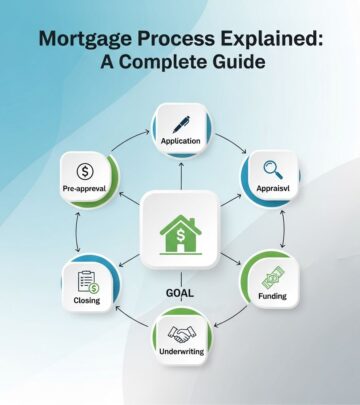
Obtaining a mortgage involves a structured process that typically includes the following steps:
Pre-Qualification and Pre-Approval
Pre-qualification is an initial assessment where lenders estimate how much you can borrow based on basic financial information. Pre-approval is more formal, involving credit checks and income verification, resulting in a written commitment for a specific loan amount. Pre-approval strengthens your position as a homebuyer and demonstrates seriousness to sellers.
Property Selection and Offer
Once pre-approved, you can begin searching for properties within your budget. When you find a suitable home, you submit an offer to purchase. The offer typically includes contingencies, such as inspection and financing contingencies, protecting the buyer if issues arise.
Home Inspection and Appraisal
After an offer is accepted, you arrange a professional home inspection to identify any structural issues or necessary repairs. Simultaneously, the lender orders a professional appraisal to ensure the property’s value supports the loan amount. If the appraisal comes in lower than the purchase price, negotiations may be necessary.
Underwriting and Final Approval
During underwriting, the lender’s underwriter thoroughly reviews your financial documents, verifying employment, income, assets, and debts. They assess your ability to repay the loan and confirm the property meets lending standards. Additional documentation may be requested during this phase.
Closing
At closing, you sign all final documents, including the promissory note and mortgage deed. Title is transferred to you, and you receive the keys to your new home. The lender disburses funds to pay off the seller and cover closing costs.
Factors Affecting Mortgage Rates
Several factors influence the interest rates offered on mortgages:
| Factor | Impact on Rates |
|---|---|
| Federal Reserve Policy | Changes in federal funds rate influence mortgage rates |
| Credit Score | Higher scores typically receive lower rates |
| Loan-to-Value Ratio | Larger down payments reduce lender risk and rates |
| Economic Conditions | Inflation and economic outlook affect rate levels |
| Loan Term Length | Longer terms typically have higher rates |
| Mortgage Type | Fixed rates higher than introductory ARM rates |
Understanding Mortgage Terms and Concepts
Several important concepts relate to mortgages that borrowers should understand:
- Amortization: The gradual repayment of a loan through regular payments, with early payments weighted toward interest and later payments toward principal
- Escrow: An account where the lender holds funds for property taxes and homeowners insurance, paying these obligations from the escrow account
- Private Mortgage Insurance (PMI): Insurance required when down payments are less than 20%, protecting the lender if you default
- Equity: The portion of the property you own outright, calculated as home value minus outstanding mortgage balance
- Refinancing: Replacing an existing mortgage with a new loan, typically to secure better terms or interest rates
Advantages and Disadvantages of Mortgages
Advantages
- Enables property ownership without full upfront payment
- Fixed-rate options provide payment stability and predictability
- Mortgage interest may be tax-deductible
- Building equity in a tangible asset
- Historically favorable interest rates in recent periods
Disadvantages
- Long-term debt obligation lasting decades
- Interest costs can exceed the original loan amount
- Risk of foreclosure if payments cannot be made
- Additional costs including insurance, taxes, and maintenance
- ARMs carry risk of payment increases
Frequently Asked Questions
Q: What is the minimum credit score needed for a mortgage?
A: Most conventional mortgages require a minimum credit score of 620, though better rates are available with scores above 740. FHA loans may accept scores as low as 500-580 with larger down payments.
Q: How much down payment do I need?
A: Down payments typically range from 3% to 20% of the purchase price. Government-backed loans may require as little as 0% to 3.5%, while conventional loans often require at least 5-20%.
Q: What are closing costs?
A: Closing costs include fees for appraisal, title insurance, attorney fees, inspection, and other services. These typically range from 2% to 5% of the purchase price.
Q: Can I pay off my mortgage early?
A: Yes, most mortgages allow early payoff without penalties. Making extra payments toward principal can significantly reduce interest costs and shorten the loan term.
Q: What is mortgage refinancing?
A: Refinancing involves taking out a new mortgage to pay off an existing one, typically to secure better interest rates, change loan terms, or access home equity.
Q: How does private mortgage insurance work?
A: PMI protects lenders if borrowers default. It’s required when down payments are less than 20% and can be removed once you build sufficient equity, typically 20%.
References
- Consumer Financial Protection Bureau (CFPB) – Mortgage Loan Servicers — U.S. Consumer Financial Protection Bureau. 2024. https://www.consumerfinance.gov/mortgage-loan-servicers/
- Federal Housing Administration – FHA Loans — U.S. Department of Housing and Urban Development. 2024. https://www.fha.gov/
- Understanding Mortgage Basics — Federal Reserve Educational Resources. 2024. https://www.federalreserve.gov/
- Mortgage Interest Rate Factors and Trends — Freddie Mac Primary Mortgage Market Survey. 2024. https://www.freddiemac.com/pmms
- VA Home Loans: Benefits and Requirements — U.S. Department of Veterans Affairs. 2024. https://www.va.gov/housing-assistance/home-loans/
- USDA Rural Development Loan Program — U.S. Department of Agriculture. 2024. https://www.rd.usda.gov/programs-services/single-family-housing-guaranteed-loan-program
Similar Articles








Read full bio of medha deb