Long-Term Debt: 7 Common Types And How They Affect Companies
Understand long-term debt, its types, and how it impacts your finances and business operations.

Understanding Long-Term Debt
Long-term debt, also referred to as long-term liabilities, represents any financial obligation that extends beyond 12 months. Whether you’re a business owner seeking capital for expansion or an investor exploring fixed-income opportunities, understanding long-term debt is essential for making informed financial decisions. This comprehensive guide explores what long-term debt is, how it functions, the various types available, and its significance in both corporate and personal finance.
What Is Long-Term Debt?
Long-term debt is any outstanding financial obligation a company or individual holds with a maturity date extending beyond one year. Unlike short-term debt, which must be repaid within 12 months, long-term debt provides borrowers with extended repayment periods that can range from several years to several decades. This classification offers flexibility for businesses seeking to finance large-scale investments and for individuals planning major purchases.
From an accounting perspective, long-term debt is classified as a non-current liability on a company’s balance sheet. This designation indicates that the obligation won’t require payment within the current fiscal year. The extended timeline allows companies to align their debt repayment schedules with the productive life of the assets they’ve financed, creating a more sustainable financial structure.
Long-term debt serves as an excellent tool for businesses and individuals who need immediate funds for startup expenses, significant capital purchases, or other financial needs that can increase their financial leverage. Simultaneously, lending institutions profit by issuing these long-term loans, which accrue interest over extended periods.
How Long-Term Debt Appears on the Balance Sheet
Understanding how long-term debt is presented on financial statements is crucial for investors and stakeholders analyzing a company’s financial health. Long-term debt appears as a non-current liability on the balance sheet, representing obligations due beyond the current accounting period.
As portions of long-term debt become due within the upcoming year, these amounts transition from non-current liabilities to current liabilities. This movement is typically classified as the “current portion of long-term debt.” For example, if a company has a $500,000 bank loan amortized equally over five years, the balance sheet would show $400,000 as long-term debt in year one, with $100,000 reclassified as a current liability since it’s due within the next 12 months.
This reclassification process continues annually until the entire debt is repaid. Financial analysts and creditors closely monitor these transitions because they affect a company’s liquidity ratios and overall financial health assessment.
Common Types of Long-Term Debt
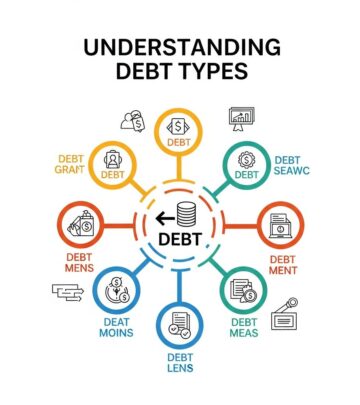
Long-term debt encompasses a wide variety of financial instruments and obligations. Understanding the different types helps borrowers select appropriate financing options and investors identify suitable investment opportunities.
Bank Loans
Bank loans represent one of the most straightforward forms of long-term debt. These loans are issued by financial institutions to individuals or businesses and typically cannot be traded or transferred between parties. Banks structure these loans with specific repayment terms, interest rates, and conditions tailored to the borrower’s circumstances.
Mortgages
Mortgages are long-term loans secured by real estate assets such as land, buildings, or commercial properties. Because they’re backed by tangible collateral, mortgages typically offer lower interest rates than unsecured loans. Companies often use mortgages to finance the acquisition or construction of facilities they’ll use for extended periods.
Corporate Bonds
Corporate bonds represent a popular form of long-term debt investment. When corporations issue bonds, they’re borrowing from investors who receive periodic interest payments and the principal at maturity. Corporate bonds typically carry higher default risk compared to government securities, but they often offer higher yields to compensate investors for this risk. Rating agencies assess corporate creditworthiness and assign ratings that help investors understand default risk.
Municipal Bonds
Municipal bonds are debt securities issued by government organizations to finance infrastructure projects. These bonds are often regarded as some of the least risky bond investments because they carry minimal default risk, typically only slightly higher than U.S. Treasury securities. Government entities may issue either short-term or long-term municipal debt depending on project requirements.
U.S. Treasury Securities
The U.S. government issues Treasury securities with various maturity dates. Long-term Treasury securities are available with maturities of 2, 3, 5, 7, 10, 20, and 30 years. These securities are considered extremely safe investments because they’re backed by the full faith and credit of the U.S. government, making them attractive to conservative investors seeking stable income.
Debentures
Debentures are unsecured long-term debt instruments that lack specific collateral backing them. Because they’re not secured by particular assets, debentures typically carry higher interest rates and lower repayment priority compared to secured debt. Companies with strong credit ratings are more likely to issue debentures successfully at reasonable rates.
Leases
Lease agreements for land, property, or services lasting multiple years constitute another form of long-term debt. Long-term operating and capital leases represent ongoing financial obligations that appear on balance sheets and affect a company’s financial ratios.
Why Companies Use Long-Term Debt
Companies strategically employ long-term debt financing for several important reasons. First, they use it to finance long-term expenditures like purchasing equipment, facilities, and fixed assets that will generate value over many years. By matching the maturity of their debt with the productive life of their assets, companies create more sustainable financial structures.
Second, long-term financing protects companies against fluctuations in credit supply and reduces refinancing risk during economic downturns. Rather than relying on constantly renewing short-term debt, companies with long-term obligations maintain stable financing arrangements regardless of market conditions.
Third, long-term debt can enhance financial leverage, allowing companies to pursue growth opportunities and strategic investments that might otherwise be unaffordable. The extended repayment period distributes payments across multiple years, improving cash flow management.
Assessing Long-Term Debt Through Financial Ratios
Financial analysts and rating agencies examine business solvency ratios to evaluate companies’ ability to meet long-term obligations. These ratios include long-term debt liabilities as a crucial component for understanding solvency risk. Key metrics include debt-to-equity ratios, debt-to-asset ratios, and interest coverage ratios, which help stakeholders assess whether companies can comfortably service their long-term debt obligations.
Credit rating agencies place strong emphasis on solvency ratios when evaluating and assigning entity ratings. These ratings provide investors and lenders with standardized assessments of default risk, making long-term debt investments more transparent and easier to evaluate.
Long-Term Debt as an Investment
For investors, long-term debt securities offer opportunities to generate consistent income through interest payments. Bonds and fixed-income securities with maturities exceeding one year allow investors to lock in yields for extended periods. The relationship between debt maturity and yield varies based on economic conditions, credit quality, and market expectations about future interest rates.
Investors can choose from various long-term debt investments with different risk profiles. Government securities offer safety with moderate returns, while corporate bonds provide higher yields with correspondingly higher default risk. Municipal bonds offer tax advantages in certain circumstances, making them attractive to investors in higher tax brackets.
Frequently Asked Questions About Long-Term Debt
Q: What is the main difference between long-term and short-term debt?
A: The primary distinction lies in repayment timing. Long-term debt has maturity dates exceeding 12 months, while short-term debt must be repaid within one year. This affects how they appear on balance sheets and how they influence financial ratios.
Q: Why would a company choose long-term debt over short-term borrowing?
A: Companies select long-term debt because it aligns repayment schedules with asset productive lives, protects against refinancing risk, provides financial stability, and allows better cash flow management across multiple years.
Q: What happens to long-term debt when it becomes due?
A: When long-term debt approaches maturity within the next 12 months, the outstanding balance is reclassified from non-current to current liabilities on the balance sheet as the “current portion of long-term debt.”
Q: Can individuals have long-term debt?
A: Yes, individuals can have long-term debt through mortgages, auto loans, student loans, and other borrowing arrangements with maturity dates exceeding one year.
Q: Which is the safest form of long-term debt investment?
A: U.S. Treasury securities are generally considered the safest because they’re backed by the U.S. government. Municipal bonds and high-rated corporate bonds also offer relatively low default risk depending on the issuer’s creditworthiness.
Q: How does long-term debt affect a company’s credit rating?
A: High levels of long-term debt relative to assets and earnings can negatively impact credit ratings. Rating agencies assess whether companies generate sufficient cash flow to service their debt obligations comfortably.
Key Takeaways
Long-term debt represents a fundamental financing tool for businesses and a significant investment category for fixed-income investors. Understanding its characteristics, types, and accounting treatment is essential for making informed financial decisions. Whether you’re evaluating a company’s financial health, seeking business financing, or building an investment portfolio, long-term debt deserves careful consideration alongside your overall financial strategy. By comprehending how long-term debt functions within financial structures, you can better assess risk, evaluate opportunities, and make decisions aligned with your financial objectives.
References
- Long-Term Debt: Definition, Formula & Example Guide — FreshBooks. 2024. https://www.freshbooks.com/glossary/accounting/long-term-debt
- Long Term Debt – Definition, Guide, How to Model LTD — Corporate Finance Institute. 2024. https://corporatefinanceinstitute.com/resources/accounting/long-term-debt-ltd/
- Long-Term Debt | Research Starters – Business and Management — EBSCO Information Services. 2024. https://www.ebsco.com/research-starters/business-and-management/long-term-debt
- What is long-term debt? — Accounting Coach. 2024. https://www.accountingcoach.com/blog/what-is-long-term-debt
- Long-term Debt – Financial Accounting I — Fiveable. 2024. https://fiveable.me/key-terms/financial-accounting/long-term-debt
- What Is Long-Term Debt? — Money. 2024. https://money.com/what-is-long-term-debt/
Similar Articles








Read full bio of medha deb