Jumbo Mortgage Guide For 2025: Rates, Requirements, Tips
Understanding jumbo mortgages: limits, requirements, rates, and how they differ from conventional loans.
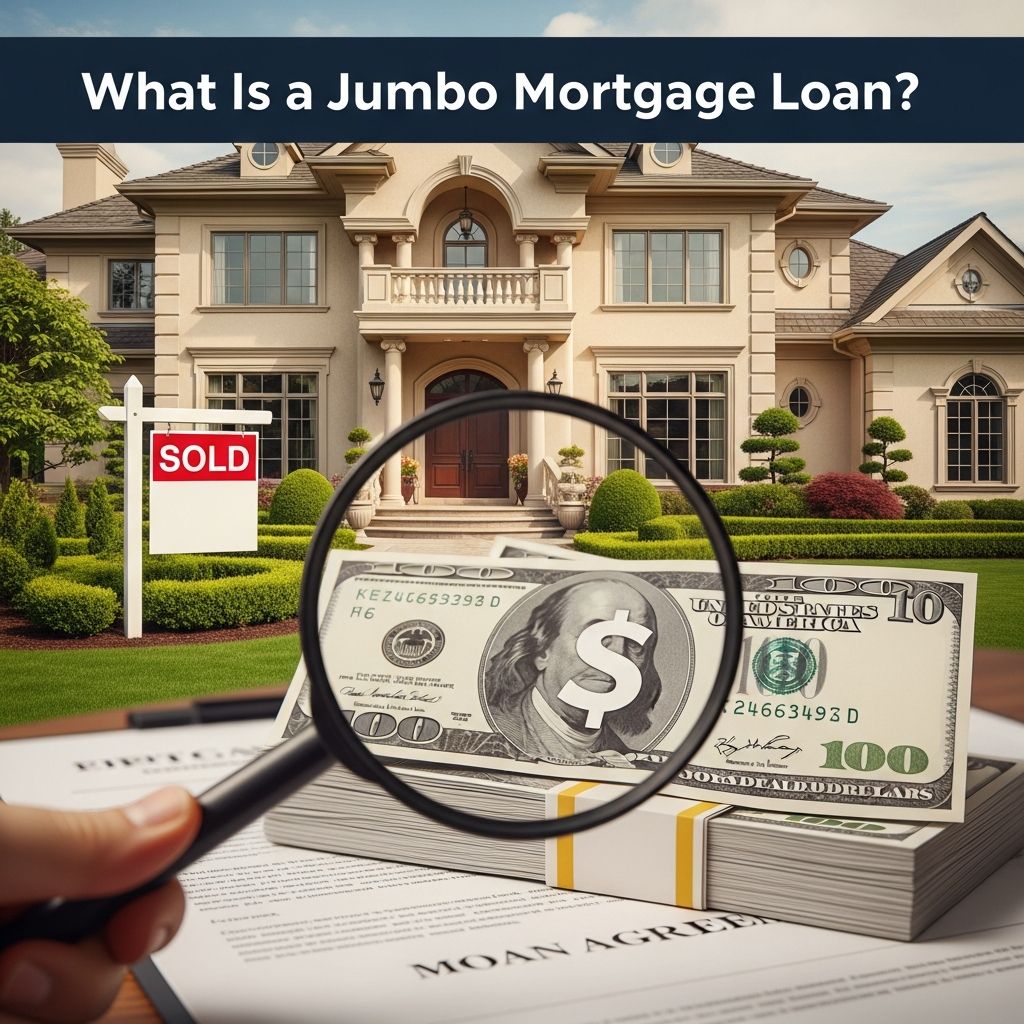
What Is a Jumbo Mortgage?
A jumbo mortgage is a type of home loan that exceeds the conforming loan limits established annually by the Federal Housing Finance Agency (FHFA) on behalf of Fannie Mae and Freddie Mac. These government-sponsored enterprises set maximum loan amounts that they will guarantee, and any mortgage beyond these thresholds is classified as a jumbo loan. As of 2025, in most parts of the United States, a jumbo mortgage exceeds $806,500, though this limit varies significantly depending on your location. In high-cost areas with elevated living expenses, the conforming loan limit can reach $1,209,750. Borrowers may need a jumbo loan when purchasing expensive homes or refinancing properties in costly metropolitan regions.
Jumbo loans serve multiple purposes in the real estate market. They can be used to purchase primary residences, investment properties, or vacation homes. Whether you’re a first-time homebuyer or an experienced real estate investor, if your loan amount exceeds your area’s conforming limit, you’ll be entering the jumbo mortgage market. Understanding the unique characteristics, requirements, and implications of jumbo loans is essential for making informed financial decisions about high-value property purchases.
How Jumbo Loans Compare to Conforming Loans
While jumbo loans and conforming loans serve similar purposes, they differ substantially in their requirements, rates, and characteristics. Conforming loans are those that meet the standards set by Fannie Mae and Freddie Mac, making them eligible for purchase or guarantee by these entities. Jumbo loans, conversely, exceed these limits and therefore fall outside the conforming loan framework.
Key Differences Between Jumbo and Conforming Loans
| Feature | Jumbo Loans | Conforming Loans |
|---|---|---|
| Loan Amount | Above $806,500 (varies by location) | Up to $806,500 (varies by location) |
| Minimum Credit Score | 700 | 620 |
| Minimum Down Payment | 20-25% | 3-5% |
| Debt-to-Income Ratio | 36-43% | 43-50% |
| Cash Reserves Required | Up to 12 months of payments | Up to 6 months of payments |
| Interest Rates | Generally higher, though gap narrowing | Typically lower |
The stringent requirements for jumbo loans reflect the heightened risk lenders assume when financing larger loan amounts. Lenders mitigate this risk by requiring borrowers to demonstrate superior financial stability, higher creditworthiness, and greater equity commitment through substantial down payments.
Qualification Requirements for Jumbo Mortgages
Obtaining a jumbo mortgage requires meeting more rigorous qualification standards than conventional conforming loans. Financial institutions are understandably cautious when lending amounts that significantly exceed conforming limits. Here are the typical requirements borrowers must satisfy:
Credit Score Requirements
Most lenders require a minimum credit score of 680 to 700 for jumbo mortgage approval, substantially higher than the 620 minimum typically required for conforming loans. Some lenders may have even more stringent requirements. Your credit score reflects your payment history, credit utilization, and overall creditworthiness, making it a critical factor in the lending decision. Lenders use credit scores as an indicator of your reliability in repaying the substantial loan amount.
Debt-to-Income Ratio
Your debt-to-income (DTI) ratio, which compares your total monthly debt obligations to your gross monthly income, must typically not exceed 36 to 45 percent for jumbo loan qualification. This stricter threshold, compared to the 43-50 percent allowed for conforming loans, ensures that you have sufficient income to comfortably manage the jumbo mortgage payment alongside your other financial obligations.
Down Payment
Jumbo loans generally require a down payment of 20 to 25 percent of the property’s purchase price, significantly higher than the 3 to 5 percent required for conforming loans. This substantial equity stake demonstrates your financial commitment and reduces the lender’s risk exposure. Some lenders may accept lower down payments, such as 10 to 15 percent, depending on your overall financial profile and compensating factors.
Cash Reserves
Lenders typically require borrowers to maintain cash reserves equivalent to six to twelve months of mortgage payments in readily accessible savings accounts. These reserves provide a financial cushion, assuring the lender that you can continue making payments even if you experience temporary income disruption. This requirement reflects the conservative lending standards applied to large jumbo loan amounts.
Understanding Current Jumbo Mortgage Rates
As of November 29, 2025, the mortgage rate landscape reflects ongoing market dynamics and Federal Reserve policy. The national average 30-year fixed jumbo mortgage interest rate stands at 6.41 percent, with an accompanying annual percentage rate (APR) of 6.44 percent. For borrowers preferring shorter loan terms, the 15-year fixed jumbo rate averages 5.73 percent with an APR of 5.81 percent.
Interestingly, the gap between jumbo and conforming loan rates has narrowed considerably in recent years. This convergence reflects competitive market dynamics and changes in how Fannie Mae and Freddie Mac structure their guarantee fees. Previously, jumbo borrowers consistently paid a significant rate premium; however, current market conditions have largely eliminated this penalty.
Factors Influencing Your Jumbo Mortgage Rate
While national averages provide useful context, your actual interest rate depends on several personal financial factors:
Credit Score and Financial Profile: Borrowers with excellent credit scores and low debt-to-income ratios typically qualify for the most favorable rates. Lenders may employ compensating factors, such as higher income or significant assets, to offset credit score deficiencies, and this flexibility occurs more frequently with jumbo loans than conforming loans.
Home Equity Position: If you’re refinancing, substantial home equity typically qualifies you for better rates. Lenders view high equity positions favorably because they reduce default risk.
Market Interest Rate Environment: Jumbo mortgage rates follow broader market trends influenced by Federal Reserve policy and economic conditions. When the Federal Reserve raises benchmark rates, jumbo rates typically increase correspondingly.
Geographic Location: Regional economic strength influences rate availability. Lenders may adjust rates upward in areas with historically higher loan default risks or weaker economic conditions.
Advantages of Jumbo Loans
Despite their stringent requirements, jumbo mortgages offer several compelling advantages for qualified borrowers seeking to finance high-value properties:
Competitive Interest Rates: Current market rates on jumbo loans closely approximate those of conforming loans. You no longer face a substantial rate premium simply because you’re borrowing a larger amount. This competitive landscape makes jumbo financing increasingly attractive for borrowers in expensive real estate markets.
Flexible Loan Terms: Many lenders retain jumbo loans in their portfolios rather than selling them to secondary market investors. This portfolio lending approach allows for greater flexibility in loan structure and terms. You might negotiate a lower down payment, alternative payment schedules, or customized terms that wouldn’t be available with conforming loans.
Premium Banking Services: Banks are major players in the jumbo mortgage market, and they frequently offer private banking benefits to jumbo borrowers. These perks may include relationship managers, preferential rates on other banking products, investment advisory services, and priority customer service.
Challenges and Considerations
While jumbo loans provide access to financing for expensive properties, they also present specific challenges that prospective borrowers should carefully consider.
The heightened qualification requirements mean that fewer borrowers qualify for jumbo loans compared to conforming mortgages. You must demonstrate exceptional financial stability and creditworthiness. The substantial down payment requirement ties up significant capital that might otherwise be invested elsewhere. Additionally, jumbo loans typically have fewer standardized features, meaning terms, conditions, and products vary more substantially between lenders, necessitating thorough comparison shopping.
Finding the Best Jumbo Mortgage Lenders
When shopping for jumbo mortgages, you’ll encounter several types of lenders, each with varying credit requirements, down payment expectations, and service models. Major national banks like Chase, U.S. Bank, and other financial institutions are significant jumbo loan providers. Additionally, some online lenders and mortgage specialists have developed competitive jumbo mortgage products. When evaluating lenders, consider their credit score requirements, minimum down payments, customer service reputation, and rate competitiveness. Bankrate periodically evaluates lenders based on affordability, availability, and borrower experience, assigning comprehensive ratings to help consumers identify the best options for their specific circumstances.
Jumbo Loan Limits by Geographic Area
The conforming loan limit threshold that determines whether a mortgage qualifies as a jumbo loan varies substantially across the United States, reflecting regional cost-of-living differences. In most areas, the 2025 limit is $806,500. However, in high-cost regions—including parts of California, New York, Massachusetts, and Washington D.C.—the limit extends to $1,209,750. Some counties may have even higher limits in particularly expensive markets. Before beginning your home search, confirm your specific area’s current conforming loan limits, as this directly determines whether you’ll need jumbo financing.
Should You Consider a Jumbo Mortgage?
A jumbo mortgage makes sense if you’re purchasing an expensive property in a high-cost real estate market and have the financial credentials to qualify. The competitive rate environment means you’re not paying a substantial premium for jumbo financing. If you meet the qualification requirements and have stable income, strong credit, and substantial savings, jumbo financing opens possibilities in premium real estate markets that conforming loans alone cannot provide.
Frequently Asked Questions About Jumbo Mortgages
Q: What’s the minimum credit score needed for a jumbo mortgage?
A: Most lenders require a minimum credit score between 680 and 700 for jumbo mortgage approval. Some lenders may accept scores as low as 660 if other compensating factors are strong. However, to secure the most competitive rates, a score above 700 is preferable.
Q: Can I get a jumbo mortgage with a lower down payment?
A: While jumbo loans typically require 20-25 percent down, some lenders may accept 10-15 percent down payments if you have exceptional credit, strong income, and substantial cash reserves. Portfolio lenders are more likely to offer flexible down payment options than those selling loans to secondary market investors.
Q: How do jumbo mortgage rates compare to conforming loan rates?
A: As of late 2025, jumbo mortgage rates are very competitive with conforming loan rates. The historical rate premium that jumbo borrowers paid has largely disappeared due to competitive market dynamics and changes in how government-sponsored enterprises structure their fees.
Q: Is jumbo financing available for investment properties or vacation homes?
A: Yes, jumbo loans can finance primary residences, investment properties, and vacation homes. However, requirements may vary slightly for non-primary residences, and lenders might require additional documentation and slightly higher down payments.
Q: How much cash reserves do I need to qualify for a jumbo mortgage?
A: Typically, lenders require cash reserves equal to 6-12 months of mortgage payments in liquid savings accounts. These reserves demonstrate your ability to weather income interruptions and maintain mortgage payments during financial difficulties.
Q: What is the difference between a jumbo loan and a conforming loan?
A: The primary difference is the loan amount. Jumbo loans exceed conforming limits set by Fannie Mae and Freddie Mac, requiring higher credit scores, larger down payments, lower debt-to-income ratios, and greater cash reserves. Jumbo loans also typically offer more flexible terms because lenders often retain them in portfolio rather than selling them.
Q: What factors influence the interest rate I’ll receive on a jumbo mortgage?
A: Your personal credit score, debt-to-income ratio, down payment amount, home equity (if refinancing), employment stability, and geographic location all influence your rate. Lenders also consider overall market conditions and the Federal Reserve’s benchmark interest rates when pricing jumbo mortgages.
Q: Are there benefits to having a jumbo mortgage with a specific bank?
A: Yes, many banks offer private banking services exclusively to jumbo mortgage customers. These benefits may include relationship managers, preferential rates on other products, investment advisory services, concierge banking, and priority customer service.
References
- Bankrate Jumbo Mortgage Rates and Information — Bankrate, Inc. 2025-11-29. https://www.bankrate.com/mortgages/what-is-jumbo-mortgage/
- Current Jumbo Mortgage Rates and Daily Trends — Bankrate, Inc. 2025-11-29. https://www.bankrate.com/mortgages/jumbo-loan-rates/
- Jumbo vs. Conventional Loans: Complete Comparison Guide — Bankrate, Inc. 2025. https://www.bankrate.com/mortgages/jumbo-vs-conventional-loans/
- Best Mortgage Lenders for Jumbo Loans in 2025 — Bankrate, Inc. 2025. https://www.bankrate.com/mortgages/best-lenders/jumbo-mortgage-lenders/
- 2025 Jumbo Loan Limits by State — Bankrate, Inc. 2025. https://www.bankrate.com/mortgages/jumbo-loan-limits/
- Federal Housing Finance Agency Conforming Loan Limits — Federal Housing Finance Agency. 2025. https://www.fhfa.gov/
Similar Articles








Read full bio of medha deb