What Is Intraday Trading: A Complete Guide
Master intraday trading with strategies, risks, and essential tips for day traders.
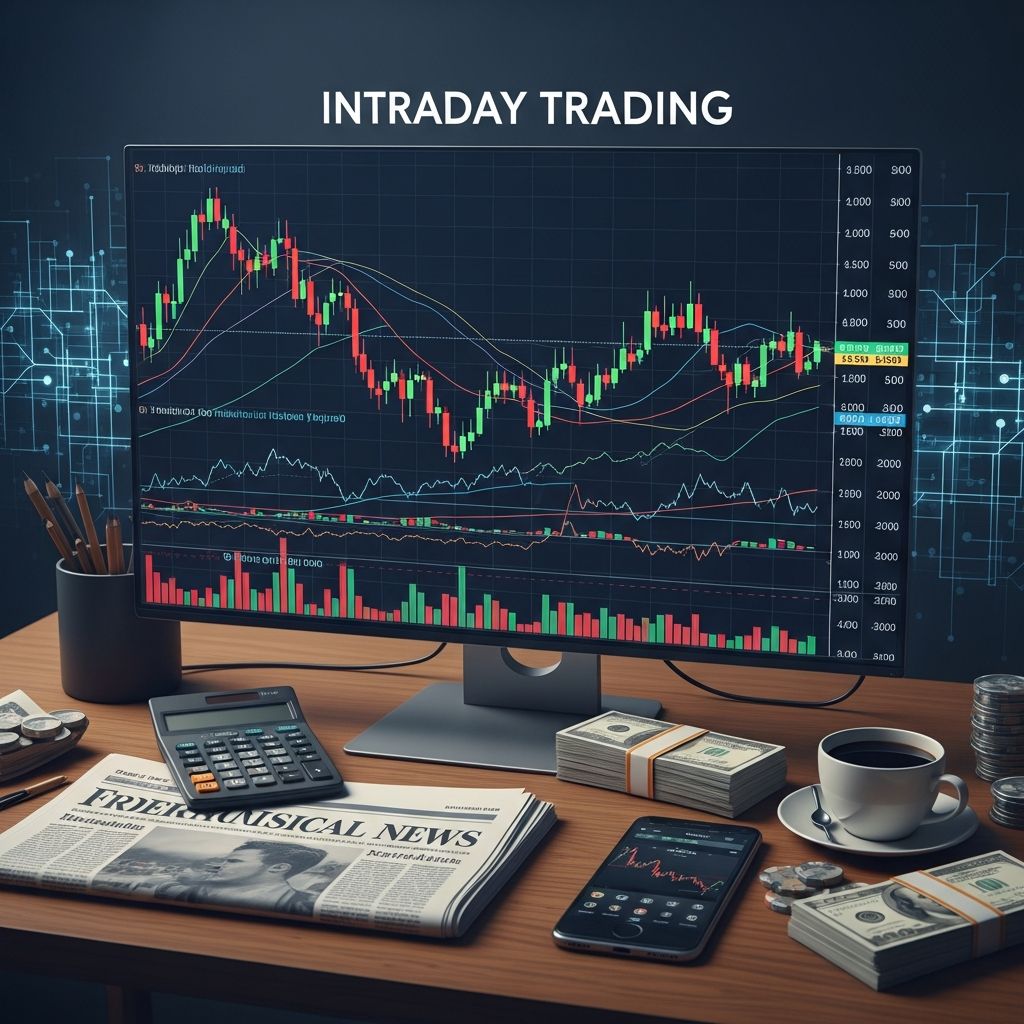
Intraday trading, also known as day trading, represents a dynamic and fast-paced approach to financial markets where traders buy and sell securities within the same trading day. Unlike traditional investing that focuses on long-term wealth accumulation, intraday trading capitalizes on short-term price fluctuations that occur throughout a single trading session. This trading methodology demands quick decision-making, disciplined execution, and a thorough understanding of market mechanics.
Understanding Intraday Trading: Definition and Core Concept
Intraday trading is the practice of buying and selling financial securities within the same trading day, with all positions closed before the market closes. The fundamental principle underlying intraday trading is straightforward: enter a position at one price and exit at a higher (or lower, in case of short selling) price, capturing the profit from the difference within hours or even minutes.
The key characteristic that distinguishes intraday trading from other trading styles is the elimination of overnight risk. By closing all positions before market close, traders avoid potential adverse movements that could occur overnight due to unexpected news, geopolitical events, or earnings announcements. This same-day settlement approach offers flexibility and reduces certain types of risk exposure.
The Two Essential Ingredients of Intraday Trading
Successful intraday trading relies on two critical market conditions:
Volatility creates the price swings necessary for profit opportunities. Without sufficient price movement, there’s limited potential for gain. Liquidity ensures traders can execute trades instantly without becoming stuck in positions. Markets with high trading volume provide the liquidity needed to enter and exit trades efficiently without significant price slippage.
How Intraday Trading Differs from Other Trading Styles
| Trading Style | Holding Period | Typical Goal | Time Commitment |
|---|---|---|---|
| Intraday Trading | Seconds to Hours | Small, frequent profits from daily volatility | High daily focus during market hours |
| Scalping | Seconds to Minutes | Tiny, rapid profits on dozens of trades | Extremely high; constant monitoring |
| Swing Trading | Days to Weeks | Capture price swings in larger trends | Moderate; daily or weekly check-ins |
| Position Trading | Weeks to Months | Capitalize on major market trends | Low; periodic monitoring |
The differences between these approaches are substantial. A position trader might place only a few trades annually, while a scalper could execute that many trades before breakfast. Intraday trading sits in the middle of this spectrum, requiring consistent focus during market hours but offering more frequent trading opportunities than position trading.
Key Characteristics of Intraday Trading
Understanding the defining features of intraday trading helps traders prepare appropriately for this trading style:
Daily Time Frame: All trades are opened and closed within a single trading day. This constraint shapes every decision a trader makes.
Leverage and Margin: Brokers typically offer margin accounts that amplify trading power, allowing traders to control larger positions with smaller capital requirements. However, leverage magnifies both profits and losses.
Quick Decision-Making: Intraday traders must act rapidly on price changes, often within seconds or minutes. This requires preparation, clear entry and exit rules, and the ability to execute decisions under pressure.
Higher Liquidity Requirements: Successful intraday trading focuses on stocks with strong trading volume and bid-ask spreads to ensure efficient trade execution.
High Volatility: Price changes occur rapidly within trading days, and the average volume of intraday trades on major exchanges like NYSE and NASDAQ significantly exceeds that of longer-term trades.
Advantages and Disadvantages of Intraday Trading
Advantages
Potential for High Profits: Frequent trades combined with leverage create opportunities for substantial gains. Skilled traders capturing multiple small winners throughout the day can accumulate significant returns.
No Overnight Risk: By closing positions before market close, traders eliminate exposure to overnight gaps, news-driven price jumps, and after-hours trading surprises.
Lower Capital Requirements: Intraday trading requires less capital compared to long-term investments and position trading strategies.
Flexibility and Adaptability: Traders can adjust strategies throughout the day based on changing market conditions, new information, and technical signals.
Disadvantages
Potential for High Losses: The same leverage and volatility that create profit opportunities can lead to substantial losses, particularly for inexperienced traders.
Stress and Emotional Challenges: Intraday trading demands constant market attention and rapid decision-making, creating psychological pressure and stress.
High Volatility Risk: Price movements can be unpredictable and swift, catching traders off guard.
Fast-Paced Decision-Making Requirements: The need for speed can lead to poor decisions, impulsive trading, and deviation from planned strategies.
Transaction Costs: Frequent trading increases commissions, fees, and slippage, all of which reduce net profitability.
Popular Intraday Trading Strategies
Scalping
Scalping represents one of the most aggressive intraday strategies, involving numerous trades over very short periods—often just seconds to a few minutes. Scalpers aim to capture tiny price movements repeatedly throughout the day, accumulating profits through volume rather than large individual gains. This strategy requires extreme discipline, fast execution, and deep market knowledge.
Range Trading
Range traders identify stocks moving within specific price ranges and capitalize on predictable bounces between support and resistance levels. Traders buy near the low end of the range and sell near the high end, repeatedly exploiting the same price boundaries until the range breaks.
Momentum Trading
Momentum trading focuses on stocks exhibiting strong directional trends, using technical indicators and market data to identify significant upward or downward momentum. Traders enter trades in the direction of the trend and exit when momentum weakens, aiming to capture larger price moves than scalpers.
Moving Average Crossovers
This technical strategy uses two or more moving averages (such as 50-day and 200-day averages) to identify potential buy or sell signals. Traders interpret crossovers as indications of trend reversals or momentum shifts, providing entry and exit points.
Breakout Trading
Breakout traders identify price levels where markets have historically shown strong support or resistance, then place trades when prices break through these levels. Using technical indicators like Bollinger Bands, traders seek explosive moves beyond established boundaries.
Pullback Trading
This strategy involves buying or selling during temporary reversals within prevailing trends, using Fibonacci retracement levels or trend lines to identify optimal entry points. Traders anticipate trend resumption after the pullback concludes.
Intraday Trading Across Different Markets
Intraday Stock Trading
Stock intraday trading involves buying and selling equities within the same day to capture short-term price movements in equity markets. This requires careful technical and fundamental analysis, focusing on stocks with sufficient volume and volatility.
Forex Intraday Trading
Currency pair traders speculate on exchange rate movements within single trading days. Forex markets operate continuously across global markets and exhibit high volatility, requiring understanding of economic events, technical analysis, and international factors.
Commodity Intraday Trading
Traders buy and sell commodities like gold, silver, crude oil, and agricultural products within trading days. Commodity markets respond to supply-demand dynamics, geopolitical events, and economic reports.
Cryptocurrency Intraday Trading
Digital currency markets operate 24/7, allowing round-the-clock intraday trading of Bitcoin, Ethereum, and other cryptocurrencies. Crypto volatility creates significant opportunities and risks for intraday traders.
Building Your Intraday Trading Plan
Setting Clear Goals
Define specific profit targets as daily, weekly, or monthly income goals. Clarify your trading style preference—whether scalping, range trading, or momentum trading—and establish goals aligned with your approach.
Defining Entry and Exit Points
Develop clear strategies using technical analysis, fundamental analysis, or combinations of both to identify entry and exit points. Consider liquidity, volatility, and trading volume when selecting securities. Establish predetermined stop-loss and take-profit levels before entering trades.
Establishing Trading Rules
Create specific rules governing your trading activities, including trading timeframes, position sizing, and trade execution protocols. Determine the number of trades per day or week, then maintain discipline in following these guidelines. Define rules for managing trades like trailing stops or partial profit-taking.
Risk Management
Risk management proves absolutely critical in intraday trading. Determine risk limits for each trade and daily trading sessions to protect capital. Calculate favorable risk-reward ratios for each trade before entry. Employ diversification, sound position sizing, and avoid over-trading tendencies.
Advanced Concepts in Intraday Trading
Short Selling
Intraday traders can profit during market downturns using short selling strategies. Traders borrow shares, immediately sell them at current prices, then buy them back later at lower prices to return to lenders, pocketing the difference.
Leverage and Margin
Brokers extend credit to intraday traders, amplifying purchasing power and potential returns. However, leverage magnifies losses equally, making risk management essential. Traders must understand margin requirements, margin calls, and the mechanics of leveraged trading.
Frequently Asked Questions About Intraday Trading
Q: What is the minimum capital required to start intraday trading?
A: Minimum capital requirements vary by broker and country. In the United States, Pattern Day Traders must maintain minimum account equity of $25,000. However, you can start with less capital in other markets or with certain brokers, though leverage capabilities may be limited with smaller accounts.
Q: How much can I earn from intraday trading?
A: Earnings depend on numerous factors including market conditions, trading strategy effectiveness, account size, and leverage used. While some traders earn substantial income, many experience losses, especially initially. Realistic expectations suggest aiming for 1-3% daily returns as achievable, though results vary widely.
Q: What skills do successful intraday traders need?
A: Essential skills include technical analysis knowledge, emotional discipline, quick decision-making ability, risk management expertise, and market understanding. Successful traders maintain detailed trading journals, review their performance regularly, and continuously refine their strategies.
Q: Is intraday trading suitable for beginners?
A: While beginners can learn intraday trading, it carries substantial risks. Most successful intraday traders recommend gaining foundational investment knowledge first, practicing with simulated accounts, and starting small before committing significant capital.
Q: How are intraday trading profits taxed?
A: Tax treatment varies significantly by jurisdiction and trading frequency. Short-term capital gains typically receive less favorable tax treatment than long-term gains. Consult tax professionals to understand your specific tax obligations.
Q: What time of day is best for intraday trading?
A: Market open and close periods typically offer highest volatility and volume. Many intraday traders focus on the first hour after market open and the final hour before close, though the best times depend on your specific strategy and market.
References
- What Is Intraday Trading: A Beginner’s Guide — Charts Watcher. 2025. https://chartswatcher.com/pages/blog/what-is-intraday-trading-a-beginner-s-guide
- What is Intraday Trading? Detailed Guide with Examples — ATFX. 2025. https://www.atfx.com/en/analysis/trading-strategies/what-is-intraday-trading
- What is Intraday Trading? Step-by-Step Guide & Tips — Aditya Birla Sun Life Mutual Fund. 2025. https://mutualfund.adityabirlacapital.com/blog/what-is-intraday-trading
- What is Intraday Trading – Meaning & Basic Rules of Day Trading — Religare Online. 2025. https://www.religareonline.com/blog/what-is-intraday-trading/
Similar Articles








Read full bio of medha deb