What Is Interest: Simple Guide To Types, Rates, And Uses
Unlock the fundamentals of interest: how it shapes borrowing costs, savings growth, and investment returns in everyday finance.
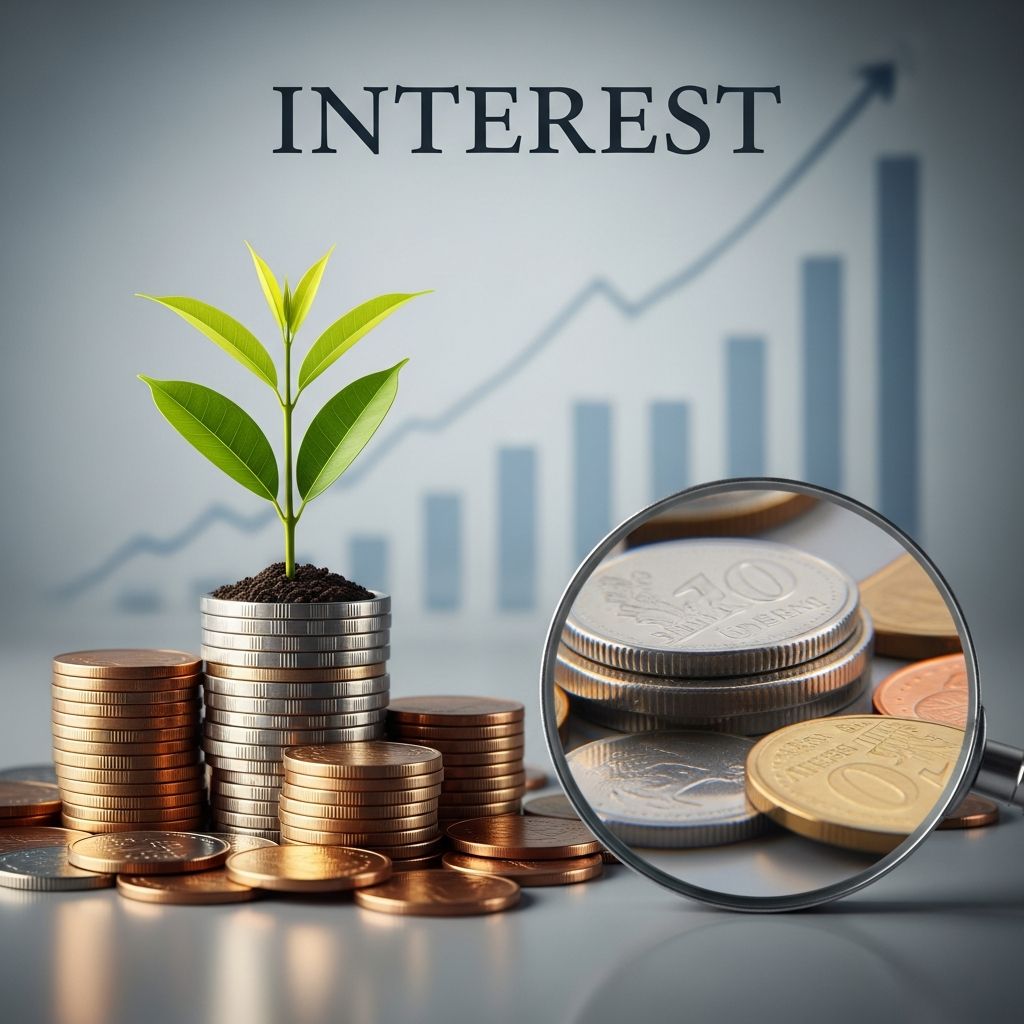
Interest represents the price paid for using borrowed money or the reward received for lending it through savings or investments. Financial institutions charge it on loans and credit products while paying it on deposit accounts, influencing personal wealth building and debt management profoundly.
The Basic Mechanics of Interest
At its core, interest functions as a percentage of the principal—the initial amount borrowed or deposited. Lenders apply this percentage periodically, either daily, monthly, or annually, to determine additional costs or earnings. For borrowers, it increases total repayment; for savers, it amplifies account balances over time. Understanding these mechanics empowers better financial choices, from selecting loans to maximizing returns on idle cash.
Key factors driving interest include the principal size, rate percentage, and duration. Larger principals or higher rates yield bigger interest amounts, while longer terms extend accumulation. Central banks, like the Federal Reserve, influence baseline rates through policy, affecting everything from mortgage costs to savings yields.
Core Types of Interest Calculation
Interest calculation methods vary, primarily between simple and compound approaches, each suited to different products.
Simple Interest Explained
Simple interest applies solely to the original principal, ignoring any accumulated earnings. This straightforward method suits short-term loans like auto financing or personal advances. The formula is Principal × Rate × Time / 100, where time is in years. For a $10,000 loan at 5% over 3 years, interest totals $1,500, keeping calculations predictable.
- Ideal for quick, low-cost borrowing without snowballing costs.
- Common in installment loans where payments cover principal plus fixed interest portions.
- Offers transparency, as totals remain constant regardless of payment timing.
Compound Interest: The Power of Growth
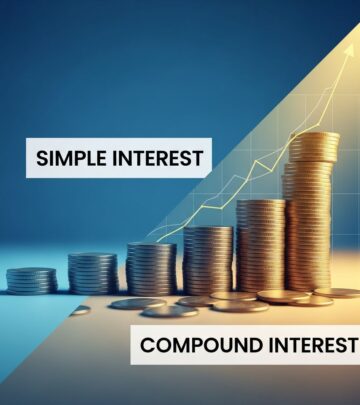
Compound interest builds on both principal and prior interest, creating exponential growth. Added periodically—often monthly—it recalculates on the new, larger balance. This ‘interest on interest’ effect dominates savings accounts, credit cards, and long-term investments. A $10,000 deposit at 5% compounded annually grows to $11,576 after five years, versus $12,763 with monthly compounding.
The formula is A = P(1 + r/n)^(nt), where A is the final amount, P principal, r annual rate, n compounding periods per year, t years. Frequent compounding accelerates growth, making it a cornerstone of retirement planning.
| Year | Simple Interest Balance | Compound (Annual) Balance |
|---|---|---|
| 1 | $10,500 | $10,500 |
| 3 | $11,500 | $11,576 |
| 5 | $12,500 | $12,763 |
This table illustrates compounding’s edge over five years on a $10,000 principal at 5%.
Fixed vs. Variable Interest Rates
Beyond calculation methods, rates themselves classify as fixed or variable, dictating payment stability.
Fixed Interest Rates
Fixed rates lock in a constant percentage throughout the loan or investment term, shielding against market shifts. Borrowers enjoy predictable monthly payments, aiding budgeting. Common in mortgages and fixed deposits, they start higher but ensure certainty. A 30-year mortgage at 4% fixed means unchanging principal and interest portions.
- Pros: Budget-friendly stability, no rate hike surprises.
- Cons: Misses potential drops in market rates.
- Best for risk-averse individuals planning long-term.
Variable or Floating Interest Rates
Variable rates fluctuate with benchmarks like the prime rate or LIBOR, tied to economic conditions. They often begin lower, appealing for short horizons, but can rise, inflating payments. Adjustable-rate mortgages (ARMs) exemplify this, with initial fixed periods followed by market-linked adjustments, sometimes capped.
| Feature | Fixed Rate | Variable Rate |
|---|---|---|
| Risk Level | Low | High |
| Initial Rate | Higher | Lower |
| Payment Predictability | Consistent | Fluctuating |
| Market Sensitivity | None | High |
From 2008-2022, 85-95% of buyers chose fixed over adjustable mortgages for stability.
Interest in Everyday Financial Products
Borrowing: Loans and Credit Cards
On loans, interest comprises the bulk of costs beyond principal. Mortgages blend fixed or adjustable rates with amortization, front-loading interest. Credit cards use compound interest daily on revolving balances, punishing minimum payments that barely dent principal. Average card rates exceed 20%, turning $1,000 debt into $1,200+ yearly if unpaid.
Savings and Deposits
Deposit accounts pay interest to incentivize holding funds. Savings and money market accounts offer variable APY (annual percentage yield), factoring compounding for true earnings. CDs lock fixed rates for terms, penalizing early withdrawal. High-yield options beat traditional banks, growing emergency funds efficiently.
Investments and Beyond
Bonds pay fixed or variable coupons, while stocks indirectly benefit from reinvested dividends compounding. Accrued interest applies to bonds between payments, adding to purchase prices. Real interest adjusts nominal rates for inflation, revealing true purchasing power gains.
Factors Influencing Interest Rates
Rates respond to inflation, central bank policies, credit risk, and economic cycles. Borrowers with strong credit scores secure lower rates, as they pose less default risk. Lenders assess FICO scores, debt-to-income ratios, and collateral. In rising rate environments, refinancing fixed loans or shifting to variable investments requires caution.
Strategies to Manage and Optimize Interest
Minimize borrowing costs by shopping rates, improving credit, and paying extra principal. For savings, prioritize high-APY accounts and automate transfers. Leverage compound growth via Roth IRAs or 401(k)s. Tools like online calculators preview scenarios, aiding decisions.
- Pay debts aggressively to curb compounding costs.
- Reinvest earnings for accelerated portfolio growth.
- Diversify between fixed and variable for balanced risk.
Frequently Asked Questions (FAQs)
What is the difference between APR and APY?
APR (annual percentage rate) includes fees on borrowing costs; APY (annual percentage yield) reflects compounding on earnings, offering a fuller picture for comparisons.
Is compound interest good or bad?
Beneficial for savers/investors via growth; detrimental for debtors as balances swell rapidly.
How do I calculate simple interest quickly?
Multiply principal by rate by time: e.g., $5,000 × 0.06 × 2 = $600.
Should I choose fixed or variable rates?
Fixed for stability; variable if expecting rate drops and tolerating uncertainty.
Does credit score affect my interest rates?
Yes, higher scores unlock lower rates across loans and cards.
Key Takeaways for Financial Success
Mastering interest transforms financial health. Borrow wisely with simple or fixed options for control, save via compounding in high-yield vehicles, and invest for long-term multiplication. Regularly review rates amid economic shifts to optimize outcomes.
References
- Understanding Different Types of Interests & Interest Rates — Jiraaf. 2023. https://www.jiraaf.com/blogs/personal-finance/different-types-of-interest-rate
- What Is Interest? How It Works for Borrowing, Deposits and Investing — Experian. 2024-02-06. https://www.experian.com/blogs/ask-experian/what-is-interest/
- Types of Interest – Definitions & Examples — Corporate Finance Institute. 2023. https://corporatefinanceinstitute.com/resources/commercial-lending/types-of-interest/
- Understand the different kinds of loans available — Consumer Financial Protection Bureau. 2024. https://www.consumerfinance.gov/owning-a-home/explore/understand-the-different-kinds-of-loans-available/
- Different Types of Interest Explained — Bajaj Finserv. 2023. https://www.bajajfinserv.in/all-about-different-types-of-interest-rates
- Understanding the 7 Types of Interest Rates — SmartAsset. 2023. https://smartasset.com/investing/understanding-the-7-types-of-interest-rate
Similar Articles








Read full bio of Sneha Tete