What Is Interest? Understanding How Your Money Grows
Learn how interest works, why it matters for your savings, and how to maximize earnings.

What Is Interest?
Interest is the cost of borrowing money or the reward for lending it. When you deposit money into a savings account, you’re essentially lending that money to a bank. In return, the bank pays you interest — a percentage of your deposit that grows over time. This interest represents the bank’s way of compensating you for allowing them to use your funds for their lending operations and investments.
Understanding interest is fundamental to making smart financial decisions. Whether you’re saving for an emergency fund, a down payment on a home, or retirement, knowing how interest works can help you maximize your money’s growth and build wealth more effectively.
Types of Interest
There are two primary types of interest that affect your savings: simple interest and compound interest.
Simple Interest
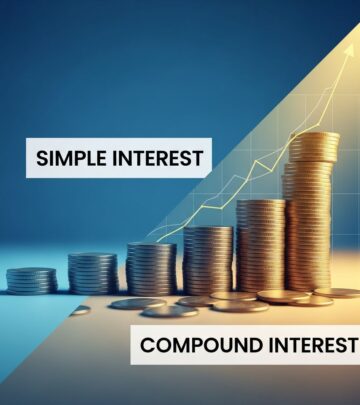
Simple interest is calculated only on the principal amount you initially deposit. The formula is straightforward: Interest = Principal × Rate × Time. With simple interest, you earn the same amount of interest each period, and your earnings don’t generate additional interest. While simple interest is easier to understand, it’s less commonly used in modern savings accounts.
Compound Interest
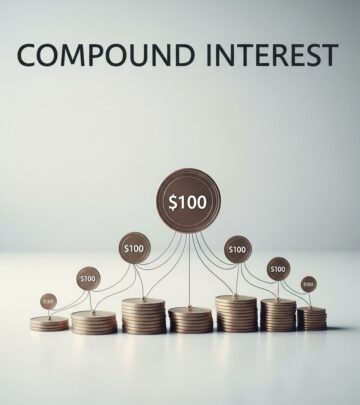
Compound interest is far more powerful for savers. With compound interest, you earn interest not only on your principal but also on the interest you’ve already earned. This creates a snowball effect where your money grows exponentially over time. The more frequently interest compounds — whether daily, monthly, or annually — the more interest you’ll earn on your savings.
Annual Percentage Yield (APY)
When evaluating savings accounts, you’ll frequently encounter the term Annual Percentage Yield, or APY. This is the effective annual rate of return on your deposit, including the effect of compound interest. APY reflects the total interest you’ll earn in a year, accounting for how often the bank compounds your interest.
APY is different from Annual Percentage Rate (APR), which doesn’t account for compounding. For savings accounts, APY is the more useful metric because it shows you the true return on your money. For example, if a savings account advertises an APY of 4.20 percent, that means you’ll earn approximately 4.20 percent on your balance over one year when compound interest is factored in.
How Interest Rates Are Determined
Several factors influence the interest rates that banks offer on savings accounts:
Federal Reserve Policy
The Federal Reserve plays a crucial role in shaping savings account interest rates. The Fed adjusts the federal funds rate based on broader economic conditions. When the Fed raises its benchmark rate, banks typically increase the interest they pay on savings accounts. Conversely, when the Fed lowers rates, savings account rates tend to decline. Currently, the federal funds rate remains at 4.25 percent to 4.50 percent, which has kept high-yield savings rates elevated for savers.
Operating Costs
The operational structure of a bank significantly impacts the interest rates it can offer. Online banks operate with lower overhead costs since they don’t maintain physical branches or large staff numbers. These cost savings often translate into higher rates for depositors. Traditional banks, with their extensive branch networks and larger workforces, have higher operating costs that can limit their ability to offer competitive rates.
Market Competition
Competition among financial institutions drives interest rates higher. When multiple banks compete for deposits, they offer more attractive rates to win your business. This is why online banks and credit unions often provide significantly better rates than traditional brick-and-mortar banks.
Current Interest Rate Environment
As of November 2025, the interest rate landscape presents opportunities for savers. The national average savings account yield stands at 0.62 percent APY, according to Bankrate’s survey of institutions. However, the best high-yield savings accounts are paying upwards of 4 percent APY, which is more than six times higher than the average. Some top-performing accounts offer rates near 4.20 percent to 4.35 percent APY.[10]
Current inflation sits at approximately 2.7 to 2.8 percent annually, meaning top savings rates are beating inflation by over 1.5 percentage points. This creates a unique environment where your purchasing power can actually grow through savings account interest rather than erode.
Traditional vs. High-Yield Savings Accounts
The difference between traditional savings accounts and high-yield savings accounts is dramatic:
| Feature | Traditional Savings Accounts | High-Yield Savings Accounts |
|---|---|---|
| Interest Rate | 0.01% to 0.10% APY | 4.00% to 4.35% APY |
| Offered By | Major brick-and-mortar banks | Online banks and credit unions |
| Monthly Fees | Often charge monthly fees | Typically no monthly fees |
| Minimum Balance | Often higher requirements | Often minimal to none |
| Earned Interest (on $5,000 annually) | $0.50 to $5.00 | $200 to $217.50 |
To illustrate the difference, consider a $5,000 deposit held for one year: an account earning the national average rate of 0.61 percent APY would generate approximately $30.50 in interest, while the same deposit in an account earning 4.35 percent APY would generate approximately $217.50 — nearly seven times more.
The Power of Compound Interest
Compound interest is one of the most powerful tools for building wealth. Albert Einstein allegedly called it the eighth wonder of the world. The longer you leave your money invested, the more dramatic the compounding effect becomes.
For example, if you deposit $10,000 into a high-yield savings account earning 4.20 percent APY and never touch it:
- After 1 year: approximately $10,420
- After 5 years: approximately $12,313
- After 10 years: approximately $15,157
Compare this to the same $10,000 in a traditional savings account earning 0.05 percent APY:
- After 1 year: approximately $10,005
- After 5 years: approximately $10,025
- After 10 years: approximately $10,050
Factors to Consider When Choosing a Savings Account
When searching for the best place to earn interest on your savings, evaluate these key factors:
Annual Percentage Yield (APY)
Always prioritize APY over the advertised interest rate. A high APY will help your money grow faster. Top APYs are currently above 4 percent, with some reaching 4.35 percent. Even a 0.5 percent difference in rate can mean hundreds of dollars over time.
Minimum Balance Requirements
Some banks require substantial minimum deposits to open an account or to earn the advertised rate. Look for accounts with minimal or no minimum balance requirements to maximize flexibility and accessibility.
Monthly Fees
Even low monthly maintenance fees can cut into your savings over time. Prioritize accounts that come without fees — effectively free accounts will help maximize the cash you contribute to your savings account.
Frequency of Compounding
The more frequently interest compounds (daily, monthly, or annually), the more interest you’ll earn. Daily compounding is ideal for maximizing returns on your savings.
Rate Adjustment Policy
Look at how often the bank adjusts its rates in response to Federal Reserve moves. Banks that quickly adjust rates upward when the Fed raises rates will help you take advantage of higher-rate environments.
Where to Find the Best Interest Rates
The highest APYs are typically found at the following types of institutions:
Online Banks
Online banks typically offer the most competitive rates due to lower overhead costs. Many online banks pay APYs of 4.20 percent to 4.35 percent, with minimal or no monthly fees and low minimum balance requirements.
Credit Unions
Credit unions often offer rates comparable to online banks while providing additional member benefits. These member-owned institutions frequently prioritize competitive savings rates to attract and retain members.
Digital-First Institutions
Newer fintech companies and digital-first financial institutions frequently offer promotional rates to build their customer base. These can be excellent sources for competitive APYs, though it’s important to verify their stability and FDIC insurance coverage.
Interest and Inflation
One critical reason to focus on interest rates is their relationship to inflation. Inflation erodes your purchasing power over time. If you earn 0.05 percent interest while inflation runs at 2.8 percent, your money is actually losing purchasing power — it will buy less a year from now than it does today.
By finding a savings account that outpaces inflation, you ensure your money isn’t losing purchasing power. A high-yield savings account earning 4.20 percent APY significantly outpaces current inflation, meaning your money will actually retain and grow its purchasing power over time.
Interest on Linked Accounts
Some banks offer special relationship rates when you link a savings account with a qualifying checking account. These rates can be significantly higher than standard rates. For example, at U.S. Bank, the standard APY on their Bank Smartly savings account is just 0.05 percent, but customers who maintain a qualifying checking account and $5,000 in combined balances can earn 1 percent APY, while those with $25,000 can earn 2.50 percent APY or more.
Tips for Maximizing Your Interest Earnings
Compare Multiple Banks
Don’t settle for the first account you find. Compare rates at different financial institutions, online banks, and credit unions to find the highest APY that meets your needs.
Calculate the Long-Term Difference
Use online compound interest calculators to see what different rates mean for your savings over time. Seeing the concrete dollar difference can motivate you to switch to a higher-yield account.
Consider Switching Banks
If your current bank offers below-average rates, switching to an online bank or credit union with higher rates could put thousands of dollars in your pocket over time.
Avoid Monthly Fees
Look for accounts with no monthly maintenance fees. These seemingly small charges can significantly reduce your earnings over time.
Maintain Your Balance
To earn the advertised APY, ensure you maintain any minimum balance requirements and avoid frequent withdrawals that might trigger fees.
Frequently Asked Questions About Interest
Q: What’s the difference between APY and APR?
A: APY (Annual Percentage Yield) includes the effect of compound interest, while APR (Annual Percentage Rate) does not. APY is more useful for comparing savings accounts because it reflects your true annual return.
Q: How often should I shop for better interest rates?
A: Interest rates change frequently, especially in response to Federal Reserve policy changes. Review rates annually or whenever you hear about significant economic shifts. If your current account’s rate drops significantly below the market average, it may be time to switch.
Q: Are high-yield savings accounts safe?
A: Yes, as long as they’re FDIC-insured. FDIC insurance protects deposits up to $250,000 per depositor, per bank. Online banks offering high yields are typically FDIC-insured, making them as safe as traditional banks while offering better rates.
Q: Can I lose money in a savings account?
A: You won’t lose the principal you deposit in an FDIC-insured account, but inflation can erode your purchasing power. That’s why finding an interest rate that outpaces inflation is crucial for protecting your wealth.
Q: How does the Federal Reserve impact my savings account interest rate?
A: The Federal Reserve sets the federal funds rate, which influences the rates banks offer on savings products. When the Fed raises rates, banks typically increase savings account rates. When the Fed lowers rates, savings rates usually decline.
Q: What’s a good interest rate for a savings account in 2025?
A: Currently, a good savings account rate is 4 percent APY or higher. The national average is only 0.62 percent APY, so anything above 4 percent puts you well ahead of most savers. Top rates reach 4.35 percent APY.
References
- Average Savings Account Interest Rate For November 2025 — Bankrate. 2025-11-28. https://www.bankrate.com/banking/savings/average-savings-interest-rates/
- 7 Low-Risk Ways To Earn More Interest On Your Money — Bankrate. 2025. https://www.bankrate.com/banking/savings/low-risk-ways-to-earn-higher-interest/
- What Is A Good Interest Rate On A Savings Account? — Bankrate. 2025. https://www.bankrate.com/banking/savings/good-interest-rate-on-a-savings-account/
- Amid High Tariff Fallout, Here’s How to Earn More Interest on Your Savings Account — Bankrate. 2025. https://www.bankrate.com/banking/savings/ways-to-earn-more-interest-on-your-savings-account/
- High-Yield Savings Rates Today: May 26, 2025 — Bankrate. 2025-05-26. https://www.bankrate.com/banking/savings/high-yield-savings-rates-today-may-26-2025/
- What Is A High-Yield Savings Account? — Bankrate. 2025. https://www.bankrate.com/banking/what-is-a-high-yield-savings-account/
- How the Federal Reserve Impacts Savings Account Interest Rates — Bankrate. 2025. https://www.bankrate.com/banking/federal-reserve/federal-reserve-impact-on-savings-accounts/
Similar Articles








Read full bio of medha deb