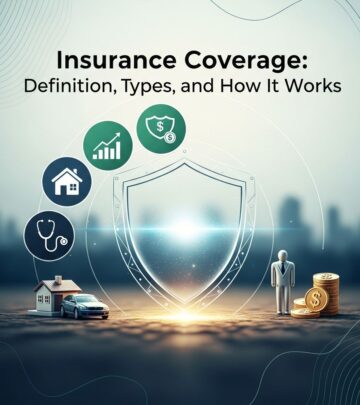
What is Insurance: Definition, How It Works & Types
Understand insurance fundamentals: protect your assets, family, and lifestyle from unexpected financial losses.

Understanding Insurance: The Basics
Insurance is an agreement between an individual or business and an insurance company designed to protect against financial losses from unforeseen circumstances. Under this arrangement, the policyholder pays regular premiums to the insurer in exchange for financial compensation when a covered incident occurs. For example, auto insurance reimburses an insured driver for repair costs following an accident, up to the policy limits. Also known as indemnity or assurance, insurance serves as a safety net that preserves your way of life during emergencies.
In simple terms, insurance is a method to protect your loved ones, property, business, and lifestyle from unexpected financial hardships. By paying an insurance provider a regular fee, you receive coverage that maintains your financial stability when unfortunate events happen. Some insurers offer multiple types of insurance policies, while others specialize in specific coverage areas. Understanding how insurance works and the various coverage options available helps you make informed decisions about your protection needs.
How Does Insurance Work?
Insurance operates on the principle of risk management and pooled resources. When you purchase an insurance policy, you join a large group of policyholders. The premiums paid by all members create a pool of funds that the insurance company uses to pay claims from members who experience covered losses.
Insurance companies employ actuaries who analyze statistical data to assess risk. For life insurance, actuaries estimate life expectancy based on factors like age and family health history. For auto insurance, they evaluate the likelihood of accidents or theft by examining driving history, age, location, and other variables. For home insurance, actuaries assess the probability of property damage or natural disasters based on the home’s age, condition, and geographic location.
Based on these risk assessments, actuaries determine appropriate premium amounts. Insurance underwriters have the final authority on whether an applicant qualifies for coverage and what premium they will pay for their selected coverage level. This system ensures that premiums accurately reflect the risk each policyholder represents.
Main Components of an Insurance Policy
While insurance policies vary significantly depending on the coverage type, several core concepts appear across most insurance products. Understanding these components helps you navigate policy options effectively.
Premium
The premium is the amount of money you pay for insurance coverage. Depending on your policy, premiums can be paid monthly, weekly, quarterly, annually, or as a single lump sum. Generally, the higher your risk of filing a claim, the higher your premiums will be. For instance, a younger and healthier life insurance applicant typically receives lower premiums than an older applicant with pre-existing medical conditions.
Deductible
A deductible is the amount you must pay out of pocket before your insurance coverage begins. Higher deductibles typically result in lower premiums, while lower deductibles mean higher premium payments. Choosing the right deductible balance depends on your financial situation and risk tolerance.
Coverage Limits
Coverage limits represent the maximum amount an insurance company will pay for a covered claim. Once you reach your limit, you’re responsible for any additional expenses. Understanding your policy limits ensures you have adequate protection for potential losses.
Copays and Coinsurance
A copay is a fixed amount you pay for a specific service, while coinsurance is a percentage of costs you share with your insurer after meeting your deductible. These cost-sharing mechanisms help control insurance costs for both policyholders and insurers.
Types of Insurance Coverage
Insurance comes in many forms, each designed to protect against specific types of losses. Here are the primary insurance categories:
Auto Insurance
Car insurance offsets the financial impact of unforeseen events related to your vehicle. Auto insurance provides coverage for:
– Theft of your car- Damage to your car from accidents or other causes- Your liability if damage is your fault- Damage to other vehicles and injury to others involved in accidents
Unlike most insurance types, car insurance is legally required to own and operate a vehicle in most U.S. states, with New Hampshire being the only exception. In Virginia and other states, driving without insurance can result in substantial fines and penalties.
Additional auto insurance coverage options include medical payments coverage, which pays for medical expenses if you or your passengers are injured in an accident. Personal injury protection (PIP), also known as no-fault insurance, covers medical bills, lost wages, and funeral costs for you or your passengers regardless of accident fault. Guaranteed asset protection (GAP) pays the difference between what you owe on your vehicle and what insurance will pay if your car is totaled or stolen.
Life Insurance
Most insurance policies are designed to repair or replace something tangible. Life insurance, however, serves to replace the insured person’s lost income upon their death by paying out a tax-free death benefit to selected beneficiaries. This financial protection ensures your family’s financial security after you pass away.
Life insurance comes in two main categories: term and permanent coverage. Term life insurance provides financial protection for a specific time period, typically 10, 20, or 30 years. Permanent life insurance, such as whole or universal life policies, provides coverage throughout your entire life as long as premiums are paid.
Whole life insurance is the most expensive type of permanent life insurance. It guarantees your beneficiaries a death benefit for your entire life and includes a cash value component. You can borrow against this cash value, and some companies pay dividends that can cover premium payments or purchase additional coverage.
Universal life insurance offers flexibility with variable premiums. Policyholders can increase or reduce premiums at any time, which adjusts their death benefit accordingly. This flexibility also affects the policy’s cash value, which earns interest and functions as a savings component.
Home Insurance
Home insurance protects your property from damage due to fire, theft, natural disasters, and other covered perils. This policy typically covers the structure of your home, personal belongings inside, liability for injuries occurring on your property, and additional living expenses if your home becomes uninhabitable.
Health Insurance
Health insurance covers medical expenses including doctor visits, hospital stays, prescription medications, and preventive care. Different health insurance plans offer varying coverage levels and cost-sharing arrangements through premiums, deductibles, copays, and coinsurance.
Pet Insurance
Pet insurance protects against the high costs of veterinary care. There are three main types of pet insurance policies:
– Accident-only policies are more affordable and cover only mishaps and unforeseen issues such as poisonings and broken bones- Accident and illness policies cover both accidents and illnesses like cancer and hip dysplasia (provided your pet had no symptoms before coverage began)- Wellness policies are typically the most expensive and cover only preventive and routine care such as vaccines and dental cleanings
Risk Management Methods
Insurance is fundamentally a method of managing risk. Understanding basic risk management approaches helps you determine which insurance coverage is appropriate for your situation. These methods include:
Risk avoidance involves avoiding activities or situations that could create losses. Risk reduction means taking steps to minimize the likelihood or severity of potential losses. Risk retention involves accepting certain risks and handling losses yourself without insurance. Risk transfer, which is what insurance provides, shifts the financial responsibility for losses to an insurance company in exchange for premium payments.
Deductible vs. Out-of-Pocket Expenses
While these terms are sometimes used interchangeably, they have distinct meanings in insurance. A deductible is the specific amount you pay before your insurance coverage activates for a particular claim. Out-of-pocket expenses represent the total of all medical or other costs you personally pay, including deductibles, copays, and coinsurance, up to your out-of-pocket maximum.
Understanding this distinction helps you evaluate your actual costs when comparing insurance policies. A policy with a lower premium might have a higher deductible, resulting in greater out-of-pocket costs when you file a claim.
Coinsurance vs. Copay
Coinsurance and copays are both forms of cost-sharing between you and your insurer, but they work differently. A copay is a fixed dollar amount you pay for a specific service, such as $25 for a doctor’s visit or $15 for a prescription. This amount remains constant regardless of the actual cost of the service.
Coinsurance, by contrast, is a percentage of the total cost you share with your insurer after meeting your deductible. For example, if your coinsurance is 20%, and a medical procedure costs $1,000, you pay $200 while your insurance pays $800. Coinsurance percentages vary depending on your specific policy and the type of service received.
Choosing the Right Insurance for Your Needs
Selecting appropriate insurance coverage requires assessing your personal circumstances, financial situation, and risk tolerance. Consider your assets that need protection, your family’s financial dependencies, your health status, and your ability to cover potential losses out of pocket.
Evaluate different policies and providers, comparing coverage options, premium costs, deductibles, and customer service ratings. Don’t simply choose the cheapest option; ensure the coverage adequately protects your needs. Life changes such as marriage, having children, purchasing a home, or starting a business may require adjusting your insurance coverage.
Frequently Asked Questions About Insurance
What is an insurance premium?
An insurance premium is the agreed-upon amount you pay regularly for insurance coverage. Premiums are usually paid monthly but may also be paid semi-annually, annually, or as a lump sum. If you stop paying your premiums, you lose your insurance coverage. Premium costs vary based on factors including the type of insurance policy, coverage amount, age, health, gender, occupation, and other risk factors specific to the coverage type.
What is the difference between insurance and assurance?
Insurance and assurance are often used interchangeably, though assurance traditionally refers to coverage for events that are certain to happen (like death with life insurance), while insurance refers to uncertain events (like car accidents). In modern usage, the terms are largely synonymous.
Do I need insurance if I’m young and healthy?
Yes, insurance remains important regardless of age or health status. Young people need auto insurance by law in most states, renters insurance to protect belongings, and life insurance if others depend on their income. Health insurance protects against unexpected medical expenses that can occur at any age.
How can I lower my insurance premiums?
Several strategies can reduce premiums: maintain a clean driving record and good health habits, bundle multiple policies with one insurer, increase your deductible, ask about available discounts, pay annually instead of monthly, and regularly shop around for better rates. Some insurers offer discounts for safety features, completing defensive driving courses, or maintaining good grades for young policyholders.
What happens if I don’t have insurance?
Consequences vary by insurance type. Driving without car insurance is illegal in most states and can result in fines, license suspension, and legal liability for accident damages. Lacking health insurance means paying full costs for medical care. Without home insurance, you’re responsible for all property damage costs. Going uninsured exposes you to potentially catastrophic financial losses.
Can I change my insurance coverage mid-policy?
Yes, most insurance policies allow you to make changes during the policy period, though timing and available changes depend on your specific policy and insurer. Common changes include adjusting coverage levels, adding or removing coverage types, and updating beneficiaries. Some changes may result in premium adjustments.
Summary of What Is Insurance?
Insurance is an agreement between an individual or business and a third-party insurance provider that protects against costs resulting from unforeseen circumstances. By purchasing insurance plans such as life, homeowners, auto, health, and travel insurance, you gain peace of mind knowing your money and property will be covered during emergencies. Insurance operates through risk assessment and premium pools, ensuring fair pricing while providing essential financial protection. Understanding insurance fundamentals, policy components, coverage types, and how to select appropriate coverage empowers you to make informed decisions that protect your financial wellbeing and that of your family.
References
- What is Insurance? Definition, How it Works, & Examples — Money.com. 2025. https://money.com/what-is-insurance/
- What Is Life Insurance and How Does It Work? — Money.com. 2025. https://money.com/life-insurance-beginners/
- 6 Best Car Insurance Companies of 2025 — Money.com. 2025. https://money.com/best-auto-insurance/
- Understanding Home Insurance — Massachusetts Government. https://www.mass.gov/info-details/understanding-home-insurance
- Tips for First-Time Car Insurance Buyers — Money.com. 2025. https://money.com/tips-for-first-time-car-insurance-buyers/
Similar Articles








Read full bio of Sneha Tete