Human Resource Management: 3 Pillars, 7 Basics, 9 Key Areas
Understanding HRM: Core functions, strategies, and best practices for organizational success.
What Is Human Resource Management?
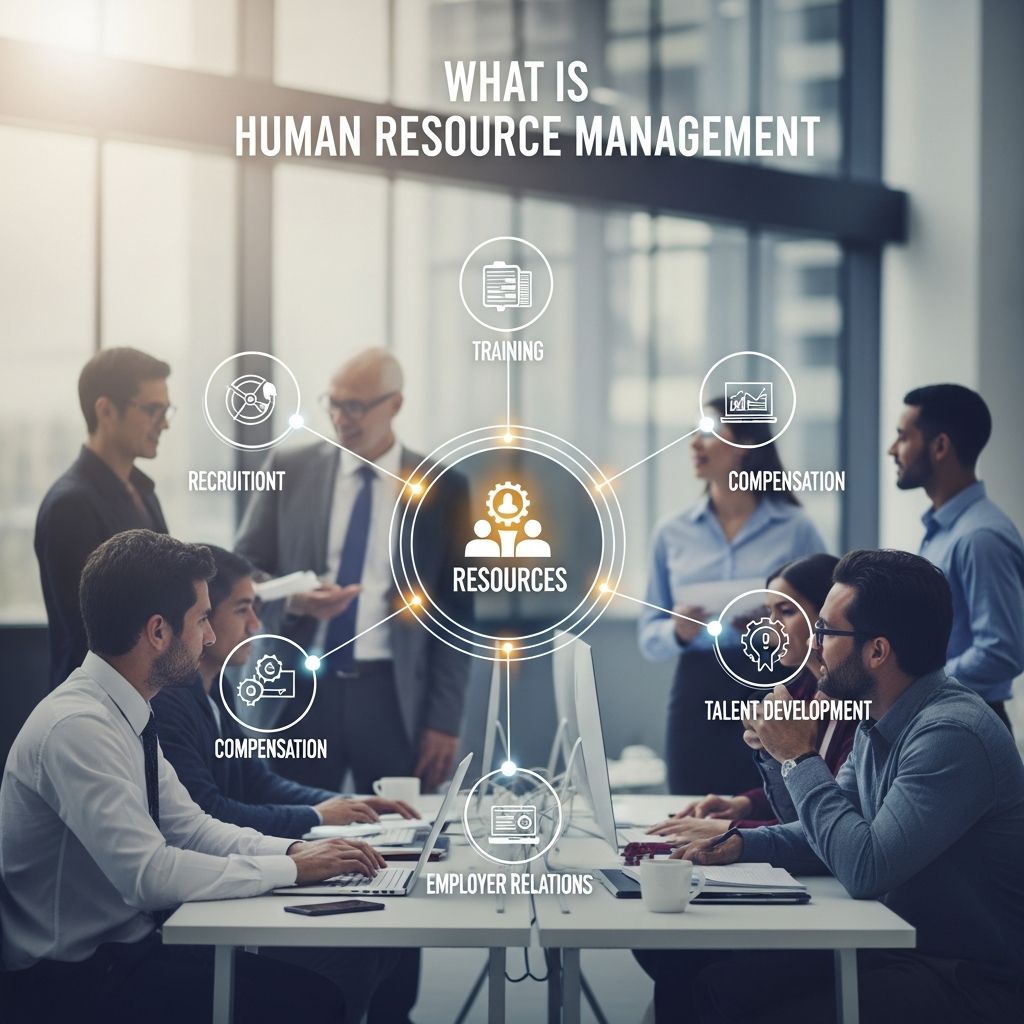
Human Resource Management (HRM) is the strategic approach to managing an organization’s most valuable asset—its people. HRM encompasses the recruitment, hiring, training, compensation, and management of employees throughout their tenure with a company. It involves coordinating various activities and initiatives designed to attract top talent, develop their skills, maintain high performance, and foster a positive workplace culture that drives organizational success.
At its core, HRM is about aligning human capital with organizational objectives. HRM professionals work to ensure that the right people are hired for the right positions, that they receive adequate training and development, that their performance is monitored and improved, and that they are fairly compensated for their contributions. This comprehensive approach to people management has become essential for organizations seeking to maintain competitive advantage in today’s dynamic business environment.
The Three Pillars of HRM: The 3 Ps Framework
Effective human resource management rests on three critical pillars known as the 3 Ps of HRM: People, Process, and Performance. These interconnected elements form the foundation of successful HR practices and provide a comprehensive framework for managing and developing a talented workforce.
People
The first pillar focuses on the human element of the organization. This encompasses recruiting the right talent, building diverse teams, fostering inclusive workplace cultures, and creating an environment where employees feel valued and engaged. People-focused initiatives include talent acquisition, employee onboarding, and building strong employee relationships that support retention and satisfaction.
Process
The process pillar refers to the systematic approaches and procedures that guide HR activities. HR processes include performance management systems, compensation and benefits administration, employee relations protocols, and compliance frameworks. These structured processes ensure consistency, fairness, and alignment with organizational goals while providing clear guidance for HR professionals and employees alike.
Performance
The performance pillar emphasizes driving individual and organizational success. HR professionals foster a culture of high performance by setting clear expectations, providing regular feedback and coaching, recognizing achievements, and implementing reward systems that motivate employees to excel. This focus on performance ensures that human capital investments translate into tangible business results.
Core Functions of Human Resource Management
Human Resource Management comprises several interconnected functions that work together to create a comprehensive people management strategy. Understanding these core functions is essential for HR professionals and organizational leaders.
Recruitment and Selection
Recruitment and selection represent the most visible elements of HR operations. These functions involve identifying open positions, attracting qualified candidates, conducting interviews and assessments, and selecting the best-fit employees for the organization. Effective recruitment ensures that organizations acquire top talent capable of contributing to long-term success. The recruitment process extends beyond posting job listings to include strategic workforce planning that anticipates future talent needs based on organizational growth and market dynamics.
HR Organization and Planning
HR organization and planning form the foundation of an effective HRM strategy. This function involves structuring the HR department to ensure smooth operations aligned with overall business strategy. Proper HR planning helps anticipate the company’s future workforce needs in terms of skills, numbers, and roles, ensuring the right people are in the right positions at the right time. Workforce planning considers current staffing levels, identifies future requirements, and creates action plans for recruitment, training, or organizational adjustments.
Performance Management
Performance management is an ongoing process of monitoring, assessing, and improving employee performance. This function involves setting clear goals, providing regular feedback, conducting performance appraisals, and identifying high performers for recognition or promotion. Performance management also includes offering support to employees struggling to meet expectations. A well-executed performance management system ensures that employees understand their roles, responsibilities, and performance standards while contributing to overall organizational productivity.
Compensation and Benefits
This critical function involves managing payroll, calculating taxes and salaries, and administering employee benefits programs. Compensation and benefits systems are designed to attract and retain talented employees while ensuring fair and competitive pay practices. HR professionals must balance organizational budgets with market rates and employee expectations, ensuring that compensation packages support employee satisfaction and retention.
Learning and Development
Employee development focuses on growing the skills, knowledge, and abilities of employees to help them advance in their careers and contribute more effectively to the organization. This function includes training programs, workshops, mentorship initiatives, and opportunities for career advancement. Development programs help ensure that employees remain competitive in a rapidly changing business environment while helping organizations stay innovative and adaptable.
Employee Relations
Employee relations encompass activities designed to foster positive relationships between management and employees, maintain open communication, and resolve workplace conflicts. Strong employee relations create a supportive work environment built on trust and mutual respect, leading to improved morale, reduced turnover, and enhanced productivity.
Labor and Time Management
This function tracks the amount of time employees spend on projects and activities to boost productivity and efficiency. Labor and time management tools help organizations understand workforce utilization, identify bottlenecks, and optimize resource allocation to meet business objectives.
Key Components of HRMS (Human Resource Management Systems)
Modern organizations often implement Human Resource Management Systems (HRMS) to streamline HR operations and improve efficiency. These comprehensive platforms typically include several interconnected components:
Core HR
Core HR covers organization charts, payroll management including incentive compensation plans, and employee information systems. This component serves as the central repository for employee data, organizational structure, and personnel records, allowing easy access and updates to essential information.
Workforce Management
Workforce management tools analyze and track employee efficiency in the workplace. These systems help managers determine the number of workers needed to complete specific tasks and include features such as time tracking, budgeting, talent management, and leave planning.
Recruitment
Dedicated recruitment modules within HRMS streamline the hiring process from job posting through candidate selection, reducing time-to-hire and improving the quality of new hires.
Talent Management
Talent management components focus on identifying, developing, and retaining high-performing employees. These systems support succession planning, career development, and strategic talent allocation.
Learning Management
Learning management systems (LMS) facilitate employee training and development by providing platforms for course delivery, progress tracking, and skill assessment.
Onboarding
Onboarding modules support the integration of new employees into the organization. These systems help streamline orientation procedures and assist new employees in acclimating to company culture while helping HR managers create engaging and welcoming experiences.
The Nine Broad Areas of HRM Activities
Human Resource Management extends across nine major activity areas that collectively support organizational success:
| HRM Activity Area | Description |
|---|---|
| Human Resource Planning | Forecasting workforce needs and developing strategies to meet them |
| Design of Organization and Job | Creating organizational structures and defining job roles and responsibilities |
| Selection and Staffing | Recruiting and hiring qualified employees for available positions |
| Training and Development | Providing learning opportunities to enhance employee skills and capabilities |
| Organizational Development | Building organizational capacity and improving overall effectiveness |
| Compensation and Benefits | Managing pay, incentives, and benefit programs for employees |
| Employee Assistance | Providing support programs for employee wellness and well-being |
| Union/Labour Relations | Managing relationships with employee unions and labor organizations |
| Personnel Research and Information System | Analyzing HR data to inform decision-making and improve practices |
The Seven HR Management Basics
Beyond the foundational 3 Ps, seven core elements are considered cornerstones for effective HRM policies and practices:
Recruitment and Selection
The process of attracting, assessing, and hiring qualified candidates remains central to building a capable workforce.
Performance Management
Ongoing monitoring and improvement of employee performance ensures organizational productivity and individual development.
Learning and Development
Continuous skill development and career advancement opportunities keep employees engaged and organizations competitive.
Succession Planning
Strategic preparation for leadership transitions and key role replacements ensures organizational continuity and stability.
Compensation and Benefits
Fair and competitive compensation packages attract and retain talented employees while supporting organizational financial objectives.
Human Resources Information System (HRIS)
Integrated technology platforms streamline HR operations, improve data accuracy, and support better decision-making.
HR Data and Analytics
Data-driven insights enable HR professionals to make informed decisions, identify trends, and optimize human capital strategies.
Why Human Resource Management Matters
Human Resource Management has evolved from a purely administrative function to a strategic business driver. Organizations that prioritize HRM realize numerous benefits, including improved employee performance, reduced turnover, stronger workplace culture, and enhanced competitive advantage. By effectively managing human capital, organizations can align employee contributions with business objectives and achieve sustainable growth.
HRM professionals are responsible for fostering productive, engaged, and skilled workforces. When all HRM components—planning, recruitment, performance management, rewards, employee relations, utilization, and development—work together seamlessly and align with organizational strategic goals, they boost morale, increase productivity, and enhance overall business performance.
Frequently Asked Questions About Human Resource Management
Q: What is the primary role of HR professionals?
A: HR professionals oversee recruitment, management, training, and retention of employees within an organization. They develop policies, manage compensation and benefits, handle employee relations, and ensure compliance with labor laws. HR professionals serve as strategic partners who align human capital initiatives with organizational goals.
Q: How does performance management benefit organizations?
A: Performance management systems help identify high performers for recognition and promotion, provide support to struggling employees, set clear expectations, and ensure accountability. These practices directly contribute to increased productivity, improved employee satisfaction, and better organizational performance.
Q: What is the importance of employee development in HRM?
A: Employee development programs enhance skills, knowledge, and abilities, enabling employees to advance their careers and contribute more effectively to organizational objectives. Development initiatives also improve employee retention, increase job satisfaction, and help organizations maintain competitive advantage through a skilled and adaptable workforce.
Q: How do compensation and benefits strategies impact employee retention?
A: Competitive and fair compensation packages, combined with attractive benefits programs, are critical factors in attracting and retaining top talent. Organizations that offer market-competitive compensation demonstrate commitment to employee satisfaction, which directly reduces turnover and associated replacement costs.
Q: What role does workforce planning play in organizational success?
A: Workforce planning helps organizations anticipate future talent needs, identify skill gaps, and develop recruitment and development strategies to address them. Effective planning ensures organizations have the right people with the right skills at the right time, preventing talent shortages and supporting business continuity.
Q: How can HR analytics improve decision-making?
A: HR analytics provide data-driven insights into employee performance, engagement, retention, and productivity. These insights enable HR professionals and organizational leaders to identify trends, measure the effectiveness of HR initiatives, and make informed decisions that drive strategic outcomes.
Conclusion
Human Resource Management is far more than hiring and firing employees. It is a complex, multifaceted process that plays a central role in shaping organizational success. By understanding and effectively implementing the core functions, components, and frameworks of HRM—from the foundational 3 Ps of People, Process, and Performance to the comprehensive seven HR basics and nine broad activity areas—organizations can create thriving workplaces where employees are productive, engaged, and committed to organizational objectives.
The integration of all HRM components with strategic organizational goals ensures that human capital investments yield maximum returns. As the business environment continues to evolve, organizations that prioritize strategic human resource management will be best positioned to attract top talent, drive innovation, and achieve sustainable competitive advantage in the marketplace.
References
- Components of a Human Resource Management System — Aalpha. 2024. https://www.aalpha.net/blog/components-of-human-resource-software-development/
- 7 Human Resource Management Basics for Every HR Professional — AIHR. 2024. https://www.aihr.com/blog/human-resource-basics/
- Key Components of Human Resource Management — SLM MBA. 2024. https://slm.mba/mmpc-002/key-components-of-human-resource-management/
- Unit – 1: Introduction to Human Resource Management — Dr. Nishikant Jha. 2024. https://www.drnishikantjha.com/booksCollection/hrm-basic-notes.pdf
- What are the 3 Ps of Human Resource Management? — Evalu-8. 2024. https://evalu-8.com/hr/what-are-the-3-ps-of-human-resource-management/
- What Is HR Management? Components, Goals and Roles — Indeed. 2024. https://sg.indeed.com/career-advice/finding-a-job/what-is-hr-management
- What Is Human Resources Management: Careers, Skills, Trends — Northeastern University Graduate Programs. 2024. https://graduate.northeastern.edu/knowledge-hub/what-is-human-resource-management/
Similar Articles








Read full bio of medha deb