What Is a Human Resource: Definition and Role
Understand human resources: definitions, roles, importance, and career opportunities in HR.
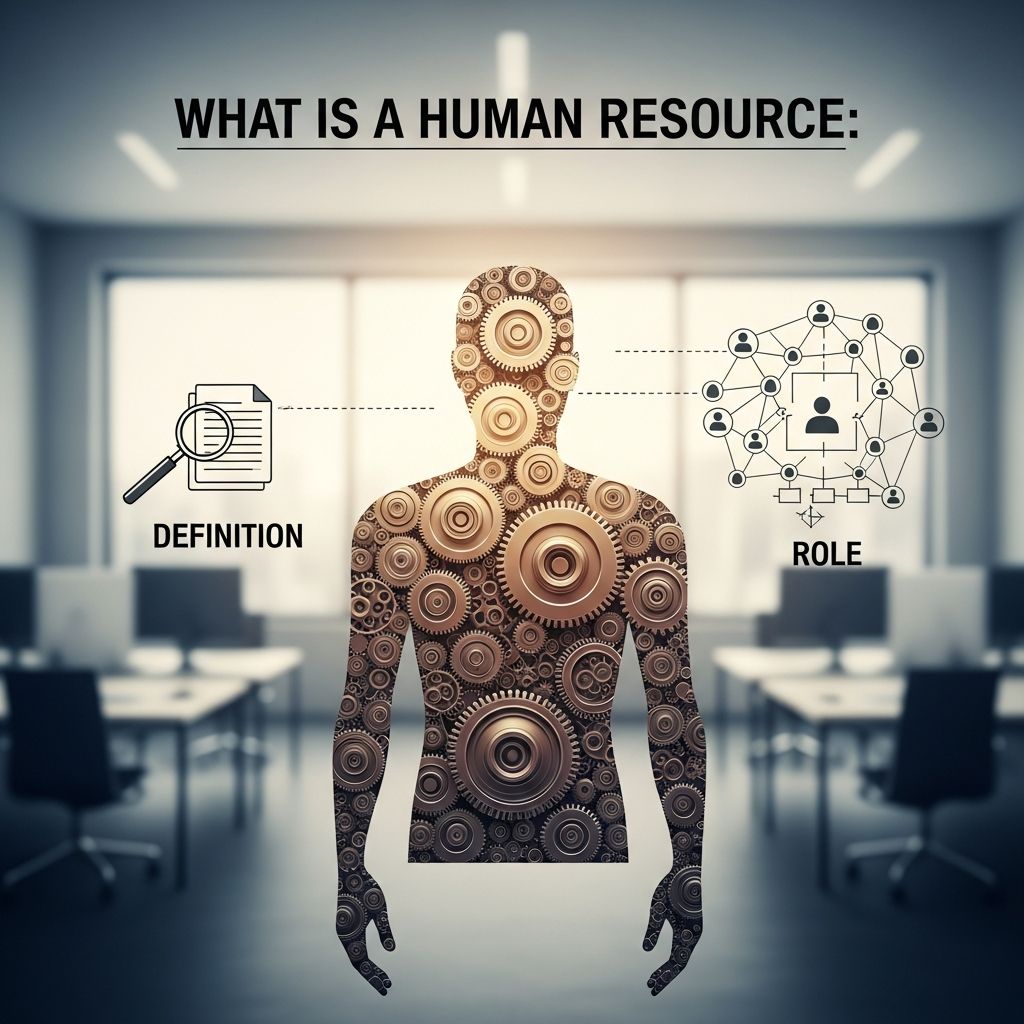
What Is a Human Resource?
Human resources refer to the people employed by an organization, often abbreviated as HR. However, the term extends far beyond simply describing employees. In contemporary business contexts, human resources encompasses both the actual workforce and the strategic management systems designed to recruit, develop, engage, and retain talent. The concept recognizes that employees are among the most valuable assets any organization possesses, directly impacting company performance, innovation, and long-term success.
The term “human resources” itself has an interesting history. Management consultant Peter Drucker is credited with coining the phrase in 1954 in his influential book The Practice of Management. Since then, the field has evolved dramatically from a purely administrative function focused on payroll and basic hiring into a strategic business discipline that influences organizational culture, competitive advantage, and financial performance.
Understanding Human Resource Management (HRM)
Human Resource Management, often abbreviated as HRM or referred to as talent management, comprises all the activities and processes companies undertake to hire, develop, and engage their workforce. While the terms HR and HRM are sometimes used interchangeably, they have distinct meanings. HR typically focuses on the administrative functions, departments, and staff responsible for employee-related tasks, whereas HRM represents the broader strategic framework encompassing management procedures, policies, and long-term organizational objectives.
HRM goes far beyond the basics of hiring and administrating staff. Well-developed HR strategies help employers and employees thrive by creating efficient, harmonious, and fulfilling work environments. This comprehensive approach recognizes that managing human resources effectively requires coordinated efforts across multiple business functions and departments.
Why Human Resource Management Matters
Human resource management has evolved into a function with extraordinary strategic value, earning senior HR leaders prominent positions within company leadership teams. According to research, 74 percent of large organizations now have a senior HR leader within the C-suite, reflecting the critical importance of HR to organizational success. This elevation in status reflects growing recognition that effective HR management directly contributes to achieving business objectives and maintaining competitive advantage.
The importance of human resource management fundamentally comes down to having skilled and engaged people who are aligned with organizational goals. With the right talent in place, an organization can fulfill its vision and remain competitive in increasingly dynamic markets. To achieve this, organizations must implement effective HR management programs and practices tailored to their specific business needs.
Key Ways HR Adds Value to Organizations
Supporting Employees Through Every Lifecycle Stage
Human resource management comprises programs and activities that support hiring, managing, and developing employees from recruitment through retirement. This comprehensive approach recognizes that employee needs and expectations evolve throughout their tenure with the organization. From onboarding and skill development to performance management and retirement planning, HR ensures smooth transitions and continuous support at every career stage.
Ensuring Profitability Through Cost Management
Labor costs—including salaries, benefits, and payroll taxes—often represent the largest expense category in most organizations, sometimes accounting for up to 70 percent of total company expenses. HR professionals help organizations keep these costs manageable through well-crafted policies, competitive compensation structures, and sophisticated people analytics that support better budgeting and decision-making. This financial stewardship protects profitability while maintaining employee satisfaction.
Creating a Positive Work Culture
Programs related to training, development, work-life balance, and diversity and inclusion are all components of a well-run HR function. These initiatives help create a culture that boosts employee engagement, retention, and performance. A positive workplace culture attracts top talent, reduces turnover, and fosters innovation and collaboration.
Lowering Compliance and Organizational Risks
Effective human resource management helps organizations navigate the complex landscape of labor laws and regulations governing how companies hire and manage people. HR teams limit hiring and reputational risk through comprehensive onboarding programs, strategic employee communication initiatives, and employee engagement surveys. This proactive approach protects organizations from legal liability and reputational damage.
Core Functions of Human Resource Management
Over the years, human resource management has evolved from a function focused primarily on hiring, benefits management, and payroll administration to one tasked with managing and improving every aspect of the employee experience. Today, HR professionals can work as generalists overseeing all HR functions or specialize in specific talent management disciplines. Understanding these core functions provides insight into the breadth and complexity of modern HR work.
Recruitment and Selection
HR plays a key role in identifying and selecting candidates for job openings. HR professionals typically use specialized HR software, beginning with applicant tracking systems that scan and organize résumés. They create job advertisements, conduct initial interview rounds, manage assessments and testing during the hiring process, make job offers, and negotiate terms with candidates. This process requires a blend of technical proficiency, business acumen, and interpersonal skills.
Onboarding and Training
Once a candidate accepts an offer, HR typically manages the comprehensive onboarding process. This includes conducting background checks, facilitating employee orientation, delivering initial and ongoing training programs, and maintaining necessary employee records. Effective onboarding sets the foundation for long-term employee success and organizational cultural integration.
Compensation, Benefits, and Total Rewards
HR professionals craft new hire offers and collaborate with business leaders to create competitive compensation structures and comprehensive benefit programs. This function requires understanding market rates, organizational budgets, and employee expectations. Competitive compensation and benefits packages are essential for attracting and retaining top talent in competitive labor markets.
Performance Management and Appraisal
HR departments establish systems for performance management and evaluation. While direct supervisors typically conduct actual evaluations, HR standardizes the process by creating templates, timelines, and evaluation criteria. This consistency ensures fairness and provides the documentation necessary for personnel decisions.
Employee Relations and Conflict Resolution
HR professionals help managers and employees resolve conflicts and manage issues that impede team effectiveness. This function requires diplomacy, problem-solving skills, and deep understanding of employment law and organizational policies.
Analytics and Reporting
HR professionals utilize data analysis platforms to measure HR key performance indicators (KPIs) such as headcount, time to hire, and employee engagement levels. This data-driven approach enables strategic decision-making and demonstrates HR’s contribution to organizational outcomes.
Diversity, Equity, Inclusion, and Belonging (DEIB)
HR creates work environments where all employees are valued for their unique perspectives and experiences. This increasingly important function addresses systemic barriers and fosters belonging across the organization.
Strategic Responsibilities of HR Professionals
Beyond traditional administrative functions, HR managers protect employer interests and manage legal and ethical responsibilities. They create, communicate, and enforce company policies while ensuring compliance with applicable laws and regulations. HR managers also spearhead collaborative work with different department leaders to develop positive workplace culture, performance incentives and rewards, talent development programs, and workplace engagement initiatives.
These long-term, overarching HR goals are sometimes referred to as strategic human resources. This strategic orientation transforms HR from a cost center into a driver of competitive advantage and business transformation.
The Evolution of HR Technology
The landscape of HR management has been dramatically shaped by technological advancement. The internet brought early tech solutions that remain relevant today. Continuous improvements in cloud services, software, web portals, apps, and digital platforms have revolutionized recruiting, candidate screening, onboarding, and employee management. Modern HR technology enables greater efficiency, better data analysis, and improved employee experiences.
Additionally, HR has evolved to focus more intentionally on employee retention. In practical terms, this approach includes surveys, feedback mechanisms, and exit interviews designed to measure employee satisfaction and identify opportunities for improvement.
Organizational Structure and HR Departments
The process of managing human resources is typically carried out by an HR department, though this isn’t always the case. In smaller organizations, HR tasks may be integrated into other departments or performed by individual employees or business owners. Larger companies typically have dedicated HR departments, though nomenclature varies across organizations. Departments might be titled “HR,” “People and Culture,” “People and Development,” “People Experience,” or “Employee Support,” reflecting different philosophical approaches to talent management.
In small businesses, managing human resources can present unique challenges since they might have minimal or no dedicated HR staff. HR tasks may fall to individual managers, business owners, or be outsourced to specialized HR service providers.
Skills and Competencies for HR Professionals
Working in HR requires developing diverse skill sets and competencies. HR professionals gain proficiency in problem-solving, overcoming challenges ranging from budget management and talent shortages to internal conflicts and compliance issues. They master digital talent management platforms, learning to use HR software and people analytics for improved reporting and strategic decision-making. Additionally, HR professionals develop expertise in policy development, understanding that human resource management continuously evolves, requiring organizations to update existing policies and write new ones to meet employee needs.
Human Capital as an Organizational Asset
Human capital refers to the economic value that a person or group brings to an organization, encompassing their training, skills, knowledge, health, motivation, and loyalty. Examples include communication skills, creativity, experience, and problem-solving abilities. In the contemporary knowledge economy, human resources are recognized as organizations’ most critical assets, though this recognition isn’t always reflected in employment practices.
Understanding and measuring human capital value is increasingly important for organizational success. Unlike traditional accounting approaches that treat employees as expenses, modern HR perspectives recognize people as valuable assets requiring strategic investment and measurement alongside other capital assets.
HR’s Role in Financial Planning
Understanding the budget is critical to helping HR create resource stability plans. The department can better estimate and allocate resources based on anticipated costs and revenue, helping the organization understand company-wide staffing needs to prevent over-hiring and under-hiring. From the HR perspective, budgeting helps project the number of staff the company requires or can afford, project benefits and salary costs, and estimate projected turnover rates and costs.
Career Opportunities in Human Resources
With an HR degree or relevant experience, professionals can pursue numerous career paths within the field. HR departments recruit new hires and help provide workers compensation, benefits, and training. The field offers diverse specialization opportunities, from compensation and benefits management to learning and development, employee relations, compliance, and strategic HR leadership.
Frequently Asked Questions
Q: What is the difference between HR and HRM?
A: HR typically refers to the administrative functions, departments, and staff responsible for employee-related tasks, while HRM (Human Resource Management) represents the broader strategic framework encompassing management procedures, policies, and long-term organizational objectives.
Q: Why is human resource management important for organizations?
A: HRM is important because it ensures organizations have skilled and engaged employees aligned with company goals. It supports profitability through cost management, creates positive workplace culture, ensures legal compliance, and drives organizational success and competitive advantage.
Q: What are the main functions of human resource departments?
A: Main HR functions include candidate recruitment and selection, training and development, performance management and appraisal, compensation and benefits administration, employee relations, compliance management, and strategic HR initiatives including diversity and inclusion programs.
Q: How has HR evolved over time?
A: HR has evolved from a purely administrative function focused on payroll and hiring into a strategic business discipline. Technology has revolutionized HR practices, and the field now emphasizes employee retention, talent development, and strategic contributions to business objectives.
Q: What skills do HR professionals need?
A: HR professionals need strong problem-solving abilities, proficiency with digital HR platforms and analytics tools, policy development expertise, communication skills, legal and compliance knowledge, and strategic thinking capabilities to contribute effectively to organizational objectives.
Q: How do HR professionals contribute to organizational profitability?
A: HR professionals manage labor costs through well-crafted policies and competitive compensation structures, utilize people analytics for better budgeting decisions, reduce turnover through engagement initiatives, minimize compliance risks, and develop talent that drives innovation and business growth.
References
- Why Is Human Resource Management Important? — Mount Vernon Nazarene University. 2024. https://mvnu.edu/blogs/why-is-human-resource-management-important/
- What Is Human Resource Management? — University of Phoenix. 2024. https://www.phoenix.edu/articles/hr/what-is-human-resource-management.html
- HR Finance 101: A Guide To Finance for HR — AIHR Digital. 2024. https://www.aihr.com/blog/hr-finance/
Similar Articles








Read full bio of medha deb