What Is a Gold IRA and How Does It Work?
Complete guide to Gold IRAs: benefits, fees, tax advantages, and investment strategies.

What Is a Gold IRA?
A Gold IRA, also known as a precious metals IRA, is a specialized type of individual retirement account that allows you to hold physical gold and other approved precious metals within a tax-advantaged retirement account structure. Unlike traditional IRAs that primarily hold paper assets such as stocks, bonds, and mutual funds, a Gold IRA enables investors to purchase and store tangible bullion coins or bars as part of their retirement portfolio.
The key distinction between a Gold IRA and a conventional IRA lies in what can be held within the account. Under standard IRS rules, the Internal Revenue Service classifies physical gold and other precious metals as collectibles, which means they typically cannot be held in traditional retirement accounts. However, a Gold IRA operates under different regulatory guidelines, allowing investors to circumvent this restriction and maintain physical precious metals in a tax-deferred or tax-free account structure.
A Gold IRA functions as a self-directed IRA, meaning it gives account holders greater control over their investment decisions compared to standard IRAs managed by brokers or financial institutions. This self-directed nature allows investors to explore diverse investment opportunities beyond traditional securities, with a custodian facilitating the process while respecting the investor’s choices.
How Does a Gold IRA Work?
Understanding the mechanics of a Gold IRA is essential before opening one. The process involves several key components that distinguish it from traditional retirement accounts.
Account Setup and Structure
When you establish a Gold IRA, you’re creating a specialized retirement account that maintains the same fundamental structure as traditional IRAs or Roth IRAs, but with the added capability to hold physical precious metals. The account operates under the same contribution limits, withdrawal rules, and tax treatment as conventional IRAs, with 2025 contribution limits set at $7,000 annually for those under 50 years old, and $8,000 for those aged 50 and older.
You can establish a Gold IRA through various account types, including Traditional IRAs, Roth IRAs, Thrift Savings Plans (TSP), 401(k)s, 403(b)s, and 457 plans. Many investors convert or rollover existing retirement accounts into Gold IRAs to access precious metals investment opportunities without triggering immediate tax consequences.
Physical Metals and Storage Requirements
When purchasing gold through a Gold IRA, you acquire actual physical precious metals—not paper certificates or exchange-traded funds representing gold value. This means you hold tangible bullion that must be stored in an IRS-approved depository or vault. This storage requirement is fundamental to Gold IRA operations and differs significantly from holding traditional securities in an IRA.
A critical rule to understand: you cannot store your physical gold at home or in a personal safe. If you do, the IRS will consider it a distribution from your IRA, triggering potential tax consequences and penalties. This custodial storage requirement ensures compliance with IRS regulations and is one reason Gold IRAs carry higher fees than traditional IRAs.
Approved Precious Metals
While gold is the primary metal held in these accounts, Gold IRAs can also include other approved precious metals such as silver, palladium, and platinum. These metals must meet specific purity standards established by the IRS to qualify for inclusion in the account.
Eligible Account Types for Gold IRAs
Gold IRAs can be established across multiple retirement account structures, providing flexibility for different investor situations:
- Traditional IRA: Allows tax-deductible contributions with tax-deferred growth and taxable withdrawals in retirement
- Roth IRA: Funded with after-tax dollars but offers tax-free growth and tax-free qualified withdrawals
- SEP IRA: Available for self-employed individuals and small business owners
- 401(k): Employer-sponsored plans that can be rolled over into Gold IRAs
- 403(b): Tax-sheltered annuity plans available to non-profit and education employees
- 457 Plan: Deferred compensation plans for state and local government employees
- Thrift Savings Plan (TSP): Federal employee retirement savings plan
Key Benefits of Investing in a Gold IRA
Tax Advantages
One of the most compelling reasons investors choose Gold IRAs is the tax-deferred or tax-free growth potential. With a traditional Gold IRA, your contributions may be tax-deductible in the year you make them, and you won’t owe taxes on gains until you begin withdrawals during retirement. This tax deferment allows your investment to compound more effectively over time, potentially significantly increasing your wealth.
For those who choose a Roth Gold IRA, the tax benefits are even more attractive. You contribute after-tax dollars, but your withdrawals during retirement are completely tax-free, provided you meet certain requirements. This structure can be particularly advantageous if you expect to be in a higher tax bracket during retirement or if tax rates increase in the future.
Portfolio Diversification
Gold typically exhibits low correlation with traditional assets such as stocks and bonds, meaning it doesn’t move in sync with these securities. By including a portion of your portfolio in physical gold, you can spread your investment risk and reduce overall portfolio volatility. This diversification benefit can help stabilize your retirement account during market fluctuations, protecting your wealth across various economic conditions.
Inflation Protection
Many investors view gold as a store of value that serves as a hedge against inflation and currency devaluation. Historically, gold prices tend to rise during periods of inflation and economic uncertainty, when traditional paper assets may lose purchasing power. This inflation-hedging characteristic makes gold particularly valuable for long-term retirement planning, helping preserve your purchasing power as you age.
Wealth Protection During Market Downturns
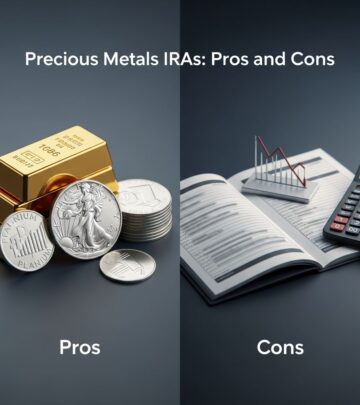
Historical data demonstrates that gold often performs well during market crises and economic downturns. During the 2008 financial crisis, for example, gold prices increased significantly while stock markets crashed, providing a valuable buffer for diversified portfolios. This counter-cyclical behavior makes gold a compelling tool for protecting accumulated retirement wealth.
Disadvantages and Considerations
Higher Fees
Gold IRAs typically come with substantially higher fees compared to traditional IRAs. These additional costs include storage fees charged by custodians for holding physical precious metals in secure vaults, insurance fees to protect your holdings, and potentially administrative fees for account maintenance. These ongoing costs can significantly eat into your investment returns over decades of retirement savings, making cost comparison essential before opening a Gold IRA.
Limited Investment Flexibility
A Gold IRA must hold physical gold and other precious metals as part of its core holdings. Unlike traditional IRAs, you cannot use a single Gold IRA to hold both precious metals and traditional investments such as stocks and bonds. If you want a diversified portfolio that includes both metals and securities, you’ll need to open separate accounts, though your aggregate contribution limits across all your IRAs remain the same.
Historical Underperformance
While gold provides valuable diversification and inflation protection benefits, it has historically underperformed stocks over the long term. If your primary investment goal is maximum wealth accumulation over several decades, a portfolio heavily weighted toward gold may generate lower returns compared to a stock-focused approach, even when accounting for volatility.
Liquidity Considerations
While precious metals can be sold, the process of liquidating physical gold from an IRA may be more time-consuming than selling stocks or bonds. You must work through your custodian, and market conditions may affect the sale price you receive.
Tax Rules and Withdrawal Requirements
Gold IRAs follow the same tax rules and withdrawal requirements as conventional IRAs. With a traditional Gold IRA, you must begin taking required minimum distributions (RMDs) starting at age 73 (as of 2023), and these distributions are taxed as ordinary income. Roth Gold IRAs have more favorable withdrawal rules, with no RMDs during your lifetime.
Early withdrawals before age 59½ typically result in a 10% penalty plus income taxes on the withdrawn amount, with limited exceptions for hardships or specific circumstances. Understanding these rules before opening a Gold IRA is crucial for proper retirement planning.
Comparison: Gold IRA vs. Traditional IRA
| Feature | Gold IRA | Traditional IRA |
|---|---|---|
| Asset Type | Physical precious metals | Stocks, bonds, mutual funds, ETFs |
| Fee Structure | Higher (storage, insurance, administrative) | Lower (often minimal for basic accounts) |
| Tax Treatment | Same as traditional or Roth IRA | Tax-deferred or tax-free (Roth) |
| 2025 Contribution Limit | $7,000 ($8,000 age 50+) | $7,000 ($8,000 age 50+) |
| Diversification Capability | Specialized for precious metals | Broad investment options |
| Historical Returns | Moderate, inflation-protective | Higher long-term growth potential |
Alternative Ways to Invest in Gold
If you’re interested in gaining gold exposure within a traditional IRA without opening a specialized Gold IRA account, alternative options exist. You can purchase gold-focused mutual funds, gold mining company stocks, or gold-related exchange-traded funds (ETFs) within a standard IRA. These alternatives provide gold exposure without the higher fees associated with physical metal storage, though they don’t provide the tangible asset ownership that physical gold offers.
Is a Gold IRA Right for You?
Deciding whether to open a Gold IRA depends on your individual financial situation, investment goals, and risk tolerance. A Gold IRA may be appropriate if you:
- Seek portfolio diversification beyond traditional securities
- Want exposure to an inflation hedge within a tax-advantaged account
- Believe precious metals will perform well during economic uncertainty
- Can tolerate the higher fees associated with physical metal storage
- Have sufficient retirement savings to allocate a meaningful portion to gold
Conversely, a Gold IRA may be less suitable if you:
- Prioritize maximum long-term wealth accumulation above all else
- Prefer low-cost, passive index investing strategies
- Want the flexibility to easily adjust between multiple asset classes
- Have limited retirement savings and cannot afford high fees
Frequently Asked Questions (FAQs)
Q: What makes a Gold IRA different from a regular IRA?
A: A Gold IRA holds physical precious metals instead of traditional securities. Both operate under the same tax rules and contribution limits, but Gold IRAs charge higher fees due to storage and insurance requirements for physical metals.
Q: Can I store physical gold at home in a Gold IRA?
A: No. The IRS requires all physical gold in a Gold IRA to be stored in an IRS-approved depository or vault. Storing gold at home will trigger a distribution and potential tax penalties.
Q: How much can I contribute to a Gold IRA in 2025?
A: The 2025 contribution limit is $7,000 for those under 50 years old, and $8,000 for those aged 50 and older. These limits apply across all your IRAs combined.
Q: Can I roll over an existing 401(k) into a Gold IRA?
A: Yes. You can roll over or transfer assets from a traditional 401(k), 403(b), or other qualified retirement plan into a Gold IRA without triggering immediate tax consequences, provided you follow proper rollover procedures.
Q: What metals can I hold in a Gold IRA?
A: Beyond gold, you can hold silver, palladium, and platinum, provided they meet IRS purity standards. Some custodians may offer additional metals, so verify with your specific provider.
Q: Are Gold IRA withdrawals taxed differently than traditional IRA withdrawals?
A: No. Gold IRA withdrawals follow the same tax treatment as traditional or Roth IRAs. Withdrawals from traditional Gold IRAs are taxed as ordinary income, while Roth Gold IRA withdrawals are tax-free if you meet certain requirements.
Q: What are the fees associated with a Gold IRA?
A: Common fees include custodian fees, storage fees charged by depositories, insurance premiums, and administrative fees. These can collectively cost hundreds of dollars annually and should be carefully evaluated before opening an account.
Q: Does gold historically provide good investment returns?
A: Gold has historically underperformed stocks over the long term but provides valuable diversification, inflation protection, and stability during market downturns. It’s best viewed as a portfolio stabilizer rather than a primary wealth-building vehicle.
Bottom Line
A Gold IRA offers a unique opportunity to incorporate physical precious metals into your tax-advantaged retirement portfolio, providing diversification benefits and potential inflation protection. However, these accounts come with higher fees than traditional IRAs and may offer lower long-term returns compared to stock-focused investments. Before opening a Gold IRA, carefully weigh the benefits against the costs and consider how it fits into your broader retirement strategy. Consulting with a financial advisor can help you determine whether a Gold IRA aligns with your specific financial goals and circumstances.
References
- Gold IRA: What It Is And How It Works — Bankrate. 2024-2025. https://www.bankrate.com/retirement/what-is-a-gold-ira/
- Gold IRA: What It Is And How To Open One — American Hartford Gold. 2024-2025. https://www.americanhartfordgold.com/goldira-retirement-accounts/
- Gold IRA Explained: Pros, Cons & How It Works — Goldco. 2024-2025. https://www.youtube.com/watch?v=nBy2qnVzALk
- Gold IRA — Internal Revenue Service (IRS). 2024-2025. https://www.irs.gov/
- What Is a Gold IRA? How Do You Invest in One? — SoFi. 2024-2025. https://www.sofi.com/learn/content/what-is-a-gold-ira/
- Gold IRA Tax Rules (Expert Guide Released) — Morningstar. 2024. https://www.morningstar.com/
Similar Articles








Read full bio of medha deb