What Is a FICO Score and How Is It Calculated?
Complete guide to understanding FICO scores, calculation factors, and improving your creditworthiness.
What Is a FICO Score?
A FICO score is a three-digit number that represents your creditworthiness and financial reliability. Created by the Fair Isaac Corporation, this standardized credit score has become the most widely used metric in the lending industry for determining loan eligibility and interest rates. Your FICO score essentially tells lenders how likely you are to repay borrowed money based on your credit history and past financial behavior.
The FICO score operates as a numerical summary of your entire financial story. Lenders, credit card companies, mortgage brokers, and other financial institutions rely on this score to assess the risk of lending you money. A higher FICO score indicates lower credit risk, making it easier to secure favorable loan terms and lower interest rates. Conversely, a lower score may result in higher interest rates or loan denials.
FICO Score Range and Categories
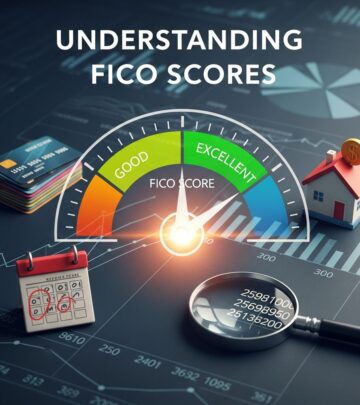
FICO scores typically range from 300 to 850, with higher scores indicating better creditworthiness. Understanding where your score falls within this spectrum is crucial for assessing your financial health and planning your credit strategy.
FICO categorizes scores into five distinct ranges:
- Excellent: 800-850 — Exceptional creditworthiness with access to the best loan terms and rates
- Very Good: 740-799 — Strong credit history with favorable lending opportunities
- Good: 670-739 — Acceptable credit profile that meets most lenders’ standards
- Fair: 580-669 — Below-average credit requiring higher interest rates
- Poor: 300-579 — Significant credit challenges with limited lending options
It’s worth noting that industry-specific FICO scores, such as the FICO Auto Score and FICO Bankcard Score, use different ranges from 250 to 900, allowing lenders to make more tailored decisions based on your history with that specific type of credit.
The Five Factors That Calculate Your FICO Score
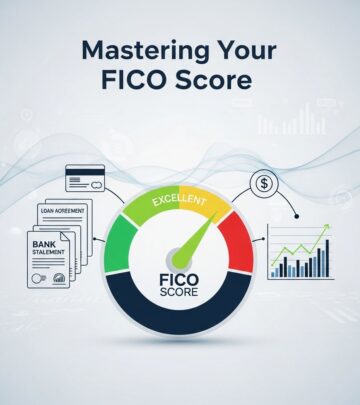
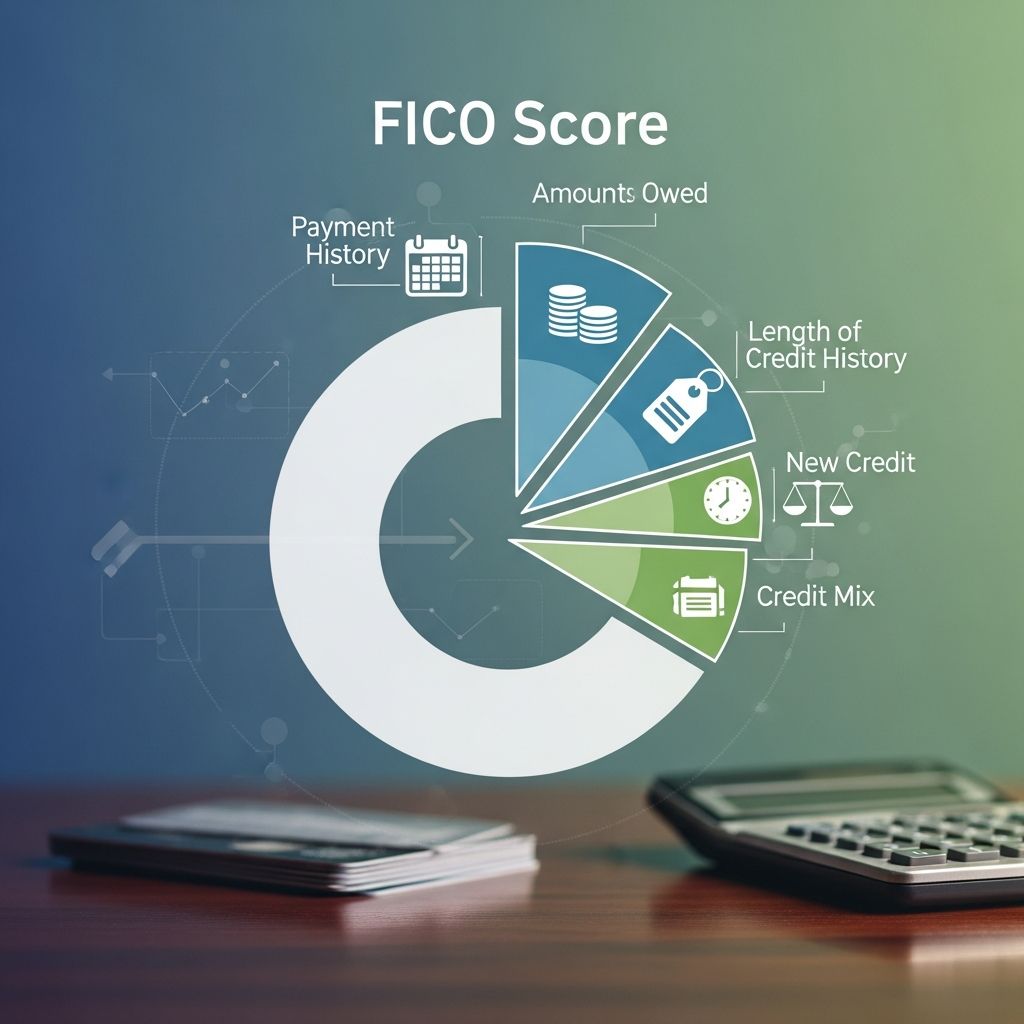
FICO uses a proprietary formula that analyzes five key categories of information from your credit report. Each factor carries a specific weight in determining your final score:
1. Payment History (35%)
Payment history is the most important factor in your FICO score calculation, accounting for 35% of your overall score. This category examines whether you consistently pay your bills on time across all credit accounts, including credit cards, loans, and other debts. Lenders view your payment history as the strongest indicator of whether you’ll repay borrowed money reliably. Late payments, missed payments, and accounts sent to collections significantly damage this component of your score. Even a single late payment can have lasting negative effects, though the impact diminishes over time.
2. Amounts Owed (30%)
The amount of debt you carry relative to your available credit, known as credit utilization, comprises 30% of your FICO score. This factor measures how much of your total credit limits you’re actually using at any given time. For example, if you have five credit cards each with a $20,000 limit, your total available credit is $100,000. If your total balances equal $10,000, your credit utilization ratio is 10%, which is considered healthy.
Credit utilization is particularly important because it demonstrates your ability to manage credit responsibly. Maxing out credit cards or maintaining high balances suggests financial strain and increased default risk. Most financial experts recommend keeping your credit utilization below 30% to optimize your credit score. FICO’s recent models place increased emphasis on rising debt levels and higher utilization ratios, making it essential to manage balances carefully.
3. Length of Credit History (15%)
The age of your credit accounts contributes 15% to your FICO score. This factor considers the age of your oldest account, your newest account, and the average age across all your accounts. A longer credit history generally boosts your score because it demonstrates sustained, responsible credit management over time. Closing old accounts can negatively impact this factor by reducing your average account age.
Building and maintaining a lengthy credit history takes time, which is why financial experts often recommend keeping old accounts open, even if you’re not actively using them. An account with a decade of on-time payments provides more evidence of reliability than a brand-new account.
4. New Credit (10%)
How often you apply for new credit accounts makes up 10% of your FICO score. When you apply for credit, lenders typically perform a hard inquiry on your credit report, which temporarily lowers your score. Applying for multiple new credit accounts within a short period signals potential financial desperation or risk, suggesting you may be taking on too much debt too quickly.
However, not all new credit is detrimental. Responsibly opening new accounts and maintaining low balances can eventually improve your score by expanding your available credit and diversifying your credit mix. The key is spacing out new credit applications and ensuring you can manage additional debt responsibly.
5. Credit Mix (10%)
The variety of credit types you manage represents 10% of your FICO score. Credit mix refers to your experience with different types of credit accounts, including revolving credit (credit cards, lines of credit) and installment credit (auto loans, mortgages, personal loans). Lenders view applicants who can successfully manage multiple types of credit as more financially sophisticated and reliable.
Having a diverse credit portfolio—such as a mortgage, auto loan, and credit cards—demonstrates your ability to handle different credit responsibilities. However, it’s important not to open unnecessary accounts solely to improve credit mix; doing so can backfire by lowering your score through new credit inquiries and increased debt.
Quick Factor Weight Comparison
| Factor | Weight | Impact Level |
|---|---|---|
| Payment History | 35% | Most Important |
| Amounts Owed | 30% | Very Important |
| Length of Credit History | 15% | Moderately Important |
| New Credit | 10% | Less Important |
| Credit Mix | 10% | Least Important |
What Information Goes Into Your FICO Score
FICO scores are calculated exclusively using information from your credit report provided by the three national credit bureaus: Equifax, Experian, and TransUnion. Your credit report contains detailed records of your borrowing and repayment behavior, but not all personal information is considered. FICO ignores factors like race, color, religion, national origin, sex, marital status, age, salary, employment history, and interest rates on specific accounts.
The specific information analyzed includes:
- Your payment history across all credit accounts
- Current account balances and credit limits
- The age of your oldest and newest accounts
- The total number of accounts you maintain
- Recent credit inquiries and new account openings
- Public records such as bankruptcies or tax liens
- Collection accounts or charged-off debts
Why Your FICO Score Matters
Your FICO score serves as a universal credit metric that lenders use to make critical decisions about your financial future. A strong FICO score opens doors to favorable loan terms, lower interest rates, and easier credit approval. Conversely, a weak score can result in higher borrowing costs, stricter lending terms, or outright loan denials.
For example, the difference between a 650 FICO score and a 750 FICO score could mean thousands of dollars in additional interest over the life of a mortgage. On a $300,000 home loan, the interest rate difference between poor and excellent credit can exceed $100,000 total interest paid. Beyond lending, employers, landlords, and insurance companies may also review credit scores when making decisions about hiring, housing, or coverage rates.
Minimum Requirements for a FICO Score
You cannot receive a FICO score until you meet certain baseline requirements. FICO requires that you have:
- At least one account that has been open for a minimum of six months
- Account activity or payment history from the past six months
These requirements can be satisfied with just one or two credit accounts. If you’re building credit for the first time, opening a credit card or becoming an authorized user on someone else’s account can help you meet these prerequisites and begin establishing a credit history.
FICO Score Variations Across Credit Bureaus
Your FICO score may vary slightly between the three credit bureaus because each bureau may have different information about your credit history. Creditors don’t always report to all three bureaus simultaneously or with the same frequency. One bureau might have more recent account information than another, resulting in score variations of 10-50 points depending on the data differences.
When applying for major credit (mortgages, auto loans), lenders typically pull your score from all three bureaus and use the middle score for lending decisions. Checking your credit scores from all three bureaus helps you understand potential variations and identify any errors that may be negatively impacting your credit profile.
How to Improve Your FICO Score
Understanding FICO score components empowers you to take targeted action. Since payment history and amounts owed together represent 65% of your score, these two factors should be your primary focus: Make all payments on time, automate payments when possible, and reduce credit card balances below 30% of your limits. These two actions alone can significantly boost your score.
Additionally, avoid closing old accounts, limit new credit applications to what you actually need, and work on diversifying your credit portfolio responsibly. Monitor your credit report regularly for errors and dispute any inaccuracies that may be unfairly lowering your score.
Frequently Asked Questions About FICO Scores
Q: What is considered a good FICO score?
A: A FICO score of 670 or higher is generally considered good, while scores above 740 are considered very good. Scores of 800 and above are considered exceptional. The average FICO score in the United States is around 717.
Q: How often does my FICO score update?
A: FICO scores can change monthly as new information is added to your credit report. Major changes like payments, new accounts, or balance changes can impact your score relatively quickly, though some factors take longer to influence your score significantly.
Q: Does checking my own credit score hurt my FICO score?
A: No, checking your own credit score results in a soft inquiry that does not impact your FICO score. Only hard inquiries from lenders when you apply for credit can temporarily lower your score.
Q: How long do negative items stay on my credit report?
A: Most negative items remain on your credit report for seven years, though bankruptcies can stay for up to ten years. Late payments, collections, and charge-offs have less impact on your score as they age.
Q: Can I get a FICO score without a credit history?
A: No, you need at least one account open for six months with activity in the past six months to receive a FICO score. If you’re new to credit, consider becoming an authorized user or opening a secured credit card to begin building your credit history.
Q: Do FICO scores vary by lender?
A: While your underlying credit profile is the same, lenders may use industry-specific FICO scores (auto scores, mortgage scores, bankcard scores) that weight certain factors differently for their specific lending purposes.
References
- FICO Credit-Scoring Algorithm — University of Washington School of Information. 2014-10-28. https://www.dourish.com/classes/infx161f14/slides/2014-10-28-team14-FICO.pdf
- How Is Your Credit Score Calculated? — American Express. Accessed 2025-11-29. https://www.americanexpress.com/en-us/credit-cards/credit-intel/how-is-credit-score-calculated/
- What Is A FICO (Fair Isaac Corporation) Credit Score? — Bankrate. Accessed 2025-11-29. https://www.bankrate.com/personal-finance/credit/what-is-a-fico-score/
- FICO Score Meaning: How It Works and Why It Matters — NerdWallet. Accessed 2025-11-29. https://www.nerdwallet.com/finance/learn/fico-score
- How FICO Scores are Calculated — Armed Forces Bank. Accessed 2025-11-29. https://www.afbank.com/article/how-fico-scores-are-calculated
- How a FICO Credit Score Is Determined — Federal Reserve Education. Accessed 2025-11-29. https://www.federalreserveeducation.org/teaching-resources/personal-finance/managing-credit/how-a-fico-credit-score-is-determined
- What is a FICO Score, How is It Calculated — Equifax. Accessed 2025-11-29. https://www.equifax.com/personal/education/credit/score/articles/-/learn/what-is-a-fico-score/
Similar Articles








Read full bio of medha deb