What is Fiat Money? Definition, History & How It Works
Understanding fiat money: the government-backed currency system powering modern economies.

What is Fiat Money?
Fiat money is a form of currency that holds value not because it is backed by a physical commodity like gold or silver, but rather because a government has declared it to be legal tender. The term “fiat” comes from the Latin phrase meaning “let it be done,” reflecting how governments use their authority to establish and maintain currency systems. In essence, fiat money derives its value from the collective trust and confidence that people place in the government or central bank that issues it.
Unlike commodity money, which is intrinsically valuable because it is made from precious metals, fiat money has no inherent worth. A $100 bill is merely a piece of paper; it possesses value only because society agrees it does and because the government guarantees its acceptance as payment. This fundamental principle underpins virtually all modern currencies worldwide, including the U.S. Dollar, the Euro, the British Pound, and the Japanese Yen.
How Fiat Money Works
Fiat money functions through a system of government regulation and public confidence. Central banks, such as the Federal Reserve in the United States or the European Central Bank in Europe, control the supply of fiat currency in circulation. These institutions use various monetary policy tools to manage economic conditions and maintain currency stability.
The value of fiat money is determined by the principles of supply and demand. When the supply of money increases while demand remains constant, the value of each unit decreases, potentially leading to inflation. Conversely, if the supply is restricted and demand remains high, the currency may appreciate. Central banks carefully balance these factors to promote economic stability and prevent excessive inflation or deflation.
Governments issue fiat money through their central banks, which regulate its circulation and implement policies to control inflation, manage interest rates, and influence credit availability. This centralized control allows authorities to respond to economic challenges such as recessions or financial crises by adjusting the money supply accordingly.
The Historical Evolution of Fiat Money
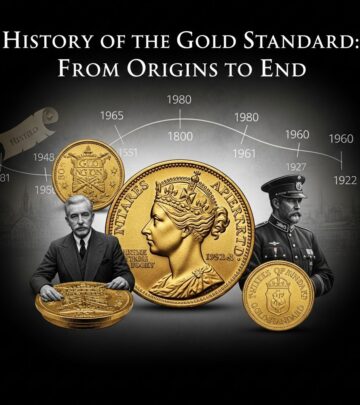
Historically, most currencies were backed by physical commodities. The gold standard, which dominated international finance for much of the 19th and 20th centuries, required governments to maintain gold reserves equal to the value of currency in circulation. Citizens could theoretically exchange paper money for gold at any time.
Representative money emerged as a middle ground, where paper notes represented a claim on a physical commodity held in reserve. The United States operated under a form of the gold standard until 1971, when President Richard Nixon effectively ended the direct convertibility of dollars to gold. This watershed moment marked the transition to a fully fiat-based monetary system, which has become the global standard.
The shift to fiat money became increasingly popular throughout the 20th century as governments sought greater flexibility in managing their economies. The ability to expand the money supply without being constrained by physical commodity reserves allowed nations to respond more dynamically to economic conditions and protect themselves from the extreme volatility of business cycles.
Key Characteristics of Fiat Currency
Fiat currencies possess several defining characteristics that enable them to function effectively as mediums of exchange:
- Legal tender status: Governments declare fiat money as legal tender, meaning it must be accepted as payment for debts and obligations.
- No intrinsic value: Unlike gold or silver, fiat money has no inherent worth independent of government backing.
- Supply control: Central banks can adjust the money supply based on economic needs, without being limited by commodity reserves.
- Portability: Fiat money exists in both physical forms (cash) and digital forms (bank balances, electronic transfers), making it convenient for transactions.
- Divisibility: Currency can be divided into smaller units (cents, pennies) for various transaction sizes.
- Durability: Physical fiat money is designed to withstand regular use and maintain its value over time.
- Uniformity: All units of the same denomination possess identical value and appearance.
- Government backing: The creditworthiness of the issuing government underpins the currency’s value.
Advantages of Fiat Money
Fiat money offers several significant advantages that have made it the preferred monetary system for modern economies:
Economic flexibility: Governments and central banks can implement monetary policies to influence economic growth, control inflation, and manage recession. By adjusting interest rates, money supply, and credit availability, authorities can guide their economies through challenging periods.
Cost efficiency: Producing fiat currency is significantly cheaper than mining and refining precious metals. The cost advantage, known as seigniorage, allows governments to generate revenue from currency production.
Stability: Fiat money can be more stable than commodity-based currencies because its value is not subject to the volatility of commodity markets. When gold prices fluctuate dramatically, a gold-backed currency experiences corresponding value changes.
Scalability: Fiat systems can accommodate growing economies and increasing transaction volumes without being constrained by physical commodity availability. This scalability is essential for modern, complex economies.
Faster economic growth: The flexibility of fiat money allows governments to pursue growth-oriented policies that may not be possible under commodity standards, historically resulting in higher rates of economic expansion.
Disadvantages of Fiat Money
Despite its advantages, fiat money also presents several challenges and risks:
Inflation risk: Without the discipline imposed by commodity backing, governments may be tempted to print excessive currency, leading to inflation. Historically, some nations have experienced hyperinflation when authorities irresponsibly expanded the money supply.
Loss of confidence: If public trust in a government or its ability to manage the currency erodes, the value of fiat money can collapse rapidly. Political instability, economic mismanagement, or fiscal irresponsibility can undermine confidence.
No intrinsic anchor: Unlike commodity money, which has some inherent value, fiat money’s worth rests entirely on faith and legal declaration. This creates vulnerability to confidence-based crises.
Potential for overprinting: The ease of producing fiat currency means that governments might create too much money, destabilizing the economy and eroding purchasing power.
Recession and deflation: While central banks have tools to manage downturns, fiat money systems are not immune to recessions or deflationary pressures during severe economic crises.
Fiat Money vs. Other Currency Systems
| Currency Type | Backing | Value Source | Stability | Flexibility |
|---|---|---|---|---|
| Fiat Money | Government decree | Public trust and legal recognition | Moderate (depends on policy) | High |
| Commodity Money | Physical commodities (gold, silver) | Intrinsic value of commodity | High (limited by commodity availability) | Low |
| Representative Money | Claims on commodities | Commodity reserves | High | Moderate |
| Cryptocurrency | Blockchain technology | Market demand and utility | Variable (highly volatile) | Moderate |
Examples of Fiat Currencies
Today, virtually all major currencies in the world are fiat currencies. The most prominent examples include:
- United States Dollar (USD): The world’s primary reserve currency, issued and controlled by the Federal Reserve.
- Euro (EUR): The common currency of 19 European Union member states, managed by the European Central Bank.
- British Pound Sterling (GBP): The currency of the United Kingdom, issued by the Bank of England.
- Japanese Yen (JPY): Japan’s currency, controlled by the Bank of Japan.
- Chinese Yuan (CNY): China’s currency, managed by the People’s Bank of China.
- Swiss Franc (CHF): Switzerland’s currency, issued by the Swiss National Bank.
The Role of Central Banks in Fiat Money Systems
Central banks play a crucial role in maintaining the integrity and stability of fiat money systems. These institutions are responsible for issuing currency, regulating its supply, and implementing monetary policies that promote economic stability. Central banks use several tools to manage fiat money, including adjusting interest rates, conducting open market operations, and implementing quantitative easing during crises.
The independence of central banks from political pressure is considered essential for the effective functioning of fiat money systems. When central banks can operate without immediate political interference, they can make decisions based on economic data and long-term stability rather than short-term political considerations.
Challenges and Criticisms of Fiat Money
Despite widespread adoption, fiat money systems face ongoing criticism from various perspectives. Some economists argue that the lack of intrinsic value creates inherent instability, while others contend that fiat systems inevitably lead to inflation. Advocates of alternative systems, such as cryptocurrency or a return to commodity-backed currencies, point to specific historical episodes of currency debasement or hyperinflation as evidence of fiat’s fundamental flaws.
However, most mainstream economists argue that properly managed fiat systems have proven superior to commodity-based alternatives in promoting economic growth and stability. The key is effective central bank governance and fiscal discipline by governments.
Frequently Asked Questions
Q: Why is fiat money called “fiat” money?
A: The term “fiat” derives from Latin, meaning “let it be done.” It reflects the fact that fiat money exists because a government has decreed it into existence and declared it legal tender through authoritative order.
Q: What gives fiat money its value?
A: Fiat money derives its value from public confidence in the issuing government and its ability to manage the economy. Its value also depends on supply and demand dynamics in the market.
Q: How is fiat money different from cryptocurrency?
A: Fiat money is government-issued and controlled by central banks, while cryptocurrency is decentralized and operates on blockchain technology. Fiat is legal tender with widespread acceptance, while cryptocurrency’s legal status varies by jurisdiction and acceptance is more limited.
Q: Can fiat money become worthless?
A: Yes, if public confidence in the issuing government collapses or if authorities engage in extreme currency debasement through overprinting, fiat money can lose substantial value or become worthless. Historical examples include hyperinflation in Zimbabwe and Venezuela.
Q: When did the world shift to fiat money?
A: The global shift to fiat money accelerated throughout the 20th century. The United States formally ended the gold standard in 1971, marking a definitive transition to a fiat-based monetary system.
Q: Is the gold standard better than fiat money?
A: The gold standard provided some stability but limited economic flexibility and constrained monetary policy. Fiat money allows greater economic responsiveness but requires disciplined government and central bank management to prevent inflation.
References
- Fiat Money – Definition, How It Works, and Examples — Corporate Finance Institute. 2024. https://corporatefinanceinstitute.com/resources/economics/fiat-money-currency/
- What is Fiat Currency? — IG International. 2024. https://www.ig.com/en/glossary-trading-terms/fiat-currency-definition
- Fiat Money: Definition, History, and How It Works — Business Insider. 2024. https://www.businessinsider.com/personal-finance/investing/fiat-money
- What is Fiat Money? — Modern Treasury. 2024. https://www.moderntreasury.com/learn/what-is-fiat-money
- Fiat Money: Meaning, Advantages, Disadvantages and Examples — GeeksforGeeks. 2024. https://www.geeksforgeeks.org/finance/fiat-money-meaning-advantages-disadvantages-and-examples/
- What is Fiat Money? — Wise. 2024. https://wise.com/us/blog/what-is-fiat-currency
Similar Articles








Read full bio of Sneha Tete