What Is An Expense Ratio And What’s A Good One?
Understanding expense ratios and how they impact your investment returns over time.
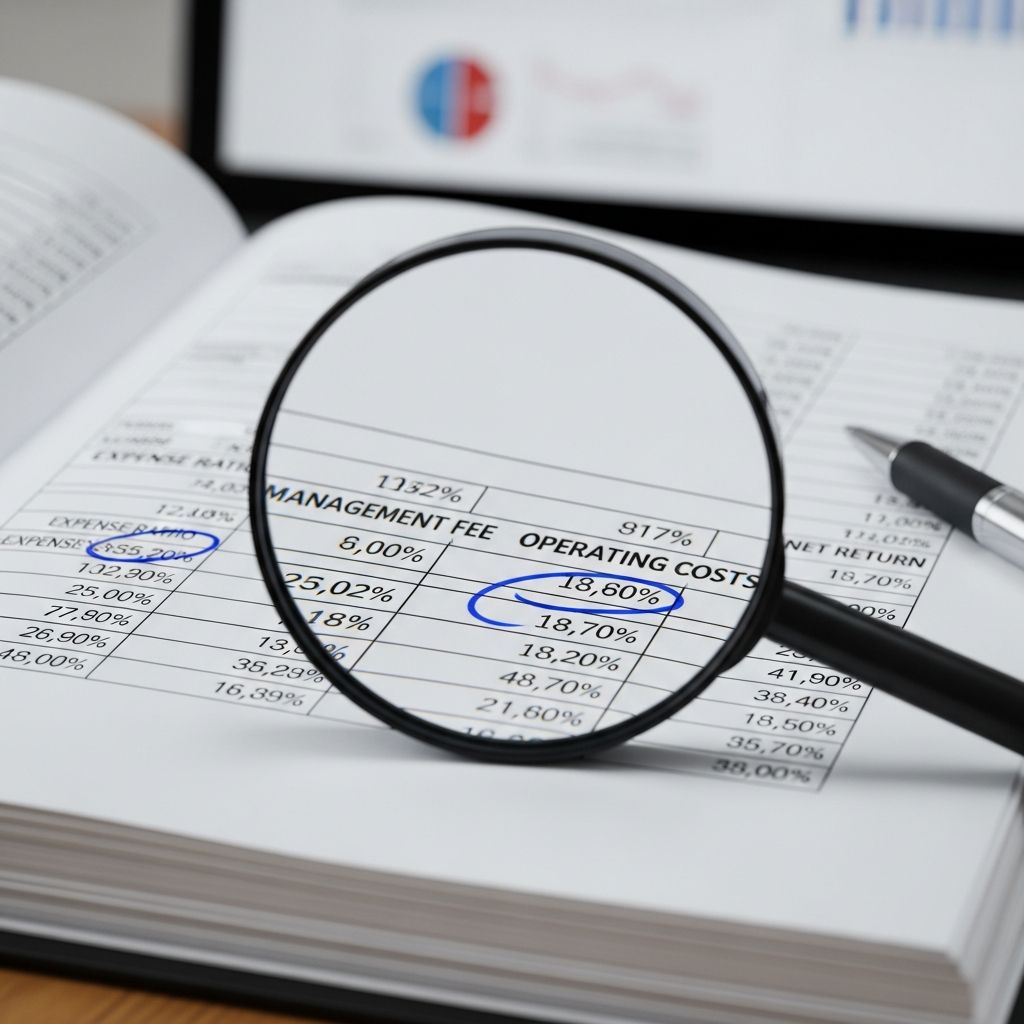
What Is An Expense Ratio?
An expense ratio is the cost of owning a fund on an annual basis, measured as a percentage of your total investment within that fund. When you invest in mutual funds or exchange-traded funds (ETFs), understanding the expense ratio is one of the most critical factors to consider before committing your money. The expense ratio represents the annual fees charged by the fund company to manage and operate the fund, and these costs directly impact your bottom-line returns.
The expense ratio is expressed as a percentage and applies to your invested capital. For example, if a fund charges an expense ratio of 0.30 percent and you have $10,000 invested in that fund, you would pay $30 annually in fees. This calculation is straightforward: multiply your investment amount by the expense ratio percentage to determine your annual cost.
For ETFs specifically, the management company deducts the expense ratio from the fund’s net asset value (NAV) on a daily basis behind the scenes. This means the cost is virtually invisible to you as an investor, unlike mutual funds where fees may be more apparent. However, whether the deduction is visible or invisible, the impact on your returns remains the same.
How Expense Ratios Are Calculated
Understanding the calculation of expense ratios helps investors make informed decisions about which funds to choose. The formula is relatively simple:
Expense Ratio (percentage) = Total Fees Charged Annually / Your Total Investment
Fund companies calculate their total fees by considering all operational expenses, including management fees, administrative costs, and other overhead associated with running the fund. The total assets under management in the fund serve as the denominator in this calculation.
Expense ratios are typically stated as a percentage but can also be expressed in basis points (bps), where 1 basis point equals 0.01 percent or 1/100 of 1 percent. For example, a 0.30 percent expense ratio is equivalent to 30 basis points. Understanding both formats can help you compare funds more effectively when reviewing fund prospectuses and investment literature.
The Impact of Expense Ratios on Your Returns
While expense ratios may seem like small percentages, their long-term impact on your investment returns can be substantial. Consider this scenario: if you make a one-time investment of $10,000 in a fund with a 1 percent expense ratio and earn the market’s average return of 10 percent annually over 20 years, the total cost in fees would be $12,250. This represents a significant reduction in your final portfolio value.
The impact becomes even more pronounced as your portfolio grows. Imagine you have been investing for many years and your initial $10,000 portfolio has grown to $1 million. If you are paying a 1 percent annual expense ratio instead of 0.30 percent, your annual fee would be $10,000—equivalent to your entire original portfolio balance. And this is a recurring fee, year after year.
Conversely, choosing a low-cost index fund with a 0.03 percent expense ratio on that same $1 million portfolio would result in an annual charge of only $300. Over an investing career, a low expense ratio could easily save you tens of thousands of dollars, if not more. This represents real money that remains invested and compounds for your retirement.
Expense Ratio Trends Over Time
There is good news for investors: expense ratios have been declining for years. The competitive landscape in the investment industry has driven management companies to lower their fees to attract and retain investors. According to recent data, average expense ratios have declined considerably over the past 20 years, particularly for stock mutual funds and stock ETFs.
For stock mutual funds, the average fees have declined from 0.99 percent in 2000 to 0.40 percent in 2024 on an asset-weighted basis. An asset-weighted basis factors in how much capital is invested in each fund and weights larger funds more heavily in the calculation. This metric provides a more accurate picture of what the average investor actually pays.
However, it is important to note that the unweighted average is actually much higher. In 2024, the unweighted average was 1.10 percent. This means that if you randomly selected a mutual fund, you would likely encounter fees closer to this higher figure. The difference between the asset-weighted and unweighted averages highlights that larger, more popular funds tend to have lower expense ratios.
Many passive funds now have expense ratios below 0.10 percent, or just $10 annually for every $10,000 invested. A few funds even have expense ratios of 0 percent, which is excellent news for cost-conscious investors.
What Is A Good Expense Ratio?
Determining what constitutes a good expense ratio depends on the type of fund and the assets it invests in. However, there are general benchmarks that can guide your decision-making process.
For Equity Funds: Low-cost equity ETFs typically have a net expense ratio of no more than 0.25 percent. Low-cost equity mutual funds generally have expense ratios of 0.5 percent or lower. In 2023, the average stock index mutual fund charged 0.05 percent on an asset-weighted basis, or $5 for every $10,000 invested.
For Bond Funds: Low-cost bond ETFs often have expense ratios under 0.2 percent, while low-cost bond mutual funds typically have an expense ratio of 0.4 percent or lower.
General Rule: Anything below the average should be considered a good expense ratio. However, it is important to keep these costs in perspective. The difference between an expense ratio of 0.10 percent and 0.05 percent is just $5 per year for every $10,000 invested. Still, there is no reason to pay more for an index fund tracking the same index, so comparing funds is worthwhile.
Why Actively Managed Funds Have Higher Expense Ratios
Your fees are directly related to the expenses of the fund itself. Actively managed funds come with higher expense ratios than index funds because they require a team of portfolio managers to research securities, make investment decisions, and continuously monitor the portfolio. These professional services add cost that must be passed on to investors.
Index funds are passively managed funds tied to the performance of a specific index, such as the S&P 500 or the total stock market. Because index funds simply track an index rather than require active decision-making, they have significantly lower operating costs and thus lower expense ratios. The difference in fees between active and passive management can be substantial over time.
It is important to note, however, that many investors choose to invest in funds with higher expense ratios if they believe the active management and potential outperformance justify the additional cost. This decision should be based on careful analysis of the fund’s historical performance relative to its benchmark.
How Fund Size Affects Expense Ratios
Fund size plays an important role in determining expense ratios. Larger funds can often charge a lower expense ratio because they can spread out certain costs, such as the management and administration of the fund, across a wider base of assets. When the same fixed costs are divided among more investors, each individual investor bears a smaller portion of the expense burden.
In contrast, a smaller fund may have to charge higher fees to break even on its operational costs. However, as a smaller fund grows and attracts more assets, it may be able to reduce its expense ratio to a more competitive level. This creates an incentive for fund managers to grow their funds and provide better value to investors.
Why Expense Ratios Matter for Long-Term Investors
For long-term investors, expense ratios should be a key consideration in fund selection. The cumulative effect of fees over decades of investing can be enormous. Even seemingly small differences in expense ratios compound significantly over time.
Consider two investors who each invest $100,000 and achieve identical market returns of 8 percent annually over 30 years. One investor chooses a fund with a 0.10 percent expense ratio, while the other chooses a fund with a 1.00 percent expense ratio. The difference in their final portfolio values would be approximately $150,000 to $200,000, with the lower-cost investor significantly ahead.
This illustrates why paying attention to expense ratios is not just a minor detail but a fundamental aspect of maximizing your investment returns and building wealth for retirement.
Finding Lower Expense Ratios
If you are looking to minimize your expenses while investing, index funds offer an excellent solution. Passively managed index funds typically charge much lower expense ratios than actively managed funds because they require less management overhead. Popular index fund providers have driven fees down to incredibly low levels in recent years, with some funds charging as little as 0.03 percent annually.
When comparing funds, focus on expense ratios as one of your primary selection criteria. Look for index funds that track broad-based indices like the S&P 500 or total stock market indices. These funds provide diversification at minimal cost, making them ideal core holdings in any investment portfolio.
Frequently Asked Questions
Q: How often are expense ratios charged?
A: Expense ratios are charged annually and calculated daily. For ETFs, the fee is deducted from the fund’s net asset value each day. For mutual funds, the annual expense is typically charged over the course of the year. You cannot avoid the expense ratio by selling your fund shortly before the end of the year.
Q: Can you negotiate expense ratios?
A: Individual investors typically cannot negotiate expense ratios directly. However, institutional investors managing large amounts of capital may sometimes negotiate lower rates. For individual investors, the best approach is to shop among funds and select those with the lowest expense ratios.
Q: Are there funds with zero expense ratios?
A: Yes, a few funds have expense ratios of 0 percent, which is the lowest possible cost. However, these are relatively rare. Most low-cost funds have expense ratios between 0.03 and 0.10 percent, which still provide excellent value for investors.
Q: How do I find the expense ratio for a specific fund?
A: You can find the expense ratio listed in the fund’s prospectus, which is available on the fund company’s website or through financial websites like Morningstar or your brokerage’s fund research tools. The expense ratio is typically clearly labeled and easy to locate.
Q: Is a lower expense ratio always better?
A: Generally, yes, a lower expense ratio is better because it means more of your money stays invested and working for you. However, the fund’s performance, investment strategy, and how well it meets your goals should also factor into your decision.
References
- What Is An Expense Ratio And What’s A Good One? — Bankrate. 2025-11-29. https://www.bankrate.com/investing/what-is-an-expense-ratio/
- ETFs: How Much Do They Really Cost — Charles Schwab. 2025. https://www.schwab.com/learn/story/etfs-how-much-do-they-really-cost
- Best Index Funds In November 2025 — Bankrate. 2025-10-31. https://www.bankrate.com/investing/best-index-funds/
- Low-Cost Index Funds: A Beginner’s Guide — Bankrate. 2025. https://www.bankrate.com/investing/low-cost-index-funds-guide/
- Mutual Funds: Pros And Cons For Investors — Bankrate. 2025. https://www.bankrate.com/investing/mutual-funds-advantages-disadvantages/
- Best Money Market Funds In 2025 — Bankrate. 2025. https://www.bankrate.com/investing/best-money-market-funds/
Similar Articles








Read full bio of medha deb