What is Electronic Funds Transfer (EFT)?
Understanding Electronic Funds Transfer: A complete guide to digital money movement and EFT payments.
What is Electronic Funds Transfer?
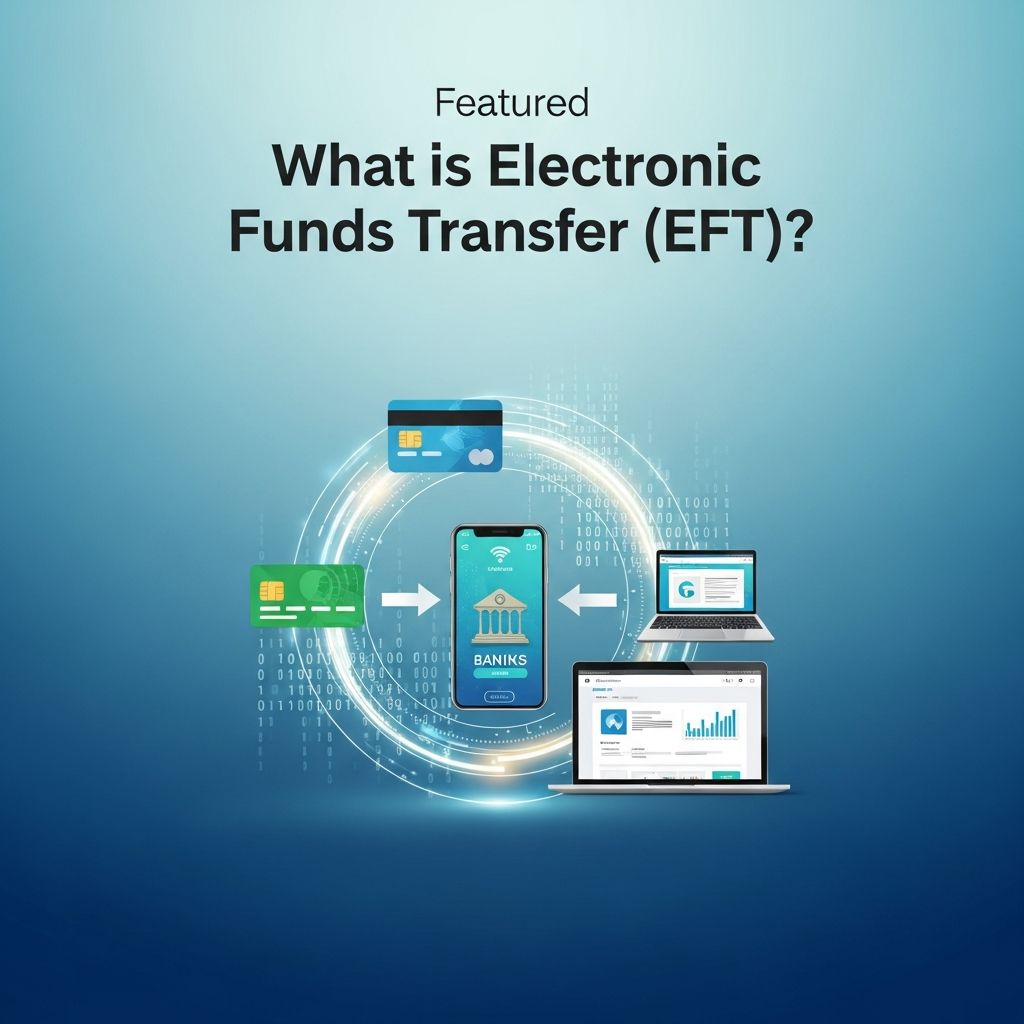
An electronic funds transfer (EFT), also known as a direct deposit, represents the digital movement of money from one bank account to another. Unlike traditional paper-based methods such as checks, EFTs facilitate seamless financial transactions through electronic networks without requiring physical documents or manual processing by bank employees. This modern approach to transferring funds has become the predominant method for moving money in contemporary banking systems, offering simplicity, accessibility, and efficiency that outdated paper-based methods simply cannot match.
The Electronic Fund Transfer Act of 1978 legally defines EFTs as any transfer initiated through telephone, computer, electronic terminal, or magnetic tape. This broad definition encompasses various payment methods including direct deposits, bank transfers, peer-to-peer payments, wire transfers, and electronic checks. Today, EFTs have become essential to modern commerce, enabling businesses, governments, and individuals to conduct financial transactions with speed and reliability.
How Electronic Funds Transfer Works
The electronic funds transfer process operates through a straightforward mechanism involving two primary parties: the sender of funds and the receiver of funds. Understanding this process helps illuminate why EFTs have become so prevalent in modern banking.
When a sender initiates an electronic funds transfer, the request channels through a series of digital networks. These networks may originate from various sources, including the Internet, a physical payment terminal (such as an ATM machine), or a banking application. The transfer request is then transmitted to the sender’s financial institution, which verifies the request and forwards it to the receiver’s bank. The receiver’s bank credits the funds to the designated account, completing the transaction.
Most electronic funds transfers are processed through the Automated Clearing House (ACH) network, which connects all banks, credit unions, and financial institutions throughout the United States. The ACH network processes these transfers in batches, typically at the end of each business day. ACH transfers generally take one to three business days to complete, making them slower than wire transfers but significantly less expensive.
In contrast, wire transfers represent a faster method of electronic funds transfer. Wire transfers typically complete within hours rather than days, though they command higher fees due to the expedited processing. The choice between ACH transfers and wire transfers depends on the urgency of the transaction and the sender’s budget considerations.
Types of Electronic Funds Transfers
Electronic funds transfers encompass numerous payment methods that facilitate digital money movement. Understanding the different types helps individuals and businesses select the most appropriate transfer method for their specific needs.
Direct Deposit
Direct deposit represents one of the most common EFT applications, primarily used by employers to pay employee wages and salaries. This automated process eliminates the need for paper checks and ensures funds arrive reliably in employees’ bank accounts on scheduled paydays.
Automated Clearing House (ACH) Transfers
ACH transfers constitute a primary method of electronic funds transfer processed through the Automated Clearing House network. These transfers accommodate both one-time transactions and recurring payments. Many utility companies use ACH transfers to collect payments from consumers for services such as electricity, water, and internet. Similarly, retailers and suppliers utilize ACH transfers for vendor payments and business-to-business transactions.
Wire Transfers
Wire transfers enable rapid movement of funds between bank accounts, typically completing within hours. The University policy distinguishes between repetitive wire transfers, where receiving bank account information is established in a template with only the transfer amount changing, and non-repetitive wire transfers, which require complete beneficiary information for each transaction.
Card Transactions
When individuals make purchases using debit or credit cards, either online or in person, the transaction constitutes an electronic funds transfer. Account information is electronically received by the issuing bank, and withdrawal approval occurs for the transaction amount. These payments typically process within one to two business days.
Internet and Online Transactions
Internet-based transactions involve manually entering payment card information into point-of-sale fields on checkout pages. Upon submission, the issuing bank processes payment approval, and funds transfer within one to two business days, similar to in-person card transactions.
Peer-to-Peer (P2P) Payments
Peer-to-peer payment systems enable individuals to transfer funds directly to one another through electronic platforms. Credit-push P2P payments, where a consumer initiates a transfer from their account, are classified as electronic funds transfers under federal regulations.
Who Uses Electronic Funds Transfers?
Electronic funds transfers serve diverse participants across multiple sectors of the economy. Senders can include employers compensating employees, businesses paying suppliers and vendors, utility companies collecting service payments, retailers conducting vendor payments, and individuals transferring money to family members or paying for services. Recipients similarly encompass employees receiving wages, goods suppliers fulfilling orders, retailers purchasing inventory, utility companies collecting fees, and various service providers receiving compensation.
Federal regulations mandate that recipients of federal payments receive compensation through direct deposit (EFT), unless a waiver is available. This requirement underscores the government’s recognition that electronic funds transfers provide a safer, more secure, and more efficient alternative to paper check payments.
Benefits of Electronic Funds Transfers
Electronic funds transfers offer numerous advantages over traditional payment methods, explaining their widespread adoption across businesses and government agencies.
Speed and Efficiency
Electronic funds transfers dramatically accelerate the payment process compared to paper checks. Most EFT transactions clear and complete within a couple of business days, with some methods like wire transfers completing within hours. This speed improvement facilitates faster cash flow management and reduces payment processing delays.
Cost Reduction
As businesses increase their usage of electronic funds transfers, paper checks become increasingly obsolete due to their expense, slower expedition, and overall operational effort. EFTs eliminate printing, postage, and handling costs associated with paper checks, reducing transaction expenses significantly.
Security
Electronic funds transfers provide enhanced security compared to paper instruments that can be lost, stolen, or fraudulently altered. Digital transactions leave electronic audit trails and employ encryption technologies to protect sensitive financial information. Federal regulations establish consumer protections for electronic fund transfers, including dispute resolution procedures and liability limitations.
Accessibility
Electronic funds transfers are accessible through multiple channels: Internet banking platforms, mobile applications, ATM machines, and telephone systems. This accessibility enables users to initiate transfers conveniently from virtually any location with appropriate device access.
Environmental Benefits
By eliminating paper checks, electronic funds transfers reduce paper consumption and associated environmental impacts, supporting sustainability objectives.
Electronic Funds Transfer Security and Controls
Financial institutions implement comprehensive security measures to protect electronic funds transfers from unauthorized access and fraudulent activity. These controls include password-protected user accounts, personal identification numbers (PINs), designated administrator oversight, and secure computer-based systems.
Proper authorization procedures are essential for EFT transactions. The procedure to initiate, approve, and record an EFT payment remains subject to the same financial policies, procedures, and controls that govern disbursements made through other means. EFT transactions will not be executed without proper authorization from affected parties in accordance with federal and state statutes and accepted business practices.
For enhanced security, phone transfers are only approved in advance by authorized representatives, and secure communication mechanisms prevent unauthorized access to transfer requests. Financial institutions typically establish transfer limits for individuals authorized to initiate wire transfer requests, providing additional safeguards against large unauthorized transactions.
Federal Regulations and Compliance
Electronic funds transfers operate under comprehensive federal regulatory frameworks designed to protect consumers and ensure system integrity. Regulation E, established by the Consumer Financial Protection Bureau, applies to any EFT that authorizes a financial institution to debit or credit a consumer’s account.
The Electronic Fund Transfer Act establishes consumer rights and responsibilities regarding electronic fund transfers. These protections include dispute resolution procedures, error correction requirements, and liability limitations for unauthorized transfers. Financial institutions must disclose EFT terms and conditions to consumers and maintain documentation of all transactions.
Common Electronic Funds Transfer Example
Consider a practical scenario illustrating how electronic funds transfers function in real-world applications. A software company completes a project for a client and prepares to send an invoice. The client agrees to pay via electronic funds transfer, requiring the software company to provide their bank account information. Once the client receives these details, they access their bank’s website or mobile application and initiate a transfer to the software company’s account. The transfer processes through the ACH network. Following initiation, the transfer may require several business days to clear, with funds becoming available in the software company’s account shortly thereafter.
Electronic Funds Transfer vs. Other Payment Methods
| Payment Method | Processing Time | Cost | Security | Accessibility |
|---|---|---|---|---|
| Paper Check | 5-7 business days | High (printing, postage) | Low (can be lost/stolen) | Limited |
| ACH Transfer | 1-3 business days | Low | High | High |
| Wire Transfer | Hours | High | High | High |
| Credit/Debit Card | 1-2 business days | Medium | High | Very High |
| P2P Payment | 1-3 business days | Low | High | Very High |
Frequently Asked Questions About Electronic Funds Transfers
Q: How long does an electronic funds transfer typically take?
A: Most electronic funds transfers clear and complete within one to three business days. However, processing time varies depending on the transfer type. Wire transfers typically complete within hours, while ACH transfers generally require one to three business days. Weekend and holiday transfers may experience extended processing times.
Q: Are electronic funds transfers secure?
A: Yes, electronic funds transfers employ multiple security measures including encryption, authentication protocols, audit trails, and regulatory oversight. Financial institutions implement password-protected accounts, personal identification numbers, and administrator controls. Federal regulations provide consumer protections including dispute resolution procedures and liability limitations for unauthorized transfers.
Q: What is the difference between ACH and wire transfers?
A: ACH transfers are processed through the Automated Clearing House network in batches and typically take one to three business days to complete but are less costly. Wire transfers provide faster processing, usually completing within hours, but command higher fees due to the expedited service and direct routing between financial institutions.
Q: Can I cancel an electronic funds transfer?
A: Cancellation depends on the transfer stage. If you cancel before the transfer processes, it may be possible. However, once an electronic funds transfer has been submitted to the receiving financial institution, cancellation becomes difficult or impossible. You should contact your bank immediately if you need to attempt cancellation.
Q: What information do I need to initiate an electronic funds transfer?
A: To initiate an electronic funds transfer, you typically need the recipient’s full name, bank account number, routing number, and the transfer amount. Some systems may require additional information such as the recipient’s bank name and address. Always verify this information carefully before submitting the transfer to prevent errors.
Q: Are there limits on electronic funds transfers?
A: Yes, financial institutions typically establish transfer limits that vary based on account type, customer relationship, and transfer method. Daily, monthly, and per-transaction limits may apply. Wire transfers often have higher limits than ACH transfers. Contact your bank to understand the specific limits applicable to your accounts.
Q: Is direct deposit considered an electronic funds transfer?
A: Yes, direct deposit is a specific type of electronic funds transfer. It represents the most common EFT application, used primarily by employers to deposit employee wages and salaries directly into bank accounts on scheduled paydays.
References
- What is Electronic Funds Transfer (EFT)? — EBANX Insights. Accessed November 2025. https://insights.ebanx.com/en/resources/payments-explained/electronic-funds-transfer-eft/
- Electronic Funds Transfers: How EFTs Work & Examples — Chargebacks911. Accessed November 2025. https://chargebacks911.com/electronic-funds-transfer/
- What is Electronic Funds Transfer (EFT)? — Modern Treasury. Accessed November 2025. https://www.moderntreasury.com/learn/electronic-funds-transfer
- Electronic Fund Transfers (EFT) — Florida State University Policies and Procedures. January 1, 2014. https://policies.vpfa.fsu.edu/policies-and-procedures/financial/electronic-fund-transfers-eft
- Electronic funds transfer—Generally — Washington State Legislature RCW 82.32.085. Accessed November 2025. https://app.leg.wa.gov/rcw/default.aspx?cite=82.32.085
- What is an EFT Payment? — Bill.com. Accessed November 2025. https://www.bill.com/learning/eft-payment
- Electronic Fund Transfers FAQs — Consumer Financial Protection Bureau. Updated December 13, 2021. https://www.consumerfinance.gov/compliance/compliance-resources/deposit-accounts-resources/electronic-fund-transfers/electronic-fund-transfers-faqs/
- Direct Deposit (Electronic Funds Transfer) — U.S. Department of the Treasury Fiscal Service. Accessed November 2025. https://www.fiscal.treasury.gov/eft/
Similar Articles








Read full bio of Sneha Tete