What Is Economic Growth: Definition and How It Works
Understanding economic growth: definition, measurement, types, and factors driving prosperity.
What Is Economic Growth?
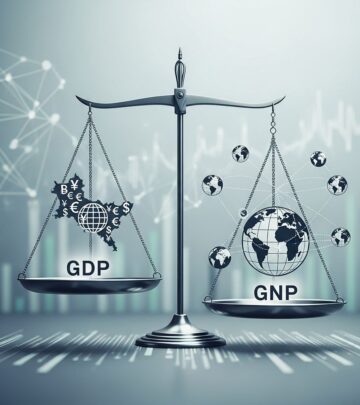
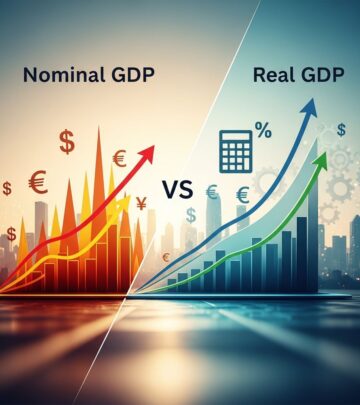
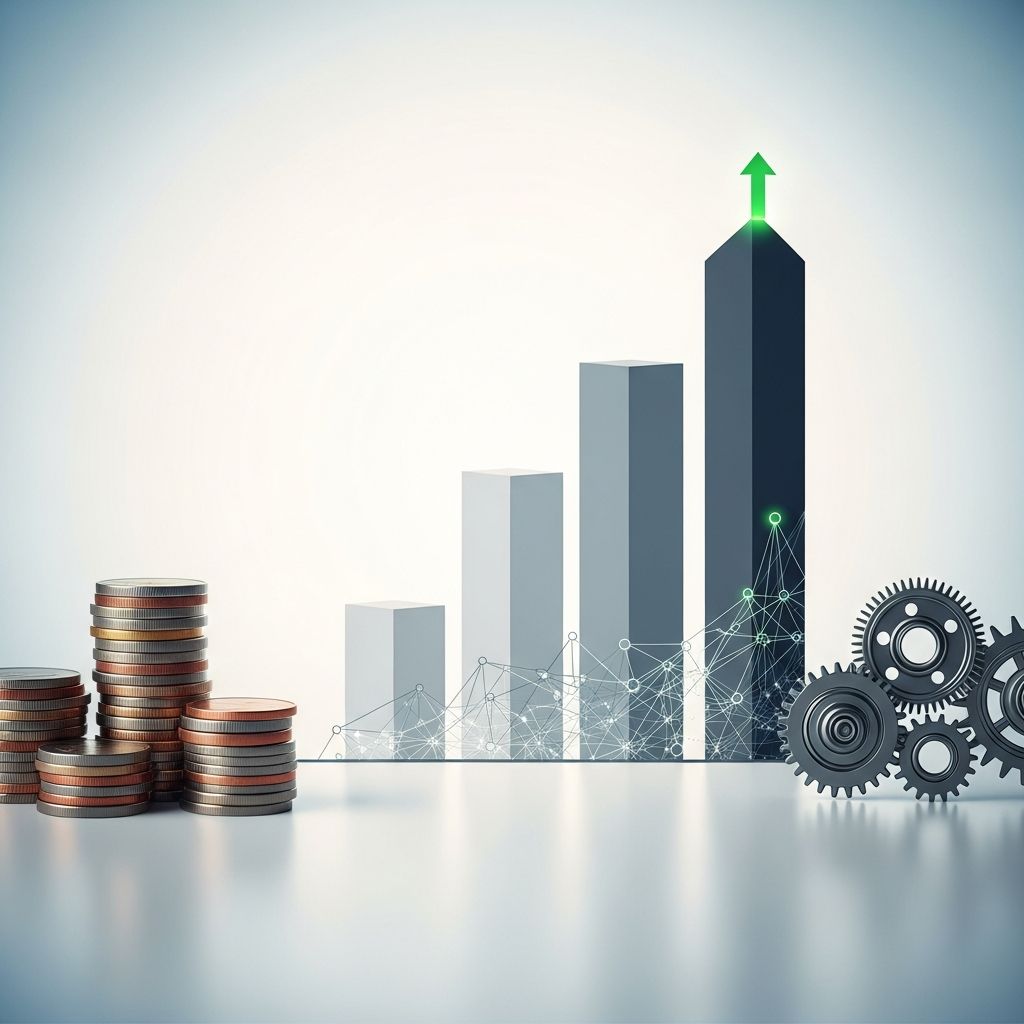
Economic growth is fundamentally defined as an increase in a country’s production of goods and services over one period of time compared with a previous period of time. This expansion of economic output is typically measured by tracking changes in real gross domestic product (GDP) or gross national product (GNP), adjusted for inflation to provide an accurate picture of actual growth rather than nominal increases driven by price changes. When an economy experiences growth, it signifies that the nation is producing more value, creating more opportunities for wealth generation, employment, and improved living standards for its citizens.
The concept of economic growth is central to understanding a nation’s prosperity and development trajectory. When measured properly through real GDP per capita, economic growth reflects genuine improvements in the productive capacity and material well-being of the population. This metric allows economists and policymakers to compare economic performance across different time periods and between different countries, providing valuable insights into the health and trajectory of an economy.
Economic growth leads to a rise in the standard of living for individuals within that country, along with an increase in the quantity and quality of resources, such as labor and capital, available for production. Rather than simply redistributing existing resources among a population, economic growth effectively expands the overall economic pie, allowing more people to benefit without requiring a reduction in anyone else’s share.
How Economic Growth Is Measured
Economists typically measure economic growth by tracking changes in real GDP over time, which represents the value of all goods and services produced in a country, adjusted for inflation. This adjustment for inflation is critical because it distinguishes between genuine productive growth and mere price increases. Several key indicators help economists assess the health and trajectory of economic growth:
- Gross Domestic Product (GDP): The total value of goods and services produced within a country’s borders
- Gross National Product (GNP): The total value of goods and services produced by a country’s nationals, regardless of location
- Gross Domestic Income (GDI): The total income earned in producing goods and services within a country
- Net National Product (NNP): GNP minus depreciation of capital
- Per Capita Income: Average income per person in the economy
- Employment Rate: The percentage of the population that is employed
- Inflation Rate: The rate at which price levels increase over time
- Consumer Price Index (CPI): Measures changes in prices paid by consumers
- Producer Price Index (PPI): Measures changes in prices at the wholesale level
- Balance of Trade (BOT): The difference between a country’s exports and imports
Real GDP per capita is particularly important because it adjusts total economic output for population size, providing a better measure of how economic growth translates into improved living standards for the average person. Small differences in annual growth rates, when compounded over decades, result in dramatic differences in living standards between nations.
Types of Economic Growth
Economists identify three primary types of economic growth, each reflecting different mechanisms through which economies expand their productive capacity.
Extensive Growth
Extensive growth occurs when there is an increase in the amount of inputs used in production, such as labor and capital. This type of growth expands the economy by adding more resources to the production process—hiring more workers, building additional factories, acquiring more raw materials, or expanding agricultural land. While extensive growth can boost total economic output, it may not necessarily improve productivity or living standards per person, as the workforce and resource base are simply growing larger. This type of growth is more common in developing economies that are beginning their industrialization process.
Intensive Growth
Intensive growth, on the other hand, occurs when there is an increase in productivity, leading to higher output per unit of input. This represents a more sustainable form of growth because it enables an economy to produce more goods and services without proportionally increasing resource consumption. Intensive growth is driven primarily by technological advancements, improved worker skills, better management practices, and innovations in production processes. A key factor in enabling intensive growth in the long-term is productivity—output per worker. When workers can produce more efficiently through technology, education, and better tools, the entire economy benefits from faster growth without depleting natural resources as rapidly.
Sustainable Growth
Sustainable growth is a type of economic growth that can be maintained over time without causing environmental degradation or resource depletion. This represents an increasingly important form of growth in contemporary economies, as nations recognize the finite nature of natural resources and the need to protect environmental systems. Sustainable growth balances economic expansion with environmental stewardship and social responsibility, ensuring that current prosperity does not compromise future generations’ ability to thrive.
Phases of Economic Growth
Economists identify varying phases of economic growth as an economy progresses through different stages of development and cyclical patterns. Understanding these phases helps policymakers and investors anticipate economic trends and adjust policies accordingly.
Takeoff Phase
The takeoff phase marks the beginning of sustained economic growth in a developing economy. During this phase, an economy transitions from traditional, primarily agricultural production toward more modern industrial and service-based activities. Investment increases, technological adoption accelerates, and the workforce begins shifting from primary to secondary and tertiary sectors.
Acceleration Phase
In the acceleration phase, economic growth rates increase significantly as the foundations laid during the takeoff period begin to mature. Productivity improvements accelerate, capital investment intensifies, and consumer confidence strengthens. This phase is characterized by rapid expansion of manufacturing capacity, infrastructure development, and rising employment rates.
Expansion Phase
The expansion phase represents a period of increasing growth and recovery from previous economic downturns or troughs. During expansion, the economy experiences an increase in output, employment, and productivity. The demand for goods and services is increasing, leading to higher prices and inflation. This phase is characterized by increased consumer confidence and business investment, as companies expand operations and consumers increase spending, creating positive feedback loops that sustain growth.
Maturity Phase
As an economy matures, growth rates typically stabilize at sustainable levels. The economy reaches a plateau where most sectors are well-developed, infrastructure is largely complete, and technological innovation becomes more incremental. Mature economies often experience slower growth rates compared to developing economies but benefit from more stable institutions and higher living standards.
Decline Phase
The decline phase occurs when economic growth slows significantly or turns negative. This can result from various factors including technological disruption, resource depletion, policy mistakes, or external shocks. During decline, unemployment rises, business investment falls, and consumer confidence weakens.
Factors That Drive Economic Growth
Economic growth is driven by four main factors: technology advancements, international trade, government policies, and investments in human capital. Additionally, several other critical factors significantly influence a nation’s ability to achieve sustained economic expansion.
Technology and Innovation
Technological advancements increase efficiency, productivity, and output while reducing costs. Technology also leads to the development of new products and services, which fuels economic growth. Countries that invest in technology and research and development tend to have higher economic growth rates. Innovation drives intensive growth by enabling workers and capital to produce more output with the same or fewer resources. In the U.S., approximately 60% of consumer spending in 2013 went on goods and services that did not exist in 1869, demonstrating innovation’s role in economic expansion.
Human Capital and Education
Human resources, including education and training, are crucial for economic growth. An educated and skilled workforce is necessary for innovation, productivity, and competitiveness. Investing in education and training programs leads to higher economic growth rates and improved living standards. Human capital—the knowledge and skills that people obtain through education, experience, and training—forms the foundation for long-term prosperity.
Physical Capital and Infrastructure
Infrastructure, including transportation, communication, and energy systems, is critical for economic growth. Improving infrastructure can lead to increased productivity, efficiency, and competitiveness, as well as improved access to resources and markets. Infrastructure investment is essential for sustainable economic growth and development. Well-developed financial markets are particularly important, as they efficiently allocate capital resources from savers to productive investments.
Natural Resources
Natural resources play a significant role in economic growth. Countries with abundant natural resources such as oil, gas, minerals, and timber tend to have higher economic growth rates than those without. However, the proper management of resources is essential to achieve sustainable growth. Overexploitation of natural resources may lead to environmental degradation and depletion, undermining long-term prosperity.
International Trade
International trade enables countries to specialize in producing goods and services where they have comparative advantages, increasing overall efficiency and productivity. Trade exposes domestic firms to global competition, spurring innovation and efficiency improvements. Access to larger markets allows companies to achieve economies of scale and expand production.
Government Policies
Government policies significantly influence the investment climate and economic growth trajectories. Sound fiscal policy, stable monetary policy, secure property rights, rule of law, and business-friendly regulations all contribute to favorable conditions for growth. Conversely, corruption, excessive regulation, and political instability deter investment and slow growth.
Social Factors
Social factors, including income inequality, poverty, and social inclusion, also affect economic growth. Reducing income inequality and providing social safety nets to everyone stimulate consumer demand and improve overall economic growth. Improving social inclusion increases workforce participation and productivity, leading to higher economic growth rates.
How the Economy Grows
The economy grows through multiple interconnected mechanisms that work together to expand productive capacity and increase output. Consumer spending drives demand for goods and services, encouraging businesses to invest in expansion and hiring. When consumers have confidence in their economic prospects, they increase spending, which stimulates production and employment growth.
Technology advancements enable businesses to produce more efficiently, reducing costs and improving competitiveness. International trade allows specialization and access to larger markets. Government policies create either favorable or unfavorable conditions for investment and entrepreneurship. Investments in human capital build a more productive workforce capable of innovation and adaptation.
These factors work together through both extensive and intensive growth mechanisms. Extensive growth expands inputs available for production, while intensive growth improves the productivity of existing inputs. Most developed economies rely heavily on intensive growth, as they have limited capacity for expanding labor forces and natural resource extraction. Sustainable growth integrates these mechanisms while maintaining environmental and social balance for long-term prosperity.
The Importance of Productivity
Productivity growth—increases in output per worker or per unit of input—represents the most crucial long-term driver of economic improvement and rising living standards. When workers can produce more through better tools, technology, education, and management practices, the entire economy benefits. Productivity growth allows for wage increases without corresponding inflation, improved competitiveness in global markets, and higher returns on capital investments.
Development of new technology, such as computers and sophisticated machinery, enables workers to produce more efficiently and effectively. This growth in output per worker is a key factor behind sustained economic growth and improved living standards across the population.
Understanding the Production Function
To analyze the sources of economic growth, economists use the concept of a production function, which is the technical relationship by which economic inputs like labor, machinery, and raw materials are turned into outputs like goods and services that consumers use. In macroeconomics, this relationship is called an aggregate production function, which describes how the entire economy transforms inputs into outputs.
By understanding production functions, economists can identify which factors are most responsible for growth in specific economies and sectors. They can determine whether growth is primarily from adding more inputs or from using existing inputs more efficiently, guiding policy recommendations accordingly.
Frequently Asked Questions
Q: What is the difference between economic growth and economic development?
A: Economic growth refers to an increase in the quantity of goods and services produced (measured by GDP), while economic development encompasses broader improvements in living standards, infrastructure, education, health, and quality of life. Development is a more comprehensive measure of progress than growth alone.
Q: Why do small differences in growth rates matter?
A: Due to compounding effects, small differences in annual growth rates create enormous differences in GDP per capita over decades. For example, an economy growing at 3% annually will have roughly double the GDP per capita in 24 years compared to an economy growing at 1% annually.
Q: How can a country achieve sustainable economic growth?
A: Sustainable growth requires balancing productivity improvements with environmental protection, investing in human capital and education, developing robust infrastructure, maintaining stable institutions and governance, and managing natural resources responsibly to ensure long-term prosperity.
Q: What role does financial development play in economic growth?
A: Well-developed financial markets allocate capital more efficiently, channeling savings into productive investments. This financial infrastructure enables entrepreneurs to access capital for innovation and expansion, supporting long-term economic growth.
References
- Economic Growth: Definition, How it Works, Types, and Phases — Strike Money. Accessed 2025-11-29. https://www.strike.money/stock-market/economical-growth
- What Are the ‘Ingredients’ for Economic Growth? — Federal Reserve Bank of St. Louis. 2013-09-01. https://www.stlouisfed.org/publications/page-one-economics/2013/09/01/what-are-the-ingredients-for-economic-growth
- Economic Growth — Economics Help. Accessed 2025-11-29. https://www.economicshelp.org/macroeconomics/economic-growth/
- Components of Economic Growth — OpenStax. Accessed 2025-11-29. https://openstax.org/books/principles-economics-3e/pages/20-3-components-of-economic-growth
- Economic Growth — Introduction to Macroeconomics, Pennsylvania State University. Accessed 2025-11-29. https://psu.pb.unizin.org/introductiontomacroeconomics/chapter/economic-growth/
- Economic Growth — Wikipedia. Accessed 2025-11-29. https://en.wikipedia.org/wiki/Economic_growth
Similar Articles








Read full bio of Sneha Tete