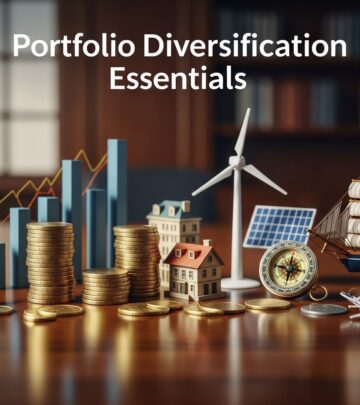
Diversification: 6 Key Asset Classes And How To Use Them
Understand portfolio diversification strategies to reduce risk and optimize returns in your investment journey.

Diversification is a fundamental investment strategy that involves spreading investments across various asset classes, sectors, and geographies to reduce risk and enhance long-term returns. By not putting all your eggs in one basket, investors can mitigate the impact of poor performance in any single investment.
Why Diversification Matters
In investing,
diversification
serves as a risk management tool that smooths out portfolio volatility. While no strategy eliminates risk entirely, diversification limits exposure to any one asset’s downturns. For instance, when stocks decline, bonds or cash equivalents often perform steadily or rise, balancing overall returns.Financial experts emphasize that a diversified portfolio can achieve higher risk-adjusted returns over time. A landmark study highlighted that asset allocation—closely tied to diversification—accounts for over 90% of a portfolio’s performance variability. This principle holds across market cycles, as different assets respond uniquely to economic shifts like growth, recession, or inflation.
How Diversification Works
Diversification operates by combining assets with low or negative correlations—meaning they don’t move in tandem. Stocks may surge in bull markets but plummet in bears, while bonds offer stability through fixed interest payments. Real estate provides income via rents and appreciation, uncorrelated with equities, and CDs guarantee principal with predictable yields.
Within asset classes, further spreading reduces risks. For stocks, this means investing across industries (tech, healthcare, utilities), company sizes (large-cap, small-cap), and regions (U.S., emerging markets). The goal is a weighted average return that avoids extreme highs and lows.
Key Asset Classes for Diversification
- Stocks: High return potential but volatile; diversify by sector and market cap.
- Bonds: Steady income; vary by maturity (short, medium, long-term) and credit quality.
- Mutual Funds/ETFs: Instant diversification; choose broad index funds over sector-specific ones.
- Real Estate: Income and growth; use REITs for liquidity without property management hassles.
- Cash Equivalents (CDs, High-Yield Savings): Low risk, FDIC-insured; ladder CDs for rate exposure.
- Commodities (Gold, Silver): Hedge against inflation and stock declines.
Benefits of Diversification
The primary benefit is
risk reduction
without proportionally sacrificing returns. A concentrated portfolio in tech stocks, for example, could crater during a sector slump, but a diversified one weathers it via gains elsewhere.Diversification also promotes adaptability. Investors can rebalance to capitalize on outperforming assets while maintaining targets. Historically, diversified portfolios outperform concentrated ones over decades, as frontrunners become laggards and vice versa.
| Asset Class | Risk Level | Return Potential | Best in Scenario |
|---|---|---|---|
| Stocks | High | High | Economic Growth |
| Bonds | Medium | Medium | Rising Rates/Recession |
| CDs/Savings | Low | Low | Stability Needed |
| Real Estate | Medium | Medium-High | Inflation |
| Commodities | Medium | Variable | Market Turmoil |
This table illustrates how mixing assets creates balance.
Risks of Overconcentration
Failure to diversify exposes portfolios to unnecessary risks. Concentrating in one stock or sector amplifies losses—recall the 2000 dot-com bust or 2008 financial crisis. Even broad asset classes like stocks can falter if the entire market tanks; diversification can’t fully shield against systemic risks.
Cash savings undiversified in one low-rate account miss higher yields elsewhere. Spreading across FDIC-insured high-yield accounts maximizes returns safely.
Strategies for Effective Diversification
Asset Allocation
Asset allocation determines your mix based on risk tolerance, age, and goals. Younger investors favor stocks (70-80%), shifting to bonds/CDs near retirement. Passive strategies maintain fixed ratios; active ones adjust for market views, like overweighting stocks pre-boom.
Stock Diversification
Hold 20-30 stocks across sectors via ETFs like S&P 500 for broad U.S. exposure, plus international/emerging market funds. Avoid overlap in ‘diversified’ funds tracking the same indices.
Bond and Fixed Income Diversification
Ladder bonds/CDs across maturities. Mix Treasuries (low risk) with corporates (higher yield).
Cash Diversification
Open high-yield savings at multiple banks, brokered CDs, and money markets. Rebalance quarterly to chase top rates.
International and Alternative Assets
10-20% in foreign stocks/ETFs hedges U.S.-specific risks. Add 5-10% commodities for inflation protection.
Implementing Diversification
Start with low-cost index funds/ETFs for instant spread. Robo-advisors automate allocation/rebalancing. Review annually or after 5-10% drifts; rebalance by selling high/buying low.
For savings, compare APYs weekly via aggregators, diversifying up to FDIC limits ($250,000 per account).
Common Diversification Mistakes
- Over-Diversification: Too many holdings dilute returns without added safety (diworsification).
- False Diversification: Funds mirroring the same stocks.
- Ignoring Correlations: Assets rising/falling together fail to diversify.
- Neglecting Rebalancing: Drifts increase risk over time.
Portfolio Rebalancing
Rebalancing restores target allocations. If stocks rise to 70% (target 60%), sell some to buy bonds. This enforces ‘buy low, sell high’ discipline, enhancing returns.
Diversification in Different Market Conditions
In growth: Stocks lead. Recession: Bonds/CDs shine. Inflation: Real estate/commodities. Diversification ensures participation in winners.
Frequently Asked Questions (FAQs)
What is the ideal number of stocks for diversification?
Aim for 20-30 stocks or use ETFs for broader exposure. Beyond that, benefits diminish.
Does diversification guarantee profits?
No, but it reduces risk and improves long-term odds.
How often should I rebalance my portfolio?
Annually or when allocations drift 5-10%.
Can I diversify cash savings?
Yes, across high-yield accounts and CDs at different institutions for best rates and FDIC protection.
Is international diversification necessary?
Yes, it adds growth opportunities and hedges U.S. risks.
Conclusion
Diversification is the cornerstone of prudent investing, balancing risk and reward for sustainable wealth building. Tailor it to your needs, stay disciplined, and consult advisors for personalization.
References
- Portfolio Diversification: Why It’s Important — Bankrate. 2024-01-15. https://www.bankrate.com/investing/diversification-is-important-in-investing/
- What You Need to Know About Diversification in Finance — AFBank. 2023-11-20. https://www.afbank.com/article/what-you-need-to-know-about-diversification-in-finance
- Asset Allocation: Creating the Ideal Investment Mix — MoneyRates. 2024-05-10. https://www.moneyrates.com/investment/asset-allocation-basics.htm
- How to Diversify Your Savings for the Best Rates — MoneyRates. 2024-08-22. https://www.moneyrates.com/cd/diversify-savings-for-the-best-rates/
- Essential Year-End Investment Checklist — MoneyRates. 2024-12-01. https://www.moneyrates.com/investment/essential-year-end-investment-checklist/
Similar Articles








Read full bio of Sneha Tete