What Is Disguised Unemployment and Why It Matters
Understanding hidden unemployment: causes, impacts, and economic implications.

What Is Disguised Unemployment?
Disguised unemployment, also known as hidden unemployment, refers to a situation where a portion of the labor force is either unemployed or working in redundant positions with minimal to zero productivity. Unlike traditional unemployment, disguised unemployment does not appear in official statistics and does not directly affect aggregate economic output. However, it represents a significant economic inefficiency that can hinder long-term growth and development.
The concept emerges when an economy has too many workers performing the same job that could be accomplished by fewer employees. In such scenarios, removing some workers would not reduce the organization’s or sector’s total output. This type of unemployment is particularly common in developing economies and agricultural sectors where labor surplus persists despite formal employment arrangements.
Definition and Core Characteristics
Disguised unemployment occurs when workers are not efficiently employed and do not contribute meaningfully to production, yet they remain counted as employed. This distinguishes it from open unemployment, where individuals are actively seeking work but cannot find employment. The defining characteristic is that the labor is redundant—the work could be accomplished with fewer workers without any reduction in output.
Key characteristics of disguised unemployment include:
- Low individual and aggregate productivity levels
- Excess labor supply relative to actual job requirements
- Workers not utilizing their full skills and capabilities
- Employment that appears formal but lacks genuine economic contribution
- Absence from official unemployment statistics
Types and Categories of Disguised Unemployment
Disguised unemployment manifests in several distinct forms, each with different causes and characteristics:
Underemployment
This occurs when individuals work part-time but seek full-time employment, or when highly educated workers accept positions below their skill level. A software engineer working as a retail cashier represents underemployment, as their productivity potential remains underutilized.
Labor Redundancy from Technological Advancement
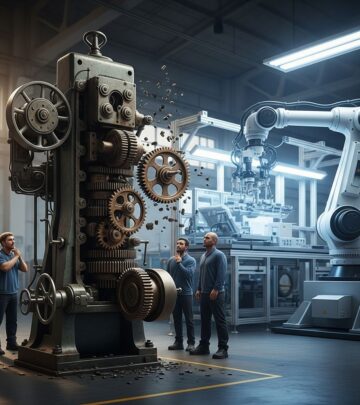
When new technologies replace workers but employment levels remain unchanged due to organizational policies or legal constraints, disguised unemployment emerges. Workers may retain their positions without contributing proportionally to output.
Structural Economic Changes
Shifts in industry demand can create situations where sectors employ more workers than necessary. For example, as manufacturing declines in developed economies, workers may be retained in diminished roles rather than laid off.
Institutional Unemployment
Government departments and state-owned enterprises frequently experience disguised unemployment due to bureaucratic structures and job security policies that maintain excess staffing levels.
Disability and Health-Related Factors
Workers with disabilities or chronic illnesses who continue employment but cannot work at full capacity contribute to disguised unemployment statistics. Their reduced productivity means they are technically employed but not fully contributing.
Real-World Examples and Case Studies
Agricultural Sector in Developing Nations
The agricultural sector in India and other developing countries provides a classic example of disguised unemployment. Small family farms often employ numerous workers on limited land using outdated technology. Consider a five-acre farm requiring only three full-time workers but employing ten family members. The additional seven workers contribute little to overall output, yet remain formally employed. This arrangement persists due to social obligations, limited job alternatives, and the difficulty of relocating rural populations to urban areas.
Small Family Businesses
A family-operated bakery illustrates the principle effectively. If four employees are needed to manage daily operations, but the family employs eight, the surplus workers represent disguised unemployment. Their removal would not diminish production capacity or sales, yet they occupy employment positions and receive compensation.
Urban Service Sector
Convenience stores and small retail establishments in urban areas frequently employ more staff than operationally necessary. Multiple cashiers, stock personnel, and managers may work during off-peak hours with minimal customer flow, creating redundant labor that masks unemployment within employment statistics.
State-Owned Enterprises
Poorly managed state-owned enterprises often maintain employment levels exceeding actual operational needs. Political considerations, employment guarantees, and resistance to restructuring preserve positions that do not contribute meaningfully to productivity or output.
Causes and Contributing Factors
Economic Structural Limitations
Limited capital investment, land constraints, and inadequate infrastructure force economies to employ workers in positions with minimal productivity. Developing nations with large agricultural sectors face particular challenges when modernization lags behind population growth.
Policy and Management Issues
Government policies mandating employment maintenance, union agreements protecting job numbers, and poor management decisions perpetuate disguised unemployment. Organizations may prioritize employment preservation over efficiency, particularly in public sector entities.
Technological Advancement Without Workforce Adjustment
When automation and technological improvements increase productivity per worker, organizations may retain existing workforce levels despite reduced labor requirements. This preserves employment but creates redundancy.
Lack of Alternative Employment Opportunities
In regions with limited economic diversification, individuals accept redundant positions because alternatives do not exist. Rural areas dependent on agriculture exemplify this constraint.
Social and Cultural Factors
Family obligations, cultural expectations regarding employment, and social safety net limitations encourage workers to accept or maintain redundant positions rather than pursue unemployment.
Economic Impact and Consequences
Resource Inefficiency
Disguised unemployment represents a significant misallocation of human capital and financial resources. Wages paid to redundant workers could be redirected toward productive investments, capital improvement, or additional productive hiring.
Suppressed Economic Growth
When large portions of the labor force operate at minimal productivity, aggregate economic output remains below potential capacity. This suppresses growth rates and competitiveness in global markets.
Wage and Living Standard Pressures
Disguised unemployment frequently correlates with lower wages, as redundant workers accept reduced compensation to maintain employment. This depresses living standards and household consumption capacity, further constraining economic growth.
Delayed Modernization
Maintaining redundant labor discourages investment in technology and modernization, perpetuating inefficiency cycles and preventing economic advancement.
Statistical Distortion
Official unemployment statistics fail to capture disguised unemployment, creating misleading impressions of labor market health and economy-wide employment conditions.
Disguised Unemployment vs. Other Unemployment Types
| Unemployment Type | Definition | Statistical Visibility | Economic Impact |
|---|---|---|---|
| Disguised Unemployment | Workers employed but not productively contributing | Hidden from official statistics | Inefficient resource allocation, reduced growth |
| Open Unemployment | Individuals actively seeking but unable to find work | Counted in official statistics | Direct loss of productive capacity and income |
| Underemployment | Working part-time or below skill level when preferring full-time | Partially captured in statistics | Underutilized skills and reduced household income |
| Structural Unemployment | Job skills mismatch due to economic changes | Counted in official statistics | Persistent unemployment in affected sectors |
| Frictional Unemployment | Temporary unemployment during job transitions | Counted in official statistics | Minimal long-term economic impact |
Geographic and Sectoral Prevalence
Developing Economies
Disguised unemployment is most prevalent in third-world and developing countries with large populations and significant agricultural sectors. India, rural China, and Southeast Asian nations experience substantial disguised unemployment due to limited industrialization and labor market constraints.
Agricultural Sectors
Rural agricultural areas globally demonstrate high disguised unemployment rates. Small landholdings, labor-intensive farming methods, and limited mechanization create conditions where labor supply far exceeds productive requirements.
Developed Economies
While less prevalent, developed nations experience disguised unemployment through underemployment, institutional redundancy in public sectors, and job quality issues. The structural nature differs from developing economies but presents similar productivity challenges.
Policy Responses and Solutions
Economic Restructuring
Transitioning workers from redundant positions to productive sectors through targeted training and redeployment addresses disguised unemployment. Infrastructure development and industrial diversification create alternative employment pathways.
Technological Modernization
Investments in agricultural mechanization, industrial automation, and technological advancement increase productivity per worker. Accompanying workforce transition programs prevent social disruption.
Education and Skill Development
Comprehensive education and vocational training equip workers for employment in growing sectors. This reduces labor surplus in declining industries and enhances overall human capital.
Institutional Reforms
Public sector restructuring, merit-based hiring, and performance evaluation systems eliminate unnecessary positions. Efficiency improvements reduce disguised unemployment while maintaining essential services.
Labor Market Policies
Flexible employment arrangements, job sharing programs, and entrepreneurship support create alternative income generation mechanisms. These approaches accommodate workers while improving overall productivity.
Frequently Asked Questions (FAQs)
Q: How does disguised unemployment differ from open unemployment?
A: Open unemployment refers to people actively seeking work but unable to find it, and they appear in official statistics. Disguised unemployment involves employed individuals who contribute minimally to production and do not appear in unemployment statistics.
Q: Why is disguised unemployment more common in developing countries?
A: Developing countries typically have large agricultural populations, limited industrial capacity, insufficient capital investment, and labor market rigidities that trap workers in redundant positions. Social safety nets are also weaker, making unemployment less tolerable than underemployment.
Q: Can disguised unemployment exist in developed economies?
A: Yes, though less prevalent. Disguised unemployment appears through underemployment, excessive public sector staffing, and workers accepting positions below their skill levels due to limited opportunities.
Q: How does disguised unemployment affect economic growth?
A: Disguised unemployment reduces aggregate productivity, suppresses output below potential capacity, and wastes resources. This constrains economic growth rates and competitiveness in global markets.
Q: Is disguised unemployment measured in official statistics?
A: No, disguised unemployment does not appear in official unemployment statistics because workers remain formally employed. It represents a hidden economic inefficiency not captured by conventional labor statistics.
Q: What role does technology play in creating or reducing disguised unemployment?
A: Technology can initially create disguised unemployment if workers are retained despite reduced labor requirements. However, long-term technological advancement enables economic transformation toward more productive sectors and reduced redundancy.
References
- What is Disguised Unemployment? — Longbridge. 2024-12-05. https://longbridge.com/en/learn/disguised-unemployment-101100
- Disguised Unemployment – Overview and Inclusions — Corporate Finance Institute. https://corporatefinanceinstitute.com/resources/economics/disguised-unemployment/
- Disguised Unemployment: Meaning & Types — Paytm Blog. https://paytm.com/blog/glossary/disguised-unemployment-meaning-definition/
- Disguised Unemployment — Economics Help. https://www.economicshelp.org/blog/412/unemployment/disguised-unemployment/
Similar Articles








Read full bio of medha deb