Demand Draft: Complete Guide To Secure Banking Payments
Understand demand drafts, how they work, their benefits, and why they're a secure payment method.
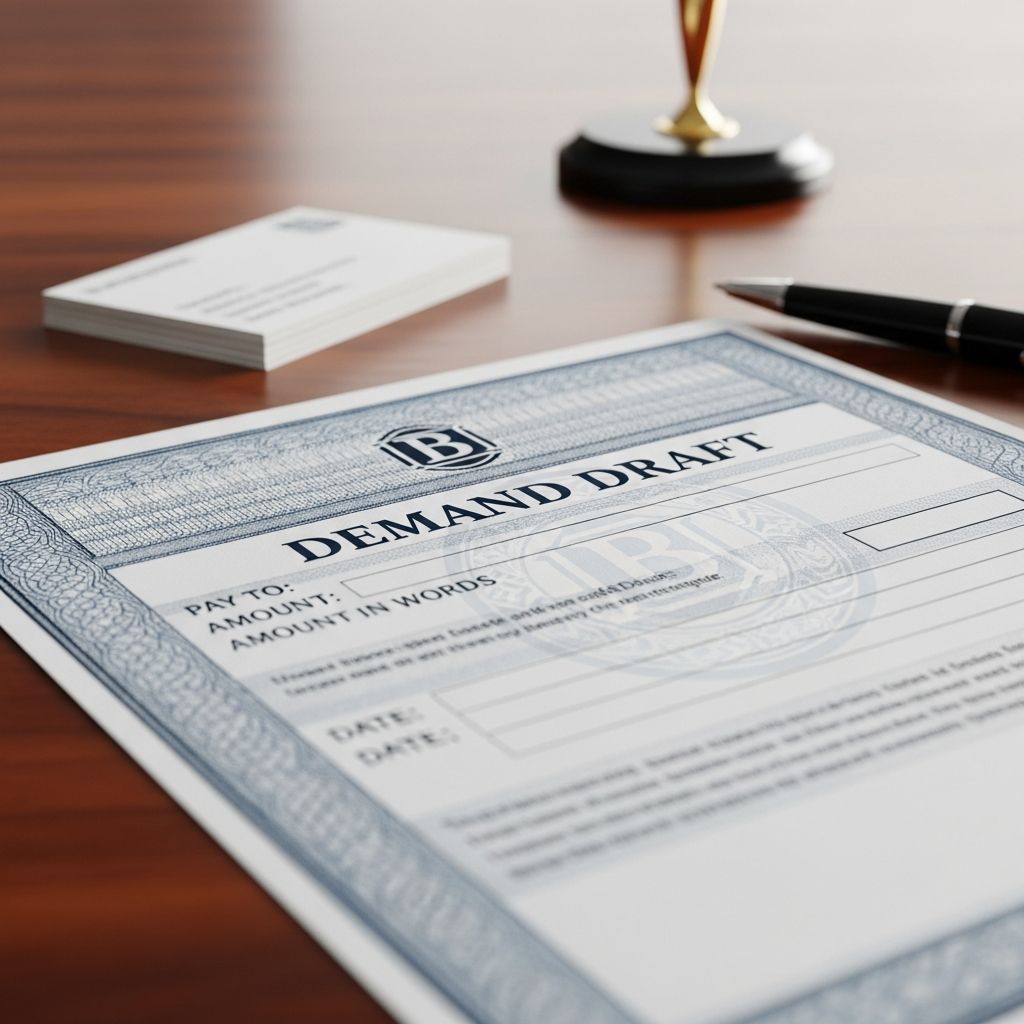
A demand draft (DD) is a financial instrument issued by banks to facilitate secure money transfers between accounts. Unlike traditional cheques, a demand draft provides guaranteed payment to the recipient because it is a prepaid instrument. This makes it one of the most reliable payment methods for large transactions, educational fees, real estate payments, and other significant financial commitments.
Understanding Demand Drafts
What Exactly is a Demand Draft?
A demand draft is a negotiable instrument similar to a bill of exchange that a bank issues to a client (known as the drawer) to direct another bank (the drawee) or one of its own branches to pay a specified sum to a designated payee. The defining characteristic of a demand draft is that it is a prepaid instrument—meaning the drawer must provide the full amount to the bank before the DD is issued. Once the bank receives payment, it guarantees that the funds will be available to the payee upon presentation.
Demand drafts are also known as sight drafts because they are payable on sight when presented to the bank by the payee. This immediate payment capability distinguishes them from time drafts, which have a specified payment date in the future.
How Demand Drafts Work
The process of obtaining and using a demand draft involves several straightforward steps:
Step 1: Form Completion – The customer visits their bank branch and completes a demand draft form, providing details such as the applicant’s name, the beneficiary’s name, the amount to be transferred, the destination branch details, and the mode of payment (cash, cheque, or online transfer).
Step 2: Payment Submission – The customer pays the full amount of the demand draft to the bank, either in cash or through another payment method.
Step 3: DD Issuance – The bank processes the request, debits the amount from the customer’s account (if applicable), and issues the demand draft. A receipt is provided for tracking purposes.
Step 4: Delivery to Payee – The drawer delivers the demand draft to the payee.
Step 5: Payment Collection – The payee presents the demand draft to their bank, which immediately credits the funds to their account.
Key Features of Demand Drafts
Prepaid Nature
The prepaid nature of a demand draft is its most important feature. The requestor must pay the bank the full amount in advance, which significantly reduces the risk of insufficient funds. This ensures that when the payee presents the draft, the funds are guaranteed to be available, eliminating concerns about payment failure.
Bank Guarantee
Since the bank collects the money upfront and holds it in reserve, a demand draft carries a guaranteed payment to the payee. The bank’s backing provides complete assurance that the transaction will be completed successfully, making demand drafts ideal for transactions requiring high security and reliability.
Negotiable Instrument Status
Under the Uniform Commercial Code (UCC 3-104), a demand draft is classified as a negotiable instrument in the form of an order. This legal classification provides specific protections and rights to all parties involved in the transaction.
Specific Payee Requirement
Demand drafts can only be credited to a specific payee’s account. This restriction adds an extra layer of security, as the draft cannot be cashed by anyone other than the designated recipient. If a demand draft is lost or stolen, the customer can request reimbursement under an indemnity claim.
Validity Period
A demand draft remains valid for three months from the date of issuance. After this period expires, the draft cannot be presented for payment, and the customer must request a new one if needed. This validity period encourages timely payment and helps maintain accurate financial records.
Types of Demand Drafts
Sight Demand Drafts
Sight demand drafts are payable immediately upon presentation to the bank. The payee can claim the funds right away without any waiting period. This is the most common type of demand draft used for immediate payment requirements.
Time Demand Drafts
Time demand drafts can only be cashed after a specific period has elapsed. The payer commits to pay on a particular date, and the bank processes the transaction based on this agreement. These are used when delayed payment is anticipated or agreed upon.
Advantages of Using Demand Drafts
High Level of Payment Security
Demand drafts offer a high level of payment security as the bank guarantees the amount. The payee does not need to worry about insufficient funds or the draft bouncing. This security makes demand drafts particularly valuable for large transactions where the risk of payment failure could be significant.
Prompt Payment Process
Since the funds are already paid to the bank, the payment process is remarkably quick. With sight drafts, the payee can claim the funds immediately upon presentation. This speed and reliability make demand drafts ideal for time-sensitive transactions.
Clear Transaction Records
Demand drafts provide a clear audit trail of transactions. Banks maintain detailed records of all demand draft issuances and payments, which is invaluable for accounting purposes, audits, and financial tracking. These records can serve as proof of payment in legal disputes.
Fraud Prevention
By recording applicant and beneficiary details on the demand draft form, the banking system helps prevent fraud and ensures payments are made to the correct party. The restriction to a specific payee eliminates the risk of unauthorized cashing.
Protection for Lost or Stolen Drafts
Unlike cash, if a demand draft is lost or stolen, the customer can request reimbursement under an indemnity claim. This protection provides peace of mind and additional security for the drawer.
Demand Draft vs. Cheque: Key Differences
While both demand drafts and cheques are widely used payment instruments, they have several important differences:
| Feature | Demand Draft | Cheque |
|---|---|---|
| Issuer | Only banks can issue demand drafts | Individuals, businesses, or other entities can issue cheques from their bank accounts |
| Payment Guarantee | Demand drafts offer guaranteed payment since they are prepaid and issued by the bank | Cheques do not guarantee payment; they may bounce if insufficient funds exist |
| Prepaid Nature | Prepaid instrument—full amount paid to bank before issuance | Not prepaid; funds remain in drawer’s account until presented |
| Parties Involved | Two parties: the bank (issuer) and the payee (recipient) | Three parties: the drawer (issuer), the drawee (bank), and the payee (recipient) |
| Payment Confirmation | Confirmed payment status before issuance after ensuring funds are available | No guaranteed payment confirmation before presentation; depends on drawer’s account balance |
| Risk Level | Lower risk for the payee due to bank guarantee | Higher risk for the payee; payment dependent on drawer’s financial situation |
| Processing Time | Faster processing; immediate or near-immediate payment | Slower processing; may take several days to clear |
| Validity Period | Valid for three months from issuance | Typically valid for six months from issuance |
Common Uses of Demand Drafts
Demand drafts are widely accepted and used in various financial scenarios:
Educational Institutions: Students often pay college admission fees and tuition through demand drafts, providing the institution with guaranteed payment security.
Real Estate Transactions: Property purchases often involve demand drafts for down payments and other large sums, ensuring both parties have confidence in the payment.
Business Dealings: Companies use demand drafts for significant business transactions, vendor payments, and inter-company fund transfers.
Government Payments: Various government institutions and agencies accept demand drafts for fee submissions, taxes, and official payments.
Insurance and Credit Services: Insurance premiums and credit card payments can be made through demand drafts, and utility companies often accept them for bill payments.
Online and Phone Purchases: Demand drafts can be used when purchasing items online or over the phone, providing security for remote transactions.
Demand Draft Charges and Costs
Banks charge fees for issuing demand drafts. These charges typically depend on the amount of the draft and the specific bank’s fee structure. Most banks charge a nominal fee ranging from approximately ₹50 to ₹250 for domestic demand drafts, with additional charges for international or foreign currency demand drafts. It is advisable to check with your specific bank for their current fee schedule before requesting a demand draft.
How to Apply for a Demand Draft
Step-by-Step Process
1. Visit Your Bank Branch: Go to the branch of your bank and proceed to the demand draft counter or customer service desk.
2. Fill the DD Form: Complete the demand draft application form with accurate information including your name, the payee’s name, the amount, and destination branch details.
3. Make Payment: Pay the full draft amount to the bank, either in cash or through cheque/online transfer, depending on bank policies.
4. Submit Documents: Provide any required identification documents for verification purposes.
5. Receive Receipt: The bank will provide you with a receipt and details for tracking your demand draft.
6. Collect DD: Collect your demand draft from the bank counter once it has been processed and issued.
International Demand Drafts
For international payments, banks issue Foreign Currency Demand Drafts (FCDD). These function similarly to domestic demand drafts but are denominated in foreign currencies. To make international payments using a demand draft, customers must specify the foreign currency in which they want the draft issued. The bank will convert the rupees at the prevailing exchange rate and issue the FCDD accordingly.
Demand Draft Validity and Expiration
Understanding the validity period of a demand draft is crucial. A demand draft remains valid for exactly three months from the date of issuance. After this period expires, the draft cannot be presented for payment, and the amount will not be transferred. If you have not used the demand draft within three months, you must request a new one from your bank. This time-limited nature encourages timely payment and helps maintain organized financial records for both individuals and institutions.
Frequently Asked Questions (FAQs)
Q: What is the main difference between a demand draft and a cheque?
A: The primary difference is that a demand draft is a prepaid, bank-guaranteed instrument, while a cheque is not prepaid and offers no guarantee of payment. Demand drafts are issued only by banks, whereas anyone with a bank account can issue a cheque. Demand drafts provide higher security for the payee.
Q: How long is a demand draft valid for?
A: A demand draft is valid for three months from the date of issuance. If the payee does not present it within this period, it expires and cannot be cashed. A new demand draft must be requested if payment is needed after the expiration date.
Q: Can anyone receive a demand draft?
A: A demand draft can only be credited to the specific payee named on the draft. The restriction to a particular payee prevents unauthorized cashing and provides additional security. If the named payee loses the draft, the original drawer can request reimbursement under an indemnity claim.
Q: What are the charges for issuing a demand draft?
A: Bank charges for issuing demand drafts vary by institution and the draft amount. Typically, domestic demand drafts cost between ₹50 and ₹250. International or foreign currency demand drafts may have higher charges. Check with your bank for exact fee information.
Q: Can a demand draft be cancelled?
A: Yes, a demand draft can be cancelled if it has not been presented for payment. The drawer must contact the bank and request cancellation. Depending on bank policies, partial refunds of fees or the entire amount may be issued, sometimes subject to processing time.
Q: Is a demand draft safer than a cheque?
A: Yes, a demand draft is significantly safer than a cheque for the payee. Since the bank guarantees payment by collecting funds upfront, there is no risk of the draft bouncing. With cheques, payment depends on the drawer’s account balance and can bounce if insufficient funds exist.
Q: What happens if my demand draft is lost?
A: If your demand draft is lost or stolen, you can request reimbursement from your bank under an indemnity claim. The bank will require documentation of the loss and may take a few days to process the claim. It is advisable to report the loss immediately to your bank.
Q: Can I use a demand draft internationally?
A: Yes, you can use a Foreign Currency Demand Draft (FCDD) for international payments. FCDDs are denominated in foreign currencies and work similarly to domestic demand drafts. The bank will convert your local currency at the prevailing exchange rate.
References
- Demand Draft vs Cheque: Key Differences Explained — Razorpay. 2024. https://razorpay.com/learn/difference-between-cheque-and-demand-draft/
- Demand Draft Facility — Jawaharlal Urban Bank. https://jawharurbanbank.com/page/175
- What is a Demand Draft Form? Meaning and Importance in Banking — Paytm. 2024. https://paytm.com/blog/demand-draft/demand-draft-form-meaning-importance/
- What is Demand Draft – DD Form, Validity, Charges and Benefits — ClearTax. 2024. https://cleartax.in/s/demand-draft
- Demand Draft – Overview, Characteristics, Types — Corporate Finance Institute. https://corporatefinanceinstitute.com/resources/wealth-management/demand-draft/
Similar Articles








Read full bio of medha deb