What Is Demand Destruction and How Does It Affect Markets?
Understanding demand destruction: How persistent high prices permanently reduce consumer demand for goods and services.
What Is Demand Destruction?
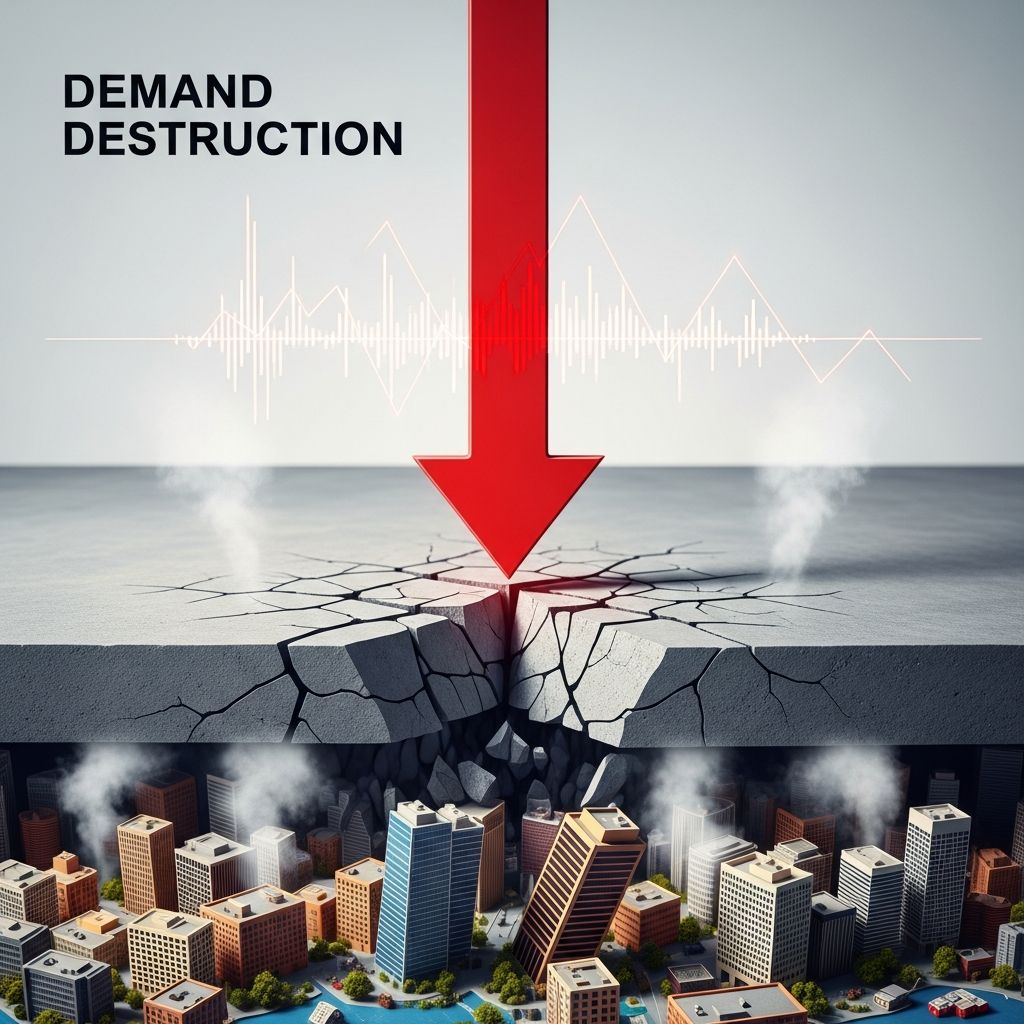
Demand destruction is an economic phenomenon that occurs when persistent high prices or limited supply causes a permanent, sustained decline in the demand for a good or service. Unlike typical fluctuations in the supply and demand cycle, demand destruction represents a fundamental shift in consumer behavior that persists even after prices return to more normal levels. This concept has become increasingly important for understanding modern economic challenges, particularly during periods of high inflation and supply chain disruptions.
At its core, demand destruction happens when prices rise to levels that fundamentally change how consumers view a product or service. Rather than simply buying less of something temporarily when prices spike, consumers make lasting decisions that alter the demand curve permanently. This represents a qualitative shift in market dynamics that distinguishes itself from ordinary price sensitivity.
Understanding the Mechanics of Supply, Demand, and Pricing
To fully grasp demand destruction, it is essential to understand the normal relationship between supply, demand, and pricing. In typical market conditions, these three variables interact in a predictable cycle. When supply is abundant, prices tend to fall because retailers need to move inventory, and consumers face no scarcity concerns. Conversely, when demand is high and supply is constrained, consumers worry about product availability and willingly pay premium prices to secure what they need.
This normal elasticity in demand allows markets to self-correct. When prices become too high, quantity demanded decreases, excess inventory accumulates, and prices eventually decline to clear the market. Once prices normalize, consumers typically return to their previous purchasing patterns. However, demand destruction disrupts this natural cycle by creating a permanent shift in consumer preferences and purchasing behavior that persists beyond the initial price shock.
Demand Destruction Versus Normal Demand Elasticity
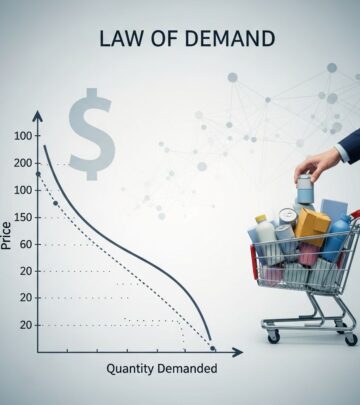
Understanding the distinction between demand destruction and ordinary demand elasticity is crucial for economists, policymakers, and investors. Demand elasticity refers to the normal responsiveness of quantity demanded to price changes. When you buy tennis balls and their price drops, you might purchase more; when the price rises, you buy fewer. This is demand elasticity, and it is reversible. Once prices return to previous levels, purchasing patterns typically revert as well.
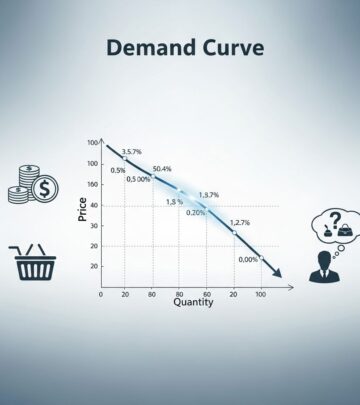
Demand destruction, by contrast, involves permanent changes in the underlying demand curve itself. The key difference lies in whether changes are temporary or permanent. With demand destruction, even if prices fall back to their original levels, consumers do not return to their previous purchasing patterns. This happens because the extended period of high prices has fundamentally altered consumer expectations, preferences, and purchasing decisions in ways that cannot be easily reversed.
The Role of Real Income and Consumer Behavior
A critical factor driving demand destruction is the impact of sustained inflation on real incomes. When persistent high prices erode purchasing power across the economy, consumers experience declining real income. This is fundamentally different from simply facing higher prices for individual goods. As real incomes fall due to widespread inflation, consumers buy less of virtually everything at every price level.
This creates a cascading effect throughout the economy. When consumers reduce spending on discretionary items like dining out, clothing, furniture, and home improvements, businesses face declining revenues. This leads to reduced production, layoffs, and in severe cases, permanent facility closures. The impact extends beyond individual consumer choices to reshape entire industry dynamics and market structures.
Real-World Examples of Demand Destruction
The Automotive Industry and Fuel Efficiency
A classic example of demand destruction is visible in the automotive market during periods of sustained high gasoline prices. When fuel prices remain elevated for extended periods, consumers do not simply drive less temporarily. Instead, they make permanent vehicle purchasing decisions by switching to smaller, more fuel-efficient cars. This shift in the vehicle fleet reduces per-capita gasoline demand in ways that persist even after fuel prices decline.
The used car market plays an important role in this process. As consumers abandon less efficient vehicles, the used market becomes flooded with these cars, driving down their resale value. This increases the expected depreciation of new inefficient vehicles, raising the total cost of ownership and making them even less desirable. The result is a permanently altered demand curve for gasoline that reflects the changed composition of the vehicle fleet.
Consumer Spending Patterns During Inflation
Recent economic experiences have demonstrated demand destruction across multiple consumer categories. During periods of high inflation, consumers exhibit measurable behavioral shifts including trading down to cheaper or generic brands, reducing discretionary purchases, delaying home improvements and maintenance, and cutting back on restaurant dining. These are not temporary adjustments but reflect fundamental changes in how consumers allocate their constrained budgets.
Additionally, consumers have increased reliance on credit card debt and depleted savings to maintain consumption levels, but these strategies have limits. Eventually, even credit becomes exhausted, and demand simply disappears. This creates a challenging economic environment where traditional monetary policy tools become less effective, as further price increases cannot stimulate demand when consumers have already reduced expenditures to sustainable levels.
Demand Destruction in Energy Markets
The concept of demand destruction gained prominence in discussions of energy markets and peak oil theory. In the oil industry, demand destruction represents a sustained reduction in oil consumption in response to persistently elevated prices or supply constraints. This manifests through multiple channels: consumers reduce driving, businesses optimize energy use, and entire industries shift toward alternative energy sources.
Unlike temporary conservation measures adopted during short-term price spikes, demand destruction in energy reflects lasting behavioral and infrastructural changes. Once consumers invest in more efficient heating systems, switch to public transportation, or relocate closer to work, these changes persist. The energy demand curve shifts permanently downward, even if prices subsequently decline.
The Broader Economic Implications
The Risk of Stagflation
Demand destruction contributes to the emergence of stagflation, an economic condition combining stagnant growth with persistent inflation. Traditional economic theory suggests that rising unemployment should eventually reduce inflation through lower demand. However, demand destruction complicates this relationship. When prices are pushed so high that consumers permanently reduce demand through behavioral changes rather than through unemployment and wage reductions, the economy can experience both high inflation and economic stagnation simultaneously.
This creates a difficult policy environment where standard interventions may prove ineffective or counterproductive. Attempting to stimulate demand through monetary expansion may simply reignite inflation without restoring the demand that has been permanently destroyed through behavioral changes and income loss.
Business Challenges and Market Restructuring
For businesses, demand destruction poses serious challenges. As consumer purchases decline permanently, companies face inventory buildup and reduced revenues. Many businesses, anticipating supply chain disruptions and potential shortages, accumulated inventory in advance only to find themselves holding excess stock as demand collapsed. This forces companies to reduce production, lay off workers, and in some cases, permanently close facilities.
The impact extends throughout supply chains. Suppliers, manufacturers, distributors, and retailers all experience reduced demand. Workers laid off from closed facilities face difficulty finding comparable employment, which further depresses demand in their communities and perpetuates the economic slowdown.
Historical Context and Current Observations
While demand destruction has been discussed in academic and policy circles for decades, recent years have brought the concept into sharper focus. Evidence of demand destruction has become increasingly apparent in consumer behavior data, particularly in discretionary spending categories. US and EU consumer outlooks have plunged significantly, leading to observable reductions in purchases of goods and services that can be postponed.
Grocery store data provides particularly telling evidence. Even as grocery bills remain elevated nominally, the quantity of goods purchased has declined materially due to inflation-driven demand destruction. This represents a fundamental shift in consumer purchasing patterns that reflects the permanent erosion of purchasing power rather than temporary price responsiveness.
The Policy Dilemma
Policymakers face a complex challenge when demand destruction becomes evident. The conventional response to high inflation involves tightening monetary policy to reduce demand and cool prices. However, if demand destruction is already occurring through behavioral changes and income erosion, further demand reduction through policy tightening risks pushing the economy into deeper recession without necessarily achieving price stability.
The ideal policy response requires recognizing the distinction between demand that is elastic and reversible versus demand that has been permanently destroyed through prolonged inflation. Different responses may be needed for these different types of demand reductions, yet existing policy frameworks often treat them identically.
Frequently Asked Questions
Q: How is demand destruction different from a recession?
A: A recession involves temporary reductions in economic activity. Demand destruction, by contrast, represents permanent shifts in consumer behavior and preferences that persist beyond the initial economic shock. While recessions are typically reversed as economic conditions improve, demand destruction creates lasting changes in demand curves that cannot be easily reversed through stimulus or price reductions alone.
Q: Can demand destruction be reversed?
A: Reversing demand destruction is extremely difficult because it involves changing fundamental consumer expectations and behavior patterns that have become ingrained. Simply lowering prices does not restore demand when consumers have made lasting decisions about vehicle choices, home locations, lifestyle changes, and brand preferences. Recovery would require not just price normalization but also restoration of real incomes and consumer confidence.
Q: Why should investors care about demand destruction?
A: Investors must understand demand destruction because it fundamentally alters company revenues, profit margins, and growth prospects. Businesses facing permanent demand destruction cannot simply wait for prices to normalize; they must permanently restructure operations. This impacts investment returns across sectors, particularly in consumer discretionary categories and industries dependent on elastic demand.
Q: How does demand destruction affect inflation?
A: Demand destruction actually makes inflation harder to combat through conventional means. If demand has been permanently destroyed through behavioral changes rather than through rising unemployment, reducing demand further through tight monetary policy becomes increasingly problematic. The economy can become stuck in stagflation where both inflation and economic stagnation persist simultaneously.
Q: What role does consumer psychology play in demand destruction?
A: Consumer psychology is central to demand destruction. Consumers form expectations about future prices and incomes based on recent experience. Extended periods of high prices create pessimistic expectations about future purchasing power, leading consumers to permanently alter behavior. Even if prices subsequently decline, these changed expectations and behavioral patterns often persist, sustaining the demand destruction.
References
- Demand Destruction — Wiktionary. Accessed 2025. https://en.wiktionary.org/wiki/demand_destruction
- Demand Destruction — Wikipedia. Accessed 2025. https://en.wikipedia.org/wiki/Demand_destruction
- What is Demand Destruction and Should We Be Worried? — DTN. Accessed 2025. https://www.dtn.com/what-is-demand-destruction-and-should-we-be-worried/
- The Specter of Demand Destruction — Pig333.com. Accessed 2025. https://www.pig333.com/articles/the-specter-of-demand-destruction_18616/
- Demand Destruction Explained — YouTube: Analyzing Finance with Nick. August 14, 2022. https://www.youtube.com/watch?v=vDQ2o2IUfEM
Similar Articles








Read full bio of Sneha Tete