What is Demand: Definition, Explanation, and Effects
Understand demand in economics: definition, law of demand, factors affecting it, and real-world applications.
Demand is one of the most fundamental concepts in economics and business. It refers to the quantity of goods or services that consumers are willing and able to purchase at various price points during a specific time period. Understanding demand is critical for businesses, policymakers, and anyone involved in economic decision-making. This comprehensive guide explores the definition of demand, explains how it works, discusses the law of demand, and examines the various factors that influence consumer behavior.
Understanding Demand: Core Definition
In economics, demand is defined as the ability and willingness of consumers to buy a good or service at any given price. However, this simple definition encompasses several important components that must all be present for demand to truly exist. The concept goes beyond mere desire or want; it requires purchasing power and the actual intention to complete a purchase.
Three essential elements must be present for demand to exist:
- Desire: The consumer must want or need the product or service
- Ability to Pay: The consumer must have sufficient income, credit, or resources to purchase the item
- Willingness to Pay: The consumer must be prepared to spend their money on that particular good or service
Without all three components, demand does not exist in the economic sense. For example, a consumer might desire a luxury car but lack the financial means to purchase it, or they might have the money but be unwilling to spend it on that particular item. In either case, there is no effective demand for that product from that consumer.
Demand Meaning in Economics
The meaning of demand in economics is more precise than in everyday language. While people commonly use “demand” to mean wanting something, economists use it to describe a specific relationship between price and quantity over a defined time period. Demand always relates to several critical factors:
- A specific price point for the good or service
- A defined time period (such as daily, weekly, or annually)
- A particular quantity of goods or services consumers wish to purchase
- The existence of buying power to complete the transaction
When economists discuss demand, they are examining how the quantity consumers wish to purchase changes in response to price changes and other economic variables. This relationship is not static but dynamic, changing as market conditions, consumer preferences, and economic circumstances shift.
Types of Demand
Economic demand can be categorized in several ways, with the most important distinction being between individual demand and market demand. Understanding these different types helps businesses and policymakers make more accurate predictions about consumer behavior.
Individual Demand
Individual demand refers to the quantity of a product that a single consumer is willing and able to purchase at various prices during a given time period. This type of demand is personal and varies significantly from consumer to consumer based on individual preferences, income levels, and circumstances. Analyzing individual demand helps businesses understand specific customer segments and tailor their offerings accordingly.
Market Demand
Market demand is the sum of all individual demands for a product or service in a market during a specific time period. It represents the total quantity that all consumers collectively are willing and able to purchase at various prices. Market demand is what economists and businesses typically focus on when making strategic decisions about pricing, production levels, and market expansion. Market demand aggregates individual consumer preferences to show overall market trends and opportunities.
Derived and Autonomous Demand
Beyond individual and market demand, economists also distinguish between autonomous demand (also called direct demand) and derived demand. Autonomous demand occurs when consumers desire a product independently of other goods in the market. In contrast, derived demand occurs when the demand for one product is directly dependent on the demand for another product. For example, if demand for automobiles increases, the demand for tires increases proportionally because tires are derived from the demand for cars.
The Law of Demand
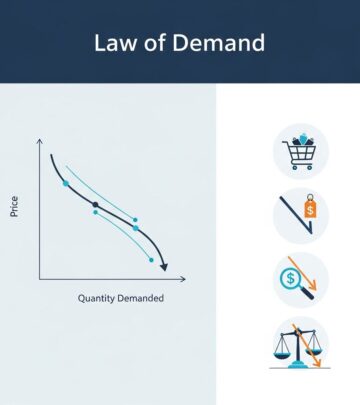
The Law of Demand is one of the most fundamental principles in economics. It establishes an inverse relationship between the price of a good and the quantity that consumers demand. Simply stated, the law of demand indicates that as the price of a product increases, the quantity demanded decreases, and conversely, as the price decreases, the quantity demanded increases.
The formal statement of the Law of Demand is: “Other things being equal, as the price of a good increases, the quantity demanded decreases; and as the price decreases, the quantity demanded increases.”
This law applies to most goods and services in the economy and reflects fundamental consumer behavior patterns. However, the law operates under certain key assumptions that must remain constant for the relationship to hold true.
Key Assumptions of the Law of Demand
For the law of demand to apply accurately, several conditions must remain unchanged:
- Consumer income remains constant: Changes in income levels affect the ability to purchase, which would shift demand independently of price
- Prices of related goods remain constant: If complementary or substitute goods change in price, consumers may shift their purchasing patterns
- Consumer preferences remain constant: Changes in tastes or preferences would affect demand regardless of price
- Population size remains constant: Population changes affect the overall size of the market and total demand
- Consumer expectations remain constant: Expectations about future prices or economic conditions influence current purchasing decisions
When any of these factors change, the law of demand may not hold true, and the relationship between price and quantity demanded can shift significantly.
The Demand Curve Explained
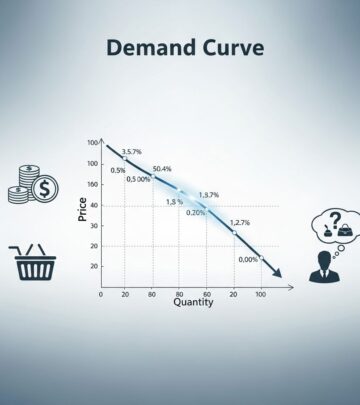
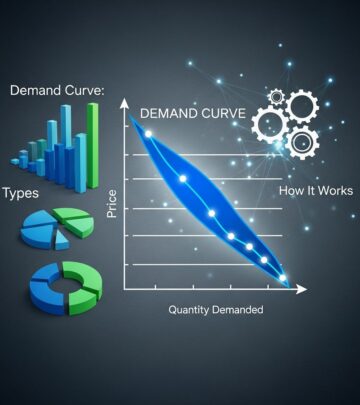
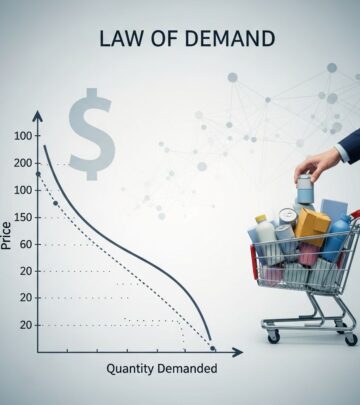
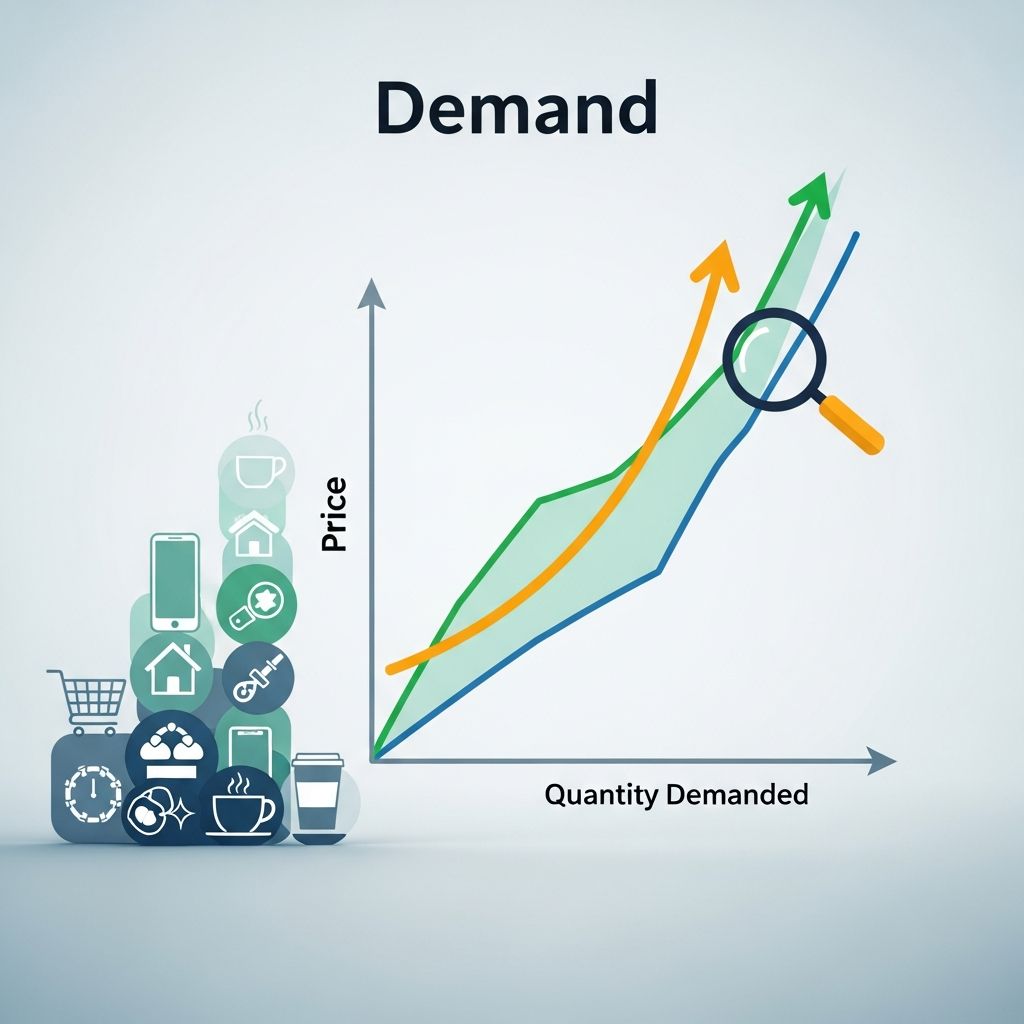
The demand curve is a graphical representation of the law of demand, showing the relationship between price and quantity demanded for a good or service over a specific time period. In a standard demand curve graph, price is plotted on the vertical Y-axis and quantity demanded is plotted on the horizontal X-axis.
Characteristics of the Demand Curve
The demand curve typically displays several distinctive characteristics:
- Downward slope: The curve slopes downward from left to right, illustrating the inverse price-quantity relationship
- Continuity: The curve is typically drawn as a continuous line, representing demand at all possible price points
- Linear or non-linear: Demand curves may be straight lines (linear) or curved (non-linear), depending on the product and market conditions
- Specific time period: Each demand curve applies to a particular time frame and market conditions
Why the Demand Curve Slopes Downward
The downward slope of the demand curve results from three fundamental economic effects:
1. Substitution Effect: When the price of a good increases, consumers substitute it with cheaper alternatives. If beef prices rise significantly, consumers might switch to chicken or other proteins, reducing the quantity of beef demanded.
2. Income Effect: A decrease in a product’s price effectively increases consumers’ real income, allowing them to purchase more of the product and other goods. This increased purchasing power leads to higher demand for the lower-priced item.
3. Diminishing Marginal Utility: Each additional unit of a product consumed provides less satisfaction than the previous unit. Consumers are therefore willing to purchase additional units only at lower prices. This explains why the demand curve becomes less steep as quantity increases.
Factors That Affect Demand
While price is the primary factor represented on the demand curve, numerous other variables influence the overall level of demand in the market. Understanding these factors is crucial for accurate demand forecasting and business strategy.
Price of the Product
As discussed extensively, the price of the product itself is the most direct factor affecting quantity demanded. However, price changes create movements along an existing demand curve, rather than shifting the curve itself.
Consumer Income
Changes in consumer income significantly affect demand for most products. For normal goods, increased income leads to higher demand. Conversely, for inferior goods (budget alternatives), increased income may reduce demand as consumers purchase higher-quality alternatives.
Consumer Preferences and Tastes
Shifts in consumer preferences dramatically affect demand. Changes in fashion, health consciousness, environmental awareness, or cultural trends can rapidly increase or decrease demand for specific products. For example, growing health awareness has increased demand for organic foods while reducing demand for certain processed foods.
Prices of Related Goods
The prices of complementary goods (products used together, like hot dogs and hot dog buns) and substitute goods (products that can replace each other, like butter and margarine) significantly influence demand. When a complement’s price rises, demand for the primary product typically falls. When a substitute’s price rises, demand for the primary product typically increases.
Consumer Expectations
Consumer expectations about future prices, income, and economic conditions profoundly affect current demand. If consumers expect prices to increase, they may increase current demand to avoid higher future prices. Similarly, expectations of reduced future income may decrease current demand.
Number of Consumers in the Market
Market demand is directly affected by the size of the consumer population. Population growth increases market demand, while population decline decreases it. Additionally, demographic changes such as aging populations or increased immigration can shift demand patterns significantly.
Seasonal and Cyclical Factors
Many products experience seasonal demand variations. Ice cream demand peaks in summer, while heating fuel demand peaks in winter. Similarly, economic cycles influence demand for various goods, with demand for luxury items particularly sensitive to economic conditions.
Utility and Demand
The concept of utility—the satisfaction or benefit a consumer derives from consuming a product—is fundamental to understanding demand. Consumers demand products because they expect to gain utility or satisfaction from them. If a product offers no utility or value to consumers, they will not demand it, regardless of price.
The principle of diminishing marginal utility further explains demand patterns. This principle states that as a consumer consumes more of a product, the additional satisfaction (marginal utility) gained from each successive unit decreases. This explains why consumers are willing to purchase more units only when the price decreases, corresponding to the downward-sloping demand curve.
Demand Schedules and Demand Curves
A demand schedule is a table that lists the quantities of a product that consumers are willing to purchase at various price levels during a specific time period. For example, a demand schedule might show that consumers will purchase 1,000 units at $10 per unit, 1,500 units at $8 per unit, 2,000 units at $6 per unit, and so on.
When the data from a demand schedule is plotted on a graph with price on the Y-axis and quantity on the X-axis, it creates a demand curve. This visual representation makes it easier to understand the relationship between price and quantity demanded and to make predictions about consumer behavior at various price points.
Practical Effects of Demand
Understanding demand has numerous practical applications for businesses and policymakers:
- Pricing Strategy: Businesses use demand analysis to determine optimal prices that maximize revenue and profit
- Production Planning: Demand forecasts help companies decide how much to produce and maintain in inventory
- Market Entry: Analysis of demand helps businesses determine which markets to enter and how to position their products
- Resource Allocation: Policymakers use demand analysis to allocate resources efficiently across the economy
- Policy Development: Understanding demand helps governments develop policies related to taxation, subsidies, and regulation
Frequently Asked Questions (FAQs)
Q: What is the difference between demand and quantity demanded?
A: Demand refers to the entire relationship between price and quantity that consumers are willing to purchase, typically shown as a demand curve. Quantity demanded refers to the specific amount consumers wish to purchase at a particular price point. A change in price causes movement along the demand curve (change in quantity demanded), while a change in other factors shifts the entire curve (change in demand).
Q: How does demand differ from supply?
A: Demand represents what consumers are willing and able to buy, while supply represents what producers are willing and able to sell. These two forces interact to determine market price and quantity. The demand curve slopes downward while the supply curve slopes upward, and they intersect at the equilibrium point.
Q: Can demand ever be perfectly inelastic?
A: Yes, demand can be perfectly inelastic for essential goods where consumers need the product regardless of price, such as certain medications. However, truly perfectly inelastic demand is rare in practice, as consumers will eventually reduce consumption or find substitutes if prices become too high.
Q: What causes a shift in the demand curve?
A: A demand curve shifts when factors other than price change, such as consumer income, preferences, expectations, prices of related goods, or population size. When demand increases, the curve shifts to the right; when demand decreases, it shifts to the left.
Q: How do businesses use demand analysis?
A: Businesses use demand analysis for pricing decisions, sales forecasting, inventory management, market segmentation, and competitive strategy development. Understanding demand helps companies allocate resources effectively and respond to market changes.
References
- Khan Academy – Law of Demand — Khan Academy. 2025. https://www.khanacademy.org/economics-finance-domain/microeconomics/supply-demand-equilibrium/demand-curve-tutorial/a/law-of-demand
- Supply and Demand — Britannica Money. 2025. https://www.britannica.com/money/supply-and-demand
- What is Demand? Meaning, Definition, and Types — Plutus Education. 2025. https://plutuseducation.com/blog/demand/
- Demand in Economics: Definition & Examples — Study.com. 2025. https://study.com/learn/lesson/demand-in-economics.html
- Economic Demand: Definition, Determinants and Types — Indeed Career Advice. 2025. https://www.indeed.com/career-advice/career-development/definition-of-economic-demand
Similar Articles








Read full bio of Sneha Tete