What Is Debt Settlement And How Does It Work?
Learn how debt settlement works, its pros and cons, and whether it's right for your financial situation.

What Is Debt Settlement?
Debt settlement is a strategic approach to managing overwhelming debt by negotiating directly with creditors to reduce the total amount you owe. Rather than paying the full balance on your debts, you work with creditors to settle accounts for less than the original amount owed, typically through a lump-sum payment. This debt relief strategy can provide significant financial relief for individuals struggling with substantial consumer debt, though it comes with important trade-offs and long-term consequences that require careful consideration.
When creditors agree to settle your debt, they essentially forgive a portion of what you owe in exchange for immediate payment of the remaining balance. For example, if you have a $10,000 credit card balance with high interest rates or insufficient income to pay it off, you might negotiate with the credit card company to accept a $6,000 settlement, forgiving the remaining $4,000. This reduction can help borrowers escape the cycle of mounting debt and interest charges.
When Debt Settlement Makes Sense
Debt settlement is typically considered a last-resort option, best suited for specific financial circumstances. Before pursuing settlement, evaluate whether your situation aligns with these key indicators:
- You are more than 90 days past due on your accounts
- You have struggled for an extended period to pay down your debts
- You are experiencing genuine financial hardship and cannot afford current payments
- You have exhausted other repayment options like hardship programs or debt management plans
- You have the ability to set aside money for a substantial lump-sum payment
- Bankruptcy would not provide a better solution for your situation
It’s important to note that debt settlement should only be considered after exploring alternatives. Many individuals find that debt management plans, credit counseling, or even bankruptcy may offer superior long-term financial outcomes compared to settlement.
How Debt Settlement Works: A Step-by-Step Process
Understanding the mechanics of debt settlement helps you prepare for what to expect throughout the process. Here’s how the strategy typically unfolds:
Step 1: Assess Your Financial Situation
Begin by conducting a thorough financial inventory. List all your debts including the creditor’s name, total amount owed, current interest rates, and payment status. This comprehensive view allows you to understand your complete financial picture and determine realistic settlement offers. Most creditors expect settlement offers in the range of 40 to 60 percent of the total amount owed, so use this benchmark as a guideline when calculating your potential offer amount.
Step 2: Gather Resources and Stop Payments
A critical aspect of debt settlement is accumulating cash for your settlement offers. Many people in debt settlement programs intentionally stop making regular debt payments and redirect that money into a dedicated savings account. This strategy creates leverage with creditors—they become more willing to negotiate when facing the possibility of receiving nothing at all. However, this approach has consequences: your credit score will suffer from missed payments, and your debt may temporarily increase due to late fees and accumulating interest.
Step 3: Contact Your Creditors
Negotiating with creditors directly represents the most challenging aspect of debt settlement. Before presenting a settlement offer, ask about hardship programs or alternative repayment plans. Creditors are significantly more likely to agree to these options, and they allow you to maintain a better credit score. If hardship programs aren’t available, proceed with your settlement negotiation.
Start with a lower offer than you can actually afford. For instance, if you can realistically afford to offer 50 percent of the debt, begin by proposing 30 percent. This strategy leaves room for negotiation and increases the likelihood of reaching an agreement closer to your target amount. Be prepared for extended back-and-forth negotiations through multiple phone calls or emails before reaching a final agreement.
Step 4: Negotiate Terms and Get Written Confirmation
As negotiations progress, ask the creditor about any associated fees and potential tax implications. Once you’ve reached an agreement, request written confirmation of the settlement terms before making any payments. This documentation protects you and provides clear record of what was agreed upon. Never rely on verbal agreements alone, as disputes can arise regarding settlement terms.
Two Main Types of Debt Settlement
You have two primary options for pursuing debt settlement:
DIY Debt Settlement
You handle all negotiations directly with your creditors yourself. This approach eliminates professional fees but requires significant time, knowledge, and emotional resilience to negotiate effectively with creditors.
Professional Debt Settlement Company
A professional debt settlement company negotiates with your creditors on your behalf. During the settlement process, the company typically requires you to make monthly payments into a secured account. When creditors agree to settle your debts, funds from this account are used to pay the remaining balance, often in a lump sum. However, professional debt settlement companies charge fees—sometimes up to 25 percent of the debt that’s successfully resolved—which can significantly reduce the financial benefits you receive.
Key Advantages of Debt Settlement
Debt settlement offers several meaningful benefits for qualified individuals:
- Significant debt reduction: Successfully settling debts can reduce your total amount owed by 40 to 50 percent, providing substantial financial relief
- Faster resolution than bankruptcy: While not instantaneous, debt settlement typically resolves faster than bankruptcy proceedings
- Avoidance of legal action: Settlement prevents creditors from pursuing legal judgments against you
- Peace of mind: Knowing you have a plan to address overwhelming debt can reduce financial stress and anxiety
- Fresh financial start: Once settled, you can focus on rebuilding your financial foundation
Important Drawbacks and Risks
Despite potential benefits, debt settlement carries substantial risks and long-term consequences:
Credit Score Damage
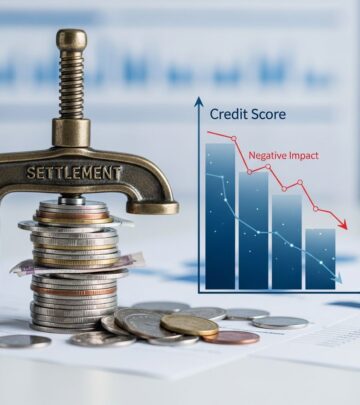
Most debt settlement companies encourage you to stop making payments while they negotiate settlements. This results in late fees and missed payments appearing on your credit reports for seven years. Even after settlement, the account continues to show as a negative mark on your credit report. The credit damage makes it significantly more difficult to qualify for new loans, credit cards, or favorable interest rates for years after settlement.
Expense and Fees
If you work through a debt settlement company, hefty fees can eliminate much of your savings. Fees sometimes reach 25 percent of successfully resolved debt, meaning that on a $50,000 debt settlement, you could pay $12,500 in fees. Additionally, debt typically increases during the settlement process due to fees from the settlement company and interest and late charges from creditors.
Lengthy Timeline
Debt settlement is not a quick fix. The process could take months or even years to complete, creating prolonged financial stress and uncertainty. This extended timeline can be particularly challenging if you need more immediate relief from your financial obligations.
Tax Implications
Any debt forgiven over $600 is considered taxable income by the IRS. If creditors reduce your $10,000 debt to $6,000, you owe taxes on the $4,000 forgiven amount. This tax liability can be substantial and may require payment in the following year, creating an unexpected financial burden.
No Guarantees
Creditors are not required to settle your debts. While they may be more willing to negotiate if the alternative is receiving no payment at all, there are no guarantees that settlement will succeed. Some creditors refuse to negotiate, leaving you with missed payments and damaged credit but no actual debt reduction.
Comparing Debt Settlement to Alternatives
| Strategy | How It Works | Credit Impact | Timeline | Cost | Debt Reduction |
|---|---|---|---|---|---|
| Debt Settlement | Negotiate reduced payoff with creditors | Severely damages credit | Months to years | High (company fees up to 25%) | 40-50% reduction possible |
| Debt Consolidation | Combine multiple debts into one loan | Can improve over time | Structured repayment term | Moderate (origination fees) | No reduction (restructuring only) |
| Debt Management Plan | Credit counselor negotiates lower payments | Minimal impact | 3-5 years typically | Low to moderate | Interest/fees may be reduced |
| Bankruptcy | Legal process to discharge or reorganize debt | Initial damage, but recovery possible | 3-7 years depending on type | Filing fees and legal costs | Significant (some debt eliminated) |
Debt Management Plans
A debt management plan involves working with a credit counselor who evaluates what you can afford and negotiates directly with creditors for reduced monthly payments, lower interest rates, or waived fees and penalties. You make monthly payments to the credit counseling agency, which distributes funds to your creditors according to the agreement terms. This option preserves your credit score much better than settlement and often provides faster relief.
Bankruptcy
While many consider bankruptcy a worst-case financial scenario, debt settlement can actually have worse long-term consequences. Bankruptcy provides legal protection and guarantees that you cannot file again for a specific period, providing creditors certainty. More importantly, bankruptcy allows you to begin rebuilding your credit immediately after discharge, whereas debt settlement leaves you with damaged credit for years. In many situations, bankruptcy is genuinely the superior option.
Interest Rate Negotiation
If you’re struggling with high-interest debt but maintain decent credit, consider negotiating directly with creditors to lower your interest rates. Explaining your financial hardship may result in better terms without requiring full debt settlement. This approach preserves your credit standing while making monthly payments more manageable.
Important Considerations Before Settling Debt
Before pursuing debt settlement, honestly assess whether it truly aligns with your financial situation. Settlement rarely offers the quick fix that desperate borrowers hope for. The combination of years of credit damage, tax liability on forgiven amounts, and company fees often means you don’t save as much money as initially expected. Compare settlement carefully against alternatives like credit counseling, debt consolidation, or bankruptcy.
If you do pursue settlement, avoid debt settlement scams by working only with legitimate organizations. Be wary of companies that guarantee specific settlement outcomes or demand upfront fees before achieving results. Research any company thoroughly and verify their complaint history with the Better Business Bureau.
What Happens After Debt Settlement
Once debts are settled, they continue appearing on your credit report as settled accounts for seven years, which still impacts your creditworthiness. However, you can begin the process of rebuilding your credit by establishing new positive payment history, reducing credit utilization, and addressing any remaining debts responsibly. Over time, settled accounts become less damaging to your score as newer positive information accumulates on your credit report.
Frequently Asked Questions
Q: Does debt settlement eliminate all my debt?
A: No, debt settlement does not eliminate all your debt. It reduces the amount you owe by negotiating a lower payoff amount with creditors. You must still pay the agreed settlement amount. Additionally, settled debt appears on your credit report for seven years and may be considered taxable income by the IRS, requiring you to pay taxes on the forgiven amount.
Q: Can I negotiate debt settlement on my own or should I hire a company?
A: You can negotiate settlement yourself (DIY) or hire a professional company. DIY settlement saves on fees but requires significant time and negotiation skills. Professional companies handle negotiations for you but charge substantial fees—sometimes up to 25 percent of successfully resolved debt. Consider your comfort level with negotiation and your financial situation when deciding.
Q: How long does the debt settlement process take?
A: The debt settlement process typically takes months to years to complete. There’s no guaranteed timeline, as negotiations can stall or creditors may refuse to settle. This prolonged uncertainty can be stressful for individuals seeking immediate financial relief.
Q: What are the tax consequences of debt settlement?
A: Any debt forgiven over $600 is considered taxable income. If a creditor reduces your $10,000 debt to $6,000, you owe income taxes on the $4,000 forgiven amount. This creates an unexpected tax liability in the following year, potentially requiring substantial payment.
Q: Will debt settlement destroy my credit score?
A: Yes, debt settlement typically causes severe damage to your credit score. Missed payments during negotiations, the settlement itself, and accounts remaining on your report as negative marks for seven years all harm your creditworthiness. This makes it difficult to qualify for new credit at favorable interest rates for years after settlement.
Q: Is bankruptcy a better option than debt settlement?
A: In many cases, yes. Bankruptcy can be a better long-term option because it allows you to begin rebuilding your credit immediately after discharge, whereas settlement leaves your credit damaged for seven years. Bankruptcy also eliminates some debts entirely rather than requiring payment of the settled amount.
References
- Striking a Deal with a Debt Collector: How to Negotiate a Debt Settlement — Bankrate. Accessed November 2025. https://www.bankrate.com/personal-finance/debt/striking-a-deal-with-a-debt-collector/
- Debt Consolidation vs. Debt Settlement: Which Is Right For You? — Bankrate. Accessed November 2025. https://www.bankrate.com/loans/debt-consolidation/debt-consolidation-vs-debt-settlement/
- How To Settle Credit Card Debt — Bankrate. Accessed November 2025. https://www.bankrate.com/credit-cards/building-credit/how-to-settle-credit-card-debt/
- Is Debt Settlement A Good Idea For Your Finances? — Bankrate. Accessed November 2025. https://www.bankrate.com/personal-finance/debt/is-debt-settlement-good-idea/
- A Comprehensive Guide To Debt Relief Programs — Bankrate. Accessed November 2025. https://www.bankrate.com/personal-finance/debt/debt-relief-guide-what-to-know/
Similar Articles








Read full bio of Sneha Tete