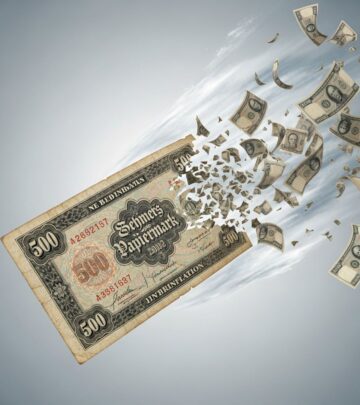
Crack-Up Boom Explained: Causes, Risks, And Policy Lessons
Understanding the economic phenomenon where currency systems collapse due to excessive credit expansion and hyperinflation.

What Is a Crack-Up Boom in Economics?
A crack-up boom represents one of the most severe and destabilizing phenomena in economic theory, characterized by the simultaneous collapse of a monetary system and the real economy. The term, coined by Austrian economist Ludwig von Mises, describes a final phase of currency crisis where excessive credit expansion leads to uncontrollable inflation, ultimately resulting in the abandonment of a currency entirely. This concept emerged from the Austrian School of Economics and reflects Mises’ observations of hyperinflation during the great European inflations of the 1920s.
The crack-up boom is fundamentally different from a typical recession or even a standard inflationary episode. Rather than representing a temporary economic downturn, it signals a complete breakdown of confidence in a monetary system, leading to a sudden and dramatic shift in how people value and use money. Understanding this phenomenon is crucial for policymakers, investors, and economists seeking to comprehend the limits of monetary policy and the dangers of unchecked credit expansion.
Understanding the Core Concept
At its essence, a crack-up boom occurs when monetary authorities attempt to sustain economic growth indefinitely through continuous credit expansion and money creation, regardless of the inflationary consequences. The central bank or government pursues this aggressive monetary policy in an effort to prevent any economic downturn, continually injecting liquidity into the financial system. However, this approach creates a fundamental paradox: by trying to prevent a normal economic correction, policymakers trigger a far more catastrophic breakdown.
The crack-up boom develops through a specific sequence of events. Initially, expansionary monetary policy creates artificial economic conditions that appear prosperous but are fundamentally unsustainable. Asset prices soar, credit flows freely, and both consumers and businesses engage in spending and investment based on false signals about economic conditions. These distortions become increasingly pronounced the longer credit expansion continues, leading to severe misallocation of capital throughout the economy.
Key Characteristics of a Crack-Up Boom
A crack-up boom exhibits several distinctive features that distinguish it from other economic crises. Understanding these characteristics helps identify when an economy might be approaching such a scenario.
Hyperinflation in Consumer Prices
The most visible symptom of a crack-up boom is hyperinflation, where the general price level rises at an extraordinary and accelerating rate. Unlike moderate inflation, hyperinflation causes severe disorientation among market participants as the purchasing power of money collapses rapidly. Consumers and businesses struggle to plan for even the short term, as price changes become so extreme that traditional economic calculations become meaningless.
Asset Price Explosions
Stock markets and real estate prices experience astronomical surges that far exceed any relationship to underlying cash flows or fundamental values. These asset bubbles represent a “flight into real values,” where investors desperately seek to exchange depreciating currency for tangible assets perceived as holding intrinsic worth. The separation between asset prices and economic reality becomes absurdly disconnected.
Breakdown of Credit Markets
Financial markets seize up as creditors become unwilling to extend new credit and borrowers cannot meet their obligations. The supply chain for credit dries up, creating cascading bankruptcies and widespread economic paralysis. Banks themselves may fail, and the fundamental mechanisms through which modern economies function begin to break down.
Supply Chain Disruption
Business-to-business transactions become increasingly difficult as intermediate goods become scarce and producers cannot operate efficiently. The breakdown extends beyond financial markets into the real economy, affecting the physical production and distribution of goods and services.
How a Crack-Up Boom Develops
Understanding the progression toward a crack-up boom requires examining the Austrian Business Cycle Theory (ABCT), which provides the theoretical framework for this phenomenon. According to this theory, artificially low interest rates encourage investors to pursue projects that would not be profitable under normal market conditions. Banks continue expanding credit aggressively, and both prices and asset values rise in what appears to be healthy economic growth.
However, beneath the surface, severe distortions accumulate. Unprofitable business ideas receive funding and are pursued seriously. Nonproductive individuals gain employment and receive rewards. The structure of the economy becomes increasingly distorted, moving further away from what market fundamentals would support.
The critical moment arrives when public perception fundamentally shifts. According to Mises, the crack-up boom unfolds “when people come to the conclusion that the central bank will expand the money supply at ever-expanding rates.” Once citizens and businesses recognize that inflation will continue indefinitely and central banks have lost control, confidence in the currency collapses instantaneously.
The Role of Expectations
Inflation expectations play a crucial role in triggering a crack-up boom. When the public becomes convinced that price increases will never cease, they fundamentally alter their behavior. The regular costs of holding cash—opportunity costs—become insignificant compared to the losses from the currency’s declining purchasing power. Everyone becomes eager to exchange money for any real goods, regardless of need or price.
This psychological transformation represents the tipping point. What was previously a monetary phenomenon becomes a behavioral one. People no longer believe money will retain any value, so they abandon it in favor of “anything else.” As Murray Rothbard described it, “a frantic rush ensues to get rid of money at all costs and to buy anything else.”
The Mechanics of Currency Collapse
When a crack-up boom reaches its climax, the currency system itself undergoes a dramatic transformation. Within a very short time—sometimes just weeks or days—the monetary unit that served as the medium of exchange ceases to function in that role entirely. What was previously accepted as money becomes worthless “scrap paper.”
This collapse occurs not because authorities suddenly stop printing money, but because citizens suddenly refuse to accept it. The demand for money essentially evaporates as people recognize its uselessness. Prices don’t just rise dramatically; they become infinite in practical terms, since sellers refuse to accept the depreciating currency at any price.
The end result typically involves the loss of trust in the existing currency, its failure, and the eventual emergence of a replacement currency or monetary standard. This might involve adoption of a foreign currency, a return to commodity money, or establishment of an entirely new currency system.
Real-World Examples and Historical Context
Ludwig von Mises developed the crack-up boom concept partly because he personally witnessed hyperinflation episodes in Europe during the 1920s. The Austrian schilling, the German mark, and other currencies experienced the exact scenario described by this theory. Prices rose so rapidly that workers needed wheelbarrows full of currency to purchase daily necessities. Eventually, these currencies were completely abandoned in favor of new monetary units.
More recently, examples of severe hyperinflation in Zimbabwe, Venezuela, and other nations demonstrate the continuing relevance of Mises’ concept. While these episodes differ in their specific causes and contexts, they share the fundamental characteristics of a crack-up boom: loss of faith in currency, astronomical price increases, and eventual monetary system collapse.
Policy Responses and the Crack-Up Boom
The crack-up boom presents policymakers with a profound dilemma. When faced with economic weakness or crisis, governments and central banks face pressure to implement stimulus measures. However, if those responses involve excessive credit expansion and money creation, they risk triggering the very phenomenon they hope to prevent.
The incentive structure creates a trap. Political leaders and monetary authorities encounter cultural impatience and demands for quick fixes following any economic weakness. Bailouts, fiscal spending, and monetary expansion follow almost automatically. Yet each intervention pushes the economy closer toward the conditions that trigger a crack-up boom. The authorities face a choice between accepting a normal recession or risking a catastrophic currency collapse.
Distinguishing Crack-Up Boom from Normal Inflation
It is crucial to understand that a crack-up boom differs fundamentally from typical inflation. Normal inflation, while uncomfortable and economically harmful, occurs within a functioning monetary system where currency retains general acceptance. Crack-up boom represents the point where the monetary system itself ceases to function.
| Characteristic | Normal Inflation | Crack-Up Boom |
|---|---|---|
| Price Increases | Significant but manageable | Hyperinflationary and accelerating |
| Currency Usage | Continues as medium of exchange | Abandoned entirely |
| Economic Function | Monetary system operational | Monetary system collapses |
| Duration | Prolonged periods possible | Sudden and rapid breakdown |
| Recovery Mechanism | Policy adjustment | New currency required |
Economic Consequences of Crack-Up Boom
The social and economic consequences of a crack-up boom extend far beyond financial markets. The position of the poor and middle class deteriorates significantly, while asset price inflation benefits the wealthy who own real assets before the collapse. Savings in the old currency become worthless, wiping out the life savings of ordinary citizens. Pension systems, insurance contracts, and other fixed-income arrangements collapse in value.
Employment becomes chaotic as businesses struggle to operate, and unemployment rises sharply alongside inflation. The normal functions of commerce become difficult or impossible. People resort to barter or foreign currencies to conduct daily transactions. The social fabric deteriorates as people lose faith not just in monetary systems but in institutions more broadly.
Austrian Business Cycle Theory and Prevention
Austrian economists argue that preventing a crack-up boom requires restraint in monetary policy and a willingness to accept normal economic cycles rather than attempting to smooth them away through continuous credit expansion. From this perspective, the appropriate policy response to economic weakness is to allow prices and asset values to adjust to sustainable levels, even if this causes short-term pain.
The alternative—continual monetary expansion—merely postpones adjustment while allowing distortions to accumulate. Each intervention makes the eventual reckoning more severe. Proponents of Austrian theory argue that accepting the discipline of the market prevents the catastrophic collapse of a crack-up boom.
Frequently Asked Questions
Q: Can modern central banks prevent a crack-up boom?
A: Modern central banks have significant tools to manage inflation and credit growth, but they cannot prevent a crack-up boom if they pursue unsustainable policies indefinitely. The phenomenon depends ultimately on public confidence, which no central bank can force.
Q: How quickly does a crack-up boom occur?
A: The actual currency collapse phase can happen remarkably fast—sometimes within weeks or even days—though the distortions leading to it accumulate over longer periods of credit expansion.
Q: Is a crack-up boom inevitable under certain conditions?
A: Austrian theory suggests that crack-up boom becomes increasingly likely as credit expansion continues unchecked and inflation expectations become unanchored, but the timing and exact form remain uncertain.
Q: What should investors do if they fear a crack-up boom?
A: Historically, investors have sought to hold tangible assets, foreign currencies, or precious metals rather than holding depreciating currency, but past performance does not guarantee future results.
Q: How is crack-up boom different from deflation?
A: Crack-up boom involves hyperinflation and currency collapse, while deflation involves falling prices and increases in the currency’s purchasing power—the opposite phenomenon entirely.
References
- Crack-Up Boom Explained: Economic Crisis Insights and Analysis — StudoCU. Accessed November 2025. https://www.studocu.com/en-us/document/university-of-wisconsin-eau-claire/principles-of-macroeconomics/what-is-crack-up-boom-notes/47153050
- Hyperinflation, Money Demand, and the Crack-Up Boom — Mises Institute. January 2010. https://mises.org/mises-daily/hyperinflation-money-demand-and-crack-boom
- Crack-Up Boom – The End of a Currency Regime — In Gold We Trust Report. Accessed November 2025. https://ingoldwetrust.report/nuggets/crack-up-boom-the-end-of-a-currency-regime/
- The Fed’s Dilemma: Why Rate Cuts Could Trigger a Crack-Up Boom — Equity Armor Investments. Accessed November 2025. https://www.equityarmorinvestments.com/the-feds-dilemma-why-rate-cuts-could-trigger-a-crack-up-boom/
- The Crack-Up Boom — Brandon Adams Newsletter. Accessed November 2025. https://brandonadams.substack.com/p/the-crack-up-boom
Similar Articles








Read full bio of medha deb