Bitcoin Guide 2026: How It Works, Risks, And Buying Tips
Bitcoin is the original cryptocurrency — a digital form of money that's decentralized, secure, and reshaping global finance for everyday investors.
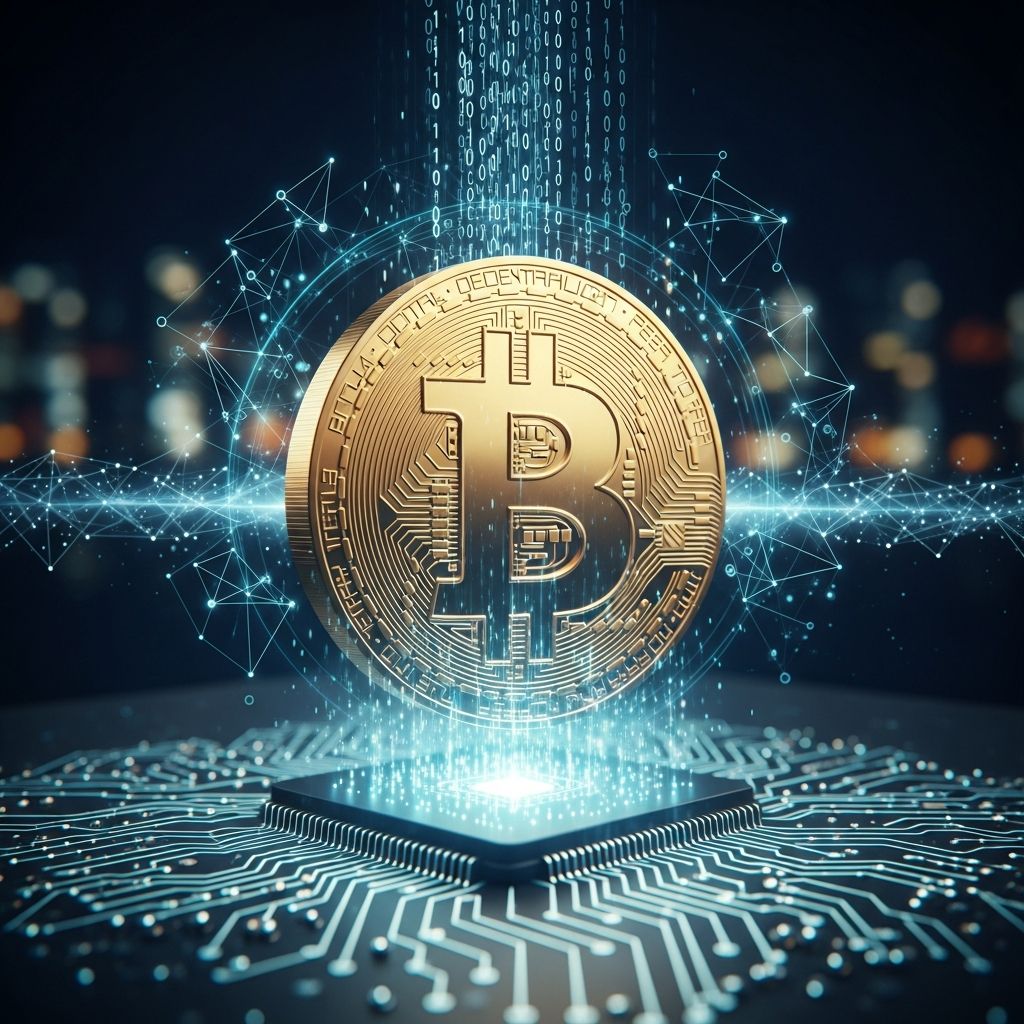
Bitcoin (BTC) is the world’s first and most valuable cryptocurrency, a decentralized digital currency that operates without banks or governments. Created in 2009, it uses blockchain technology to enable secure, peer-to-peer transactions worldwide. As of 2026, Bitcoin’s market cap exceeds $1 trillion, with growing institutional adoption via ETFs from firms like Morgan Stanley.
How Does Bitcoin Work?
Bitcoin functions on a
blockchain
, a public distributed ledger that records all transactions across a network of computers. Here’s a breakdown:- Decentralization: No single entity controls Bitcoin; thousands of nodes validate transactions.
- Mining: Miners solve complex math puzzles to add transaction blocks, earning new bitcoins as rewards.
- Wallets: Users store BTC in digital wallets (software or hardware) using private keys for access.
- Halvings: Every four years, mining rewards halve, capping supply at 21 million BTC to mimic scarcity like gold.
This system ensures security through cryptography, making Bitcoin resistant to counterfeiting or double-spending.
A Brief History of Bitcoin
Satoshi Nakamoto published the Bitcoin whitepaper in 2008 amid the financial crisis, launching the network in January 2009 with the genesis block message: “The Times 03/Jan/2009 Chancellor on brink of second bailout for banks.”
- 2010: First real-world purchase — 10,000 BTC for two pizzas (now worth billions).
- 2013: Price surges to $1,000 amid media hype.
- 2017: Bull run to $20,000, followed by crash.
- 2021: Hits $69,000 peak; El Salvador adopts as legal tender.
- 2024-2026: Spot Bitcoin ETFs approved; Morgan Stanley files for BTC ETFs, signaling mainstream finance entry.
Bitcoin has survived multiple crashes, rebounding stronger each cycle due to halvings and adoption.
Bitcoin’s Price History and Volatility
Bitcoin’s price is notoriously volatile but trends upward long-term. Key data:
| Year | Peak Price | Key Event |
|---|---|---|
| 2011 | $31 | Early adoption |
| 2013 | $1,163 | CyperPunk boom |
| 2017 | $19,783 | ICO mania |
| 2021 | $68,789 | Institutional inflows |
| 2025 | $100,000+ | ETF approvals, halving |
Volatility stems from low liquidity, news events, and speculation, but surveys show 67% of crypto investors would allocate retirement funds to BTC.
Why Invest in Bitcoin?
Bitcoin offers unique advantages:
- Store of Value: “Digital gold” with fixed 21M supply vs. fiat inflation.
- Hedge Against Inflation: Performs well during economic uncertainty.
- Global Accessibility: Send value instantly worldwide, low fees.
- Institutional Momentum: Banks like Morgan Stanley entering via ETFs.
- High Returns Potential: Early investors saw 100x+ gains; new apps flock users to crypto.
However, it’s speculative — treat as high-risk allocation (1-5% of portfolio).
Risks of Investing in Bitcoin
Bitcoin isn’t risk-free:
- Volatility: Can drop 50%+ in weeks, as in 2022 crash.
- Regulatory Uncertainty: Governments may impose bans or taxes.
- Security Threats: Hacks, scams, lost keys mean permanent loss.
- Environmental Concerns: Mining energy use, though shifting to renewables.
- Competition: Altcoins like Solana challenge dominance.
Expert tips: Diversify, use secure storage, avoid leverage.
How to Buy Bitcoin
- Choose an Exchange: Coinbase, Binance.US, Kraken — regulated platforms.
- Verify Identity: KYC required for fiat on-ramps.
- Fund Account: Bank transfer, card, or ACH.
- Buy BTC: Market or limit orders; start small.
- Withdraw to Wallet: Don’t leave on exchange.
Alternatives: Bitcoin ETFs for indirect exposure without wallets.
How to Store Bitcoin Safely
Use the “not your keys, not your coins” rule:
- Hot Wallets: Apps like Exodus for daily use (convenient, hackable).
- Cold Wallets: Hardware like Ledger, Trezor (offline, secure).
- Paper Wallets: Printed keys (free, but risky if lost).
- Multisig: Requires multiple keys for access.
Backup seed phrases securely; enable 2FA everywhere.
Bitcoin Mining Explained
Mining secures the network: Computers compete to validate blocks using Proof-of-Work (PoW). Rewards: 3.125 BTC/block post-2024 halving. Home mining unprofitable due to ASIC dominance; join pools like F2Pool.
Bitcoin Halving: What It Means for Price
Halvings reduce new supply: 2020 (6.25→3.125 BTC), next 2028. Historically, halvings precede bull runs due to scarcity. 2024 halving correlated with ETF approvals and new highs.
Bitcoin vs. Traditional Investments
| Asset | Volatility | Yield | Accessibility |
|---|---|---|---|
| Bitcoin | High | None (appreciation) | 24/7 global |
| Stocks | Medium | Dividends | Brokerages |
| Gold | Low | None | Physical/digital |
Bitcoin offers uncorrelated returns, diversifying portfolios.
Frequently Asked Questions (FAQs)
What is Bitcoin in simple terms?
Bitcoin is digital money you can send to anyone without banks, secured by math and a global network.
Is Bitcoin a good investment in 2026?
Potentially yes for risk-tolerant investors; 67% of crypto holders eye it for retirement. Research thoroughly.
Can Bitcoin reach $1 million?
Speculative; depends on adoption, halvings, and macro factors. Past performance isn’t future guarantee.
How much Bitcoin should I buy?
Start with what you can afford to lose — dollar-cost average over time.
Is Bitcoin legal?
Yes in most countries; check local regs (e.g., U.S. IRS taxes as property).
References
- 67% of Crypto Investors Would Use Retirement Funds to Buy Bitcoin — The Penny Hoarder. 2022. https://www.thepennyhoarder.com/investing/crypto-stats/
- Morgan Stanley files for bitcoin, solana ETFs — Denver Gazette. 2026-01-06. https://www.denvergazette.com/2026/01/06/morgan-stanley-files-for-bitcoin-solana-etfs-in-digital-assets-push/
- New Investment App Users Are Flocking to Crypto — The Penny Hoarder. 2025. https://www.thepennyhoarder.com/investing/investing-crypto-survey/
- Bitcoin: A Peer-to-Peer Electronic Cash System — Satoshi Nakamoto. 2008-10-31. https://bitcoin.org/bitcoin.pdf
- 5 Expert Tips for Protecting Yourself from the Next Crypto Crash — The Penny Hoarder. 2025. https://www.thepennyhoarder.com/investing/crypto-crash/
- SEC Approves Spot Bitcoin ETFs — U.S. Securities and Exchange Commission. 2024-01-10. https://www.sec.gov/news/press-release/2024-10
Similar Articles








Read full bio of Sneha Tete