What Is Barter Exchange and How Does It Work
Learn how barter exchanges work, their benefits, and real-world examples for businesses and individuals.
What Is Barter Exchange?
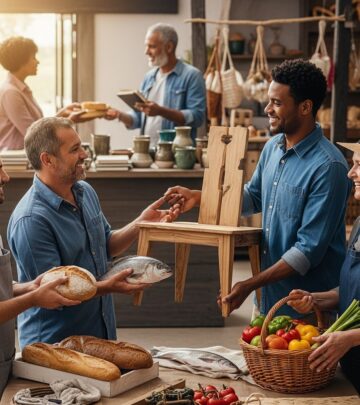
Barter exchange represents one of the oldest and most fundamental forms of commerce, predating the invention of modern currency systems. At its core, a barter exchange is an organization or arrangement where parties directly exchange goods or services for other goods or services without utilizing money as a medium of exchange. This straightforward concept has evolved significantly over time, transforming from simple one-on-one transactions between individuals into sophisticated networks that connect businesses and facilitate millions of dollars in trade annually.
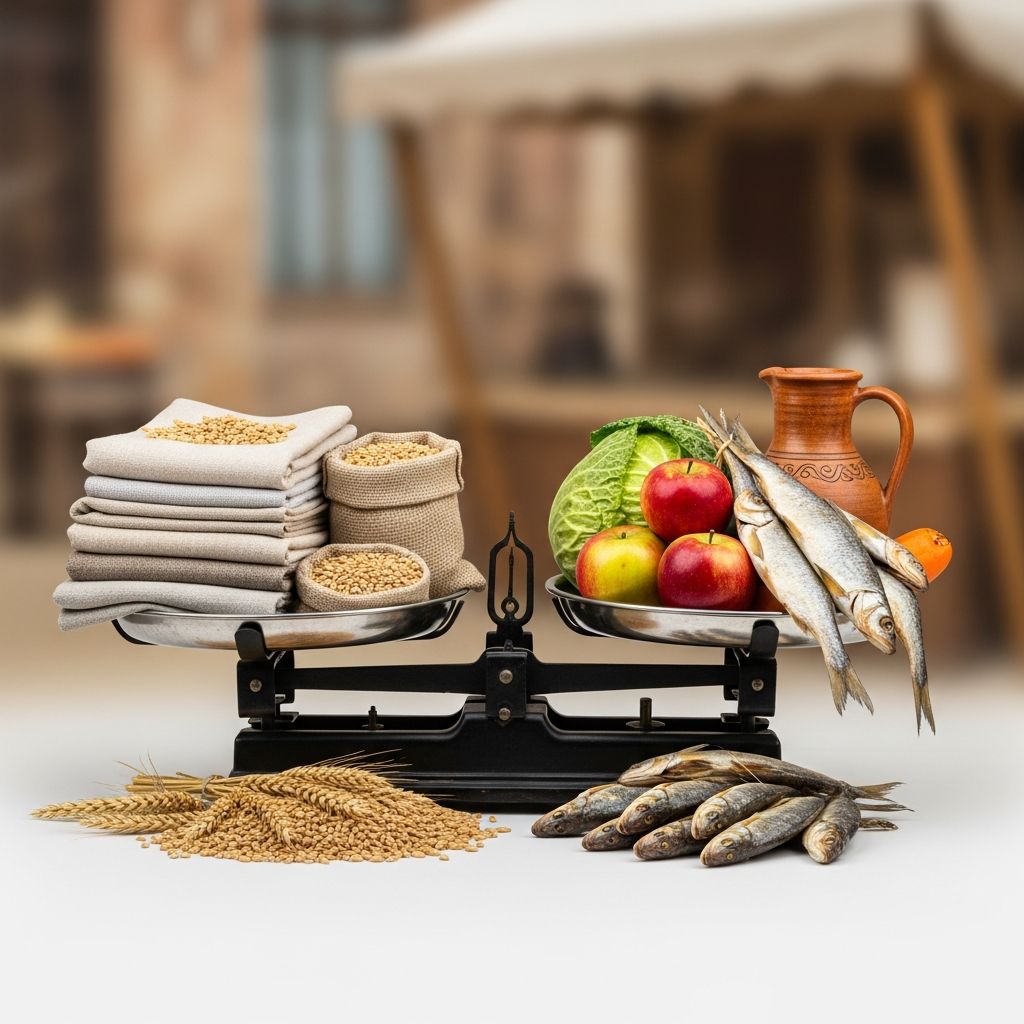
In a barter exchange, the focus shifts entirely from cash transactions to value equivalency. Two parties come together, each offering something they have in abundance or can produce, in return for something the other party possesses. Whether it’s a farmer trading grain for tools, a service provider exchanging expertise for products, or a business swapping inventory for marketing services, the underlying principle remains constant: mutual benefit through direct exchange. The beauty of this system lies in its flexibility and its ability to work in virtually any economic context.
Understanding Barter Exchange Definition and Mechanics
A barter exchange is fundamentally defined as a direct transaction between two or more parties where goods or services are exchanged without the use of currency. Unlike traditional commerce where money serves as the medium of exchange, barter transactions involve the parties assessing the value of what each is offering and negotiating a fair trade. This assessment process is entirely subjective and negotiable, allowing participants considerable flexibility in determining what constitutes a fair exchange.
The mechanics of barter exchanges operate on several key principles. First, there is no criterion of standard value in the way currency provides one. Instead, each transaction is unique, with value determined through negotiation between the parties involved. Second, barter transactions are often transformative, meaning that goods or services may take on new significance or value under their new owner than they had under the original owner. Third, the exchange is typically reciprocal and immediate, though modern organized barter systems have introduced mechanisms that allow for more delayed and complex transactions through trade credits.
Types of Barter Arrangements
Barter arrangements exist across a spectrum of complexity and formality. Understanding these different types helps illustrate how barter functions in modern commerce.
Informal Direct Barter
The simplest form of barter occurs between two parties who directly negotiate and exchange goods or services. A neighbor who exchanges fresh vegetables from their garden for dog-walking services demonstrates informal direct barter at its most basic. These transactions require no intermediary, formal agreement, or complex systems. Both parties simply agree that the exchange is fair and proceed.
Organized Barter Networks
Modern organized barter has evolved to become far more sophisticated. Barter exchanges now operate as membership-based organizations where companies and individuals can join to access a broader network of trading partners. In these systems, members earn trade credits when they provide goods or services to other members. These credits can then be used to purchase goods or services from any other member in the network, not necessarily from the party they originally traded with. This deferred and networked approach dramatically expands the utility of barter systems.
B2B Professional Barter
Businesses increasingly engage in barter exchanges that swap professional services. A web development agency might exchange website creation services for accounting and financial advisory services provided by an accounting firm. These professional-to-professional exchanges allow companies to obtain services they would otherwise need to purchase with cash, thereby conserving working capital while building business relationships.
Key Benefits of Barter Exchange
Barter exchange offers numerous advantages that make it an attractive alternative to traditional monetary commerce, particularly in circumstances where cash flow is constrained or during economic uncertainty.
Cash Conservation and Capital Preservation
One of the primary advantages of barter exchange is the ability to preserve cash for essential business operations and unexpected expenses. By exchanging goods or services instead of paying cash, businesses maintain liquidity that might otherwise be depleted. This is particularly valuable for small businesses and startups operating with tight profit margins. A café struggling with cash flow might barter its coffee services to a co-working space in exchange for marketing services, thereby boosting visibility without spending scarce capital.
Inventory Management and Waste Reduction
Businesses frequently accumulate excess inventory, perishable goods, or underutilized capacity that represents potential waste. Barter provides an excellent mechanism for converting these assets into something of value before they lose their worth entirely. Overstocked items can be traded, perishable goods can find buyers before expiration, and downtime can be monetized through services. This transforms what might otherwise become waste into profitable transactions.
Market Expansion and Customer Acquisition
Barter exchanges enable businesses to reach new customers and market segments without the expense of traditional marketing campaigns. By exchanging goods or services with other members of a barter network, companies gain exposure to entirely new customer bases and industry sectors they might not otherwise reach. This organic network expansion often proves more cost-effective than paid advertising and creates genuine business relationships based on mutual benefit.
Enhanced Business Relationships
The act of engaging in barter often creates stronger, more meaningful business connections compared to anonymous cash transactions. When two businesses exchange their core competencies, they develop deeper understanding of each other’s operations, values, and capabilities. These relationships frequently evolve into long-term partnerships, collaborative ventures, and strategic alliances that benefit both parties far beyond the initial exchange. In local business communities, barter strengthens bonds and fosters mutual support networks.
Increased Business Productivity
Barter helps businesses fill downtime and unused capacity by exchanging these resources for something valuable. A restaurant with empty tables during slow periods might exchange meal vouchers for services needed by the business. A hotel with vacant rooms might trade accommodations for marketing services. This approach turns otherwise wasted capacity into productive use and revenue generation.
Practical Examples of Barter Exchange
Small Business Examples
A local print shop produces menus for a nearby restaurant in exchange for catering services at a corporate event. Both businesses benefit: the restaurant obtains professional menus without cash outlay, while the print shop secures catering services for an important client event. This arrangement strengthens community bonds and demonstrates mutual support among local enterprises.
An accounting firm needing a website redesign contacts a web development agency. The accounting firm offers financial advisory and tax preparation services in exchange for web development services. This professional services swap allows both companies to obtain expertise they need while preserving cash that would otherwise be spent on outside consultants.
Individual and Community Examples
A piano teacher offers music lessons to a neighbor who is a professional chef, exchanging piano instruction for a series of cooking classes. This skill-for-skill trade allows both individuals to learn valuable new skills without the financial burden of commercial classes or tutoring services.
Community swap meets and exchange events allow individuals to trade books, clothing, household goods, and other items. These gatherings promote sustainability, reduce waste, encourage reuse, and create platforms for community engagement and relationship building among neighbors.
John, who has an abundance of tomatoes from his garden, arranges with Maria, who provides dog-walking services, to exchange fresh tomatoes for dog care while he travels. This organic, natural arrangement benefits both parties: John’s vegetables reach someone who will use them, while Maria obtains ingredients for homemade gifts.
How Barter Exchanges Operate
Modern organized barter exchanges function as membership-based organizations that facilitate complex trading networks. Members contract with each other or with the barter exchange itself to exchange property or services. Here’s how the system typically works:
Membership and Account Structure
Businesses join a barter exchange as members, usually paying an annual membership fee. Each member maintains an account tracked within the exchange’s system, similar to a bank account but denominated in trade credits rather than currency.
Trade Credit System
When a member provides goods or services to another member, they receive trade credits rather than cash payment. These credits are deposited into their account and represent purchasing power within the exchange network. Members are then free to purchase goods or services from any other member in the network, not necessarily from the party they originally traded with. This decoupling of sales and purchases dramatically increases the flexibility and utility of the system.
Transaction Timeline and Fulfillment
Members can acquire desired goods or services from other members within a predetermined time frame. If a member fails to deliver promised goods or services within the agreed timeframe, the debt is typically settled in cash, protecting the integrity of the system and ensuring accountability. This mechanism prevents members from accumulating unlimited trade credit debt.
Fees and Commissions
Exchange members typically pay purchase and sales commissions outlined in their membership contract. These fees cover the administrative costs of operating the exchange and ensuring quality control, dispute resolution, and system maintenance.
Why Barter Exchange Matters in Modern Business
Despite the prevalence of modern currency and digital payment systems, barter exchange remains remarkably relevant and valuable in contemporary commerce. According to industry data, more than 450,000 businesses in the United States actively use barter exchanges to improve their bottom line, ranging from small corner shops to more than two-thirds of Fortune 500 companies. These numbers underscore the enduring value of barter systems in business strategy.
The global scale of organized barter is substantial. The International Reciprocal Trade Association reports that member companies transacted more than $10 billion globally in organized barter arrangements. Experts anticipated continued growth in this sector, with trade volume expected to increase by approximately 15% year-over-year, demonstrating continued confidence in barter’s effectiveness as a business tool.
Barter exchange proves particularly valuable during periods of economic uncertainty, tight cash flow, or hyperinflationary environments where currency devalues rapidly. In such circumstances, the ability to exchange goods and services directly without relying on money becomes genuinely advantageous. Additionally, barter functions effectively when there is limited information about trading partners’ creditworthiness or when trust levels are low, since both parties receive value immediately.
Considerations and Challenges in Barter Exchange
While barter exchange offers substantial benefits, participants should understand potential challenges and considerations before engaging in these arrangements.
Finding Compatible Trading Partners
One significant challenge in barter exchange is locating partners whose needs and offerings align perfectly. In smaller markets or specialized industries, finding appropriate trading partners can prove difficult. Organized barter networks help address this challenge by providing access to larger pools of potential trading partners.
Quality Assurance and Standards
Ensuring that traded goods or services meet each party’s quality standards and expectations requires clear communication, detailed specifications, and sometimes trial periods or pilot programs. Disputes over quality can damage the collaborative spirit that makes barter valuable.
Value Assessment Complexity
Since there is no objective standard for value in barter transactions, determining fair exchange rates can be complex and contentious. What one party considers equivalent value may differ substantially from the other party’s assessment. Careful negotiation and clear agreement on value upfront helps prevent disputes.
Tax and Legal Considerations
Barter transactions have tax implications that participants must understand and address properly. The Internal Revenue Service treats barter income as taxable, and the fair market value of goods or services received in barter exchange must typically be reported as income. Professional advice from tax consultants is recommended before engaging in significant barter arrangements.
Barter Exchange for Different Scenarios
| Scenario | Ideal Barter Approach | Primary Benefit | Key Consideration |
|---|---|---|---|
| Business with excess inventory | Organized barter exchange membership | Convert unused inventory to needed goods/services | Finding appropriate trading partners |
| Startup with limited cash flow | Professional services barter | Obtain essential services without cash outlay | Quality assurance of exchanged services |
| Individual seeking skill development | Direct skill-for-skill exchange | Learn new skills affordably | Finding qualified trading partners |
| Company with downtime/unused capacity | Barter exchange network | Monetize unused capacity and resources | Managing trade credit accounts |
| Non-profit organization | Community barter arrangements | Obtain needed goods and services affordably | Tax implications and reporting |
Frequently Asked Questions About Barter Exchange
Q: Is barter exchange still relevant in today’s digital economy?
A: Yes, barter exchange remains highly relevant. More than 450,000 businesses in the U.S. use barter exchanges actively, including two-thirds of Fortune 500 companies. Digital platforms have made organizing barter transactions easier than ever, expanding their applicability across industries and market segments.
Q: Do I need to pay taxes on barter transactions?
A: Yes, the IRS treats barter as taxable income. The fair market value of goods or services received in barter exchange must be reported as income. It’s advisable to consult with a tax professional regarding your specific barter transactions to ensure proper tax compliance.
Q: How do organized barter exchanges protect members?
A: Organized barter exchanges protect members through membership contracts, quality assurance requirements, clear communication protocols, and enforcement mechanisms. If members fail to deliver within agreed timeframes, debts are typically settled in cash, protecting the system’s integrity.
Q: Can individuals participate in barter exchange, or is it only for businesses?
A: Both individuals and businesses participate in barter exchange. Individual-to-individual exchanges occur through informal arrangements and community swap events, while organized barter networks typically focus on business-to-business exchanges, though some accept individual members.
Q: What happens if a barter exchange partner fails to deliver?
A: In organized barter exchanges, if a member fails to deliver goods or services within the agreed timeframe, the debt is typically settled in cash. This mechanism ensures accountability and prevents unlimited accumulation of trade credit debt.
Q: How do I determine fair value in a barter transaction?
A: Fair value in barter is determined through negotiation between parties based on market value, scarcity, demand, and what each party is willing to accept. Unlike currency-based transactions, there’s no objective standard, so clear communication and mutual agreement are essential.
References
- Bartering in 2025: How to Trade and Exchange Without Cash — Fynk. 2025. https://fynk.com/en/blog/bartering-guide-successful-trade-exchange/
- 11 Examples of Bartering That Professionals May Encounter — Indeed Career Advice. https://www.indeed.com/career-advice/career-development/bartering-examples
- Barter — Wikipedia. https://en.wikipedia.org/wiki/Barter
- Bartering – Definition, Uses, Advantages and Disadvantages — Corporate Finance Institute. https://corporatefinanceinstitute.com/resources/economics/bartering/
- Benefits of Barter — Southern Barter Exchange. https://www.southernbarter.com/what-is-sbx/benefits-of-barter/
- Top 10 Benefits of Barter Exchange For Small Businesses — iTradeColorado. https://itradecolorado.com/10-benefits-of-barter-exchange-for-businesses/
- Topic no. 420, Bartering Income — Internal Revenue Service. https://www.irs.gov/taxtopics/tc420
Similar Articles








Read full bio of medha deb