Asset: Definition, Types, and Financial Importance
Comprehensive guide to understanding assets, their types, valuation methods, and role in financial planning.
What is an Asset?
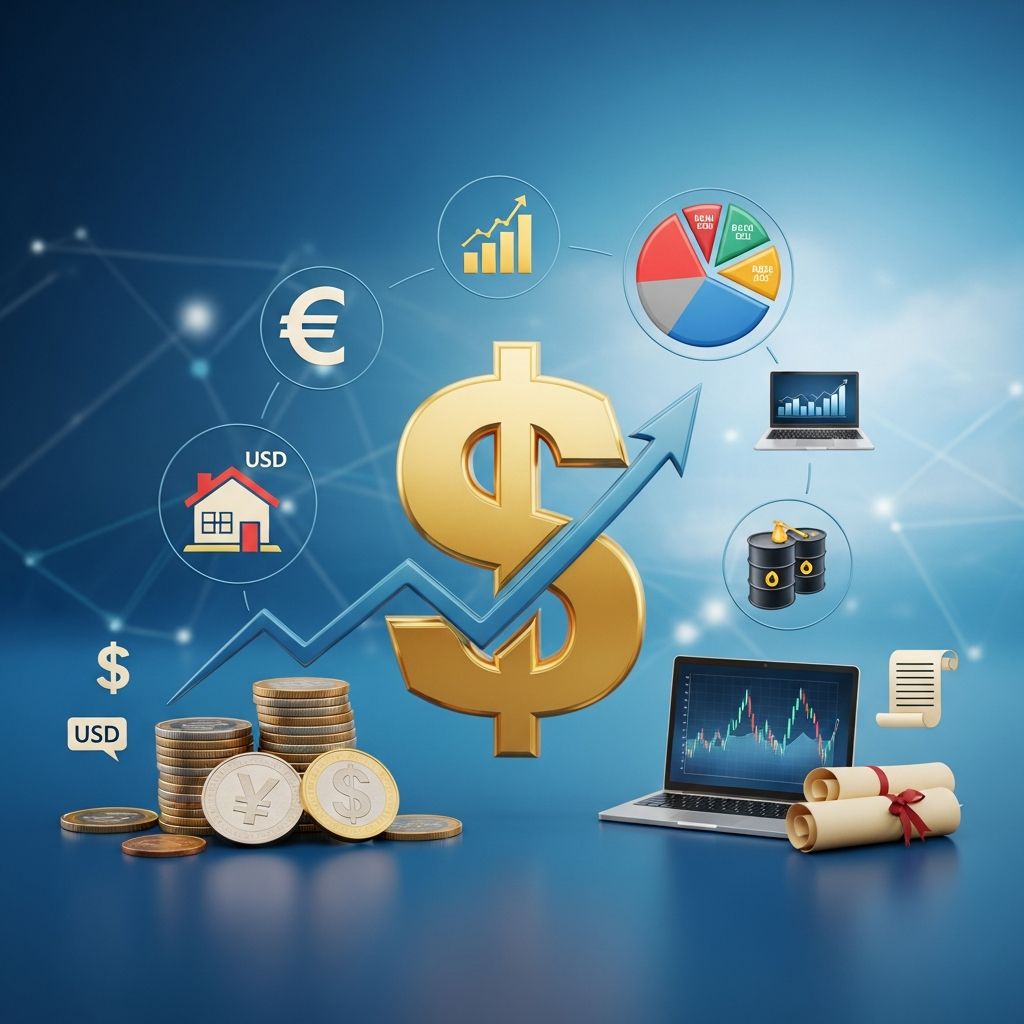
An asset is any resource or item of economic value that an individual, corporation, or organization owns or controls with the expectation that it will provide future financial benefits. Assets are fundamental components of personal wealth and corporate balance sheets, representing everything a business or person owns that has the potential to generate cash flow or provide utility. Understanding assets is crucial for financial planning, investment decisions, and assessing overall financial health.
Assets can take various forms, from tangible physical items like real estate and machinery to intangible items such as patents, copyrights, and brand recognition. The value of an asset is typically measured in monetary terms and recorded on a company’s balance sheet as part of its total assets. For individuals, assets form the foundation of net worth calculations and long-term wealth building strategies.
Key Characteristics of Assets
Assets possess several defining characteristics that distinguish them from other financial items:
- Economic Value: Assets must have measurable monetary value that can be quantified and exchanged in the marketplace.
- Ownership: The individual or entity must have legal ownership or control over the asset to claim it as their own.
- Future Benefits: Assets should generate economic benefits in the future, whether through income generation, appreciation, or utility provision.
- Controlled Resource: The owner must be able to control how the asset is used and deployed for their benefit.
- Result of Past Transactions: Assets typically arise from transactions or events that have already occurred, not future ones.
Classification of Assets
Assets are categorized in several ways to better understand their nature and financial implications. The most common classification system divides assets into current and non-current categories.
Current Assets
Current assets are resources expected to be converted into cash or used up within one year of the balance sheet date. These assets are highly liquid and represent a company’s short-term financial flexibility.
- Cash and Cash Equivalents: Physical currency, bank accounts, and highly liquid investments like money market funds.
- Accounts Receivable: Money owed to the company by customers for goods or services already delivered.
- Inventory: Raw materials, work-in-progress items, and finished goods held for sale.
- Marketable Securities: Short-term investments that can be quickly converted to cash, such as stocks and bonds.
- Prepaid Expenses: Payments made in advance for services or goods to be received within the year.
Non-Current Assets (Fixed Assets)
Non-current assets, also known as fixed assets or long-term assets, are expected to provide benefits beyond one year. These assets are less liquid and form the foundation of a company’s productive capacity.
- Property, Plant, and Equipment: Physical assets like buildings, machinery, vehicles, and land used in operations.
- Intangible Assets: Non-physical assets including patents, trademarks, copyrights, and goodwill.
- Long-term Investments: Stocks, bonds, and other securities held for extended periods.
- Deferred Tax Assets: Tax benefits that can be realized in future periods.
- Capitalized Software: Software costs that provide benefits over multiple years.
Tangible vs. Intangible Assets
Another important distinction in asset classification involves whether they have physical substance.
Tangible Assets
Tangible assets are physical items that can be seen and touched. They have intrinsic value and can be easily assessed for worth. Examples include real estate, vehicles, equipment, inventory, and precious metals. Tangible assets typically depreciate over time, except for land and certain collectibles.
Intangible Assets
Intangible assets lack physical form but possess significant economic value. These include intellectual property, brand reputation, customer relationships, and proprietary technology. Intangible assets often appreciate in value and are becoming increasingly important in modern economies, particularly in technology and service-based industries.
Asset Valuation Methods
Determining the accurate value of assets is essential for financial reporting and decision-making. Several valuation methods are commonly employed:
- Historical Cost: Assets are recorded at their original purchase price, adjusted for depreciation.
- Fair Market Value: The price at which an asset would sell between a willing buyer and seller in an open market.
- Book Value: The value of an asset as shown on the balance sheet, calculated as cost minus accumulated depreciation.
- Replacement Cost: The amount required to replace an asset with an equivalent new asset.
- Present Value: The current worth of future cash flows expected to be generated by the asset.
Assets on the Balance Sheet
Assets are a critical component of the balance sheet, one of the three primary financial statements. The balance sheet equation is:
Assets = Liabilities + Shareholders’ Equity
This fundamental accounting equation ensures that all resources owned by a company are accounted for as either obligations (liabilities) or owner contributions and retained earnings (equity). The quality and composition of assets can significantly impact investment decisions and creditworthiness assessments.
Asset Turnover and Efficiency
Asset turnover is a financial metric that measures how efficiently a company uses its assets to generate revenue. Calculated as revenue divided by average total assets, this ratio indicates how many dollars of sales a company generates for every dollar invested in assets. A higher asset turnover ratio generally suggests more efficient asset utilization, though optimal ratios vary by industry.
Depreciation and Asset Management
Many tangible assets lose value over time through depreciation. Depreciation accounting helps companies allocate the cost of assets over their useful lives. Common depreciation methods include straight-line depreciation, declining balance method, and units of production method. Proper asset management includes regular maintenance, timely replacement, and monitoring of asset condition to ensure continued operational efficiency.
Personal Assets and Net Worth
For individuals, assets are equally important for wealth building and financial security. Personal assets include:
- Real estate and property holdings
- Vehicles and equipment
- Investment portfolios (stocks, bonds, mutual funds)
- Retirement accounts (401(k), IRA)
- Cash savings and emergency funds
- Collectibles and valuable personal items
- Business ownership stakes
Net worth is calculated by subtracting total liabilities from total assets, providing a comprehensive snapshot of personal financial health.
Asset Allocation and Investment Strategy
Asset allocation is a fundamental investment principle involving dividing a portfolio among different asset classes such as stocks, bonds, real estate, and cash. Proper asset allocation helps diversify risk, balance potential returns, and align investments with personal goals and time horizons. Financial advisors often recommend age-based allocation strategies and periodic rebalancing to maintain desired risk levels.
Strategic Asset Management in Business
Companies employ various strategies to optimize asset performance:
- Asset Maintenance: Regular upkeep to preserve asset functionality and extend useful life.
- Asset Disposal: Selling or retiring outdated or underperforming assets.
- Asset Financing: Using debt or leasing to acquire necessary assets while preserving cash.
- Asset Consolidation: Combining duplicate or redundant assets to improve efficiency.
- Asset Monitoring: Tracking asset performance and condition through management systems.
Digital and Intangible Asset Growth
Modern economies increasingly focus on intangible assets like software, data, digital content, and online platforms. These assets often require minimal physical resources but can generate substantial value. Companies like technology firms, entertainment studios, and social media platforms derive most of their value from intangible assets rather than physical infrastructure.
Risk and Asset Protection
Asset protection involves strategies to safeguard assets from creditors, litigation, or other threats. Common protection methods include:
- Insurance policies covering property, liability, and other risks
- Trusts and legal structures that separate personal and business assets
- Diversification across different asset types and geographic regions
- Regular asset valuations and documentation
- Compliance with relevant regulations and tax obligations
Frequently Asked Questions (FAQs)
What is the difference between assets and liabilities?
Assets are resources with economic value that a person or company owns, while liabilities are financial obligations or debts owed to others. Assets increase net worth, whereas liabilities decrease it. The balance sheet equation (Assets = Liabilities + Equity) shows how these relate to each other.
Why are intangible assets important for valuation?
Intangible assets like patents, brands, and customer relationships often represent significant portions of a company’s value, especially in technology and service industries. They drive competitive advantages and future earning potential, making them crucial for accurate financial assessment and merger valuations.
How does depreciation affect asset value on financial statements?
Depreciation reduces the book value of tangible assets over their useful lives, reflecting their consumption or obsolescence. This accounting practice matches the cost of assets against the revenue they generate, providing a more accurate representation of true asset value over time.
What makes an asset liquid?
Asset liquidity refers to how quickly and easily an asset can be converted to cash without significant loss of value. Cash and cash equivalents are highly liquid, while real estate and equipment are illiquid. Liquidity is crucial for meeting short-term financial obligations.
How should I diversify my personal assets?
Diversification involves spreading investments across different asset classes (stocks, bonds, real estate, commodities), geographic regions, and industries. This strategy reduces risk by ensuring that poor performance in one area is balanced by other assets, aligning with your age, risk tolerance, and financial goals.
What is the importance of asset turnover ratio in business analysis?
Asset turnover ratio measures operational efficiency by showing how much revenue a company generates from each dollar of assets. Higher ratios indicate better asset utilization and operational efficiency. This metric helps compare companies within the same industry and identify opportunities for improvement.
Conclusion
Assets are fundamental to understanding personal finance, business operations, and investment strategy. Whether tangible or intangible, current or fixed, assets represent the economic resources that generate wealth and support financial goals. By understanding asset classifications, valuation methods, and management strategies, individuals and organizations can make informed financial decisions, optimize resource allocation, and build sustainable wealth. Proper asset management, combined with strategic diversification and regular assessment, forms the foundation of sound financial planning and long-term prosperity.
References
- Statement of Financial Accounting Standards (SFAS) No. 141 — Financial Accounting Standards Board (FASB). 2001. https://www.fasb.org/
- U.S. Securities and Exchange Commission: What is an Asset? — SEC Office of Investor Education. 2023. https://www.sec.gov/investor/
- International Financial Reporting Standards (IFRS) Framework — International Accounting Standards Board. 2023. https://www.ifrs.org/
- Asset Management Best Practices — American Society of Asset Managers. 2024. https://www.assetmanagement.org/
- Corporate Finance and Balance Sheet Analysis — CFA Institute Research Foundation. 2023. https://www.cfainstitute.org/
Similar Articles








Read full bio of Sneha Tete