What Is an Auto Loan and How Does It Work?
Complete guide to auto loans: Understanding terms, rates, and how to secure the best financing for your vehicle purchase.
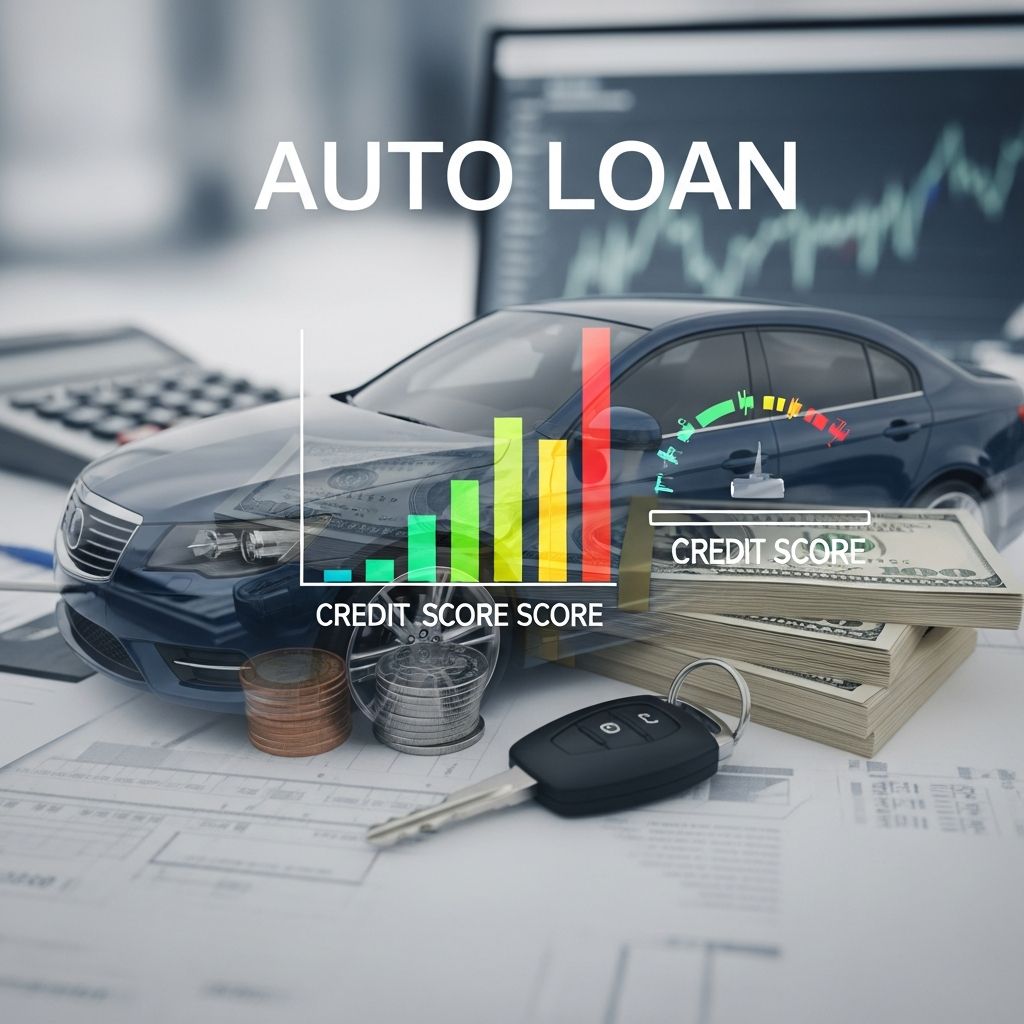
An auto loan is a type of secured installment loan that allows you to purchase a vehicle without paying the full price upfront. Instead of paying cash, you borrow money from a lender and repay it over a set period, typically 36 to 84 months. The vehicle itself serves as collateral for the loan, meaning if you fail to make payments, the lender can repossess the car.
When you take out an auto loan, you agree to pay back the borrowed amount plus interest and any associated fees in fixed monthly installments. The loan amount, combined with your down payment, covers the total cost of the vehicle. Understanding how auto loans work is essential before you commit to financing a car, as the terms and rates can significantly impact your overall cost.
Key Terms to Know When Getting a Car Loan
Before you apply for an auto loan, familiarize yourself with these important terms that will affect your borrowing experience:
Interest Rate
The interest rate is an annual fee that the lender charges you for borrowing money. This percentage is calculated on the outstanding balance of your loan and directly influences how much you’ll pay in total. A higher credit score or shorter loan term generally results in a lower interest rate, making your loan more affordable.
Annual Percentage Rate (APR)
The APR represents the total cost of borrowing, including the interest rate and other fees, expressed as an annual percentage. While the interest rate only accounts for the cost of the principal, the APR provides a more comprehensive view of what you’ll actually pay. This makes the APR a critical figure to compare when shopping for loans from different lenders.
Down Payment
The down payment is the amount of money you pay upfront to the lender before taking out the loan. This amount is applied directly toward the total purchase price of the vehicle. The larger your down payment, the lower your monthly payments will be, as you’re borrowing less money overall. For example, making a larger down payment on a $45,000 car can reduce both your monthly payment and total interest paid significantly.
Monthly Payment
Your monthly payment is the fixed amount you pay toward the loan each month. This payment covers both principal and interest. The monthly payment is determined by three factors: the auto loan’s term, the amount borrowed, and the interest rate. Understanding your monthly payment is crucial for budgeting and ensuring the loan fits within your financial situation.
Loan Term
The loan term, also called the repayment period, is the window of time during which you’ll make payments on the auto loan. Loan terms are typically expressed in months or years, ranging from 36 months to 84 months or longer. A shorter term means higher monthly payments but lower total interest, while a longer term spreads payments out but increases overall borrowing costs.
Principal
The principal is the amount you borrow to purchase the vehicle, excluding interest and fees. When you add your down payment to the principal, you get the total cost of the car. Understanding the principal helps you grasp how much of each payment goes toward the actual vehicle cost versus interest.
Total Cost of the Loan
This figure encompasses the principal, interest, and all fees associated with acquiring the vehicle. Calculating the total cost of the loan helps you understand the true expense of financing a car. A higher APR or longer loan term will increase this total significantly.
How Your Credit Score Affects Your Auto Loan
Your credit score is one of the most significant factors determining the interest rate you’ll receive on an auto loan. Lenders assess your creditworthiness by examining your credit history, payment patterns, and overall financial responsibility. Lenders typically look for regular income, a low debt-to-income (DTI) ratio, and a good credit score. The stronger your credit score, the more competitive your rate will be.
The difference between rates for borrowers with excellent credit versus poor credit can be substantial. According to current market data, the average new car loan rates range from 5.27 percent for borrowers with excellent credit (781 to 850) to 15.97 percent for borrowers with deep subprime credit (300 to 500). This difference can add thousands of dollars to your total borrowing costs over the life of the loan.
Understanding Annual Percentage Rate (APR)
The APR is one of the most important numbers when deciding on an auto loan, as it determines your total borrowing costs. An APR is set based on your credit score, income, and the term and amount of the loan. Expect a higher interest rate if you’re shopping for a longer-term loan or if your credit score is fair or poor. Conversely, a shorter loan term or higher credit score may help you access better rates.
Ideally, you want a lower APR to achieve a more affordable monthly payment and keep more money in your pocket. An APR that’s just a few points higher could make the loan far more expensive over time. This is why comparing APRs from multiple lenders is crucial before committing to a loan.
How Credit Score Influences Monthly Payments
To illustrate how your credit score impacts your finances, consider a $36,000 auto loan with a 48-month term. Here’s how the interest rate, monthly payment, and total interest paid vary by credit score range:
| Credit Score Range | Interest Rate | Monthly Payment | Total Interest Paid |
|---|---|---|---|
| Superprime (781 to 850) | 5.18% | $832 | $3,936 |
| Prime (661 to 780) | 6.70% | $857 | $5,139 |
| Near Prime (601 to 660) | 9.83% | $910 | $7,686 |
| Subprime (501 to 600) | 13.22% | $970 | $10,547 |
| Deep Subprime (300 to 500) | 15.81% | $1,017 | $12,804 |
As you can see, a borrower with a deep subprime credit score would pay $12,804 in interest compared to just $3,936 for a superprime borrower—a difference of nearly $8,868. This demonstrates why improving your credit score before applying for a loan can save you significant money.
How Loan Term Affects Your Total Borrowing Costs
The length of your loan term plays a major role in determining your monthly payment and total borrowing costs. Let’s examine how different loan terms affect the same $36,000 loan at a 6 percent interest rate:
| Loan Term | 36 Months | 60 Months | 84 Months |
|---|---|---|---|
| Monthly Payment | $1,095 | $696 | $526 |
| Total Borrowing Costs | $3,427 | $5,759 | $8,176 |
As shown in the table, while a 36-month loan requires a higher monthly payment of $1,095, it results in the lowest total borrowing cost of $3,427. An 84-month loan spreads the payments out to a manageable $526 per month, but you’ll pay $8,176 in total borrowing costs—more than double the 36-month option. When considering loan terms, balance your monthly budget with the total cost of the loan.
Factors That Lenders Consider
Lenders evaluate multiple factors before approving your auto loan application and determining your interest rate. Understanding these factors can help you strengthen your application:
Credit Score: Your credit score is the primary indicator of your creditworthiness and directly affects the interest rate you receive. Higher scores typically qualify for lower rates.
Income and Employment: Lenders prefer to see regular, stable income to ensure you can make monthly payments consistently. They may verify employment history and income through documentation.
Debt-to-Income Ratio: Your DTI ratio compares your total monthly debt payments to your gross monthly income. A lower ratio indicates you have room in your budget for a car payment.
Down Payment Amount: A larger down payment demonstrates financial commitment and reduces the lender’s risk, often resulting in better rates and terms.
Vehicle Type: The make, model, age, and condition of the vehicle can influence your loan terms. Newer vehicles and those with better reliability ratings may qualify for better rates.
Loan Amount and Term: The total amount you’re borrowing and the repayment period affect your interest rate. Longer terms and larger amounts may come with higher rates.
Average Auto Loan Rates in 2025
Current auto loan rates remain relatively high, though they have been declining slowly since January 2025. The benchmark rate declined to 4.25 to 4.5 percent in December, but this hasn’t yet translated to significant decreases in consumer auto loan rates. Here’s what borrowers with different credit scores can expect:
| Credit Score Range | New Cars | Used Cars |
|---|---|---|
| 781 to 850 (Super Prime) | 5.27% | 7.15% |
| 661 to 780 (Prime) | 6.78% | 9.39% |
| 601 to 660 (Nonprime) | 9.97% | 13.95% |
| 501 to 600 (Subprime) | 13.38% | 18.90% |
| 300 to 500 (Deep Subprime) | 15.97% | 21.58% |
These rates are notably higher for used cars across all credit categories, so if you’re considering a used vehicle, expect to pay more in interest.
Tips for Getting the Best Auto Loan Rate
Several strategies can help you secure a more favorable auto loan rate:
Improve Your Credit Score Before Applying: If possible, spend time improving your credit score before applying for a car loan. Even a modest increase can result in a lower interest rate and substantial savings.
Shop Around With Multiple Lenders: Different lenders offer different rates and terms. Compare offers from banks, credit unions, online lenders, and dealerships to find the best deal.
Increase Your Down Payment: A larger down payment reduces the amount you need to borrow and demonstrates financial commitment, often resulting in better rates.
Choose a Shorter Loan Term: While this increases your monthly payment, a shorter term reduces total interest costs significantly.
Consider Getting Pre-Approved: Pre-approval from a lender gives you negotiating power at the dealership and helps you understand what rates you qualify for.
Know Your Average Rates in Advance: Research the average interest rates for your credit score range and compare rates offered by several lenders before you apply. This puts you in a good position to negotiate financing at the dealership and ensures you’re getting a competitive rate.
Frequently Asked Questions
Q: What is the difference between an interest rate and APR?
A: The interest rate is the percentage you pay to borrow money, while the APR (Annual Percentage Rate) includes the interest rate plus all fees and charges associated with the loan. The APR provides a more complete picture of your total borrowing cost.
Q: How can I lower my monthly auto loan payment?
A: You can lower your monthly payment by making a larger down payment, choosing a longer loan term, improving your credit score to qualify for a lower interest rate, or shopping for better rates from different lenders.
Q: Does my credit score really impact my auto loan rate that much?
A: Yes, significantly. The difference between an excellent credit score (5.27% APR) and a deep subprime score (15.97% APR) on a new car can result in thousands of dollars in additional interest over the life of the loan.
Q: What loan term should I choose?
A: Consider your budget for monthly payments against the total interest you’ll pay. Shorter terms (36-48 months) have lower total costs but higher payments, while longer terms (60-84 months) have lower payments but higher total costs.
Q: Should I get pre-approved before shopping for a car?
A: Yes, getting pre-approved gives you a clear understanding of what you can afford, helps you know the interest rates you qualify for, and strengthens your negotiating position at the dealership.
Q: What is a good down payment amount?
A: While a minimum down payment might be 0-10%, a larger down payment of 15-20% can significantly lower your monthly payments, reduce total interest paid, and improve your chances of loan approval.
References
- What is an auto loan and how does it work? — Bankrate. 2025. https://www.bankrate.com/loans/auto-loans/what-is-an-auto-loan/
- Auto Loan Calculator — Bankrate. 2025. https://www.bankrate.com/loans/auto-loans/auto-loan-calculator/
- Average car payments in 2025: What to expect — Bankrate. 2025. https://www.bankrate.com/loans/auto-loans/average-monthly-car-payment/
- How To Get The Best Auto Loan Rates — Bankrate. 2025. https://www.bankrate.com/loans/auto-loans/how-to-get-the-best-auto-loan-rate/
Similar Articles








Read full bio of Sneha Tete