What Is an Asset? Definition, Types & Examples
Learn what assets are, how they work, and why they matter for your financial health.
What Is an Asset?
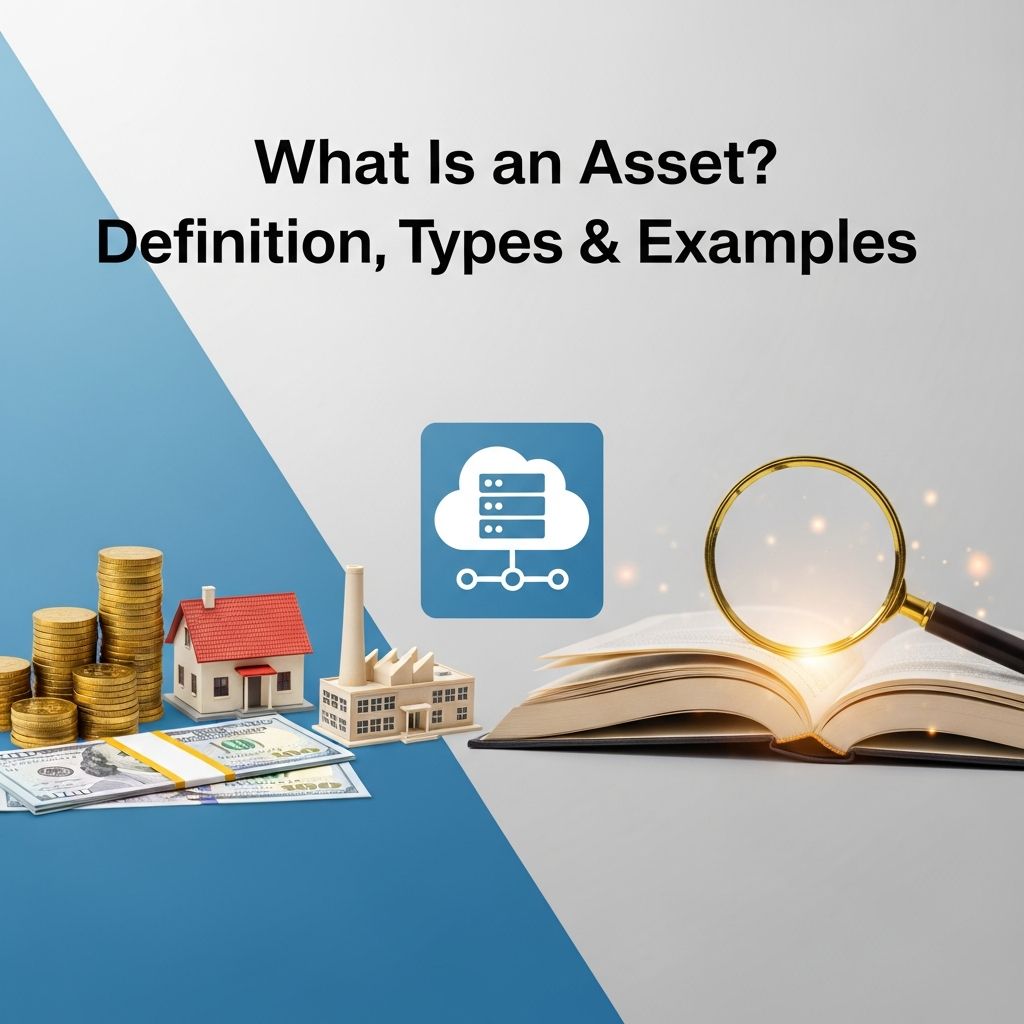
An asset is any resource—whether physical or intangible—that has earning power or economic value. Assets form the foundation of personal wealth and business financial health, representing everything you own that can be converted into cash or generate income. Whether you’re an individual building personal wealth or a corporation managing business operations, understanding assets is essential to financial success.
At its core, an asset is something of value that someone owns. It could be a home, a car, cash, stocks, or intellectual property—essentially anything tangible or intangible that holds monetary or economic worth. The key characteristic of an asset is that it can be used to produce positive economic value and can generally be converted into cash, although cash itself is also considered an asset.
Assets as Property and Investments
Assets exist in many forms throughout your life and financial portfolio. Your personal possessions—your home, vehicle, furniture, and jewelry—are all considered assets because they have monetary value. These physical assets are examples of tangible assets that you can touch and see.
Beyond personal property, investments also fall under the asset category. Stocks, bonds, mutual funds, and other investment vehicles represent financial assets that can generate income or appreciate over time. Cash in your bank account, money market accounts, and savings are fundamental assets that provide liquidity and financial security.
The distinction between different asset types helps you understand your overall financial picture. Some assets, like cash, are highly liquid and can be quickly converted to spending money. Others, like real estate or fine art, are less liquid and may take time to sell but often appreciate in value over extended periods.
Types of Assets
Assets fall into several distinct categories, each serving different purposes in your financial strategy. Understanding these classifications helps you make informed decisions about building and managing your wealth.
Tangible Assets
Tangible assets are physical items of value that you can see and touch. These include:
- Real estate and land
- Residential and commercial property
- Vehicles and equipment
- Precious metals like gold and silver
- Fine art and collectibles
- Furniture and household items
Tangible assets often serve dual purposes—they can be personal possessions that improve your quality of life while also functioning as investments. Real estate, for example, provides shelter while potentially appreciating in value over time. Precious metals and collectibles appeal to high-net-worth individuals who view them as alternative investments alongside traditional financial assets.
Intangible Assets
Intangible assets are non-physical resources that hold significant economic value. For businesses, these include:
- Intellectual property and patents
- Copyrights and trademarks
- Brand reputation and goodwill
- Computer software and proprietary systems
- Licenses and permits
Intangible assets can be harder to quantify than physical assets, but they often represent substantial value. A company’s brand name, customer relationships, and proprietary technology may be worth far more than its physical equipment. For individuals, intellectual property created through work or innovation can represent significant financial value.
Financial Assets
Financial assets represent ownership claims or contractual rights to economic benefits. These include:
- Cash and cash equivalents
- Stocks and equity ownership
- Bonds and fixed-income securities
- Mutual funds and investment funds
- Certificates of deposit (CDs)
- Money market accounts
Financial assets provide pathways to wealth accumulation through returns, dividends, interest payments, and capital appreciation. The flexibility and liquidity of financial assets make them accessible investment vehicles for most people building personal wealth.
Current Assets vs. Noncurrent Assets
From an accounting perspective, companies classify assets based on how quickly they can be converted to cash. This distinction matters significantly for business financial planning.
Current Assets
Current assets include resources expected to be converted to cash or consumed within one year or one operating cycle, whichever is longer. These encompass:
- Cash and cash equivalents in checking and savings accounts
- Short-term investments and marketable securities
- Accounts receivable from customers
- Inventory of products ready for sale
- Prepaid expenses and accrued income
Current assets represent the most liquid portion of a company’s balance sheet, indicating the resources immediately available to pay bills, meet payroll, and fund operations. Businesses with strong current asset positions demonstrate short-term financial stability and operational flexibility.
Noncurrent Assets
Noncurrent assets, also called long-term or fixed assets, are expected to provide value beyond one year. These include:
- Property, plant, and equipment (PP&E)
- Long-term investments
- Intangible assets and goodwill
- Noncurrent receivables
- Long-term leases
Noncurrent assets form the backbone of a company’s productive capacity. Manufacturing equipment, real estate, and long-term technology investments enable companies to generate revenue over extended periods. These assets typically depreciate or amortize over time as they age and their productive value diminishes.
Assets on the Balance Sheet
In corporate accounting, the balance sheet presents the fundamental equation: Total assets equal total liabilities plus shareholders’ equity. This statement reveals the company’s financial structure and resource allocation from two perspectives.
Assets are listed on the left side of the balance sheet, organized by liquidity with current assets appearing first. The right side displays liabilities (what the company owes) and equity (ownership claims). This dual presentation shows not only what resources the company controls but also where those resources originate—from borrowed funds (liabilities) or owner investment (equity).
Each line item on the asset section represents a specific resource category with its monetary value clearly stated. This transparency enables investors, creditors, and management to evaluate the company’s financial health, operational efficiency, and growth potential.
Asset-Heavy vs. Asset-Light Business Models
Different industries and business strategies result in vastly different asset compositions. Understanding these models reveals how companies generate value and manage capital efficiency.
Asset-Heavy Model
Asset-heavy companies invest substantial capital in physical infrastructure and equipment. Manufacturing, pharmaceuticals, engineering, and chemical processing companies typically operate with this model. They require factories, machinery, research facilities, and significant inventory. While capital-intensive and less flexible, these businesses create tangible products and often benefit from barriers to entry that protect market position.
Asset-Light Model
Asset-light companies operate with minimal physical assets, instead leveraging technology, platforms, and intellectual property. Digital platforms like ride-sharing services, social media companies, and streaming services exemplify this approach. They require lower capital investment, offer greater scalability, and can adapt quickly to market changes. Asset-light businesses typically achieve higher profit margins and faster growth trajectories.
Understanding Wasting Assets
A wasting asset is a resource that irreversibly declines in value over time. Vehicles and machinery exemplify wasting assets—a car purchased today will be worth less next year. In financial markets, options contracts are wasting assets because they lose time value as their expiration date approaches.
Understanding wasting assets matters for tax planning and depreciation accounting. Businesses can account for this value decline through depreciation charges, reducing taxable income. Individuals should recognize that certain purchases represent depreciating assets rather than investments, influencing purchasing decisions and financial strategy.
Why Assets Matter for Financial Health
Your asset portfolio directly determines your net worth and financial security. By accumulating assets that appreciate or generate income, you build lasting wealth. Diversifying across asset types—combining real estate, investments, and business assets—reduces risk while maximizing long-term returns.
For businesses, asset management directly impacts profitability and operational efficiency. Companies must balance between investing in assets that generate returns and maintaining financial flexibility. Poor asset management leads to inefficiency, excess capital tied up unproductively, and reduced competitiveness.
Frequently Asked Questions
Q: What is the difference between assets and liabilities?
A: Assets are resources you own that have value and can generate income. Liabilities are debts or obligations you owe to others. Your net worth equals your total assets minus your total liabilities.
Q: Are all assets investments?
A: No. While some assets like stocks or rental property serve as investments designed to generate returns or appreciate, other assets like personal vehicles or household items are primarily for personal use, though they retain some monetary value.
Q: How do I calculate my total assets?
A: List everything you own with monetary value: cash, investments, real estate, vehicles, retirement accounts, and valuable possessions. Total these amounts to determine your asset base. For businesses, consult the balance sheet’s asset section.
Q: Can assets decrease in value?
A: Yes. Wasting assets like vehicles and machinery depreciate over time. Market fluctuations can reduce investment values. Real estate can depreciate in declining neighborhoods. Understanding asset depreciation helps with financial planning and tax strategy.
Q: What makes an asset liquid?
A: Liquidity refers to how quickly an asset can be converted to cash without significant loss. Cash is most liquid. Stocks and bonds are highly liquid. Real estate and collectibles are less liquid because selling takes time and may involve transaction costs.
References
- Asset – Money — Britannica. Accessed November 2025. https://www.britannica.com/money/asset
- Asset — Wikipedia. Accessed November 2025. https://en.wikipedia.org/wiki/Asset
- What Is a Balance Sheet? — Money. Accessed November 2025. https://money.com/what-is-a-balance-sheet/
- International Financial Reporting Standards (IFRS) Definition of Assets — IFRS Foundation. Accessed November 2025. https://www.ifrs.org
- Generally Accepted Accounting Principles (GAAP) — Financial Accounting Standards Board (FASB). Accessed November 2025. https://www.fasb.org
Similar Articles








Read full bio of medha deb