What Is a Vendor? Definition, Types, and Examples
Complete guide to understanding vendors, their roles, types, and impact on business operations and supply chains.
What Is a Vendor?
A vendor is a business entity or individual that sells goods or services to other companies or directly to consumers for profit. The term encompasses a broad range of participants in the supply chain, from large manufacturers to independent service providers. Vendors play a fundamental role in modern commerce by providing the products and services that businesses need to operate and consumers need to purchase.
In essence, vendors are intermediaries or direct sellers within the marketplace. They can operate in business-to-business (B2B) transactions, where they supply products or services to other businesses, or in business-to-consumer (B2C) transactions, where they sell directly to end-users. Understanding what vendors are and how they operate is essential for any business looking to build strong supplier relationships and maintain an efficient supply chain.
How Vendors Work
Vendors operate through various mechanisms depending on their type and the nature of their offerings. The fundamental principle remains consistent: vendors source or create products and services, then distribute them to their target market. Here’s how different vendor models function:
Business-to-Business (B2B) Transactions
In B2B models, vendors supply products or components that other businesses use to manufacture their own products or deliver services. For example, a smartphone manufacturer requires vendors to supply microchips, processors, and other essential hardware components. These vendors work closely with their business clients to ensure consistent quality, timely delivery, and alignment with production schedules. B2B vendors often establish long-term relationships with their clients and may offer customized solutions tailored to specific business requirements.
Business-to-Consumer (B2C) Transactions
B2C vendors sell finished goods or services directly to individual consumers. A retail vendor, for instance, sources products at wholesale prices and sells them to consumers through physical stores or online platforms. These vendors focus on customer experience, product availability, and competitive pricing. They manage inventory, handle customer service, and often use marketing strategies to attract and retain customers.
Service Provision
Service-based vendors provide non-tangible offerings such as IT support, marketing services, consulting, or event planning. A marketing agency, for example, might contract with specialized vendors for web design, content creation, and graphic design services. Each vendor brings specific expertise, allowing the agency to deliver comprehensive solutions without maintaining in-house expertise in every area.
Types of Vendors
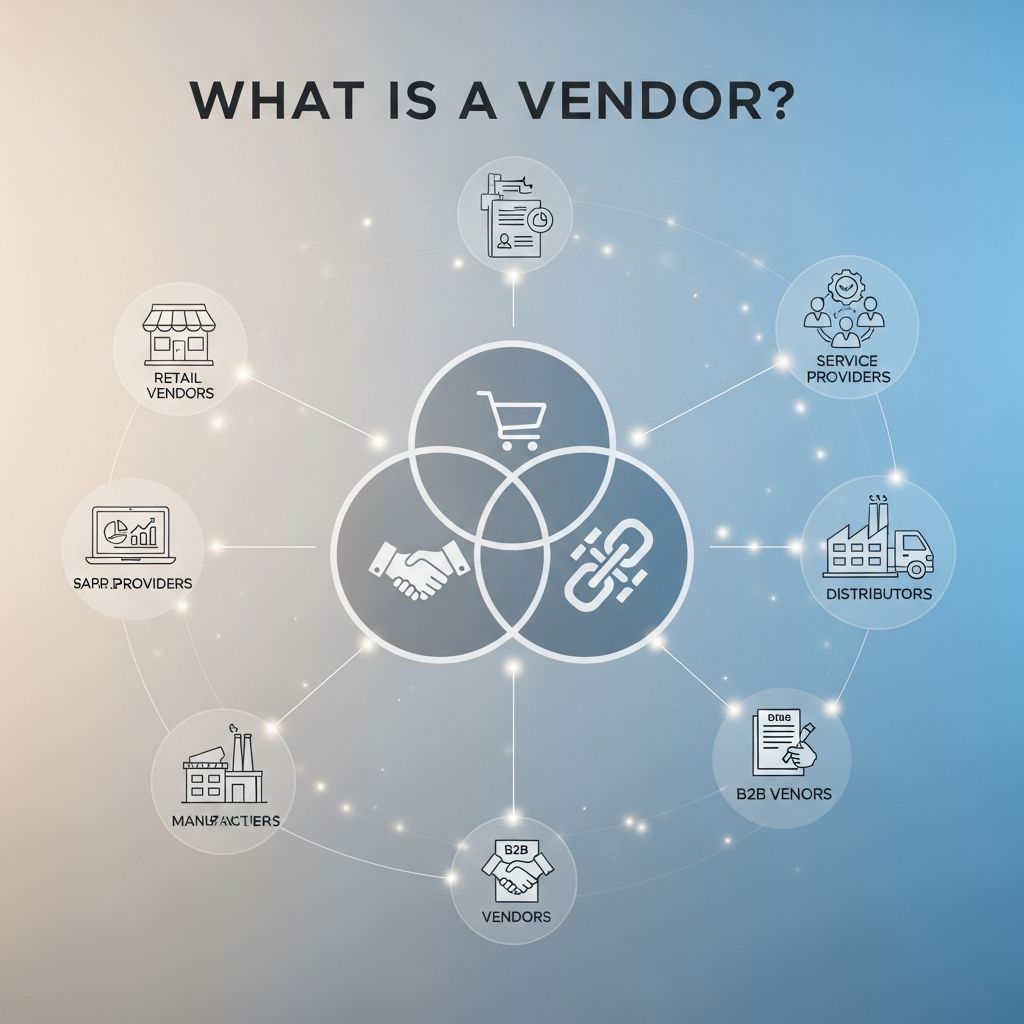
Vendors come in various forms, each serving distinct roles within the supply chain and market ecosystem. Understanding these categories helps businesses identify the right vendor partners for their specific needs.
Manufacturers
Manufacturers create products from raw materials and transform them into finished goods. When businesses source directly from manufacturers, they often benefit from lower prices due to the absence of middlemen. Manufacturers offer opportunities for customization and quality control, making them ideal for businesses seeking to establish product lines with specific requirements. Sourcing from manufacturers allows companies to negotiate bulk pricing and establish direct relationships with producers.
Wholesalers
Wholesalers purchase goods in bulk from manufacturers or other wholesalers and resell them to retailers, distributors, or other businesses. Wholesale vendors act as intermediaries in the supply chain, helping distribute products efficiently. Some wholesalers also sell directly to consumers, creating a hybrid “wholesaler-retailer” model. Wholesalers typically handle large quantities and offer competitive pricing based on bulk purchase orders.
Retailers
Retailers purchase goods from suppliers and wholesalers, then sell them directly to consumers in smaller quantities. Retailers provide convenience and quick turnaround times, making them a viable option for businesses needing to replenish stock quickly. They typically operate in business-to-consumer markets and rely on efficient inventory management systems to maintain product availability.
Service Providers
Service providers offer specialized expertise and non-tangible products rather than physical goods. Examples include IT support, marketing agencies, consulting firms, legal services, and event planning companies. Service providers are particularly valuable for businesses looking to outsource specific functions or gain expertise not feasible to develop in-house. The professional services sector continues to grow, expected to reach $2.07 trillion in revenue by 2028, underscoring the importance of these vendors in the modern economy.
Independent Vendors and Freelancers
Independent vendors, also known as freelancers or independent contractors, offer specialized services or niche products without being formally tied to a specific organization. These vendors provide flexibility and specialized expertise for short-term or project-based needs. They can range from individual consultants to small boutique firms offering highly specialized services.
Importers
Importers source products from international suppliers and bring them into their home markets for distribution. They handle customs, logistics, and compliance requirements, making products from around the world accessible to domestic businesses and consumers.
Dropshippers
Dropshippers operate a unique business model where they don’t maintain inventory. Instead, when customers place orders, dropshippers purchase products from suppliers and have them shipped directly to customers. This model reduces upfront capital requirements and inventory management complexity.
Vendor vs. Supplier: Key Differences
While the terms “vendor” and “supplier” are often used interchangeably, they have distinct meanings in business contexts. A supplier provides raw materials, components, or goods used in production, while a vendor typically sells the final product or service to the end user or another business. Suppliers focus on providing inputs for production processes, whereas vendors deliver finished products or services ready for consumption or resale.
Vendor Characteristics by Category
| Vendor Type | Who They Serve | Nature of Delivery | Example Industries | Payment Structure |
|---|---|---|---|---|
| Product Vendors | B2B and B2C customers | Ready-to-use products (software, food, tools) | Retail, tech, e-commerce, office services | Per transaction or service agreement |
| Suppliers | Manufacturers, wholesalers, production facilities | Base materials (metals, textiles, chemicals) | Manufacturing, agriculture, industrial production | Supply contracts or bulk purchase orders |
| Service Vendors | Businesses requiring expertise | Skilled labor or technical outcomes | Construction, IT services, legal, marketing | Hourly, milestone-based, or per project |
Real-World Vendor Examples
Understanding how vendors operate in practice helps illustrate their diverse roles:
B2C Example
A vendor sources home appliances at wholesale rates and sells them to major retail chains like Target. This vendor manages inventory based on store demand, handles fulfillment logistics, and maintains pricing competitiveness. The vendor serves as a crucial link between manufacturers and retail consumers.
B2B Example
Apple, as a vendor, provides electronics and accessories through both direct sales channels and authorized resellers. Similarly, 3M supplies a wide range of products—from medical supplies to office products—to businesses and retailers globally. These vendors enable companies to access high-quality goods at scale, driving operational efficiency and growth.
Service-Based Example
A digital marketing agency may outsource specific tasks to specialized vendors who offer targeted expertise in web development, graphic design, and content creation. Each vendor contributes their specialized skills, allowing the agency to deliver comprehensive solutions to clients while maintaining focus on core competencies.
The Importance of Vendors in Supply Chain Management
Vendors are fundamental to effective supply chain management. They facilitate the sourcing, production, and distribution of goods and services that keep businesses operating efficiently. Well-managed vendor relationships ensure reliable product supply, consistent quality, and competitive pricing. The global manufacturing industry, valued at $14.5 trillion in 2024, demonstrates the vast economic importance of product-based vendors in the broader economy.
Effective vendor management involves establishing clear communication channels, negotiating favorable terms, monitoring performance, and maintaining long-term strategic partnerships. Businesses that cultivate strong vendor relationships gain competitive advantages through improved supply chain reliability, cost efficiency, and access to innovation.
Online Vendors and E-Commerce
The rise of digital commerce has created new vendor categories. Online vendors use e-commerce platforms and direct sales channels to reach broad markets without maintaining physical storefronts. These vendors range from small businesses operating through platforms like Amazon and Shopify to global enterprises with sophisticated digital infrastructure. Online vendors offer consumers convenience, speed, and market flexibility, transforming how products and services reach end-users.
Service Vendors in the Modern Economy
Service vendors have become increasingly important in the modern business landscape. They deliver non-physical goods or services such as logistics, technical support, maintenance, consulting, and professional services. Service vendors play a crucial role in supply chain efficiency and provide long-term business support systems that help organizations scale and improve their operations.
Frequently Asked Questions
Q: What is the main role of a vendor in business?
A: The primary role of a vendor is to sell finished goods or services to other businesses (B2B) or directly to consumers (B2C), helping companies meet operational needs or customers access desired products and services. Vendors serve as critical participants in supply chains, ensuring products and services reach their intended markets efficiently.
Q: How is a vendor different from a supplier?
A: A supplier typically provides raw materials or components used in production processes, while a vendor sells the final product or service to the end user or another business. Suppliers focus on providing inputs for manufacturing, whereas vendors deliver finished goods or services ready for consumption or resale.
Q: What are the main types of vendors?
A: The main types of vendors include manufacturers, wholesalers, retailers, service providers, independent vendors, importers, and dropshippers. Each type serves specific roles within the supply chain, from creating products to delivering services to end consumers.
Q: Can vendors work in both B2B and B2C markets?
A: Yes, many vendors operate in both B2B and B2C markets. For example, a manufacturer might sell components to other businesses while also selling finished products directly to consumers through retail channels or online platforms.
Q: Why are vendor relationships important for businesses?
A: Strong vendor relationships ensure reliable product supply, consistent quality, competitive pricing, and access to innovation. Well-managed vendor partnerships contribute to supply chain efficiency, cost control, and competitive advantage in the marketplace.
Q: How do service vendors differ from product vendors?
A: Service vendors provide intangible offerings such as consulting, IT support, or marketing services, while product vendors provide physical goods. Service vendors typically charge based on hourly rates, project milestones, or fixed fees, whereas product vendors often use transaction-based or purchase order pricing structures.
References
- Understanding Vendors: Definition, Types, and Differences — Auditive. 2025. https://auditive.io/blog/understanding-vendors-definition-types-differences
- What Is a Vendor? Definition, Types, and Example — Credlix. 2024. https://www.credlix.com/blogs/what-is-a-vendor-definition-types-and-example
- What Is a Vendor? Types and Examples (2024) — Shopify. 2024. https://www.shopify.com/retail/vendor
- What Is a Vendor: Definition and Types — Ramp. 2025. https://ramp.com/blog/what-is-a-vendor
- What Is a Vendor? 4 Types of Vendors in the Supply Chain – 2025 — MasterClass. 2025. https://www.masterclass.com/articles/what-is-a-vendor
- A Complete Guide to Vendors: Definition, Benefits, and Best Practices — RealTime POS. 2024. https://realtimepos.com/a-complete-guide-to-vendors-definition-benefits-and-best-practices/
- What Is a Vendor? Definition, Types & Role in the Supply Chain — Inbound Logistics. 2024. https://www.inboundlogistics.com/articles/what-is-a-vendor-in-the-supply-chain-types-key-responsibilities-and-financial-considerations/
Similar Articles








Read full bio of Sneha Tete