What is a Ticker Symbol: Definition & How It Works
Learn how ticker symbols work, their history, and why they matter for stock trading and investing.

What Is a Ticker Symbol?
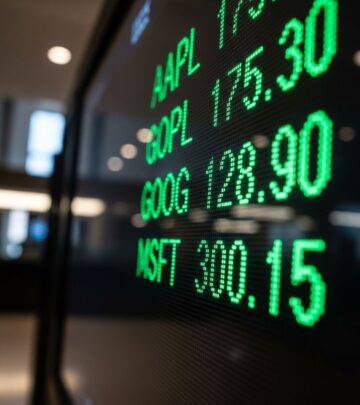
A ticker symbol, also known as a stock symbol or stock ticker, is a unique abbreviation used to identify publicly traded shares of a particular company or security on a stock exchange. These symbols typically consist of letters, numbers, or a combination of both, and serve as a shorthand for investors to refer to, purchase, and research securities. When you want to buy or sell stock in a company, you use its ticker symbol to execute the trade quickly and accurately.
Ticker symbols are essential components of modern financial markets, allowing traders and investors to communicate about specific securities without having to reference lengthy company names. Each symbol is exclusive to one company on a particular exchange, ensuring there is no confusion between different securities.
The History and Origin of Ticker Symbols
The history of ticker symbols dates back to 1867, following the invention of the ticker tape machine by Edward Calahan. This machine revolutionized financial communication by allowing stock prices and trading information to be transmitted rapidly across distances. The first ticker symbol was used to identify shares of the Union Pacific Railroad Company.
The term “ticker” itself derives from the distinctive noise made by these early ticker tape machines as they printed stock information. As stock exchanges became more active and the volume of trades increased, the need for a faster and more efficient way to identify securities became apparent. Ticker symbols solved this problem by condensing company names into short, memorable codes that could be transmitted quickly.
In the United States, modern letter-only ticker symbols were developed by Standard & Poor’s (S&P) to bring a national standard to investing. Previously, a single company could have many different ticker symbols as they varied between the dozens of individual stock markets across the country. This standardization was crucial for the development of a more cohesive national securities market.
How Ticker Symbols Are Structured
The structure and length of ticker symbols vary depending on the stock exchange where a company is listed. Understanding these conventions helps investors quickly identify which exchange a stock trades on and what the symbol represents.
Length and Composition
In the United States, ticker symbols are typically between 1 and 5 letters in length. The specific length often depends on the exchange. Stocks listed on the New York Stock Exchange (NYSE) typically have 1 to 3 letters, while NASDAQ-listed companies frequently have 4 letters. Some well-known examples include Apple Inc. (AAPL) on NASDAQ, Ford Motor Company (F) on the NYSE, and Key Bank (KEY).
Symbols were originally kept as short as possible to reduce the number of characters that had to be printed on ticker tape machines and to make it easy for traders and investors to recognize them quickly. While the original practical constraints no longer apply in modern digital markets, the tradition of keeping symbols concise remains.
Symbol Selection and Representation
When a company decides to go public, it selects the exchange where it wants to list and then chooses a unique ticker symbol to differentiate itself from other companies on that exchange. In most cases, companies attempt to select a symbol that represents or relates to their company name. For example, General Electric uses “GE,” which directly corresponds to its initials.
However, it’s important to note that not all ticker symbols directly correspond to company names. For instance, the ticker symbol “HP” does not belong to Hewlett-Packard (which uses “HPE”). Instead, “HP” is the symbol for Helmerich & Payne, Inc., an oil field drilling company. This highlights why investors must verify they are trading the correct security rather than assuming a symbol based on company name abbreviations.
Ticker Extensions and Special Codes
Beyond the root ticker symbol, exchanges often append additional letters called extensions that encode important information about the security. These extensions communicate critical details to traders about the status, class, and special circumstances of the stock.
Share Class Extensions
Many companies issue different classes of shares with varying voting rights and privileges. Ticker extensions identify these different share classes:
- A or B: Class A or Class B shares, which have different voting rights and priorities
- J: Voting shares with special characteristics
- K: Non-voting shares
Preferred Stock Extensions
Preferred stocks, which have priority over common stock in receiving dividends and assets during liquidation, use specific extensions:
- P: First preferred shares
- O: Second preferred shares
- N: Third preferred shares
- M: Fourth preferred shares
Special Status Indicators
The following extensions indicate special circumstances or status of the security:
- Q: The company has filed for bankruptcy
- D: New issue or reverse split has occurred
- E: Delinquent SEC filings
- Z: Miscellaneous situations requiring special attention
- W: When issued (pre-release trading)
- X: Mutual fund
Other Notable Extensions
Additional extensions provide context about bonds, warrants, and other securities:
- G, H, I: Convertible bonds (first, second, and third, respectively)
- R: Subscription receipts or rights
- T: With warrants or rights attached
- WT: Warrants
- U, V, UN: U.S. funds and units
Ticker Symbols Across Different Stock Exchanges
The allocation of symbols and formatting conventions is specific to each stock exchange. While U.S. stock exchanges follow relatively similar standards through the Intermarket Symbols Reservation Authority’s (ISRA) National Market System Plan (NMS Plan), international exchanges have their own unique requirements and systems.
United States Stock Exchanges
In July 2007, the Securities and Exchange Commission (SEC) approved a rule change that allowed companies moving from the New York Stock Exchange to the NASDAQ to retain their three-letter symbols. DirecTV was one of the first companies to take advantage of this rule. Previously, a glance at a U.S. stock symbol and its appended codes would allow investors to determine precisely where a stock traded.
This rule change was significant because previously, the number of letters in a ticker symbol could indicate which exchange a stock traded on. When the rule was first implemented, it did not apply to companies with one or two-letter symbols, but subsequently, any stock became able to move between the NYSE and NASDAQ without changing its symbol. Companies like CA Technologies demonstrated this flexibility when it moved from the NYSE to the NASDAQ in April 2008 while retaining its two-letter symbol.
International Markets
The International Securities Identification Number (ISIN) serves as a global identifier for securities, but it does not replace the ticker symbol. A security may have the same ISIN across multiple international exchanges but different ticker symbols on each. For example, Mercedes-Benz Group stock trades on twenty-two different stock exchanges worldwide and is priced in five different foreign currencies, yet it maintains the same ISIN (DE0007100000) while having different ticker symbols on each exchange. This demonstrates why both the ISIN and exchange-specific ticker symbol are necessary for precise identification.
Over-the-Counter and Pink Sheet Trading
Securities traded over-the-counter (OTC) outside of formal exchanges also use letter codes to identify products, though these don’t follow the same standardized guidelines as exchange-listed securities. Pink Sheet securities, indicated by the “PK” extension, represent companies that may be smaller, newer, or less frequently traded. The letter “Y” suffix sometimes appears on the over-the-counter market to indicate an American Depositary Receipt (ADR).
Why Ticker Symbols Matter Today
While ticker symbols originated out of practical necessity during the era of ticker tape machines, they remain indispensable tools in modern investing for several reasons. First, every ticker symbol is unique to one company, eliminating confusion, especially for companies with similar names. Second, ticker symbols are faster to type than full company names, which accelerates trade execution and research. Finally, they serve as universal references that all market participants understand immediately.
In the modern age of digital exchanges, ticker symbols function more as a relic of tradition than a technical necessity, yet they have become so ingrained in financial culture and practice that they remain essential. Market data providers, brokerage platforms, financial news outlets, and stock tickers all depend on these symbols to communicate clearly and efficiently.
Frequently Asked Questions
Q: How do I find a company’s ticker symbol?
A: You can find a company’s ticker symbol on financial websites like Yahoo Finance, Google Finance, or your brokerage platform. Simply search for the company name, and the ticker symbol will appear in the results.
Q: Can a ticker symbol change?
A: While a ticker symbol typically remains constant, companies may change their symbol in certain circumstances, such as after a merger, acquisition, or significant restructuring. However, this is relatively uncommon.
Q: What does the letter “Q” at the end of a ticker symbol mean?
A: The letter “Q” indicates that the company has filed for bankruptcy protection. This signals to investors that the company’s financial situation is unstable.
Q: Why are some ticker symbols 1 letter while others have 4 or 5?
A: The length typically depends on the stock exchange. NYSE-listed stocks usually have 1-3 letters, while NASDAQ stocks often have 4 letters. Companies choose their symbols based on availability and preferences within exchange guidelines.
Q: Is a ticker symbol the same as a company’s legal name?
A: No. A ticker symbol is a unique trading identifier and does not have to match the company’s legal name. It’s simply a shorthand code used for trading and identification purposes.
Q: Can two companies have the same ticker symbol?
A: No. Each ticker symbol is exclusive to one company on a particular exchange. However, the same company may have different ticker symbols on different international exchanges.
References
- Ticker symbol — Wikimedia Foundation. 2025. https://en.wikipedia.org/wiki/Ticker_symbol
- What is a Stock Symbol? — IG Group. 2025. https://www.ig.com/uk/glossary-trading-terms/stock-symbol-definition
- What is a Ticker Symbol? — Robinhood Financial LLC. 2024. https://robinhood.com/us/en/learn/articles/79dhnyd0hycqflR5un29us/what-is-a-ticker-symbol/
- Ticker — U.S. Securities and Exchange Commission. 2024. https://www.investor.gov/introduction-investing/investing-basics/glossary/ticker
- What is a Ticker Symbol — StockTrak. 2025. https://www.stocktrak.com/what-is-a-ticker-symbol/
Similar Articles








Read full bio of Sneha Tete