What Is a Skill Set: Definition and Examples
Master your professional abilities: Understanding skill sets and advancing your career.

A skill set is a fundamental concept in career development and professional growth. Whether you’re just starting your career, looking to make a change, or seeking to advance in your current role, understanding your skill set is essential for positioning yourself effectively in today’s competitive job market. Your skill set represents the collection of abilities, knowledge, and expertise you’ve developed over time through education, practice, and real-world experience.
Understanding Skill Sets: Definition and Importance
A skill set refers to the combination of abilities, knowledge, and expertise that you’ve built throughout your personal and professional journey. It’s more than just technical know-how; it encompasses both measurable competencies and interpersonal abilities that enable you to perform specific tasks and succeed in various roles. Your skill set is essentially the foundation of your professional potential, representing what you can contribute to an organization or achieve in your career.
Understanding your skill set allows you to leverage your strengths, identify areas for growth, and make informed career decisions. When you have a clear grasp of your abilities, you can strategically position yourself for opportunities that align with your competencies. This self-awareness is crucial for personal development and professional advancement. In a competitive job market, emphasizing a well-rounded skill set can significantly set you apart from other candidates, making it essential to tailor your resume and professional narrative to highlight your most relevant skills.
The Core Categories of Skills
Skills are typically organized into several broad categories, each serving different purposes in your professional life. Understanding these categories helps you identify where your strengths lie and where you might need development.
Hard Skills: Technical Proficiency
Hard skills are measurable and teachable technical abilities that are typically specific to certain industries or professions. These are the skills that employers often test through certifications, practical assessments, or technical interviews. Hard skills are usually explicitly listed in job descriptions and are fundamental for performing core job functions.
Essential hard skills for today’s workforce include:
- Data analysis and interpretation
- Artificial intelligence and machine learning proficiency
- Digital marketing and social media management
- Project management and agile methodologies
- Cloud computing and infrastructure management
- Programming languages such as Python, Java, or JavaScript
- Financial modeling and accounting software expertise
- Cybersecurity and data protection knowledge
Developing hard skills occurs through formal education, specialized training programs, certifications, or hands-on practice. For example, becoming proficient in Python coding requires structured learning combined with practical application. These technical competencies are often the baseline requirements for specific positions and can significantly impact your earning potential and career trajectory.
Soft Skills: Interpersonal Abilities
Soft skills are the interpersonal and personal management abilities that define how you interact with others and manage yourself in professional settings. Unlike hard skills, soft skills are more difficult to measure but are equally valuable to employers. These abilities are transferable across industries and essential for success in virtually any role.
Key soft skills include:
- Communication and active listening
- Teamwork and collaboration
- Leadership and influence
- Problem-solving and critical thinking
- Time management and organization
- Emotional intelligence and empathy
- Adaptability and flexibility
- Conflict resolution and negotiation
A strong foundation of soft skills is necessary to succeed in most roles, regardless of industry or position level. Employers increasingly recognize that technical knowledge alone isn’t sufficient; employees must also communicate effectively, collaborate with diverse teams, and adapt to changing circumstances. These skills are often developed through life experience, professional relationships, and intentional personal development.
Analytical Skills: Data-Driven Decision Making
Analytical skills represent your capacity to assess complex information, identify patterns, and make informed decisions based on data and evidence. These skills bridge the gap between hard and soft skills, requiring both technical knowledge and critical thinking abilities.
Analytical competencies include:
- Market research and analysis
- Data interpretation and visualization
- Financial forecasting and budgeting
- Logical reasoning and problem decomposition
- Statistical analysis and modeling
Creative Skills: Innovation and Design
Creative skills encompass your ability to think innovatively, design solutions, and generate original ideas. These skills are increasingly valued across all industries as organizations seek employees who can develop new products, improve processes, and contribute fresh perspectives.
Creative abilities include:
- Graphic design and visual communication
- Content creation and copywriting
- Product innovation and development
- Brainstorming and ideation
- Strategic planning and visioning
Management Skills: Leading and Planning
Management skills support your ability to lead teams, plan projects, and execute strategic goals. These competencies are essential for anyone in a leadership position or aspiring to advance into management roles.
Key management competencies include:
- Project management and execution
- Team leadership and motivation
- Budget oversight and financial management
- Strategic planning and implementation
- Performance management and feedback
Organizational Skills: Productivity and Efficiency
Organizational skills involve your ability to manage time effectively, prioritize tasks, and maintain productivity in complex environments. These foundational skills enhance your efficiency and professional reputation.
Organizational competencies include:
- Calendar and schedule management
- Task delegation and prioritization
- Workflow optimization and process improvement
- Documentation and record management
- Meeting coordination and logistics
Transferable Skills Across Industries
Transferable skills are abilities that remain valuable regardless of the industry or specific job role you pursue. These skills enhance your professional flexibility and marketability, allowing you to pivot between careers or adapt to changing job requirements.
Examples of highly transferable skills include:
- Microsoft Office Suite proficiency (Word, Excel, PowerPoint)
- Communication and presentation abilities
- Problem-solving and analytical thinking
- Customer service and relationship management
- Project coordination and planning
- Training and mentoring capabilities
The value of transferable skills becomes evident when changing jobs or industries. For instance, if you’re highly proficient with Microsoft Excel, that skill will be valuable in virtually any professional role requiring data analysis or financial management. Similarly, strong communication abilities serve you well whether you’re in marketing, management, sales, or technical fields.
Skill Sets by Career Path
Different roles and industries require distinct combinations of skills. Understanding the specific skill sets valued in your target career path helps you strategically develop your abilities and position yourself competitively.
Administrative and Support Roles
Administrative professionals require a unique blend of technical proficiency and interpersonal abilities to manage office operations effectively.
Essential skills for administrative careers include:
- Calendar and schedule management
- Data entry and database management
- Microsoft Office Suite expertise
- Email correspondence and business communication
- Attention to detail and accuracy
- Problem-solving and resourcefulness
- Time management and multitasking
- Customer service orientation
- Task prioritization and delegation
- Document preparation and formatting
Customer Service and Support Roles
Customer-facing roles demand strong interpersonal skills combined with product knowledge and technical proficiency with customer management systems.
Key skills for customer service careers include:
- Active listening and empathy
- Verbal and written communication
- Problem-solving and conflict resolution
- Patience and emotional regulation
- Product and service knowledge
- Multitasking and time management
- CRM software proficiency (Salesforce, Zendesk, etc.)
- Adaptability to customer needs
- Team collaboration and support
- Professional demeanor and presence
Product Management Roles
Product managers require a sophisticated skill set combining strategic thinking, technical understanding, and cross-functional leadership abilities.
Essential skills for product management careers include:
- Product roadmap development and planning
- Market research and competitive analysis
- User feedback analysis and interpretation
- Cross-functional team leadership
- Agile and scrum methodologies
- Strategic thinking and vision setting
- UX/UI understanding and design collaboration
- Data-driven decision making
- Prototyping and wireframing basics
- Stakeholder communication and management
- Risk assessment and mitigation
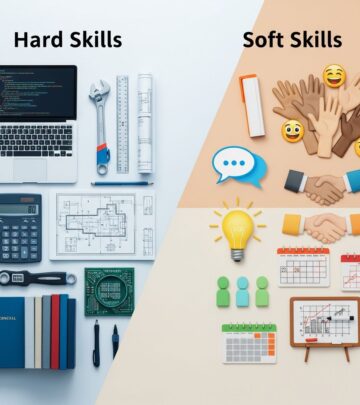
The Distinction Between Hard and Soft Skills
| Aspect | Hard Skills | Soft Skills |
|---|---|---|
| Definition | Technical, measurable competencies | Interpersonal and personal abilities |
| Measurement | Easily quantifiable through tests or certifications | Difficult to measure objectively |
| Development | Through formal education and training | Through experience and practice |
| Job Specificity | Often role or industry specific | Transferable across industries |
| Examples | Programming, data analysis, accounting | Communication, leadership, teamwork |
| Importance | Essential for performing core job functions | Essential for professional success overall |
Why Skill Sets Matter in Today’s Job Market
Your skill set is fundamentally important for several reasons in today’s competitive professional landscape. First, it directly impacts your employability and career prospects. Employers seek candidates who can demonstrate the specific competencies required for their positions, making a well-developed skill set your competitive advantage.
Second, your skill set influences your earning potential. Specialized hard skills and advanced competencies often command higher salaries and more desirable positions. Continuous skill development throughout your career can lead to promotions, leadership opportunities, and increased financial rewards.
Third, understanding your skill set enhances your confidence and professional identity. When you recognize your capabilities and can articulate them clearly, you approach job searches and interviews with greater assurance. This self-knowledge also helps you set realistic career goals and development plans.
Finally, in an era of rapid technological change and industry disruption, a comprehensive and adaptable skill set makes you resilient. Soft skills like adaptability and learning agility, combined with a foundation of technical competencies, enable you to navigate career transitions and remain relevant throughout your professional life.
How to Assess and Develop Your Skill Set
Developing a strong skill set requires intentional effort and strategic planning. Start by conducting a thorough self-assessment to identify your current skills, strengths, and development areas. Review job descriptions for positions you aspire to hold, identifying the skills you already possess and those you need to acquire.
Next, prioritize skill development based on your career goals and market demand. Focus on building skills that align with your interests while also being valuable in your industry. Consider pursuing relevant certifications, taking online courses, seeking mentorship, or gaining hands-on experience in areas where you want to develop.
Finally, regularly update your professional materials—resume, LinkedIn profile, and cover letters—to reflect your evolving skill set. Use specific examples and metrics to demonstrate how your skills have created value in previous roles, making your qualifications concrete and compelling to potential employers.
Frequently Asked Questions About Skill Sets
Q: What is the difference between a skill and a skill set?
A: A single skill is a specific ability, such as coding in Python. A skill set, however, is a comprehensive collection of related abilities. For example, software development as a skill set includes proficiency in multiple programming languages, understanding of version control systems, and soft skills such as communication and collaboration.
Q: Can soft skills be taught and developed?
A: Yes, soft skills can definitely be developed and improved through intentional practice, professional experience, and formal training. While some people may have natural inclinations toward certain soft skills like communication or leadership, everyone can strengthen these abilities through awareness, feedback, and consistent effort.
Q: How should I highlight my skill set on a resume?
A: Tailor your skill set presentation to match the specific job description. Use relevant keywords from the job posting, organize skills into categories such as technical skills and soft skills, and provide concrete examples of how you’ve applied these skills to achieve results. Prioritize the most relevant and impressive skills for the position you’re pursuing.
Q: Which skills are most in demand for 2025?
A: Currently in-demand skills include artificial intelligence and machine learning proficiency, data analysis, cloud computing, digital marketing, cybersecurity, critical thinking, leadership, and adaptability. However, demand varies by industry, so research opportunities in your specific field of interest.
Q: How can I improve my skill set if I’m already employed?
A: Employed professionals can develop their skill sets through online courses, professional certifications, internal training programs, mentorship relationships, taking on new projects or roles, attending industry conferences, and seeking stretch assignments that challenge them to develop new capabilities.
Q: Are certifications necessary to develop a strong skill set?
A: While certifications can validate expertise and enhance credibility, particularly for hard skills, they’re not always necessary. Practical experience, demonstrated results, and portfolio work can be equally valuable. The necessity of certifications depends on your industry and specific career goals.
References
- Skill Set: Definition and How to Showcase Yours in Your Job Search — The Muse. https://www.themuse.com/advice/skill-set
- What is Skill Set — ProHance. https://www.prohance.net/glossary/what-is-skill-set.php
- What is a Skills Set? — Klara HR. https://www.klarahr.com/blog/what-is-a-skills-set/
- What Is a Skill Set? 14 Professional Skills to Help Your Career — Grammarly. https://www.grammarly.com/blog/career-advice/skill-set/
- A Comprehensive List of Job Skills Employers Value Most — Mount Vernon Nazarene University. https://mvnu.edu/blogs/top-10-job-skills-employers-value/
Similar Articles








Read full bio of medha deb