What Is a Secured Loan & How Does It Work?
Discover secured loans: collateral-backed financing with lower rates but higher risks for borrowers seeking accessible credit options.

A
secured loan
is a form of financing where the borrower pledges a valuable asset as collateral to guarantee repayment, reducing lender risk and often enabling better terms for the borrower.Secured loans provide access to funds for major purchases or needs, backed by items like real estate, vehicles, or savings, making them viable even for those with limited credit history.
What Are Secured Loans and How Do They Work?
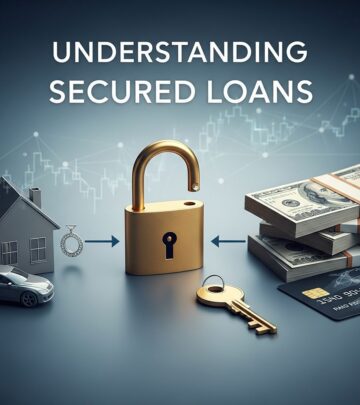
Secured loans stand out in the lending landscape by requiring borrowers to offer collateral—physical assets like homes, cars, or art, or financial ones like cash deposits or investments—to secure the loan. This collateral acts as insurance for the lender; if the borrower defaults, the lender can seize and liquidate the asset to recoup losses, thereby minimizing financial exposure.
The process begins with the borrower selecting an appropriate asset that meets the lender’s criteria. Upon approval, the lender places a
lien
—a legal claim—on the collateral. As long as payments are made on time, the borrower retains full use and ownership rights. Successful repayment lifts the lien, restoring unencumbered title to the asset. Default triggers repossession, foreclosure, or other recovery actions, emphasizing the high stakes for borrowers.Because of this structure, secured loans typically feature
lower interest rates
than unsecured alternatives, as lenders face less risk. They also boast higher borrowing limits, often reaching hundreds of thousands of dollars, and more lenient qualification standards, benefiting those with poor credit scores or thin credit files.What Is a Secured Loan?
At its core, a secured loan ties credit access to an asset’s value, differentiating it from unsecured loans that rely solely on the borrower’s promise to repay. Common collateral includes:
- Homes and real estate: Primary for mortgages and home equity products.
- Vehicles: Standard for auto loans.
- Investments or cash savings: Used in secured personal loans or cards.
- Valuables like art or equipment: Less common but accepted by some lenders.
This backing allows lenders to offer favorable terms while providing borrowers opportunities unavailable through unsecured credit. For instance, individuals rebuilding credit after setbacks can leverage assets to qualify where they otherwise might not.
How Does a Secured Loan Work?
Securing a loan involves pledging collateral, granting the lender a lien until full repayment. Repayment typically follows an amortization schedule with fixed or variable payments covering principal and interest.
In default scenarios—missed payments persisting 90+ days—lenders pursue remedies:
- Repossession: For movable assets like cars.
- Foreclosure: For real estate, involving court processes.
- Liquidation: Selling seized collateral at auction or market value.
Proceeds offset the debt; any surplus returns to the borrower, though shortfalls may lead to deficiency judgments. Borrowers must maintain asset insurance and value to protect lender interests during the term.
Types of Secured Loans
Secured loans span consumer, business, and specialized needs. Key types include:
- Mortgages: Finance home purchases, secured by the property itself. Fixed-rate or adjustable, terms up to 30 years.
- Auto loans: Fund vehicle acquisitions, collateralized by the car. Terms 36-84 months, rates tied to credit and vehicle value.
- Home equity loans: Lump-sum borrowing against home equity (market value minus mortgage balance), repaid in fixed installments.
- Home equity lines of credit (HELOCs): Revolving credit like a card, draw as needed up to limit, variable rates based on prime + margin.
- Secured personal loans: Flexible use for debt consolidation, purchases; collateral varies (savings, CDs, vehicles).
- Secured credit cards: Deposit equals limit; builds credit via responsible use, reported to bureaus.
- Business loans: Secured by company assets for operations or expansion.
Each type tailors collateral to purpose, with lenders appraising assets to determine loan-to-value (LTV) ratios, typically 80-95%.
Pros and Cons of Secured Loans
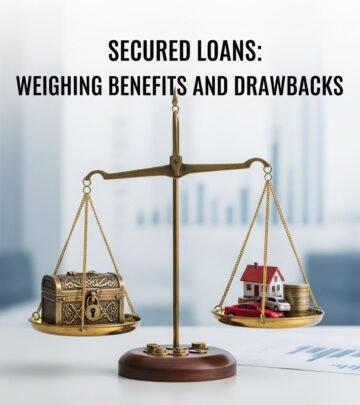
Secured loans balance accessibility with accountability. Weigh these factors carefully.
Pros
- More flexible credit requirements: Collateral mitigates risk, easing approval for subprime borrowers (scores below 670).
- Lower interest rates: Often 1-5% below unsecured, influenced by credit but anchored by asset security.
- Higher borrowing limits: Enables large sums, e.g., $500K+ mortgages vs. $50K unsecured personal loans.
- Longer repayment terms: Spreads payments, lowering monthly burden (e.g., 30-year mortgages).
Cons
- High borrower risk: Default risks asset loss—home foreclosure or car repossession.
- Potential credit damage: Late payments reported to Equifax, Experian, TransUnion, dropping scores 100+ points.
- Asset maintenance costs: Insurance, taxes, upkeep required; neglect voids terms.
- Lien encumbrances: Limits selling/refinancing collateral until repaid.
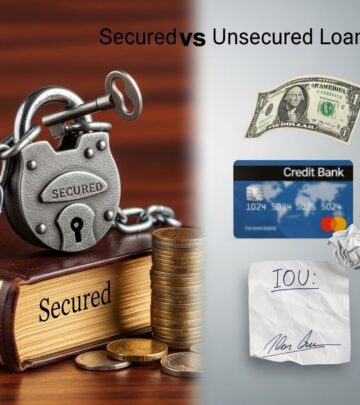
| Aspect | Secured Loans | Unsecured Loans |
|---|---|---|
| Collateral | Required | None |
| Interest Rates | Lower (e.g., 4-8% APR) | Higher (e.g., 10-36% APR) |
| Approval Odds (Poor Credit) | Higher | Lower |
| Borrowing Max | $100K+ | $50K max |
| Default Consequence | Asset Loss | Collections/Lawsuit |
This comparison highlights secured loans’ trade-offs: affordability vs. collateral jeopardy.
Is a Secured Loan Right for You?
Ideal for those needing substantial funds with imperfect credit, confident in repayment, and willing to risk assets. Suitable scenarios:
- Buying a home/car where asset matches purpose.
- Debt consolidation to lower rates.
- Building credit via secured cards.
Avoid if unstable income, alternative unsecured options exist, or assets are irreplaceable. Assess via free credit reports from AnnualCreditReport.com, calculate debt-to-income (DTI under 36% ideal), and compare lender offers.
Steps to apply:
- Check credit: Scores via Equifax, fix errors.
- Evaluate assets: Appraisals confirm value.
- Shop rates: Banks, credit unions, online lenders.
- Read terms: Fees, prepayment penalties.
- Budget repayments: Ensure affordability.
Frequently Asked Questions (FAQs)
What is the difference between secured and unsecured loans?
Secured loans require collateral, offering lower rates/higher limits; unsecured rely on creditworthiness, with higher rates and stricter approval.
Can I get a secured loan with bad credit?
Yes, collateral offsets poor credit, though rates may be higher and LTV limited.
What happens if I default on a secured loan?
Lender seizes/sells collateral via repossession or foreclosure to recover funds.
Are secured credit cards considered secured loans?
Yes, deposit serves as collateral, aiding credit building if reported to bureaus.
How do home equity loans differ from HELOCs?
Loans provide lump sums with fixed payments; HELOCs offer revolving draws with variable rates.
References
- What is a Secured Loan & How Does it Work? — Equifax. 2023. https://www.equifax.com/personal/education/personal-finance/articles/-/learn/what-is-a-secured-loan/
- How to Get a Personal Loan & How They Work — Equifax. 2023. https://www.equifax.com/personal/education/loans/articles/-/learn/how-to-get-a-personal-loan-how-they-work/
- What are Installment Loans? — Equifax. 2023. https://www.equifax.com/personal/education/loans/articles/-/learn/installment-loans/
- What Is a Secured Credit Card & Does It Build Credit? — Equifax. 2023. https://www.equifax.com/personal/education/credit-cards/articles/-/learn/what-is-a-secured-credit-card-do-they-build-credit/
- Establishing Credit When You Don’t Have Credit — Equifax. 2023. https://www.equifax.com/personal/education/credit-cards/articles/-/learn/establishing-credit-when-you-don-t-have-credit/
Similar Articles








Read full bio of Sneha Tete