What Is a Second Mortgage and How Does It Work?
Understand second mortgages, how they use your home equity, and when they can be a smart borrowing option.
A second mortgage lets you borrow against the equity in your home while you still have a first mortgage in place. It can give you access to a large sum of cash at interest rates that are often lower than credit cards or unsecured personal loans, but it also puts your home at additional risk if you cannot repay the loan.
This guide explains what a second mortgage is, how it works, the main types (home equity loans and HELOCs), when it might be a good idea, and how it compares to refinancing.
What Is a Second Mortgage?
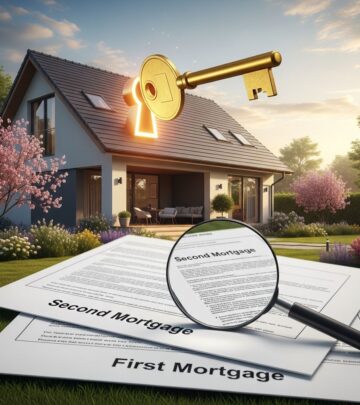
A second mortgage is an additional home-secured loan taken out while your original, or first, mortgage is still being repaid. It is called “second” because it sits in a second lien position behind your existing mortgage. In a foreclosure, the first mortgage lender is paid back before the second mortgage lender.
Because the loan is secured by your property, the lender records a lien against your home. If you default, both the first and second mortgage lenders may have the right to foreclose and take the property to satisfy the debt.
How your home equity fits in
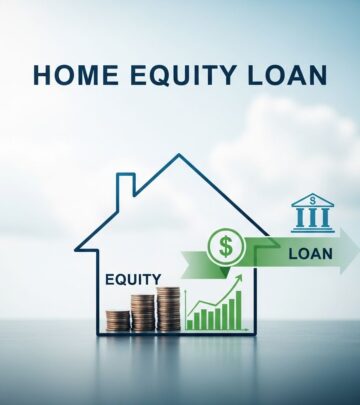
Second mortgages are based on home equity — the portion of your home you own outright. Equity is typically calculated as:
Home's current market value − outstanding mortgage balance(s) = equity
Many lenders will allow you to borrow up to around 80%–85% of your home’s value across all mortgages combined, including the second mortgage.
How Does a Second Mortgage Work?
In practice, a second mortgage functions similarly to other mortgage loans. You apply with a lender, your income and credit are reviewed, the property value is verified, and a lien is recorded once the loan closes.
General process
- Application: You submit a loan application and authorize a credit check.
- Documentation: Lenders review your income, debts, assets, and credit history to assess your ability to repay.
- Appraisal: A home appraisal or automated valuation is usually required to confirm your home’s current market value.
- Underwriting: The lender evaluates your equity, debt-to-income ratio (DTI), and credit score to determine eligibility and loan terms.
- Closing: You sign loan documents, pay any closing costs, and the lender records the second lien on your property.
- Funding: You receive a one-time lump sum (home equity loan) or revolving line of credit (HELOC), depending on the product you choose.
Typical qualification criteria
While exact standards vary by lender, common requirements include:
- Minimum equity: Often at least 15%–20% equity remaining in the home after the loan.
- Maximum combined loan-to-value (CLTV): Frequently capped around 80%–85% of the home’s market value across all mortgages.
- Credit score: Many lenders look for at least a “good” credit score, often in the mid-600s or higher.
- Stable income: Documented income sufficient to support payments on the first mortgage, second mortgage, and other debts.
- Debt-to-income ratio: Typically must fall below lender limits (commonly under 43%–45%, though this varies).
How much can you borrow?
The borrowing limit usually depends on your home’s value and existing mortgage balances. A common formula for maximum second mortgage size is:
(Home value × max CLTV%) − current mortgage balances = potential second mortgage amount
For example, if your home is worth $300,000 and the lender allows up to 85% CLTV:
- 85% of $300,000 = $255,000 total allowed across all mortgages
- If your first mortgage balance is $200,000, the maximum second mortgage might be about $55,000
Types of Second Mortgages
There are two main forms of second mortgages: home equity loans and home equity lines of credit (HELOCs).
| Feature | Home Equity Loan | HELOC (Home Equity Line of Credit) |
|---|---|---|
| Type of credit | Installment loan | Revolving line of credit |
| How funds are received | Single lump-sum disbursement | Draw as needed up to your limit |
| Interest rate | Usually fixed | Usually variable, often tied to a benchmark rate |
| Payment type | Fixed monthly payments over a set term | Interest-only or interest + principal during draw, then full amortizing payments in repayment period |
| Best for | Known, one-time expenses (e.g., major renovation) | Ongoing or unpredictable expenses (e.g., phased projects, emergency access) |
Home equity loan (fixed second mortgage)
A home equity loan is a classic second mortgage. You borrow a set amount secured by your equity and receive the funds in a single lump sum.
- Fixed interest rate: The rate is usually fixed, providing predictable monthly payments.
- Set term: Common repayment terms range from about 5 to 30 years, depending on lender and loan size.
- Use of funds: Typically can be used for almost any purpose, such as home improvements, debt consolidation, tuition, or major purchases.
Home equity line of credit (HELOC)
A HELOC is a revolving line of credit secured by your home equity, similar in concept to a credit card but with your house as collateral.
- Credit limit: You are approved for a maximum line amount based on your equity and qualifications.
- Draw period: During the initial draw period (often 5–10 years), you can withdraw, repay, and re-borrow up to your limit.
- Variable rate: Most HELOCs have variable interest rates tied to an index (such as the prime rate), which means your payment can change over time.
- Repayment period: After the draw period, the HELOC typically enters a repayment phase, during which you can no longer draw and must pay back the outstanding balance over a defined term.
Second Mortgage vs. Refinancing
Borrowers often compare taking a second mortgage with refinancing their existing mortgage, especially a cash-out refinance. These options have different structures and trade-offs.
Key differences
| Feature | Second Mortgage | Refinance (Cash-Out) |
|---|---|---|
| Number of loans after closing | Two home loans (first + second mortgage) | One new mortgage replaces the old one |
| Effect on existing rate | Keeps your current first mortgage rate unchanged | Replaces your old rate with the new market rate |
| When it may be better | If your first mortgage has a low rate you want to keep, and you only need extra funds | If current rates are lower than your existing rate or you want to change term/loan type |
| Payments | Separate second payment in addition to your first mortgage payment | Single consolidated payment on the new loan |
| Closing costs | Closing costs on the second mortgage only (often 2%–5% of the loan amount) | Closing costs on the full new mortgage balance |
When a second mortgage can make sense
Second mortgages can be appealing if:
- You have a significantly lower rate on your first mortgage than current market rates and want to keep it.
- You need access to equity for a specific project or goal, not to restructure your entire mortgage.
- You prefer not to reset the term of your original mortgage.
When refinancing may be better
A refinance, including a cash-out refinance, may be more suitable if:
- Current interest rates are lower than the rate on your existing first mortgage.
- You want to change the loan term, such as moving from a 30-year to a 15-year term.
- You want one single payment instead of managing two separate mortgages.
Pros and Cons of Second Mortgages
Like any major borrowing decision, second mortgages come with both advantages and drawbacks. Carefully weigh these before moving forward.
Benefits of taking a second mortgage
- Access to large amounts of cash: If you have substantial equity, a second mortgage can unlock tens of thousands of dollars—or more—for major expenses.
- Lower rates than unsecured loans: Because the loan is secured by your home, interest rates are often lower than those on credit cards or unsecured personal loans.
- Flexible use of funds: You can typically use the money for home improvements, debt consolidation, education, medical bills, or other significant needs.
- Option to keep your first mortgage: You can tap your equity without altering the low rate or favorable terms on your existing mortgage.
- Predictability (for home equity loans): Fixed rates and terms offer stable, predictable payments that can simplify budgeting.
Risks and drawbacks
- Risk of foreclosure: Your home serves as collateral. If you cannot make payments, you could lose your property to foreclosure.
- Additional monthly payment: You add a second housing payment on top of your existing mortgage, which may strain your budget.
- Closing costs and fees: Second mortgages often carry closing costs similar in type (though usually smaller in total dollars) to primary mortgages, such as appraisal, title, and origination fees.
- Variable rate risk (for HELOCs): If interest rates rise, your payments can increase, sometimes significantly.
- Potential to become “house rich, cash poor”: Over-borrowing against your home’s value can leave you with little equity cushion if property values decline.
Costs and Fees to Expect
Just like a first mortgage, second mortgages can involve several types of closing costs. While exact amounts vary, common expenses include:
- Loan origination or underwriting fees
- Appraisal or valuation fees
- Credit report and processing fees
- Title search and recording fees
- Attorney fees in some states
Many second mortgage products have total closing costs in the range of about 2%–5% of the loan amount, similar to typical primary mortgage closing cost percentages, although exact figures depend on lender and loan size.
When Is a Second Mortgage a Good Idea?
Whether a second mortgage is appropriate depends on your goals, current mortgage terms, and overall financial health.
Situations where a second mortgage may be helpful
- Home improvements that build value: Using a second mortgage to finance renovations or energy-efficiency upgrades may increase your home’s value and quality of life.
- High-interest debt consolidation: Replacing credit card or personal loan debt with a lower-rate, home-secured loan can reduce interest costs if you avoid re-accumulating unsecured debt.
- Major life expenses: Funding education, medical expenses, or other large, necessary costs may be more affordable through a secured second mortgage than through other forms of borrowing.
- Preserving a low first-mortgage rate: If your existing mortgage rate is far below current market rates, a second mortgage allows you to keep that rate while still accessing equity.
Red flags to watch for
- You are struggling to keep up with current bills and obligations.
- You plan to move or sell the home in the near future, which might not give you enough time to benefit from the loan after paying closing costs.
- You are unsure about your income stability, such as being in a volatile industry or facing imminent job changes.
- You want to use the funds for nonessential spending or rapidly depreciating items.
Frequently Asked Questions (FAQs)
Q: Is a second mortgage the same as a home equity loan?
A: A home equity loan is one of the most common types of second mortgage. The term “second mortgage” is broader and also includes home equity lines of credit (HELOCs), as both are secured by your home and sit behind the first mortgage lien.
Q: How hard is it to qualify for a second mortgage?
A: Lenders typically require you to have sufficient equity (often leaving at least 15%–20% in the home), a solid credit score, and a manageable debt-to-income ratio, along with verified income and stable employment.
Q: Are second mortgage interest rates higher than first mortgage rates?
A: Yes, second mortgage rates are usually slightly higher than first mortgage rates because the lender is in a junior lien position and faces more risk. However, they are often lower than unsecured borrowing options like credit cards.
Q: Can I deduct interest paid on a second mortgage?
A: Under current U.S. tax law, mortgage interest on a second mortgage may be deductible if the loan is used to buy, build, or substantially improve the home that secures the loan and if you itemize deductions. Because tax rules are complex and subject to change, consult a qualified tax professional or refer to IRS guidance.
Q: What happens to my second mortgage if I sell my home?
A: When you sell your home, the proceeds must first pay off the first mortgage, then the second mortgage. Any remaining funds go to you as the homeowner. If the sale price does not fully cover both loans and transaction costs, you may not have enough equity to satisfy the second mortgage without bringing additional cash to closing.
References
- What is a second mortgage and how does it work? — Bankrate. 2024-02-15. https://www.bankrate.com/home-equity/what-is-a-second-mortgage/
- Second Mortgages: What Are They and How Do They Work? — Pennymac. 2023-10-05. https://www.pennymac.com/blog/second-mortgages-what-are-they-how-they-work
- Understanding the Power of Second Mortgages in Property Value — National Association of Realtors (NAR). 2023-06-20. https://www.nar.realtor/mortgage-financing/second-mortgage
- Second Mortgage: What You Need to Know — Rocket Mortgage. 2024-01-10. https://www.rocketmortgage.com/learn/second-mortgage
- What’s the Difference Between Second Mortgage Types? — Regions Bank. 2023-08-01. https://www.regions.com/insights/personal/article/difference-between-second-mortgage-types
- Publication 936 (Home Mortgage Interest Deduction) — Internal Revenue Service. 2023-01-13. https://www.irs.gov/publications/p936
Similar Articles








Read full bio of Sneha Tete