What is a Retailer: Definition, Types & Role
Complete guide to understanding retailers, their role in commerce, types, and importance in the supply chain.
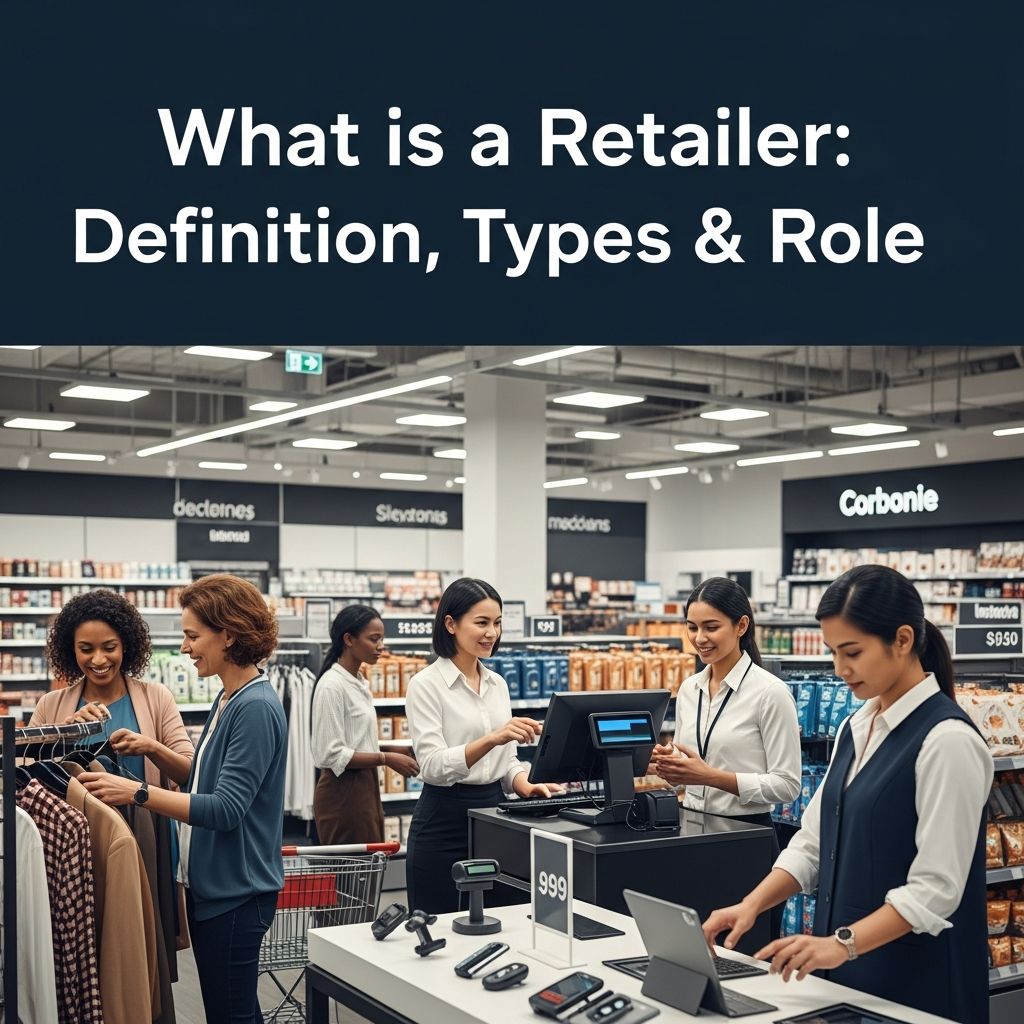
A retailer is a business or individual that purchases goods from wholesalers, manufacturers, or distributors and sells them directly to consumers in small quantities for personal use. Retailers represent the final link in the supply chain, serving as the crucial connection between manufacturers and end consumers. They operate across various platforms including physical brick-and-mortar stores, e-commerce websites, and mobile operations, playing an indispensable role in modern commerce by making products accessible and convenient for everyday consumers.
Understanding the Definition of a Retailer
At its core, a retailer is an intermediary in the distribution channel who purchases merchandise in bulk from suppliers and breaks down these quantities into smaller units for individual consumers. Unlike wholesalers who sell in large volumes to businesses and other retailers, retailers focus on end-user sales. The fundamental distinction lies in the purpose of purchase—retail customers buy products for personal consumption rather than for resale or business purposes.
Retailers operate at the point of sale, directly interacting with consumers and understanding their needs, preferences, and buying behaviors. This direct consumer interaction positions retailers uniquely to gather valuable market intelligence and provide feedback to manufacturers about product performance, quality issues, and emerging consumer demands. This feedback loop helps manufacturers make informed decisions about product modifications and innovations.
Key Characteristics of Retailers
Retailers possess several distinctive characteristics that differentiate them from other members of the supply chain:
Small Quantity Sales
One of the most fundamental characteristics of retailers is their focus on small quantity sales. Retailers purchase products in bulk from wholesalers but divide these quantities into smaller, manageable units that align with individual consumer needs. Without retailers breaking bulk, consumers would face significant inconvenience—they would need to purchase entire cases or pallets of products, which would be impractical and economically inefficient for personal use. This service transforms large wholesale quantities into consumer-friendly portions.
Direct Consumer Interaction
Retailers operate as the direct touchpoint between products and consumers. They understand consumer preferences, seasonal demands, and regional tastes. This proximity to the market enables retailers to provide valuable insights to manufacturers and help shape product development and marketing strategies. Retailers often offer personalized customer service, product recommendations, and after-sale support that wholesale or manufacturing channels cannot provide.
Diverse Product Assortment
Retailers typically maintain a diverse range of products or services tailored to specific consumer needs and preferences. Some retailers specialize in particular product categories, while others offer broad selections across multiple categories. This variety helps consumers access multiple products from a single location, saving time and effort compared to visiting multiple suppliers.
Supply Chain Management
Retailers manage critical supply chain functions including sourcing, inventory management, and distribution. They ensure products are available when consumers need them, maintain appropriate stock levels to meet demand, and implement systems to minimize waste and obsolescence. This management extends to understanding distribution logistics, storage requirements, and delivery mechanisms.
Types of Retailers
Retailers can be classified in multiple ways based on various criteria including location, scale of operations, product specialization, and sales channels. Understanding these classifications helps identify different retail models and their unique operational characteristics.
Classification by Location and Mobility
Retailers are broadly divided into two primary categories based on their physical presence:
Itinerant Retailers
Itinerant retailers, also known as mobile vendors, do not maintain a fixed business location. Instead, they move from location to location, carrying their merchandise to customers. These retailers typically operate with lower investment requirements and fewer resources compared to fixed-location retailers. They focus on bringing products directly to consumers’ doorsteps and often emphasize affordability and convenience.
Common types of itinerant retailers include:
- Street Traders: Sell goods at busy public locations such as temples, bus stands, railway stations, and market areas
- Hawkers and Peddlers: Move through residential neighborhoods offering various consumer goods
- Pushcart and Cart Vendors: Operate mobile selling units in urban and suburban areas
Fixed Shop Retailers
Fixed shop retailers maintain permanent business locations in specific geographical areas. They do not need to search for customers as their fixed location attracts regular clientele. These retailers include:
Small-Scale Retailers: Operate on limited budgets with smaller store footprints and limited product ranges. They typically serve local neighborhoods and focus on everyday products with reasonable variety. Examples include general stores, specialty stores, single-line stores, and street-level shops. These retailers often build strong community relationships and provide personalized service.
Large-Scale Retailers: Operate expansive stores with significant inventory investments and broad product selections. They are typically located in central, high-traffic urban areas and serve large customer bases. Examples include department stores, supermarkets, hypermarkets, shopping malls, and chain stores. These retailers benefit from economies of scale, bulk purchasing power, and established supply chain networks.
Classification by Business Model
Retailers can also be classified based on their specific business approach and operational model:
Independent Retailers
Independent retailers are entrepreneurs who establish and operate their own retail businesses from the ground up. They typically handle multiple roles including purchasing, sales, marketing, and management. Independent retailers offer personalized service and often serve niche markets with specialized products.
Franchise Retailers
Franchise retailers operate under established brand names and business models. They pay fees to franchisors and operate using predetermined systems, pricing strategies, and product selections. Franchise retailers benefit from brand recognition, established customer bases, and operational support from parent companies. Examples include McDonald’s, KFC, and other branded retail chains.
Department Stores
Department stores offer multiple product categories under one roof, including clothing, home goods, electronics, and cosmetics. These large retailers provide comprehensive shopping experiences and cater to diverse consumer needs in single transactions.
Specialty Stores
Specialty retailers focus exclusively on specific product categories such as books, electronics, footwear, or sporting goods. They offer deep product expertise, extensive variety within their category, and specialized customer service for their particular market segment.
Classification by Sales Channel
Brick-and-Mortar Retailers: Traditional physical stores where customers visit in person to browse and purchase products. These retailers provide tangible shopping experiences where customers can see, touch, and try products before purchasing.
Online Retailers: E-commerce businesses that operate through digital platforms, allowing customers to browse and purchase products remotely. Online retailers often provide convenience, broader product selection, and sometimes competitive pricing through reduced overhead costs.
Omnichannel Retailers: Combine physical and online sales channels, allowing customers to shop through their preferred method and often offering services like buy-online-pickup-in-store or ship-from-store options.
The Role of Retailers in Business and Economy
Retailers serve multiple critical functions in the business ecosystem and broader economy:
Supply Chain Integration
Retailers form the essential final link in the supply chain, connecting manufacturers’ products with consumers who need and want them. They manage the complex logistics of receiving, storing, and distributing products efficiently to meet consumer demand at convenient times and locations.
Market Accessibility
Retailers make products readily accessible to consumers by maintaining convenient locations, extended operating hours, and accessible inventory. They reduce the friction in the purchasing process and eliminate the need for consumers to negotiate directly with manufacturers or wholesalers.
Consumer Intelligence
Through direct consumer interaction, retailers gather valuable information about purchasing patterns, preferences, seasonal trends, and product performance. This intelligence helps manufacturers understand market dynamics and guides product development decisions. Retailers provide genuine, field-tested feedback that research departments may not capture.
Credit and Convenience
Many retailers offer credit facilities to trusted customers, building long-term relationships and customer loyalty. Convenience stores, for example, may extend monthly credit to regular customers for essential items, functioning as informal lines of credit in their communities. This credit access improves consumer purchasing power and strengthens community economic activity.
Value Addition
Retailers add value by breaking bulk, providing product assortment, offering customer service, ensuring product availability, and creating pleasant shopping environments. These services transform raw wholesale offerings into consumer-ready retail experiences.
Retailers vs. Wholesalers: Key Differences
| Aspect | Retailer | Wholesaler |
|---|---|---|
| Customer Type | Final consumers for personal use | Retailers and other businesses |
| Sales Quantity | Small quantities as per customer needs | Large quantities in bulk |
| Location | Near residential or market areas | Wholesale markets or commercial hubs |
| Pricing | Higher per-unit pricing with markup | Lower per-unit pricing for bulk orders |
| Customer Interaction | Direct consumer engagement | Business-to-business transactions |
Importance of Retailers in Modern Commerce
Retailers play increasingly important roles in the modern economy. They bridge the gap between demand and supply, help manufacturers reach broader markets, and enable consumers to find products easily. In contemporary retail environments, retailers must adapt to changing consumer preferences, technological advancements, and competitive pressures while maintaining their core function of delivering quality products and services.
The retail sector represents a significant portion of employment and economic activity in most economies. Retailers contribute to local economic development, support manufacturing through bulk purchases, and serve as entry points for consumer engagement with brands.
Similar Articles








Read full bio of Sneha Tete